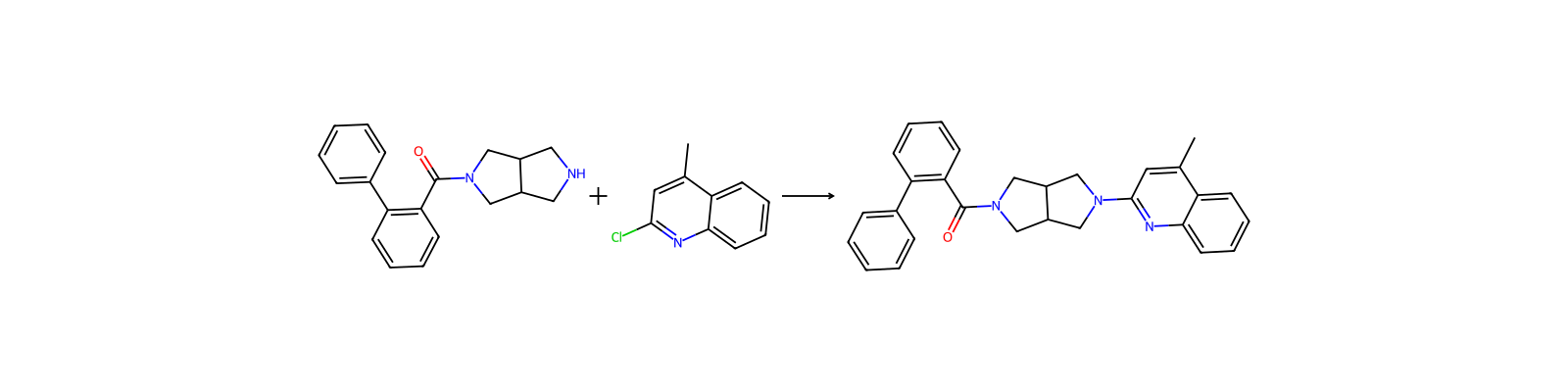
HRID 243979As reactant
Completing data — refresh the page later to see the latest
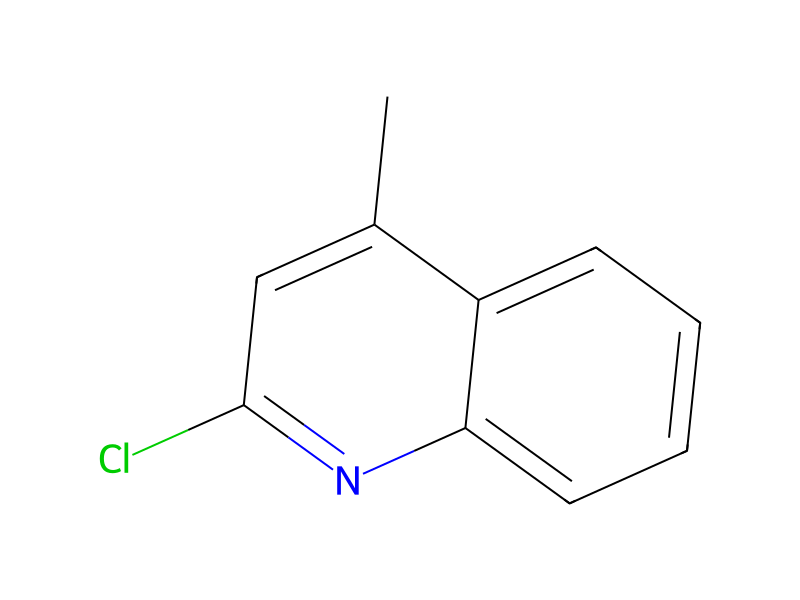
634-47-9Cc1cc(Cl)nc2ccccc12PFEIMKNQOIFKSW-UHFFFAOYSA-N634-47-9DTXSID00212808Safety information is for reference only and does not replace the supplier’s Safety Data Sheet (SDS), applicable regulations, or professional assessment.
Warning
H315 (100%): Causes skin irritation [Warning Skin corrosion/irritation]
P261, P264, P264+P265, P271, P280, P302+P352, P304+P340, P305+P351+P338, P319, P321, P332+P317, P337+P317, P362+P364, P403+P233, P405, and P501 (click each P-code to see the statement)
Aggregated GHS information provided per 45 reports by companies from 5 notifications to the ECHA C&L Inventory. Each notification may be associated with multiple companies.
Description4-Methyl-2-chloro-quinoline is an organic intermediate. It has been reported that it can be used to prepare graphite electrodes based on CrO-FeO-PbO and quinoline modified and a modified vermiculite adsorbent for the adsorption and removal of benzene in chemical wastewater.
Uses2-Chloro-4-methyl-quinoline is a useful synthetic intermediate. It is an intermediate used to synthesize 4-Methyl-2-(1-piperidinyl)-quinoline (M320715) which is a potent inhibitor of TRPC4 channels, responsible for various stimulation, muscle response due to interaction with the environment. 2-Chloro-4-methyl-quinoline is also considered as a cyanine dye.
PreparationThe mixture of 2-hydroxy-4-methylquinoline and phosphorus oxychloride was heated to 80-85°C. After the solid was completely dissolved, the mixture was poured into ice water, the mixture was extracted with ether, and the ether extract was distilled out of ether. Afterwards, carry out vacuum distillation, collect 132-135 ℃ (0.4kPa) fraction, namely 2-chloro-4-methylquinoline. For further purification, petroleum ether (boiling point 40-50°C) can be used for recrystallization, and the yield is 86%-89%.