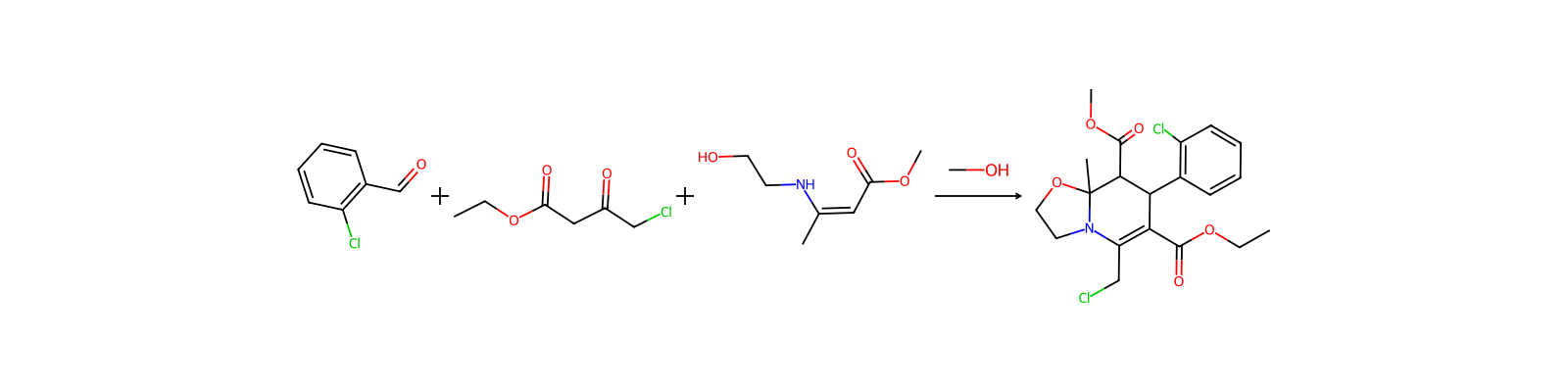
HRID 1254als Edukt
2-Chlorobenzaldehyde
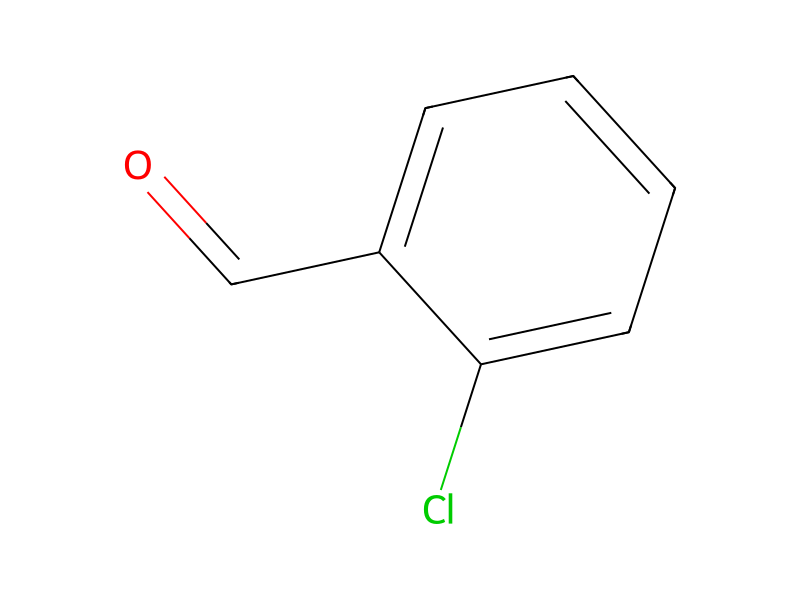
35913-09-8O=Cc1ccccc1ClFPYUJUBAXZAQNL-UHFFFAOYSA-N2-chlorobenzaldehyde is a clear colorless to yellowish liquid. (NTP, 1992)
35913-09-8、89-98-5DTXSID5024764CHEMBL1547989log Kow = 2.33
2.33
2.28
1.248 at 68 °F (NTP, 1992) - Denser than water; will sink
1.2483 g/cu cm at 20 °C
BP range: 209-214 °C; density: 1.240-1.245 at 25 °C/25 °C. Soluble in alcohol, ether, acetone; insoluble in water /Chlorobenzaldehyde/
1.25 g/cm³
Colorless to yellowish liquid
Needles
Liquid or needles
1 to 5 mg/mL at 75 °F (NTP, 1992)
Slightly soluble in water
Soluble in ethanol, diethyl ether, acetone, benzene, carbon tetrachloride
Solubility in water, g/l at 20 °C: 1.8 (poor)
Sicherheitsangaben dienen nur zur Orientierung und ersetzen weder das Sicherheitsdatenblatt (SDB) des Lieferanten noch geltende Vorschriften oder eine fachliche Bewertung.
Danger
H314: Causes severe skin burns and eye damage [Danger Skin corrosion/irritation]
P260, P264, P280, P301+P330+P331, P302+P361+P354, P304+P340, P305+P354+P338, P316, P321, P363, P405, and P501 (click each P-code to see the statement)
Danger
H302 (34.1%): Harmful if swallowed [Warning Acute toxicity, oral]
P260, P261, P264, P264+P265, P270, P272, P273, P280, P301+P317, P301+P330+P331, P302+P352, P302+P361+P354, P304+P340, P305+P354+P338, P316, P317, P321, P330, P333+P317, P362+P364, P363, P391, P405, and P501 (click each P-code to see the statement)
Chemical: Benzaldehyde, 2-chloro-
Benzaldehyde, 2-chloro- is listed on the EPA's Chemical Data Reporting (CDR) system. Manufacturers and importers of Benzaldehyde, 2-chloro- are required to report information about their production and use of this chemical to the EPA under the Toxic Substances Control Act (TSCA). (40 eCFR Part 711)
REACH registered substance: 2-chlorobenzaldehyde (EC: 201-956-3)
2-Chlorobenzaldehyde: Does not have an individual approval but may be used under an appropriate group standard
This chemical is combustible. (NTP, 1992)
Combustible. Gives off irritating or toxic fumes (or gases) in a fire. Above 87 °C explosive vapour/air mixtures may be formed.
Main metabolic pathways of o-chlorobenzylidene malononitrile (CS) in rabbits were estimated quantitatively following iv administration. The products of hydrolysis were o-chlorobenzaldehyde (o-Cbald) and malononitrile. The toxic actions of CS can be ascribed to o-Cbald.
Male adult Wistar rats dosed i.p. with o-substituted benzaldehydes (o-F, o-Cl, and o-Br = V, VI, and VII) excreted mercapturic acids in urine. These acids were identified as N-acetyl-S-(ortho-substituted benzyl)cysteines (I, II, III). The total mercapturic acid excretion as % dose (2.0 mmol/kg, n = 4) was 1.2 +/- 0.4, 6.8 +/- 0.9, and 10.4 +/- 2.0 for V, VI, and VII. p-Cl-benzaldehyde administered in the same dose showed a non-significant urinary thioether excretion. The aim of the investigation was to prove in vivo a postulated metabolic pathway of substituted benzaldehydes via sulfate esters to mercapturic acids. After a single administration of the sodium salts of o- and p-Cl-benzylsulfuric acid a significant increase in mercapturic acid excretion of 21.2 +/- 1.8% and 14.5 +/- 1.2% of dose (2.0 mmol/kg, n = 4) was found. By pretreatment with pyrazole the mercapturic acid excretion increased after administration of o-Cl-benzyl alcohol (IX) whereas a significant decrease was found after administration of o-Cl-benzaldehyde (VI). After simultaneous administration of ethanol with IX and VI an increase in mercapturic acid excretion was observed. After previous administration of pentachlorophenol a significant decrease in urinary mercapturic acid excretion for IX and VI was found. These findings are in accordance with a metabolic pathway of substituted benzaldehydes via benzyl alcohols, subsequently sulfate esters to the corresponding benzylmercapturic acids.
2-Chlorobenzaldehyde might be produced when a moist skin is exposed to the riot control agent CS. CS-hydrolysis to 2-chlorobenzaldehyde and malononitrile occurs both in vitro and in vivo. No quantitative data have thus far been reported with respect to the percutaneous absorption and the cutaneous biotransformation of 2-chlorobenzaldehyde. Percutaneous absorption, biotransformation and elimination of (14)C-labeled 2-chlorobenzaldehyde was investigated in the rat. Following IV (25 uL/kg) and IP (37.5 uL/kg) (14)C-2-chlorobenzaldehyde administration to rats, the plasma radioactivity declined rapidly over a 24 hr period with similar plasma radioactivity-time profiles. Following cutaneous administration (75 uL/kg) in a closed glass-cup on the skin a slow skin penetration occurred as indicated by plasma radioactivity levels. A slow increase in plasma radioactivity was followed by a slow decline of radioactivity in plasma over a 3-day period. Most of the radioactivity was found in the urine with low levels in feces and exhaled air. The cutaneously administered radioactivity was also partly recovered from the glass-cup. For the qualitative and quantitative determination of metabolites in urine, a thin layer chromatography-radioautography method was used. The metabolic patterns of urinary excreted metabolites following cutaneous application and systemic administration of (14)C-2-chlorobenzaldehyde to rats were very similar. No parent compound was recovered from the rat urine. 2-Chlorohippuric acid was the principal urinary metabolite. Quantitatively, the urinary excretion of (14)C-2-chlorobenzyl alcohol following cutaneous application differed substantially from that after the systemic administration. There was no evidence of storage in the skin or skin toxicity of 2-chlorobenzaldehyde following cutaneous application.


190 °F (NTP, 1992)
87 °C (189 °F) (SRP: closed cup)
87 °C c.c.
413.4 °F at 760 mmHg (NTP, 1992)
212 °C
211.9 °C
When heated to decomposition it emits toxic fumes of chloride.
Hazardous decomposition products formed under fire conditions: Carbon oxides, hydrogen chloride gas.
54.3 °F (NTP, 1992)
11.9 °C
12.4 °C
Causes somnolence, tremor, and diarrhea in lethal-dose feeding studies of rats; [RTECS] A severe skin, eye, and respiratory tract irritant; Can be absorbed through skin; [ICSC] A skin, eye, and upper respiratory tract irritant; [CAMEO] A skin, eye, nose, throat, and upper respiratory tract irritant; Inhalation of high concentrations can cause CNS depression; [CHEMINFO] Causes burns; [eChemPortal: ESIS] A corrosive substance that can cause injury to the skin, eyes, and respiratory tract; Inhalation may cause chemical pneumonitis; [MSDSonline]
Section 8(a) of TSCA requires manufacturers of this chemical substance to report preliminary assessment information concerned with production, exposure, and use to EPA as cited in the preamble in 51 FR 41329. Effective date: 9/30/91; Reporting date: 11/27/91.
Pursuant to section 8(d) of TSCA, EPA promulgated a model Health and Safety Data Reporting Rule. The section 8(d) model rule requires manufacturers, importers, and processors of listed chemical substances and mixtures to submit to EPA copies and lists of unpublished health and safety studies. Benzaldehyde, 2-chloro- is included on this list. Effective date: 9/30/91; Sunset date: 6/30/98.
This action promulgates standards of performance for equipment leaks of Volatile Organic Compounds (VOC) in the Synthetic Organic Chemical Manufacturing Industry (SOCMI). The intended effect of these standards is to require all newly constructed, modified, and reconstructed SOCMI process units to use the best demonstrated system of continuous emission reduction for equipment leaks of VOC, considering costs, non air quality health and environmental impact and energy requirements. Chlorobenzaldehyde is produced, as an intermediate or a final product, by process units covered under this subpart. /Chlorobenzaldehyde/
Fires involving this compound can be controlled with a dry chemical, carbon dioxide or Halon extinguisher. (NTP, 1992)
Use water spray, foam, powder, carbon dioxide. In case of fire: keep drums, etc., cool by spraying with water.
Fresh air, rest. Refer for medical attention.
Remove contaminated clothes. Rinse skin with plenty of water or shower for at least 15 minutes. Refer for medical attention .
Rinse with plenty of water for several minutes (remove contact lenses if easily possible). Refer for medical attention.
Rinse mouth. Give one or two glasses of water to drink. Do NOT induce vomiting. Refer for medical attention .
EYES: First check the victim for contact lenses and remove if present. Flush victim's eyes with water or normal saline solution for 20 to 30 minutes while simultaneously calling a hospital or poison control center. Do not put any ointments, oils, or medication in the victim's eyes without specific instructions from a physician. IMMEDIATELY transport the victim after flushing eyes to a hospital even if no symptoms (such as redness or irritation) develop.
Suitable extinguishing media: Use water spray, alcohol-resistant foam, dry chemical or carbon dioxide.
Advice for firefighters: Wear self-contained breathing apparatus for firefighting if necessary.
Use water spray to cool unopened containers.
ACCIDENTAL RELEASE MEASURES: Personal precautions, protective equipment and emergency procedures: Use personal protective equipment. Avoid breathing vapors, mist or gas. Ensure adequate ventilation. Remove all sources of ignition. Evacuate personnel to safe areas. Beware of vapors accumulating to form explosive concentrations. Vapors can accumulate in low areas. Environmental precautions: Prevent further leakage or spillage if safe to do so. Do not let product enter drains. Methods and materials for containment and cleaning up: Contain spillage, and then collect with an electrically protected vacuum cleaner or by wet-brushing and place in container for disposal according to local regulations. Keep in suitable, closed containers for disposal.
SMALL SPILLS AND LEAKAGE: If you spill this chemical, FIRST REMOVE ALL SOURCES OF IGNITION. Then, use absorbent paper to pick up all liquid spill material. Your contaminated clothing and absorbent paper should be sealed in a vapor-tight plastic bag for eventual disposal. Solvent wash all contaminated surfaces with 60-70% ethanol followed by washing with a soap and water solution. Do not reenter the contaminated area until the Safety Officer (or other responsible person) has verified that the area has been properly cleaned.
SRP: Recycle any unused portion of the material for its approved use or return it to the manufacturer or supplier. Ultimate disposal of the chemical must consider: the material's impact on air quality; potential migration in air, soil or water; effects on animal, aquatic and plant life; and conformance with environmental and public health regulations. If it is possible or reasonable use an alternative chemical product with less inherent propensity for occupational harm/injury/toxicity or environmental contamination.
Product: This combustible material may be burned in a chemical incinerator equipped with an afterburner and scrubber. Offer surplus and non-recyclable solutions to a licensed disposal company. Contact a licensed professional waste disposal service to dispose of this material. Contaminated packaging: Dispose of as unused product.
Personal protection: chemical protection suit and protective gloves. Do NOT let this chemical enter the environment. Collect leaking liquid in sealable containers. Absorb remaining liquid in dry sand or inert absorbent. Then store and dispose of according to local regulations.
ACCIDENTAL RELEASE MEASURES: Personal precautions, protective equipment and emergency procedures: Use personal protective equipment. Avoid breathing vapors, mist or gas. Ensure adequate ventilation. Remove all sources of ignition. Evacuate personnel to safe areas. Beware of vapors accumulating to form explosive concentrations. Vapors can accumulate in low areas. Environmental precautions: Prevent further leakage or spillage if safe to do so. Do not let product enter drains.
Precautions for safe handling: Avoid inhalation of vapor or mist. Keep away from sources of ignition - No smoking. Take measures to prevent the build up of electrostatic charge.
Appropriate engineering controls: Handle in accordance with good industrial hygiene and safety practice. Wash hands before breaks and at the end of workday.
Gloves must be inspected prior to use. Use proper glove removal technique (without touching glove's outer surface) to avoid skin contact with this product. Dispose of contaminated gloves after use in accordance with applicable laws and good laboratory practices. Wash and dry hands.
TERRESTRIAL FATE: Based on a classification scheme(1), an estimated Koc value of 97(SRC), determined from a log Kow of 2.33(2) and a regression-derived equation(3), indicates that o-chlorobenzaldehyde is expected to have high mobility in soil(SRC). Volatilization of o-chlorobenzaldehyde from moist soil surfaces is expected to be an important fate process(SRC) given an estimated Henry's Law constant of 2.4X10⁻⁵ atm-cu m/mole(SRC), using a fragment constant estimation method(4). o-Chlorobenzaldehyde has a vapor pressure of 0.230 mm Hg(5) and exists as a liquid under environmental conditions; therefore, o-chlorobenzaldehyde may volatilize from dry soil. Utilizing the Japanese MITI test, 8% of the theoretical BOD was reached in 4 weeks(6); utilizing Zahn-Wellens inherent biodegradability tests, o-chlorobenzaldehyde reached 90-100% biodegradation in 13-15 days(7), suggesting that under certain environmental conditions biodegradation may be an important environmental fate process in soil(SRC).
AQUATIC FATE: Based on a classification scheme(1), an estimated Koc value of 97(SRC), determined from a log Kow of 2.33(2) and a regression-derived equation(3), indicates that o-chlorobenzaldehyde is not expected to adsorb to suspended solids and sediment(SRC). Volatilization from water surfaces is expected(4) based upon an estimated Henry's Law constant of 2.4X10⁻⁵ atm-cu m/mole(SRC), developed using a fragment constant estimation method(5). Using this Henry's Law constant and an estimation method(4), volatilization half-lives for a model river and model lake are 30 hours and 22 days, respectively(SRC). According to a classification scheme(6), an estimated BCF of 16(SRC), from its log Kow(2) and a regression-derived equation(3), suggests the potential for bioconcentration in aquatic organisms is low(SRC). Utilizing the Japanese MITI test, 8% of the theoretical BOD was reached in 4 weeks(7); utilizing Zahn-Wellens inherent biodegradability tests, o-chlorobenzaldehyde reached 90-100% biodegradation in 13-15 days(8), suggesting that under certain environmental conditions biodegradation may be an important environmental fate process in water(SRC).
ATMOSPHERIC FATE: According to a model of gas/particle partitioning of semivolatile organic compounds in the atmosphere(1), o-chlorobenzaldehyde, which has a vapor pressure of 0.230 mm Hg at 20 °C(2), is expected to exist solely as a vapor in the ambient atmosphere. Vapor-phase o-chlorobenzaldehyde is degraded in the atmosphere by reaction with photochemically-produced hydroxyl radicals(SRC); the half-life for this reaction in air is estimated to be 22 hours(SRC), calculated from its rate constant of 1.7X10⁻¹¹ cu cm/molecule-sec at 25 °C(SRC) that was derived using a structure estimation method(3). o-Chlorobenzaldehyde contains chromophores that absorb at wavelengths >290 nm(4) and, therefore, is expected to be susceptible to direct photolysis by sunlight(SRC).
Chlorobenzaldehyde, isomer not unspecified, was detected, but not quantified in the volatiles of raw cassava, Manihot esculenta, Crantz (from the Dominican Republic), but not detected in volatiles of white Gari (from Fed Ins of Ind Res, Nigeria) and farine (from the St Lucia Marketing Board)(1). /Chlorobenzaldehyde/
IDENTIFICATION AND USE: o-Chlorobenzaldehyde occurs as liquid or needles. It is used as intermediate in the preparation of triphenyl methane and related dyes, and organic intermediate. HUMAN STUDIES: There are no data available. ANIMAL STUDIES: 2-Chlorobenzaldehyde might be produced when a moist skin is exposed to the riot control agent CS (o-chlorobenzylidene malononitrile). CS hydrolysis to 2-chlorobenzaldehyde and malononitrile occurs both in vitro and in vivo. Main metabolic pathways of CS in rabbits were estimated quantitatively following iv administration. The products of hydrolysis were o-chlorobenzaldehyde and malononitrile. The toxic actions of CS can be ascribed to o-chlorobenzaldehyde. O-chlorobenzaldehyde showed negative responses in yeast when it was tested for genotoxicity without metabolic activation.
Cough. Sore throat. Burning sensation.
Redness. Pain.
Redness. Pain.
Burning sensation in the mouth and in the stomach. Abdominal pain.
EPA has released the Interactive Chemical Safety for Sustainability (iCSS) Dashboard. The iCSS Dashboard provides an interactive tool to explore rapid, automated (or in vitro high-throughput) chemical screening data generated by the Toxicity Forecaster (ToxCast) project and the federal Toxicity Testing in the 21st century (Tox21) collaboration. /The title compound was tested by ToxCast and/or Tox21 assays/[USEPA; ICSS Dashboard Application; Available from, as of November 16, 2017: http://actor.epa.gov/dashboard/]
The following link will take the user to the National Toxicology Program (NTP) Test Status of Agents Search page, which tabulates the results and current status of tests such as "Short-Term Toxicity Studies", "Long-term Carcinogenicity Studies", "Developmental Studies", "Genetic Toxicology Studies", etc., performed with this chemical. Testing status for o-Chlorobenzaldehyde is available.[Available from, as of November 3, 2017: https://ntpsearch.niehs.nih.gov/?e=True&ContentType=Testing+Status]
The Koc of o-chlorobenzaldehyde is estimated as 97(SRC), using a log Kow of 2.33(1) and a regression-derived equation(2). According to a classification scheme(3), this estimated Koc value suggests that o-chlorobenzaldehyde is expected to have high mobility in soil(SRC).
AEROBIC: o-Chlorobenzaldehyde, present at 100 mg/L, reached 8% of its theoretical BOD in 4 weeks using an activated sludge inoculum at 30 mg/L in the Japanese MITI test(1). In the test solution, primary degradation of o-chlorobenzaldehyde formed o-chlorobenzoic acid and o-chlorobenzylalcohol(1). Utilizing a Zahn-Wellens inherent biodegradability test, o-chlorobenzaldehyde reached 100% biodegradation within 3 days after an acclimation period of 10 days(2). Another Zahn-Wellens test gave similar results, greater than 90% biodegradation after 15 days(2), suggesting that this compound may biodegrade under certain environmental conditions(SRC).
An estimated BCF of 16 was calculated in fish for o-chlorobenzaldehyde(SRC), using a log Kow of 2.33(1) and a regression-derived equation(1). According to a classification scheme(2), this BCF suggests the potential for bioconcentration in aquatic organisms is low(SRC).
Section 8(a) of TSCA requires manufacturers of this chemical substance to report preliminary assessment information concerned with production, exposure, and use to EPA as cited in the preamble in 51 FR 41329. Effective date: 9/30/91; Reporting date: 11/27/91.
Pursuant to section 8(d) of TSCA, EPA promulgated a model Health and Safety Data Reporting Rule. The section 8(d) model rule requires manufacturers, importers, and processors of listed chemical substances and mixtures to submit to EPA copies and lists of unpublished health and safety studies. Benzaldehyde, 2-chloro- is included on this list. Effective date: 9/30/91; Sunset date: 6/30/98.
This action promulgates standards of performance for equipment leaks of Volatile Organic Compounds (VOC) in the Synthetic Organic Chemical Manufacturing Industry (SOCMI). The intended effect of these standards is to require all newly constructed, modified, and reconstructed SOCMI process units to use the best demonstrated system of continuous emission reduction for equipment leaks of VOC, considering costs, non air quality health and environmental impact and energy requirements. Chlorobenzaldehyde is produced, as an intermediate or a final product, by process units covered under this subpart. /Chlorobenzaldehyde/
Used to make alcohols, acids, and dyes; Used in the rubber, tanning, and paper industries; [HSDB] Used as an intermediate for optical brighteners, agricultural chemicals, and pharmaceuticals; [CHEMINFO]
Pulp and Paper Processing [Category: Industry]
Intermediate in the preparation of triphenyl methane and related dyes, organic intermediate. /Chlorobenzaldehyde/
2023: 21,164 lb
Non-confidential 2016 Chemical Data Reporting (CDR) information on the production and use of chemicals manufactured or imported into the United States. Chemical: 2-Chlorobenzaldehyde:
2-Chlorobenzaldehyde is produced mainly by chlorination of 2-chlorotoluene to form 2-chlorobenzal chloride, which is then subjected to acid hydrolysis. Metal salts, such as iron(III) chloride, are used as catalysts. The hydrolysis can also be accomplished using formic acid without a catalyst.
2-Chlorobenzaldehyde can also be produced by oxidation of 2-chlorobenzyl chloride with N-oxides of tertiary amines or with dilute nitric acid.
Fabricated Metal Product Manufacturing
Benzaldehyde, 2-chloro-: ACTIVE
Verwenden2-Chlorobenzaldehyde can be used to make alcohols, acids, and dyes; used in the rubber, tanning, and paper industries; used as an intermediate for optical brighteners, agricultural chemicals, and pharmaceuticals.It can also be used to prepare triphenyl methane and related dyes, organic intermediate.
synthetische2-Chlorobenzaldehyde is produced mainly by chlorination of 2-chlorotoluene to form 2-chlorobenzal chloride, which is then subjected to acid hydrolysis. Metal salts, such as iron(III) chloride, are used as catalysts. The hydrolysis can also be accomplished using formic acid without a catalyst.2-Chlorobenzaldehyde can also be produced by oxidation of 2-chlorobenzyl chloride with N-oxides of tertiary amines or with dilute nitric acid.https://pubchem.ncbi.nlm.nih.gov/compound/2-Chlorobenzaldehyde