HomeMCPSkillsWorkbenchOpenChem
HomeWorkbenchNotificationsMe
llms.txt · skill.md · MCP GuidePrivacy Policy · Terms of Service · Supportv1.8.5
  1. Home
  2. /Compound

Pramlintide

HCID 70691388
New reaction
Print

Completing data — refresh the page later to see the latest

Basic informationOverviewNames & identifiersPropertiesSafety & regulationChemistry & industryRelated reactionsCompound notes
Substructure searchFind similar structures

Basic information

CAS
151126-32-8
Standard SMILES
CC[C@H](C)[C@H](NC(=O)[C@@H]1CCCN1C(=O)CNC(=O)[C@H](Cc1ccccc1)NC(=O)[C@H](CC(N)=O)NC(=O)[C@H](CC(N)=O)NC(=O)[C@H](CO)NC(=O)[C@H](CO)NC(=O)[C@H](Cc1c[nH]cn1)NC(=O)[C@@H](NC(=O)[C@H](CC(C)C)NC(=O)[C@H](Cc1ccccc1)NC(=O)[C@H](CC(N)=O)NC(=O)[C@H](C)NC(=O)[C@H](CC(C)C)NC(=O)[C@H](CCCNC(=N)N)NC(=O)[C@H](CCC(N)=O)NC(=O)[C@@H](NC(=O)[C@H](C)NC(=O)[C@@H]1CSSC[C@H](NC(=O)[C@@H](N)CCCCN)C(=O)N[C@@H](CC(N)=O)C(=O)N[C@@H]([C@@H](C)O)C(=O)N[C@@H](C)C(=O)N[C@@H]([C@@H](C)O)C(=O)N1)[C@@H](C)O)C(C)C)C(=O)N[C@@H](CC(C)C)C(=O)N1CCC[C@H]1C(=O)N1CCC[C@H]1C(=O)N[C@H](C(=O)N[C@@H](CC(N)=O)C(=O)N[C@H](C(=O)NCC(=O)N[C@@H](CO)C(=O)N[C@@H](CC(N)=O)C(=O)N[C@H](C(=O)N[C@@H](Cc1ccc(O)cc1)C(N)=O)[C@@H](C)O)C(C)C)[C@@H](C)O
InChIKey
FVNLNEGMCMHEBF-CLRARMPYNA-N
Molecular formula
C171H267N51O53S2
Average molar mass
3,949 g/mol
Monoisotopic mass
3,946.9206749

Overview

Pramlintide is a polypeptide.

Names & identifiers

Preferred name
Pramlintide
IUPAC
(2S)-N-[(2S)-1-[[(2S)-1-[[(2S)-1-[[(2S)-4-amino-1-[[(2S)-1-[[(2S)-1-[[(2S)-1-[[(2S)-1-[[(2S)-1-[[(2S)-1-[[(2S)-4-amino-1-[[(2S)-4-amino-1-[[(2S)-1-[[2-[(2S)-2-[[(2S,3S)-1-[[(2S)-1-[(2S)-2-[(2S)-2-[[(2S,3R)-1-[[(2S)-4-amino-1-[[(2S)-1-[[2-[[(2S)-1-[[(2S)-4-amino-1-[[(2S,3R)-1-[[(2S)-1-amino-3-(4-hydroxyphenyl)-1-oxopropan-2-yl]amino]-3-hydroxy-1-oxobutan-2-yl]amino]-1,4-dioxobutan-2-yl]amino]-3-hydroxy-1-oxopropan-2-yl]amino]-2-oxoethyl]amino]-3-methyl-1-oxobutan-2-yl]amino]-1,4-dioxobutan-2-yl]amino]-3-hydroxy-1-oxobutan-2-yl]carbamoyl]pyrrolidine-1-carbonyl]pyrrolidin-1-yl]-4-methyl-1-oxopentan-2-yl]amino]-3-methyl-1-oxopentan-2-yl]carbamoyl]pyrrolidin-1-yl]-2-oxoethyl]amino]-1-oxo-3-phenylpropan-2-yl]amino]-1,4-dioxobutan-2-yl]amino]-1,4-dioxobutan-2-yl]amino]-3-hydroxy-1-oxopropan-2-yl]amino]-3-hydroxy-1-oxopropan-2-yl]amino]-3-(1H-imidazol-4-yl)-1-oxopropan-2-yl]amino]-3-methyl-1-oxobutan-2-yl]amino]-4-methyl-1-oxopentan-2-yl]amino]-1-oxo-3-phenylpropan-2-yl]amino]-1,4-dioxobutan-2-yl]amino]-1-oxopropan-2-yl]amino]-4-methyl-1-oxopentan-2-yl]amino]-5-carbamimidamido-1-oxopentan-2-yl]-2-[[(2S,3R)-2-[[(2S)-2-[[(4R,7S,10S,13S,16S,19R)-16-(2-amino-2-oxoethyl)-19-[[(2S)-2,6-diaminohexanoyl]amino]-7,13-bis[(1R)-1-hydroxyethyl]-10-methyl-6,9,12,15,18-pentaoxo-1,2-dithia-5,8,11,14,17-pentazacycloicosane-4-carbonyl]amino]propanoyl]amino]-3-hydroxybutanoyl]amino]pentanediamide
English name
Pramlintide
Molecular formula
C171H267N51O53S2.C2H4O2.H2O
Molecular weight
4027.49

Names & synonyms

TriproamylinpramlintidaTRIPRO-AMYLINAC0137AC137AC-137AC-0137D3FM8FA78TpramlintidumRefChem:58316A10BX05DTXSID801027623
Show more names
CL062Pramlintide D10Pramlintide TriproamylinLys-c[Cys-Asn-Thr-Ala-Thr-Cys]-Ala-Thr-Gln-Arg-Leu-Ala-Asn-Phe-Leu -Val-His-Ser-Ser-Asn-Asn-Phe-Gly-Pro-Ile-Leu-Pro-Pro-Thr-Asn-Val-Gly -Ser-Asn-Thr-Tyr-NH2PramlintideQ: What is Pramlintide Q: What is the CAS Number of Pramlintide Q: What is the storage condition of Pramlintide Q: What are the applications of Pramlintide
AC 137LYS-CYS-ASN-THR-ALA-THR-CYS-ALA-THR-GLN-ARG-LEU-ALA-ASN-PHE-LEU-VAL-HIS-SER-SER-ASN-ASN-PHE-GLY-PRO-ILE-LEU-PRO-PRO-THR-ASN-VAL-GLY-SER-ASN-THR-TYR-NH2151126-32-8PramlintideUNII-D3FM8FA78TPramlintide [USAN:INN:BAN]CHEMBL2103758SCHEMBL29355376

Database identifiers

CAS
151126-32-8
PubChem CID
70691388
ChEMBL
CHEMBL2103758
ChEBI
CHEBI:135922

Properties

Computed structural propertiesFilling in

XLogP
-15.7
Topological polar surface area
1,740 Ų
Hydrogen bond donors
56
Hydrogen bond acceptors
59
Rotatable bonds
110
Heavy atoms
277
Formal charge
0
Complexity
9,660

Experimental & physicochemical properties

Human DrugsBreast Feeding; Lactation; Milk, Human; Hypoglycemic Agents; Islet Amyloid Polypeptide

Physicochemical properties

solubility
soluble in Water
form
Solid
color
White
Water Solubility
1 mg/ml · Soluble to 1 mg/ml in water
Sequence
2 · Lys-Cys-Asn-Thr-Ala-Thr-Cys-Ala-Thr-Gln-Arg-Leu-Ala-Asn-Phe-Leu-Val-His-Ser-Ser-Asn-Asn-Phe-Gly-Pro-Ile-Leu-Pro-Pro-Thr-Asn-Val-Gly-Ser-Asn-Thr-Tyr-NH2 (Disulfide bridge:Cys2-Cys7)
InChIKey
FVNLNEGMCMHEBF-CLRARMPYNA-N
FDA UNII
3 FM8FA78T · D3FM8FA78T

Safety & regulation

Safety information is for reference only and does not replace the supplier’s Safety Data Sheet (SDS), applicable regulations, or professional assessment.

Toxicology

HepatotoxicityIn large clinical trials, serum enzyme elevations were rare (
Drug Induced Liver Injury · 5 items

Drug-Induced Liver Injury Severity and Toxicity (DILIst)

pramlintide

DILI Negative

Subcutaneous

DOI:10.1016/j.drudis.2019.09.022

Effects During Pregnancy and Lactation◉ Summary of Use during Lactation

Chemistry & industry

Pharmacology

ATC Code · 2 items

A - Alimentary tract and metabolism

QA - Alimentary tract and metabolism

Protein BindingPramlintide does not extensively bind to blood cells or albumin (approximately 40% of the drug is unbound in plasma).
Pharmacodynamics · 1 item

Pramlintide is a synthetic analog of amylin, a glucoregulatory hormone that is synthesized by pancreatic β-cells and released into the bloodstream, in a similar pattern as insulin, after a meal. Like insulin, amylin is deficient in individuals with diabetes. It is provided as an acetate salt. Pramlintide is a 37-amino acid polypeptide that differs structurally from human amylin by the replacement of alanine, serine, and serine at positions 25, 28, and 29 respectively with proline.

Mechanism of Action · 1 item

Pramlintide is an amlyinomimetic, a functional analog of the naturally occurring pancreatic hormone amylin. Amylin has activity in a number of gastrointestinal and glucodynamic systems, and by mimicking its activity, pramlintide acts to improve glycemic control through modulation of the rate of gastric emptying, prevention of post-prandial rise in glucagon levels, and by increasing sensations of satiety, thereby reducing caloric intake and potentiating weight loss. There appears to be at least three distinct receptor complexes that bind with high affinity to amylin. All three complexes contain the calcitonin receptor at the core, plus one of three Receptor activity-modifying proteins, RAMP1, RAMP2, or RAMP3.

Biological Half-LifeApproximately 48 minutes
Metabolism/MetabolitesMetabolized primarily by the kidneys.
FDA Pharmacological Classification · 5 items

D3FM8FA78T

PRAMLINTIDE

Mechanisms of Action [MoA] - Amylin Agonists

Established Pharmacologic Class [EPC] - Amylin Analog

Pramlintide is an Amylin Analog. The mechanism of action of pramlintide is as an Amylin Agonist.

MeSH Pharmacological ClassificationSubstances which lower blood glucose levels.
Absorption, Distribution and Excretion · 2 items

The absolute bioavailability of a single subcutaneous dose of pramlintide is approximately 30 to 40%.

Pramlintide is metabolized primarily by the kidneys.

Applications

UsesAntidiabetic.

DescriptionPramlintide Synthetic is a single, non-glycosylated polypeptide chain containing 37 amino acids, having a molecular mass of 3949.4 Dalton and a Molecular formula of C171H267N51O53S2.
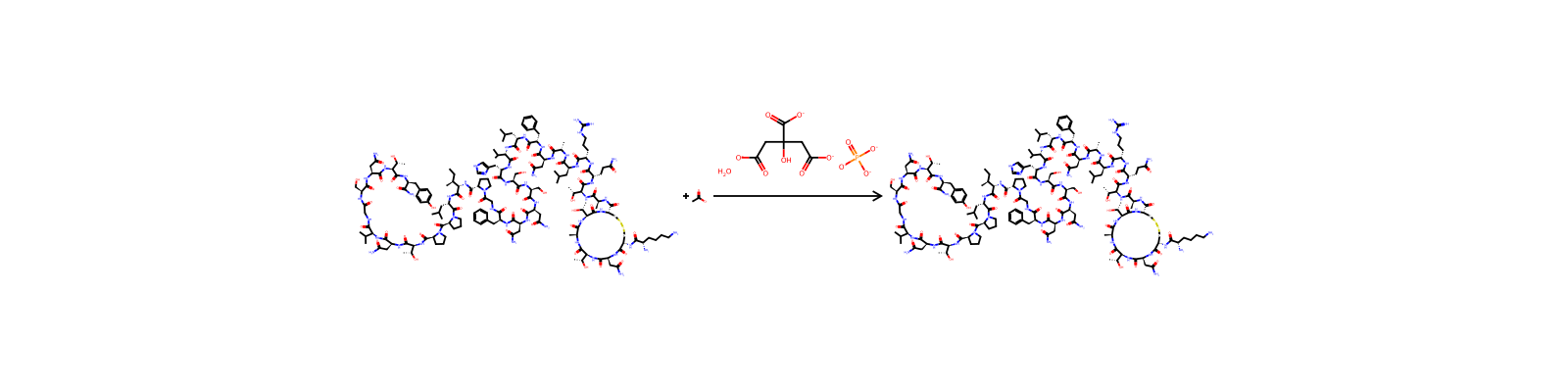
Related reactions

5 records
New reaction record
HRID 523616As product
HRID 623331As product
HRID 929369As product
HRID 1473812As product
HRID 2364938As product

Compound notes

On this pageBasic informationOverviewNames & identifiersPropertiesSafety & regulationChemistry & industryRelated reactionsCompound notes