
uspto-grants-1998_03 · 10.6084/m9.figshare.5104873.v1 · US05731352
查看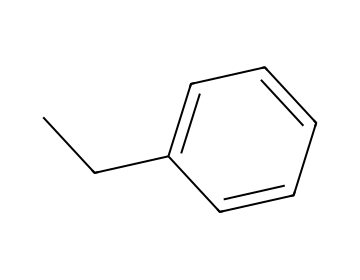
IDENTITY
COMPUTED
PROPERTIES
log Kow = 3.15
3.1
Aromatic odor
Pungent odor
Sweet, gasoline-like odor
0.867 at 68 °F (USCG, 1999) - Less dense than water; will float
0.8626 g/cu cm at 25 °C
Density of saturated vapor-air mixture at 760 mm Hg (air= 1): 1.03 (26 °C); specific dispersion: 174.6
Cricital density: 2.67 mmol/cu m; critical volume: 374.0 cu m/mol
Relative density (water = 1): 0.9
0.87
0.64 cP at 25 °C
0.6 mm²/s at 25 °C
Colorless liquid
less than 1 mg/mL at 73 °F (NTP, 1992)
In water, 170 mg/L at 25 °C (average of 16 literature ranging from 131-212 mg/L at 25 °C)
In water, 169 mg/L at 25 °C
In water, 0.014 g/100 mL at 15 °C
Soluble in all proportions in ethyl alcohol and ethyl ether
For more Solubility (Complete) data for ETHYLBENZENE (8 total), please visit the HSDB record page.
59 °F (NTP, 1992)
12.8 °C
15.0 °C (59.0 °F) - closed cup
64 °F (18 °C) - closed cup
70 °F (21 °C) - closed cup
18 °C c.c.
277.2 °F at 760 mmHg (NTP, 1992)
136.2 °C
136 °C
277 °F
136.2 °C @760 [mm Hg]
277 °F
Hazardous decomposition products formed under fire conditions - Carbon oxides.
When heated to decomposition it emits acrid smoke and irritating fumes.
-139 °F (NTP, 1992)
-94.95 °C
-95 °C
-139 °F
-94.9 °C
-139 °F
3.66 (NTP, 1992) - Heavier than air; will sink (Relative to Air)
3.66 (Air = 1)
Relative vapor density (air = 1): 3.7
3.66
Odor Threshold Low: 0.09 [ppm];Odor Threshold High: 0.6 [ppm];Odor threshold from AIHA
140 ppm /Purity not specified/
2-2.6 mg/cu m; detection: 0.4 mg/cu m /Purity not specified/
Odor Low: 8.7 mg/cu m, Odor High: 870.0 mg/cu m
GHS
Danger
H225: Highly Flammable liquid and vapor [Danger Flammable liquids];H304: May be fatal if swallowed and enters airways [Danger Aspiration hazard];H332: Harmful if inhaled [Warning Acute toxicity, inhalation];H373: May causes damage to organs through prolonged or repeated exposure [Warning Specific target organ toxicity, repeated exposure]
P210, P233, P240, P241, P242, P243, P260, P261, P271, P280, P301+P316, P303+P361+P353, P304+P340, P317, P319, P331, P370+P378, P403+P235, P405, and P501 (click each P-code to see the statement)
This chemical does not meet GHS hazard criteria for < 0.1% (2 of 7017) of reports.
HAZARDS
Chemical: Benzene, ethyl-
Hazard Traits - Carcinogenicity; Developmental Toxicity; Endocrine Toxicity; Hepatotoxicity and Digestive System Toxicity; Nephrotoxicity and Other Toxicity to the Urinary System; Neurotoxicity; Ocular Toxicity; Respiratory Toxicity;Authoritative List - ATSDR Neurotoxicants; CA MCLs; CA TACs; CWA 303(c); CWA 303(d); IARC Carcinogens - 2B; OEHHA RELs; Prop 65;Report - regardless of intended function of ingredient in the product
Benzene, ethyl- is listed on the EPA's Chemical Data Reporting (CDR) system. Manufacturers and importers of Benzene, ethyl- are required to report information about their production and use of this chemical to the EPA under the Toxic Substances Control Act (TSCA). (40 eCFR Part 711)
Status: Active Update: 07-03-2023 https://echa.europa.eu/registration-dossier/-/registered-dossier/15377;Status: No longer Valid Update: 24-10-2011 https://echa.europa.eu/registration-dossier/-/registered-dossier/7855
Benzene, ethyl-: HSNO Approval: HSR001151 Approved with controls
The New Jersey Worker and Community Right to Know Act requires public and private employers to provide information about hazardous substances at their workplaces. (N.J.S.A. 34:5A-1 et. seq.)
IMAP assessments - Benzene, ethyl-: Environment tier I assessment;IMAP assessments - Benzene, ethyl-: Human health tier II assessment
Flammable Liquid
Special Hazards of Combustion Products: Irritating vapors are generated when heated.;Behavior in Fire: Vapor is heavier than air and may travel considerable distance to the source of ignition and flash back. (USCG, 1999)
· HIGHLY FLAMMABLE: Will be easily ignited by heat, sparks or flames.;· Vapors may form explosive mixtures with air.;· Vapors may travel to source of ignition and flash back.;· Most vapors are heavier than air. They will spread along the ground and collect in low or confined areas (sewers, basements, tanks, etc.).;· Vapor explosion hazard indoors, outdoors or in sewers.;· Those substances designated with a (P) may polymerize explosively when heated or involved in a fire.;· Runoff to sewer may create fire or explosion hazard.;· Containers may explode when heated.;· Many liquids will float on water.
Highly flammable. Vapour/air mixtures are explosive.
A very dangerous fire ... hazard when exposed to heat or flame ...
Inhalation may cause irritation of nose, dizziness, depression. Moderate irritation of eye with corneal injury possible. Irritates skin and may cause blisters. (USCG, 1999)
· May cause toxic effects if inhaled or absorbed through skin.;· Inhalation or contact with material may irritate or burn skin and eyes.;· Fire will produce irritating, corrosive and/or toxic gases.;· Vapors may cause dizziness or asphyxiation, especially when in closed or confined areas.;· Runoff from fire control or dilution water may cause environmental contamination.
Ethylbenzene is a colorless, flammable liquid that smells like gasoline. It is found in natural products such as coal tar and petroleum and is also found in manufactured products such as inks, insecticides, and paints. Ethylbenzene is used primarily to make another chemical, styrene. Other uses include as a solvent, in fuels, and to make other chemicals.
Ethylbenzene is mainly used in the manufacture of styrene. Acute (short-term) exposure to ethylbenzene in humans results in respiratory effects, such as throat irritation and chest constriction, irritation of the eyes, and neurological effects such as dizziness. Chronic (long-term) exposure to ethylbenzene by inhalation in humans has shown conflicting results regarding its effects on the blood. Animal studies have reported effects on the blood, liver, and kidneys from chronic inhalation exposure to ethylbenzene. Limited information is available on the carcinogenic effects of ethylbenzene in humans. In a study by the National Toxicology Program (NTP), exposure to ethylbenzene by inhalation resulted in an increased incidence of kidney and testicular tumors in rats, and lung and liver tumors in mice. EPA has classified ethylbenzene as a Group D, not classifiable as to human carcinogenicity.
Liquid causes first degree burns on short exposure. [CHRIS] Mild irritation but no corneal injury after instillation of 2 drops into rabbit eye; Rats with inhalation exposure to 400 ppm (but not 300 ppm) eight hours per day for five days had increased auditory thresholds and loss of cochlear hair cells; Mild liver toxicity observed in animal inhalation studies; Causes CNS depression in lethal concentration studies; When exposed at 1000 ppm, humans have profuse lacrimation. 2021 ACGIH Basis: irritation of upper respiratory tract, eye irritation, ototoxicity, kidney effects and CNS impairment; [ACGIH]
1175 130
1175 130
Hydrocarbons, Aromatic
Symbol: F, Xn; R: 11-20; S: (2)-16-24/25-29
UN Hazard Class: 3; UN Pack Group: II
Haley TJ, A Review of Literature on Ethylbenzene; Dangerous Prop Ind Mater Rep 1 (6): 2 (1981). A review with 39 references on chemistry, metabolism, pharmacology & toxicity of ethylbenzene.
USEPA; Ambient Water Quality Criteria Document: Ethylbenzene (1980) EPA No. 440/5-8-048.
Environment Canada; Tech Info for Problem Spills: Ethylbenzene (Draft) (1982)
Fishbein L; Ethylbenzene in An Overview of Environmental and Toxicological Aspects of Aromatic Hydrocarbons; Sci Total Environ 44 (3): 269-88 (1985)
For more Special Reports (Complete) data for ETHYLBENZENE (10 total), please visit the HSDB record page.
SAFETY
Excerpt from ERG Guide 130 [Flammable Liquids (Water-Immiscible / Noxious)]:;CAUTION: The majority of these products have a very low flash point. Use of water spray when fighting fire may be inefficient.;SMALL FIRE: Dry chemical, CO2, water spray or regular foam. If regular foam is ineffective or unavailable, use alcohol-resistant foam.;LARGE FIRE: Water spray, fog or regular foam. If regular foam is ineffective or unavailable, use alcohol-resistant foam. Avoid aiming straight or solid streams directly onto the product. If it can be done safely, move undamaged containers away from the area around the fire.;FIRE INVOLVING TANKS, RAIL TANK CARS OR HIGHWAY TANKS: Fight fire from maximum distance or use unmanned master stream devices or monitor nozzles. Cool containers with flooding quantities of water until well after fire is out. Withdraw immediately in case of rising sound from venting safety devices or discoloration of tank. ALWAYS stay away from tanks in direct contact with flames. For massive fire, use unmanned master stream devices or monitor nozzles; if this is impossible, withdraw from area and let fire burn. (ERG, 2024)
Use dry powder, foam, carbon dioxide. In case of fire: keep drums, etc., cool by spraying with water.
Fresh air, rest. Refer for medical attention.
Remove contaminated clothes. Rinse and then wash skin with water and soap.
First rinse with plenty of water for several minutes (remove contact lenses if easily possible), then refer for medical attention.
Rinse mouth. Do NOT induce vomiting. Refer for medical attention .
· CALL 911. Then call emergency response telephone number on shipping paper. If shipping paper not available or no answer, refer to appropriate telephone number listed on the inside back cover.;· Keep unauthorized personnel away.;· Stay upwind, uphill and/or upstream.;· Ventilate closed spaces before entering, but only if properly trained and equipped.
· ELIMINATE all ignition sources (no smoking, flares, sparks or flames) from immediate area.;· All equipment used when handling the product must be grounded.;· Do not touch or walk through spilled material.;· Stop leak if you can do it without risk.;· Prevent entry into waterways, sewers, basements or confined areas.;· A vapor-suppressing foam may be used to reduce vapors.;· Absorb or cover with dry earth, sand or other non-combustible material and transfer to containers.;· Use clean, non-sparking tools to collect absorbed material.;Large Spill;· Dike far ahead of liquid spill for later disposal.;· Water spray may reduce vapor, but may not prevent ignition in closed spaces.
EYES: First check the victim for contact lenses and remove if present. Flush victim's eyes with water or normal saline solution for 20 to 30 minutes while simultaneously calling a hospital or poison control center. Do not put any ointments, oils, or medication in the victim's eyes without specific instructions from a physician. IMMEDIATELY transport the victim after flushing eyes to a hospital even if no symptoms (such as redness or irritation) develop.;SKIN: IMMEDIATELY flood affected skin with water while removing and isolating all contaminated clothing. Gently wash all affected skin areas thoroughly with soap and water. If symptoms such as redness or irritation develop, IMMEDIATELY call a physician and be prepared to transport the victim to a hospital for treatment.;INHALATION: IMMEDIATELY leave the contaminated area; take deep breaths of fresh air. If symptoms (such as wheezing, coughing, shortness of breath, or burning in the mouth, throat, or chest) develop, call a physician and be prepared to transport the victim to a hospital. Provide proper respiratory protection to rescuers entering an unknown atmosphere. Whenever possible, Self-Contained Breathing Apparatus (SCBA) should be used; if not available, use a level of protection greater than or equal to that advised under Protective Clothing.;INGESTION: DO NOT INDUCE VOMITING. If the victim is conscious and not convulsing, give 1 or 2 glasses of water to dilute the chemical and IMMEDIATELY call a hospital or poison control center. Be prepared to transport the victim to a hospital if advised by a physician. If the victim is convulsing or unconscious, do not give anything by mouth, ensure that the victim's airway is open and lay the victim on his/her side with the head lower than the body. DO NOT INDUCE VOMITING. IMMEDIATELY transport the victim to a hospital. (NTP, 1992)
General First Aid:;· Call 911 or emergency medical service.;· Ensure that medical personnel are aware of the material(s) involved, take precautions to protect themselves and avoid contamination.;· Move victim to fresh air if it can be done safely.;· Administer oxygen if breathing is difficult.;· If victim is not breathing:;-- DO NOT perform mouth-to-mouth resuscitation; the victim may have ingested or inhaled the substance.;-- If equipped and pulse detected, wash face and mouth, then give artificial respiration using a proper respiratory medical device (bag-valve mask, pocket mask equipped with a one-way valve or other device).;-- If no pulse detected or no respiratory medical device available, provide continuous compressions. Conduct a pulse check every two minutes or monitor for any signs of spontaneous respirations.;· Remove and isolate contaminated clothing and shoes.;· For minor skin contact, avoid spreading material on unaffected skin.;· In case of contact with substance, remove immediately by flushing skin or eyes with running water for at least 20 minutes.;· For severe burns, immediate medical attention is required.;· Effects of exposure (inhalation, ingestion, or skin contact) to substance may be delayed.;· Keep victim calm and warm.;· Keep victim under observation.;· For further assistance, contact your local Poison Control Center.;· Note: Basic Life Support (BLS) and Advanced Life Support (ALS) should be done by trained professionals.;Specific First Aid:;· Wash skin with soap and water.
(General first aid procedures);Eye: Irrigate immediately - If this chemical contacts the eyes, immediately wash (irrigate) the eyes with large amounts of water, occasionally lifting the lower and upper lids. Get medical attention immediately.;Skin: Water flush promptly - If this chemical contacts the skin, flush the contaminated skin with water promptly. If this chemical penetrates the clothing, immediately remove the clothing and flush the skin with water promptly. If irritation persists after washing, get medical attention.;Breathing: Respiratory support;Swallow: Medical attention immediately - If this chemical has been swallowed, get medical attention immediately.
Fireproof. Separated from strong oxidants. Provision to contain effluent from fire extinguishing. Store in an area without drain or sewer access.
Vapors are heavier than air and may travel to a source of ignition and flash back. Liquid floats on water and may travel to a source of ignition and spread fire.
· Wear positive pressure self-contained breathing apparatus (SCBA).;· Structural firefighters' protective clothing provides thermal protection but only limited chemical protection.
Biological Exposure Indices (BEI) [ACGIH] - Sum of Mandelic and Phenylglyoxylic acids in urine = 150 mg/g creatinine at end of shift; Ns (Nonspecific determinants--also present after exposure to styrene;) [TLVs and BEIs]
1430.0 [ppm]
20.0 [ppm]
Suitable extinguishing media: Use water spray, alcohol-resistant foam, dry chemical, or carbon dioxide.
Advice for firefighters: Wear self-contained breathing apparatus for firefighting if necessary.
Use water spray to cool unopened containers.
Approach fire from upwind to avoid hazardous vapors and toxic decomposition products. Use water spray, dry chemical, foam, or carbon dioxide. Use water spray to keep fire-exposed containers cool.
Keep container tightly closed in a dry and well-ventilated place. Containers which are opened must be carefully resealed and kept upright to prevent leakage. Hygroscopic. Storage class (TRGS 510): Flammable liquids.
Outside or detached storage is preferred. Inside storage should be in a standard flammable liquids storage warehouse, room, or cabinet. Separate from oxidizing materials.
Temp: ambient; Venting: open (flame arrester) or pressure-vacuum
ACCIDENTAL RELEASE MEASURES: Personal precautions, protective equipment and emergency procedures: Use personal protective equipment. Avoid breathing vapors, mist or gas. Ensure adequate ventilation. Remove all sources of ignition. Evacuate personnel to safe areas. Beware of vapors accumulating to form explosive concentrations. Vapors can accumulate in low areas. Environmental precautions: Prevent further leakage or spillage if safe to do so. Do not let product enter drains. Discharge into the environment must be avoided. Methods and materials for containment and cleaning up: Contain spillage, soak up with non-combustible absorbent material, (e.g. sand, earth, diatomaceous earth, vermiculite) and transfer to a container for disposal according to local/national regulations.
1) Remove all ignition sources. 2) Ventilate area of spill or leak. 3) For small quantities, absorb on paper towels. Evaporate in safe place (such as fume hood). ... Burn paper in suitable location away from combustible materials. Large quantities can be collected & atomized in suitable combustion chamber.
Land spills should be contained; skimming equipment and/or sorbent (polyurethane) foams can be used. Use of activated carbon is recommended.
Water spills should be contained; skimming equipment and/or sorbent (polyurethane) foams can be used to remove the slick. Universal gelling agent can be used to solidify a trapped mass. Use of activated carbon on dissolved portion is recommended.
Absorb in vermiculite, dry sand, earth or similar material
Excerpt from ERG Guide 130 [Flammable Liquids (Water-Immiscible / Noxious)]:;ELIMINATE all ignition sources (no smoking, flares, sparks or flames) from immediate area. All equipment used when handling the product must be grounded. Do not touch or walk through spilled material. Stop leak if you can do it without risk. Prevent entry into waterways, sewers, basements or confined areas. A vapor-suppressing foam may be used to reduce vapors. Absorb or cover with dry earth, sand or other non-combustible material and transfer to containers. Use clean, non-sparking tools to collect absorbed material.;LARGE SPILL: Dike far ahead of liquid spill for later disposal. Water spray may reduce vapor, but may not prevent ignition in closed spaces. (ERG, 2024)
Generators of waste (equal to or greater than 100 kg/mo) containing this contaminant, EPA hazardous waste number F003, must conform with USEPA regulations in storage, transportation, treatment and disposal of waste.
SRP: Wastewater from contaminant suppression, cleaning of protective clothing/equipment, or contaminated sites should be contained and evaluated for subject chemical or decomposition product concentrations. Concentrations shall be lower than applicable environmental discharge or disposal criteria. Alternatively, pretreatment and/or discharge to a permitted wastewater treatment facility is acceptable only after review by the governing authority and assurance that "pass through" violations will not occur. Due consideration shall be given to remediation worker exposure (inhalation, dermal and ingestion) as well as fate during treatment, transfer and disposal. If it is not practicable to manage the chemical in this fashion, it must be evaluated in accordance with EPA 40 CFR Part 261, specifically Subpart B, in order to determine the appropriate local, state and federal requirements for disposal.
Product: Burn in a chemical incinerator equipped with an afterburner and scrubber but exert extra care in igniting as this material is highly flammable. Offer surplus and non-recyclable solutions to a licensed disposal company. Contact a licensed professional waste disposal service to dispose of this material; Contaminated packaging: Dispose of as unused product.
Generators of waste (equal to or greater than 100 kg/mo) containing this contaminant, EPA hazardous waste number F003, must conform with USEPA regulations in storage, transportation, treatment and disposal of waste.
For more Disposal Methods (Complete) data for ETHYLBENZENE (9 total), please visit the HSDB record page.
TOXICITY
CDC-ATSDR Toxicological Profile
Ethylbenzene was detected, not quantified, in 8 of 8 samples of mother's milk from 4 US urban areas(1). 16.5% of 387 expired air samples taken from 54 normal, healthy, urban volunteers were positive for ethylbenzene concentration with an average of 1.8 ng/L expired air(2). Whole blood samples from 250 subjects ranged in ethylbenzene concentrations from not detected to 59 ppb, with an average of 1.0 ppb(3). Blood samples from 251 humans in the US, collected as part of the 1999-2000 National Health and Nutrition Examination Survey, contained mean, median, minimum and maxium ethylbenzene concentrations of 0.073, 0.042, 0.010 and 0.949 ng/mL(4).
Following oral exposure, a gastric lavage is recommended. Protect airway by placement in Trendelenburg and left lateral decubitus position or by endotracheal intubation. Control any seizures first. Following inhalation, move patient to fresh air. Monitor for respiratory distress. If cough or difficulty breathing develops, evaluate for respiratory tract irritation, bronchitis, or pneumonitis. Administer oxygen and assist ventilation as required. Following eye exposure, irrigate exposed eyes with copious amounts of room temperature water for at least 15 minutes. In case of dermal exposure, remove contaminated clothing and wash exposed area thoroughly with soap and water. Treat dermal irritation or burns with standard topical therapy. Patients developing dermal hypersensitivity reactions may require treatment with systemic or topical corticosteroids or antihistamines. Some chemicals can produce systemic poisoning by absorption through intact skin. Carefully observe patients with dermal exposure for the development of any systemic signs or symptoms and administer symptomatic treatment as necessary. (T36)
Urinary biomarkers are widely used among biomonitoring studies because of their ease of collection and nonintrusiveness. Chloroform and TEX (i.e., toluene, ethylbenzene, and m-xylene) are chemicals that are often found together because of common use. Although interactions occurring among TEX are well-known, no information exists on possible kinetic interactions between these chemicals and chloroform at the level of parent compound or urinary biomarkers. The objective of this study was therefore to study the possible interactions between these compounds in human volunteers with special emphasis on the potential impact on urinary biomarkers. Five male volunteers were exposed by inhalation for 6 hr to single, binary, and quaternary mixtures that included chloroform. Exhaled air and blood samples were collected and analyzed for parent compound concentrations. Urinary biomarkers (o-cresol, mandelic, and m-methylhippuric acids) were quantified in urine samples. Published PBPK model for chloroform was used, and a Vmax of 3.4 mg/hr/kg was optimized to provide a better fit with blood data. Adapted PBPK models from our previous study were used for parent compounds and urinary biomarkers for TEX. Binary exposures with chloroform resulted in no significant interactions. Experimental data for quaternary mixture exposures were well predicted by PBPK models using published description of competitive inhibition among TEX components. However, no significant interactions were observed at levels used in this study. PBPK models for urinary biomarkers proved to be a good tool in quantifying exposure to VOC.
In lab assistants using xylenes & ethylbenzene, 2,4-dimethylphenol, metab of m-xylene could not be detected. Competitive reaction between xylenes & ethylbenzene prevented m-xylene from oxidation. ...
A study of workers exposed occupationally to solvent mixtures that include ethylbenzene (mean exposure level 1.8 ppm) showed a 58% incidence of hearing loss compared to 36% in the reference (unexposed) group. The role of ethylbenzene in the observed losses cannot be ascertained from this study given that ethylbenzene was only one of several solvents, most of which were present at mean concentrations 1.5- 3.5 times higher than ethylbenzene. Consistent with the outcome of occupational studies showing hearing loss, significant and persistent adverse auditory effects have been shown in animals after acute- and intermediate-duration inhalation exposures to ethylbenzene and after acute-duration oral exposures.
Developmental (effects during periods when organs are developing) , Hepatic (Liver), Neurological (Nervous System), Renal (Urinary System or Kidneys)
Developmental;Hepatic;Urinary
Eyes, skin, respiratory system, central nervous system
Chronic exposure to etylbenzene can lead to an increase in the mean number of lymphocytes and a decrease in hemoglobin levels. Acute duration and intermediate duration studies suggest that the auditory system is a sensitive target of ethylbenzene toxicity. Exposure ethylbenzene can lead to functional and organic disturbances (nervous system disturbances, toxic hepatitis and upper respiratory tract complaints). Metabolites of ethylbenzene have been shown to produce oxidative damage to DNA. (L311, T52)
LC50; Species: Chironomus plumosus (Midge) 2nd instar larva; Conditions: freshwater, renewal, 23 °C, pH 7.0, dissolved oxygen 6.4 mg/L; Concentration: 98300 ug/L for 24 hr (95% confidence interval: 67700-253200 ug/L)
LC50; Species: Chironomus plumosus (Midge) 2nd instar larva; Conditions: freshwater, renewal, 23 °C, pH 7.0, dissolved oxygen 6.4 mg/L; Concentration: 37800 ug/L for 48 hr (95% confidence interval: 31100-46500 ug/L)
LC50; Species: Lepomis macrochirus /bluegill/; Concentration: 32 mg/L for 96 hr /Conditions of bioassay not specified/
LC50; Species: Carassius auratus /goldfish/; Concentration: 94.44 mg/L for 96 hr /Conditions of bioassay not specified/
For more Ecotoxicity Values (Complete) data for ETHYLBENZENE (15 total), please visit the HSDB record page.
TERRESTRIAL FATE: Based on a classification scheme(1), measured Koc values of 224 to 257(2-4), indicate that ethylbenzene is expected to have moderate mobility in soil(SRC). Volatilization of ethylbenzene from moist soil surfaces is expected to be an important fate process(SRC) given a Henry's Law constant of 7.88X10⁻³ atm-cu m/mole(5). Ethylbenzene is expected to volatilize from dry soil surfaces(SRC) based upon a vapor pressure of 9.6 mm Hg at 25 °C(6). Based on results of biodegradation screening studies, ethylbenzene is considered to be inherently biodegradable in soil under aerobic conditions, and not rapidly biodegradable in anaerobic conditions(7). As an example, ethylbenzene, present at 50 mg/L, reached 81% of its theoretical BOD in 14 days during a 28-day BOD test indicating it may be readily biodegradable under the right conditions(7). The kinetics of biodegradation appear to be site specific, and depend upon factors such as the type and population of microbes present, the environmental temperature, the concentration of ethylbenzene, the presence of other compounds that may act as a substrate, and the amount of oxygen and electron acceptors present(3).
AQUATIC FATE: Based on a classification scheme(1), measured Koc values of 224 to 257(2-4, indicate that ethylbenzene is not expected to adsorb to suspended solids and sediment(SRC). One sediment study concluded that the marine sediment compartment is not an important sink for ethylbenzene(5). Volatilization from water surfaces is expected(6) based upon a Henry's Law constant of 7.88X10⁻³ atm-cu m/mole(7). Using this Henry's Law constant and an estimation method(5), volatilization half-lives for a model river and model lake are 3.1 hours and 4.1 days, respectively(SRC). According to a classification scheme(8), experimental BCF values of 15(9) and 1(10) suggests the potential for bioconcentration in aquatic organisms is low. Based on results of biodegradation screening studies, ethylbenzene is considered to be inherently biodegradable in water under aerobic conditions, and not rapidly biodegradable in anaerobic conditions(11). The kinetics of biodegradation appear to be site specific, and depend upon factors such as the type and population of microbes present, the environmental temperature, the concentration of ethylbenzene, the presence of other compounds that may act as a substrate, and the amount of oxygen and electron acceptors present(3). In a mesocosm experiment using simulated Narragansett Bay conditions, complete biodegradation occurred in approximately 2 days after a 2 week lag in spring and a 2 day lag in summer(12). As a component of gas oil, ethylbenzene completely degraded in groundwater in 8 days(13) and in seawater in 10 days(14). Phootooxidation of ethylbenzene may have some environmental importance in surface waters exposed to sunlight(3).
ATMOSPHERIC FATE: According to a model of gas/particle partitioning of semivolatile organic compounds in the atmosphere(1), ethylbenzene, which has a vapor pressure of 9.6 mm Hg at 25 °C(2), is expected to exist solely as a vapor in the ambient atmosphere. Vapor-phase ethylbenzene is degraded in the atmosphere by reaction with photochemically-produced hydroxyl radicals(SRC); the half-life for this reaction in air is estimated to be 2.3 days(SRC), calculated from its rate constant of 7.0X10⁻¹² cu cm/molecule-sec at 25 °C(3). Vapor-phase ethylbenzene is also degraded in the atmosphere by reaction with night-time nitrate radicals(SRC); the half-life for this reaction in air is estimated to be 56 days(SRC), calculated from its rate constant of 5.71X10⁻¹⁶ cu cm/molecule-sec at 25 °C(4). Ethylbenzene has been detected in rainwater and snow(5,6), and therefore, it may be removed from the air by wet deposition(SRC). Ethylbenzene does not absorb at wavelengths >290 nm(7) and, therefore, is not expected to be susceptible to direct photolysis by sunlight(SRC).
Ethylbenzene concentrations in supermarket eggs packed in polystyrene, fresh unpacked eggs, and fresh eggs packed in polystyrene were found to be 28, 4, and 4 ng/g, respectively(1). Duck meat, duck fat, cantonese style roasted duck, and cantonese style roasted duck gravy had concentrations of 0.47, 2.55, 4.07, and 12.30 ppb ethylbenzene, respectively(2). Ethylbenzene was detected but not quantified in mountain Beaufort cheese(3). Ethylbenzene was detected in dried legumes such as beans with a 5 ppb average concentration, in split peas at 13 ppb, and in lentils at a 5 ppb concentration(4).
As part of the US FDA Total Diet Program, monitoring of 70 foods between 1996 and 2000 detected ethylbenzene in the following food items(1):[Table#254]
Neurotoxin - Acute solvent syndrome;Occupational hepatotoxin - Secondary hepatotoxins: the potential for toxic effect in the occupational setting is based on cases of poisoning by human ingestion or animal experimentation.;Dermatotoxin - Skin burns.;Lacrimator (Lachrymator) - A substance that irritates the eyes and induces the flow of tears.;IARC Carcinogen - Class 3: Chemicals are not classifiable by the International Agency for Research on Cancer.;ACGIH Carcinogen - Confirmed Animal.
The substance can be absorbed into the body by inhalation of its vapour and by ingestion.
inhalation, ingestion, skin and/or eye contact
Oral (L311); inhalation (L311) ; dermal (L311).
Ethylbenzene was detected, but not quantified, in 8 of 8 samples of mother's milk from 4 US urban areas(1). The average concentration of ethylbenzene in processed cow's milk was found to be 0.13 ng/mL in whole milk, 0.05 ng/mL in 2% milk and 0.13 ng/mL in 1% milk(2).
REGULATORY
Chemical: Benzene, ethyl-
Hazard Traits - Carcinogenicity; Developmental Toxicity; Endocrine Toxicity; Hepatotoxicity and Digestive System Toxicity; Nephrotoxicity and Other Toxicity to the Urinary System; Neurotoxicity; Ocular Toxicity; Respiratory Toxicity;Authoritative List - ATSDR Neurotoxicants; CA MCLs; CA TACs; CWA 303(c); CWA 303(d); IARC Carcinogens - 2B; OEHHA RELs; Prop 65;Report - regardless of intended function of ingredient in the product
Benzene, ethyl- is listed on the EPA's Chemical Data Reporting (CDR) system. Manufacturers and importers of Benzene, ethyl- are required to report information about their production and use of this chemical to the EPA under the Toxic Substances Control Act (TSCA). (40 eCFR Part 711)
Status: Active Update: 07-03-2023 https://echa.europa.eu/registration-dossier/-/registered-dossier/15377;Status: No longer Valid Update: 24-10-2011 https://echa.europa.eu/registration-dossier/-/registered-dossier/7855
Benzene, ethyl-: HSNO Approval: HSR001151 Approved with controls
The New Jersey Worker and Community Right to Know Act requires public and private employers to provide information about hazardous substances at their workplaces. (N.J.S.A. 34:5A-1 et. seq.)
F003; When ethylbenzene is a spent solvent, it is classified as a hazardous waste from a nonspecific source (F003), as stated in 40 CFR 261.31, and must be managed according to State and/or Federal hazardous waste regulations.
Pursuant to section 8(d) of TSCA, EPA promulgated a model Health and Safety Data Reporting Rule. The section 8(d) model rule requires manufacturers, importers, and processors of listed chemical substances and mixtures to submit to EPA copies and lists of unpublished health and safety studies. Ethylbenzene is included on this list. Effective date: 6/19/87; Sunset date: 6/19/97.
This action promulgates standards of performance for equipment leaks of Volatile Organic Compounds (VOC) in the Synthetic Organic Chemical Manufacturing Industry (SOCMI). The intended effect of these standards is to require all newly constructed, modified, and reconstructed SOCMI process units to use the best demonstrated system of continuous emission reduction for equipment leaks of VOC, considering costs, non air quality health and environmental impact and energy requirements. Ethylbenzene is produced, as an intermediate or a final product, by process units covered under this subpart.
Listed as a hazardous air pollutant (HAP) generally known or suspected to cause serious health problems. The Clean Air Act, as amended in 1990, directs EPA to set standards requiring major sources to sharply reduce routine emissions of toxic pollutants. EPA is required to establish and phase in specific performance based standards for all air emission sources that emit one or more of the listed pollutants. Ethylbenzene is included on this list.
Persons in charge of vessels or facilities are required to notify the National Response Center (NRC) immediately, when there is a release of this designated hazardous substance, in an amount equal to or greater than its reportable quantity of 1000 lb or 454 kg. The toll free number of the NRC is (800) 424-8802. The rule for determining when notification is required is stated in 40 CFR 302.4 (section IV. D.3.b).
Toxic pollutant designated pursuant to section 307(a)(1) of the Federal Water Pollution Control Act and is subject to effluent limitations.
Ethylbenzene is designated as a hazardous substance under section 311(b)(2)(A) of the Federal Water Pollution Control Act and further regulated by the Clean Water Act Amendments of 1977 and 1978. These regulations apply to discharges of this substance. This designation includes any isomers and hydrates, as well as any solutions and mixtures containing this substance.
For the protection of human health from the toxic properties of ethylbenzene ... the ambient water criterion is determined to be 1.4 mg/L.
(CA) CALIFORNIA 300 ug/L
(AZ) ARIZONA 680 ug/L
(FL) FLORIDA 30 ug/L
(ME) MAINE 70 ug/L
(MN) MINNESOTA 700 ug/L
Maximum contaminant levels (MCL) for organic contaminants apply to community and non-transient, non-community water systems: Ethylbenzene, MCL 0.7 mg/L.
EPA 700 ug/L
EPA 700 ug/L
PHARMACOLOGY
Whole body: biphasic with initial of 3.1 hours and slower phase of 25 hours; [TDR, p. 631]
Ethylbenzene is extensively metabolized, mainly to mandelic and phenylglyoxylic acids. These urinary metabolites can be used to monitor human exposures.
Ethyl benzene in man is metabolized 64% to mandelic and 25% to phenylglyoxylic acid and excreted into urine.
It is metabolized mainly in the liver through hydroxylation followed by conjugation and excretion of the metabolites in the urine. Major metabolites in rats are hippuric and benzoic acids (38%), 1-phenylethanol (25%), mandelic acid (15-23%), and phenylglyoxylic acid (10%). ... Major metabolites in humans are mandelic acid (65-70%) and phenylglyoxylic acid (20-25%).
Female assistants using mixture of xylenes & ethylbenzene as solvent in histology lab were exam. Avg air concn of (m + p)-xylene & ethylbenzene was between 56-68 & 34-41 ppm. Approx 1.1 to 1.4% of retained ethylbenzene was metabolized to 2-ethyl-phenol.
For more Metabolism/Metabolites (Complete) data for ETHYLBENZENE (11 total), please visit the HSDB record page.
Ethylbenzene is metabolized mainly through hydroxylation and then through conjugation reactions from which numerous metabolites have been isolated. Hydroxylation of ethylbenzene to 1-phenylethanol is catalyzed by cytochrome P-450 isoforms CYP2E1 and CYP2B6. 1-Phenylethanol is conjugated to glucuronide, which then is either excreted or converted to subsequent metabolites. Oxidation of 1-phenylethanol yields acetophenone, which is both excreted in the urine as a minor metabolite and further transformed. Continued oxidation of the side chain leads to the sequential formation of 2-hydroxyacetophenone, 1-phenyl-1,2-ethanediol, mandelic acid, and phenylglyoxylic acid. Minor pathways (e.g., ring hydroxylation) include glucuronide and sulfate conjugation with hydroxylated derivatives to form glucuronides and sulfates that are excreted in the urine. In humans exposed via inhalation, the major metabolites of ethylbenzene in the urine are mandelic acid (70%) and phenylglyoxylic acid (25%). Following dermal exposure of humans, however, excretion of mandelic acid was shown to be only 4.6% of the absorbed dose, which may indicate differences in the metabolic fate between inhalation and dermal exposure routes. (L311)
Human exposure to ethylbenzene occurs mainly by inhalation; 40-60% of inhaled ethylbenzene is retained in the lung.
Three lab technicians exposed to 42 ppm & 1 to 34 ppm had avg steady state blood levels of 0.72 + or - 0.11 mg/L. 30 Min after exposure concn had dropped to approx 0.5% of original values.
After exposure to 112-156 mg/l (aq) the skin absorption rate in humans (n= 14) was 0.11 to 0.21 mg/sq m/hr.
When administered sc to 40 rats (2.5 ml, 1:1 v/v), ethylbenzene was detected in the blood within 2 hours, and the levels of ethylbenzene (10-15 ppm in blood) were maintained for at least 16 hours.
For more Absorption, Distribution and Excretion (Complete) data for ETHYLBENZENE (6 total), please visit the HSDB record page.
Membrane
USES
Ethylbenzene is used primarily in the production of styrene. It is also used as a solvent, as a constituent of asphalt and naphtha, and in fuels.
Used as a solvent and an intermediate in the production of styrene (90%) and other organic chemicals; The general population may be exposed after contact with gasoline, automobile emissions, domestic products containing solvents, and cigarette smoke. [ACGIH] Used as a solvent for resins and coatings; [HSDB]
Painting (Solvents) [Category: Paint];Plastic Composites Manufacturing [Category: Industry]
Smoking cigarettes [Category: Food & Drugs]
Essentially all commercial ethylbenzene production is captively consumed for the manufacture of styrene monomer or in the co-production of styrene monomer with propylene oxide. Styrene is used in the production of polystyrene and a wide variety of other plastics. Of the minor uses, the most significant is in the paint industry as a solvent, which accounts for <1% of production capacity. Even smaller volumes go toward the production of acetophenone, diethylbenzene, and ethylanthraquinone.
... Component for automotive and aviation fuels.
(1978) 8.59X10+10 G
(1983) 4.84X10+10 G
(1985) 7.49X10+10 g
(1996) 126 million pounds
(1978) 1.53X10+10 G
(1981) 2.09X10+10 G
US General Imports entered under schedule 4, pt 1B, of the TSUS (1983). Quantity of ethylbenzene: 87,201,615 lbs.
(1996) 16 million pounds
2023: 10,000,000,000 - <15,000,000,000 lb;2022: 8,500,000,000 - <10,000,000,000 lb;2021: 10,000,000,000 - <15,000,000,000 lb;2020: 10,000,000,000 - <15,000,000,000 lb
(1977) 8.3X10+9 lb
(1980) 3.5 x 10+12 g
(1981) 3.5 x 10+12 g
(1977) 3.77X10+12 G
For more U.S. Production (Complete) data for ETHYLBENZENE (15 total), please visit the HSDB record page.
Intermediate for styrene monomer production, more than 99%; the remainder is exported or sold as solvent (1984).
Styrene, 97%; Miscellaneous, 3% (1983) /Estimate/
CHEMICAL PROFILE: Ethylbenzene. Intermediate for styrene monomer production, over 99%. The remainder is used in solvent applications.
CHEMICAL PROFILE: Ethylbenzene. Demand: 1988: 9,935 million lb; 1989: 10,230 million lb; 1993 /projected/: 11,500 million lb. (Imports and exports are both minor, each one on the order of 200 million lb.)
Precursors for styrene production, more than 99 percent. The remainder is used in solvent applications.
Solvent;Dispersing agent;Binder;Other;Processing aids not otherwise specified;Fuel;Fuel agents;Cleaning agent;Filler;Not Known or Reasonably Ascertainable;Catalyst;Intermediate;Hardener;Adhesion/cohesion promoter;Surface modifier
Sealant (barrier);Diluent;Not Known or Reasonably Ascertainable;Catalyst;Cleaning agent;Surface modifier;Laboratory chemicals;Anti-static agent;Adhesion/cohesion promoter;Intermediate;Binder;Other;Solvent;Chemical reaction regulator;Fuel;Fuel agents;Processing aids not otherwise specified
Prepd from acetophenone
Alkylation of benzene with ethylene is the source of nearly all ethylbenzene. For several decades most alkylation plants utilized dissolved Lewis acids, in most cases aluminum chloride, to catalyze the reaction in the liquid phase. About 40% of worldwide ethylbenzene production still utilizes variations on this method. Although the aluminum chloride route generally provides competitive economics, disposal of the resulting waste streams has become increasingly costly. In addition, this route is susceptible to severe corrosion of equipment and piping. Since the early 1980s, technologies using heterogeneous zeolites, operating in the vapor phase and more recently in the liquid phase, have been most often selected for new ... plants.
Produced via the use of zeolite catalyst, ZSM-5, in a process called the Mobil-Badger vapor phase ethylbenzene process.
(1) By heating benzene and ethylene in the presence of aluminum chloride, with subsequent distillation; (2) by fractionation directly from the mixed xylene stream in petroleum refining.
Grade: Technical, pure, research
Information on 774 consumer products that contain Ethylbenzene in the following categories is provided:;• Auto Products;• Commercial / Institutional;• Hobby/Craft;• Home Maintenance;• Inside the Home;• Landscaping/Yard;• Personal Care;• Pesticides
Chemical Classes -> Hydrocarbons (contain hydrogen and carbon atoms), Volatile organic compounds
SOLVENTS
Pesticide, Fertilizer, and Other Agricultural Chemical Manufacturing;Wholesale and Retail Trade;Plastics Product Manufacturing;Synthetic Rubber Manufacturing;Transportation Equipment Manufacturing;Oil and Gas Drilling, Extraction, and Support activities;Electrical Equipment, Appliance, and Component Manufacturing;Construction;All Other Chemical Product and Preparation Manufacturing;Adhesive Manufacturing;Furniture and Related Product Manufacturing;Petroleum Refineries;Non-metallic Mineral Product Manufacturing (includes clay, glass, cement, concrete, lime, gypsum, and other non-metallic mineral product manufacturing);Paint and Coating Manufacturing;Plastics Material and Resin Manufacturing;All other Petroleum and Coal Products Manufacturing;Fabricated Metal Product Manufacturing;Textiles, apparel, and leather manufacturing;All Other Basic Organic Chemical Manufacturing;Printing Ink Manufacturing
Benzene, ethyl-: ACTIVE
Ethylbenzene is recovered from benzene-toluene-xylene (BTX) processing.
ALIASES
REACTIONS
uspto-grants-1998_03 · 10.6084/m9.figshare.5104873.v1 · US05731352
查看
uspto-grants-2010_06 · 10.6084/m9.figshare.5104873.v1 · US07741514B2
查看
uspto-grants-2010_06 · 10.6084/m9.figshare.5104873.v1 · US07741514B2
查看
uspto-grants-2010_06 · 10.6084/m9.figshare.5104873.v1 · US07744828B2
查看
uspto-grants-2010_06 · 10.6084/m9.figshare.5104873.v1 · US07744828B2
查看
uspto-grants-2005_02 · 10.6084/m9.figshare.5104873.v1 · US06858623B2
查看
Training data from https://doi.org/10.1039/C8SC04228D (2/10) · 10.1039/C8SC04228D
查看
Training data from https://doi.org/10.1039/C8SC04228D (2/10) · 10.1039/C8SC04228D
查看