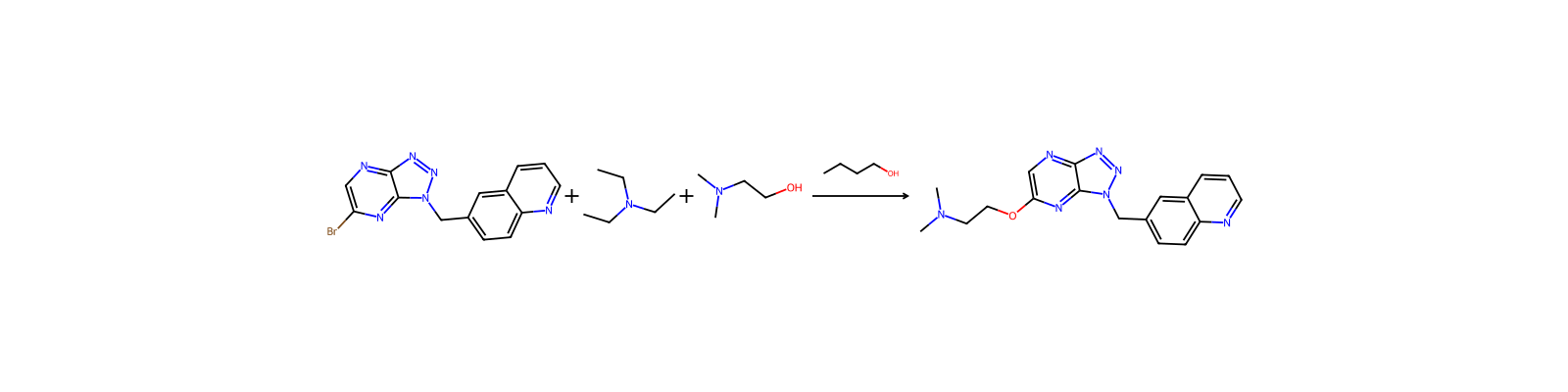
HRID 3159As reactant

108-01-0CN(C)CCOUEEJHVSXFDXPFK-UHFFFAOYSA-N2-dimethylaminoethanol appears as a clear colorless liquid with a fishlike odor. Flash point 105 °F. Less dense than water. Vapors heavier than air. Toxic oxides of nitrogen produced during combustion. Used to make other chemicals.
108-01-0DTXSID2020505CHEMBL1135、CHEMBL122588CHEBI:271436Nitrogen Compounds -> Ethanolamines
Corrosives
Pharmaceuticals -> Listed in ZINC15
Pharmaceuticals
log Kow = -0.55 at 23 °C
-0.55
Amine odor
Fishy odor
0.887 at 68 °F (USCG, 1999) - Less dense than water; will float
0.8866 g/cu cm at 20 °C
Bulk density wt/gal at 20 °C: 7.4 lb/gal
Relative density (water = 1): 0.89
0.8866 @ 20°C
Colorless liquid
Very faint yellow liquid
greater than or equal to 100 mg/mL at 73 °F (NTP, 1992)
Miscible with water
Miscible with alcohol, ether
Miscible with acetone, benzene
1000 mg/mL
Solubility in water: miscible
105 °F (NTP, 1992)
105 °F
105 °F open cup
38 °C c.c.
Safety information is for reference only and does not replace the supplier’s Safety Data Sheet (SDS), applicable regulations, or professional assessment.
Danger
H226: Flammable liquid and vapor [Warning Flammable liquids]
P210, P233, P240, P241, P242, P243, P260, P261, P264, P270, P271, P280, P301+P317, P301+P330+P331, P302+P352, P302+P361+P354, P303+P361+P353, P304+P340, P305+P354+P338, P316, P317, P321, P330, P362+P364, P363, P370+P378, P403+P235, P405, and P501 (click each P-code to see the statement)
This chemical does not meet GHS hazard criteria for 0.2% (2 of 1289) of reports.
Danger
H226 (99.8%): Flammable liquid and vapor [Warning Flammable liquids]
Chemical: Ethanol, 2-(dimethylamino)-
Regulation (EC) No 1831/2003 (amended)
Ethanol, 2-(dimethylamino)- is listed on the EPA's Chemical Data Reporting (CDR) system. Manufacturers and importers of Ethanol, 2-(dimethylamino)- are required to report information about their production and use of this chemical to the EPA under the Toxic Substances Control Act (TSCA). (40 eCFR Part 711)
REACH registered substance: 2-dimethylaminoethanol (EC: 203-542-8)
Dimethylaminoethanol: Does not have an individual approval but may be used under an appropriate group standard
The New Jersey Worker and Community Right to Know Act requires public and private employers to provide information about hazardous substances at their workplaces. (N.J.S.A. 34:5A-1 et. seq.)
Special Hazards of Combustion Products: May contain toxic gases including ammonia (incomplete combustion) and NOx.
· Flammable/combustible material.
Flammable. Gives off irritating or toxic fumes (or gases) in a fire. Above 38 °C explosive vapour/air mixtures may be formed.
Inhalation of the vapor or mist can cause irritation to the upper respiratory tract. Asthmatic symptoms have been reported. Extremely irritating; may cause permanent eye injury. Corrosive; will cause severe skin damage with burns and blistering. Ingestion may cause damage to the mucous membranes and gastrointestinal tract. (USCG, 1999)
· May cause toxic effects if inhaled or ingested.
2-DIMETHYLAMINOETHANOL is an organic compound with both amine and alcohol substituents. Amines are chemical bases. They neutralize acids to form salts plus water. These acid-base reactions are exothermic. The amount of heat that is evolved per mole of amine in a neutralization is largely independent of the strength of the amine as a base. Amines may be incompatible with isocyanates, halogenated organics, peroxides, phenols (acidic), epoxides, anhydrides, and acid halides. Flammable gaseous hydrogen is generated by amines in combination with strong reducing agents, such as hydrides. This compound may react vigorously with oxidizing materials. (NTP, 1992)
Excerpt from ERG Guide 132 [Flammable Liquids - Corrosive]:
Use water spray, alcohol-resistant foam, powder, carbon dioxide. In case of fire: keep drums, etc., cool by spraying with water.
Fresh air, rest. Half-upright position. Refer for medical attention.
First rinse with plenty of water for at least 15 minutes, then remove contaminated clothes and rinse again. Refer for medical attention .
First rinse with plenty of water for several minutes (remove contact lenses if easily possible), then refer for medical attention.
Rinse mouth. Do NOT induce vomiting. Give one or two glasses of water to drink. Rest. Refer for medical attention .
· CALL 911. Then call emergency response telephone number on shipping paper. If shipping paper not available or no answer, refer to appropriate telephone number listed on the inside back cover.
· ELIMINATE all ignition sources (no smoking, flares, sparks or flames) from immediate area.
EYES: First check the victim for contact lenses and remove if present. Flush victim's eyes with water or normal saline solution for 20 to 30 minutes while simultaneously calling a hospital or poison control center. Do not put any ointments, oils, or medication in the victim's eyes without specific instructions from a physician. IMMEDIATELY transport the victim after flushing eyes to a hospital even if no symptoms (such as redness or irritation) develop.
General First Aid:
Water may be ineffective. Alcohol foam.
To fight fire, use alcohol foam, foam, CO2, dry chemical.
Wear self-contained breathing apparatus for firefighting if necessary.
Use water spray, alcohol-resistant foam, dry chemical or carbon dioxide.
Use water spray to cool unopened containers.
Do not store near acids.
Keep container tightly closed in a dry and well-ventilated place. Containers which are opened must be carefully resealed and kept upright to prevent leakage. Handle and store under inert gas. Storage class (TRGS 510): Flammable liquids
Contain spillage, and then collect with an electrically protected vacuum cleaner or by wet-brushing and place in container for disposal according to local regulations.
Prevent further leakage or spillage if safe to do so. Do not let product enter drains. Discharge into the environment must be avoided.
ACCIDENTAL RELEASE MEASURES /Personal precautions, protective equipment and emergency procedures/ Wear respiratory protection. Avoid breathing vapors, mist or gas. Ensure adequate ventilation. Remove all sources of ignition. Evacuate personnel to safe areas. Beware of vapors accumulating to form explosive concentrations. Vapors can accumulate in low areas.
SRP: Recycle any unused portion of the material for its approved use or return it to the manufacturer or supplier. Ultimate disposal of the chemical must consider: the material's impact on air quality; potential migration in air, soil or water; effects on animal, aquatic and plant life; and conformance with environmental and public health regulations. If it is possible or reasonable use an alternative chemical product with less inherent propensity for occupational harm/injury/toxicity or environmental contamination.
/Product/ Burn in a chemical incinerator equipped with an afterburner and scrubber but exert extra care in igniting as this material is highly flammable. Offer surplus and non-recyclable solutions to a licensed disposal company. Contact a licensed professional waste disposal service to dispose of this material. /Contaminated packaging/ Dispose of as unused product.
Personal protection: gas-tight chemical protection suit including self-contained breathing apparatus. Collect leaking and spilled liquid in sealable non-metallic containers as far as possible. Absorb remaining liquid in sand or inert absorbent. Then store and dispose of according to local regulations.
Monomethylethanolamine (1 mM) and dimethylethanolamine (1 mM) stimulated DNA synthesis 10- and 15-fold, respectively, in NIH 3T3 fibroblasts. In addition, simultaneous treatments with insulin (500 nM) and methylated ethanolamine analogues (1 mM or less) resulted in synergistic activation of DNA synthesis. The order of mitogenic potency of ethanolamine analogues was dimethylethanolamine > monomethylethanolamine > ethanolamine. Choline (1-5 mM) alone had no effect on DNA synthesis, but it increased the combined effects of lower concentrations of ethanolamine analogues and insulin. The synergistic effects of ethanolamine analogues, choline and insulin were considerably (1.7- to 1.9-fold) enhanced by GF 109203X (3 uM), a specific inhibitor of protein kinase C. The results suggest that ethanolamine analogues enhance insulin-induced DNA synthesis by a mechanism which is inhibited by the protein kinase C system.
Dimethylaminoethanol (DMAE) was administered acutely to rats subsequently injected with spomorphine. A dose of 80 mg of DMAE had no effect on the severity of apomorphine-induced stereotypy. However, 160 mg of DMAE significantly diminished the severity of apomorphine-induced stereotypy. This dose of DMAE did not significantly alter spontaneous locomotor activity. DMAE did not reduced apomorphine-induced stereotypy in animals previously exposed to haloperidol and presumed to have postsynaptic dopamine receptor supersensitivity. These results with DMAE are contrasted with the effects of choline chloride, and suggest that choline chloride may be more effective than DMAE at augmenting striatal cholinergic activity.
Dithiocarb and (+)-cyanidanol-3-prevented paracetamol-induced liver injury in rats in vivo. Both, as well as two other antihepatotoxic agents, deanol and DMSO, inhibited covalent binding of [(3)H]-paracetamol to rat liver microsomal proteins in vitro. Dithiocarb and (+)-cyanidanol-3 were the most effective inhibitors. The concentrations of the antidotes yielding 50% inhibition (I50) valued 1.8 x 10(-5) M for dithiocarb and 2.1 x 10(-5) M for (+)-cyanidanol-3.
2-Dimethylaminoethanol (DMAE; 0.1-0.5 g/kg) significantly reduced the paracetamol-induced increments of serum-enzyme activities (GOT, GPT, SDH) in rats and mice. This hepatoprotective effect of DMAE depended on the applied dose in rats, but there was no complete protection following the highest dose. Paracetamol-induced depletion of hepatic glutathione (GSH) was not influenced by the simultaneous administration of DMAE in rats and mice. Metabolic disposition of paracetamol in the urine of rats showed an enhanced elimination of free paracetamol and the glucuronide in the DMAE-treated group, whereas the mercapturate excretion remained unchanged. Diminished p-hydroxylation of aniline in a 9000Xg supernatant of rat and mouse liver homogenates in the presence of DMAE indicated an inhibition of microsomal mixed-function oxidase activity, which is also involved in the metabolic activation of paracetamol.
For more Interactions (Complete) data for 2-DIMETHYLAMINOETHANOL (12 total), please visit the HSDB record page.
TERRESTRIAL FATE: Based on a classification scheme(1), an estimated Koc value of 1(SRC), determined from a structure estimation method(2), indicates that 2-dimethylaminoethanol is expected to have very high mobility in soil(SRC). The pKa of 2-dimethylaminoethanol is 9.3(3). At pH 8.2, 20% will be the free amine. Thus, this compound will exist almost entirely in the cation form in the environment and cations generally adsorb to organic carbon and clay more strongly than their neutral counterparts(4). As a result, 2-dimethylaminoethanol may have greater adsorption and less mobility than its estimated Koc value indicates. Volatilization of 2-dimethylaminoethanol from moist soil surfaces is not expected to be an important fate process(SRC) given an estimated Henry's Law constant of 1.8X10⁻⁹ atm-cu m/mole(SRC), using a fragment constant estimation method(2). 2-Dimethylaminoethanol may volatilize from dry soil surfaces(SRC) based upon a vapor pressure of 3.18 mm Hg at 25 °C(5). A 60.5% of theoretical BOD in two weeks using activated sludge in the Japanese MITI test indicates that 2-dimethylaminoethanol is readily biodegradable(6) and suggests that biodegradation is an important environmental fate process in soil(SRC). Results of another screening test found that 2-dimethylaminoethanol biodegrades readily(7).
AQUATIC FATE: Based on a classification scheme(1), an estimated Koc value of 1(SRC), determined from a structure estimation method(2), indicates that 2-dimethylaminoethanol is not expected to adsorb to suspended solids and sediment(SRC). Volatilization from water surfaces is not expected(3) based upon an estimated Henry's Law constant of 1.8X10⁻⁹ atm-cu m/mole(SRC), developed using a fragment constant estimation method(2). According to a classification scheme(4), an estimated BCF of 3(SRC), from its log Kow of -0.55(5) and a regression-derived equation(2), suggests the potential for bioconcentration in aquatic organisms is low(SRC). A 60.5% of theoretical BOD in two weeks using activated sludge in the Japanese MITI test indicates that 2-dimethylaminoethanol is readily biodegradable(6) and suggests that biodegradation is an important environmental fate process in soil(SRC). Results of another screening test found that 2-dimethylaminoethanol biodegrades readily(7). 2-Dimethylaminoethanol is not expected to undergo hydrolysis in the environment due to the lack of functional groups that hydrolyze under environmental conditions(3).
ATMOSPHERIC FATE: According to a model of gas/particle partitioning of semivolatile organic compounds in the atmosphere(1), 2-dimethylaminoethanol, which has a vapor pressure of 3.18 mm Hg at 25 °C(2), is expected to exist solely as a vapor in the ambient atmosphere. Vapor-phase 2-dimethylaminoethanol is degraded in the atmosphere by reaction with photochemically-produced hydroxyl radicals(SRC); the half-life for this reaction in air is estimated to be 4.3 hours(SRC), calculated from its rate constant of 9.0X10⁻¹¹ cu cm/molecule-sec at 25 °C(3). Vapor-phase 2-dimethylaminoethanol is also degraded in the atmosphere by reaction with ozone(SRC); the half-life for this reaction in air is estimated to be 1.7 days(SRC), calculated from its rate constant of 6.71X10⁻¹⁸ cu cm/molecule-sec at 25 °C(3).
IDENTIFICATION AND USE: 2-Dimethylaminoethanol (DMAE) is a colorless liquid. DMAE has been used as an ingredient in skin care, and in cognitive function- and mood-enhancing products. Deaner(DMAE p-acetamidobenzoate) was a U.S. prescription drug for more than 20 years until 1983 when it was withdrawn from the market. It was used to treat children with learning and behavior problems. A large number of dietary supplements contain DMAE. The predominant form, when specified, is DMAE bitartrate. DMAE has applications in the chemical and pharmaceutical industries. HUMAN EXPOSURE AND TOXICITY: Severe respiratory symptoms were observed in a single painter exposed to spray paint containing DMAE. Wheal and flare responses occurred after exposure of human volunteers to DMAE but it was interpreted as an irritant. DMAE tartrate administered orally to humans produced mild mental stimulation. At 20 mg/day, there was a gradual increase in muscle tone and perhaps an increased frequency of convulsions in susceptible individuals. Larger doses produced insomnia, muscle tenseness, and spontaneous muscle twitches. Serious cholinergic side effects were reported in a 37-yr-old woman with tardive dyskinesia who had been taking deanol. However, a single 2500 mg dose taken in a suicide attempt had no adverse effects. ANIMAL STUDIES: Acute clinical signs of rat exposure to DMAE vapor included nasal and ocular irritation, respiratory distress, and body weight loss. In the 13-week study, rats were exposed to 0, 8, 24, or 76 ppm DMAE for 6 hr/day, 5 days/week for 13 weeks. The principal exposure-related changes were transient corneal opacity in the 24 and 76 ppm groups; decreased body weight gain for the 76 ppm group; and histopathological lesions of the respiratory and olfactory epithelium of the anterior nasal cavity of the 76 ppm group and of the eye of several 76 ppm group females. DMAE did not induce any neoplasms in mice. In a developmental study in rats there were no effects of DMAE treatment on any gestational parameters, including pre- and post-implantation loss or sex ratio. Fetal body weights per litter were statistically significantly increased at 100 ppm relative to controls. There were no increases in the incidences of total malformations by category (external, visceral or skeletal) or individually. The incidence of six skeletal variations out of 120 noted differed in exposed groups relative to that of control. Four of these variations were decreases in incidence; only one fetal variation, the split (bipartite) cervical centrum, was elevated at 100 ppm relative to controls. DMAE was not genotoxic using the Salmonella/microsome reverse gene mutation test, the CHO/HGPRT forward gene mutation test, a sister chromatid exchange test in cultured CHO cells, and an in vivo peripheral blood micronucleus test in mice.
Cough. Sore throat. Burning sensation. Laboured breathing. Symptoms may be delayed.
Redness. Pain. Skin burns.
Redness. Blurred vision. Pain. Severe burns.
Abdominal pain. Nausea. Vomiting. Shock or collapse. Burning sensation.
EPA has released the first beta version (version 0.5) of the Interactive Chemical Safety for Sustainability (iCSS) Dashboard. The beta version of the iCSS Dashboard provides an interactive tool to explore rapid, automated (or in vitro high-throughput) chemical screening data generated by the Toxicity Forecaster (ToxCast) project and the federal Toxicity Testing in the 21st century (Tox21) collaboration. /The title compound was tested by ToxCast and/or Tox21 assays; Click on the "Chemical Explorer" button on the tool bar to see the data./[USEPA; ICSS Dashboard Application; Available from, as of December 8, 2014: http://actor.epa.gov/dashboard/]
Using a structure estimation method based on molecular connectivity indices(1), the Koc of 2-dimethylaminoethanol can be estimated to be 1(SRC). According to a classification scheme(2), this estimated Koc value suggests that 2-dimethylaminoethanol is expected to have very high mobility in soil. The pKa of 2-dimethylaminoethanol is 9.3(3). At pH 8.2, 20% will be the free amine. Thus, this compound will exist almost entirely in the cation form in the environment and cations generally adsorb to organic carbon and clay more strongly than their neutral counterparts(4). As a result, 2-dimethylaminoethanol may have greater adsorption and less mobility than its estimated Koc value indicates.
/HUMAN EXPOSURE STUDIES/ Adverse effects were observed in one occupational study (manufacture of polyurethane foam insulation for refrigerators) and included disorders of the upper respiratory tract and nervous system, along with significant changes in the immune status. Workers were exposed to a mixture of DMAE, ethylenediamine, propylene oxide, and 4,4-methylenediphenyl diisocyanate. Severe respiratory symptoms were observed in a single painter exposed to spray paint containing DMAE. Wheal and flare responses occurred after exposure of human volunteers to DMAE (undiluted, and 1:10 and 1:100 dilutions in saline) but were interpreted as an irritant response. DMAE failed to meet the current criteria for classification as a respiratory sensitizer.[NTP; Dimethylethanolamine (DMAE)
/HUMAN EXPOSURE STUDIES/ Beyond subjective assessments, the effect of skin tensors is difficult to assess. The present 2-phase randomized double-blind split face study was designed to compare the effect of a gel containing 3% 2-dimethylaminoethanol (deanol, DMAE) with the same formulation without DMAE. In a first pilot study, sensorial assessments and measures of the skin distension under suction were performed in eight volunteers. In a second study conducted in 30 volunteers, shear wave propagation was measured. Large interindividual variations precluded any significant finding in the first study. The DMAE formulation showed, however, a significant effect characterized by increased shear wave velocity in the direction where the mechanical anisotropy of skin showed looseness.The DMAE formulation under investigation increased skin firmness.
/HUMAN EXPOSURE STUDIES/ Skincare formulations for the improvement of aging skin are increasingly important consumer products. Here, we review available data on one such agent - 2-dimethylaminoethanol (DMAE) or deanol - that has recently been evaluated in a placebo-controlled trial. DMAE is an analog of the B vitamin choline and is a precursor of acetylcholine. Although the role of acetylcholine as a neurotransmitter is well known, growing evidence points to acetylcholine as a ubiquitous cytokine-like molecule that regulates basic cellular processes such as proliferation, differentiation, locomotion, and secretion in a paracrine and autocrine fashion. Indeed, this modulatory role may contribute to the cutaneous activity of DMAE. In a randomized clinical study, 3% DMAE facial gel applied daily for 16 weeks has been shown to be safe and efficacious (p < 0.05) in the mitigation of forehead lines and periorbital fine wrinkles, and in improving lip shape and fullness and the overall appearance of aging skin. These effects did not regress during a 2-week cessation of application. Beneficial trends (p > 0.05 but </= 0.1) were noted in the appearance of coarse wrinkles, under-eye dark circles, nasolabial folds, sagging neck skin, and neck firmness. Application was found to be well tolerated, with no differences in the incidence of erythema, peeling, dryness, itching, burning, or stinging between the DMAE and placebo groups. An open-label extension of the trial showed that the long-term application of DMAE gel for up to 1 year was associated with a good safety profile. The acute skin-firming effects of DMAE have been confirmed by quantitative measures of cutaneous tensile strength.
/HUMAN EXPOSURE STUDIES/ Seventy-four children referred for problems with learning, including many with hyperactivity, were screened for neurological or psychiatric illness, then given deanol, methylphenidate, or placebo in a double-blind fashion for 3 months. Maintenance dose for methylphenidate was 40 mg daily; for deanol, 500 mg. Behavior rating forms, reaction time, and a series of standard psychometric tests were given before and after treatment. Both drugs showed significant improvement on a number of tests; the pattern and degree of change differed slightly for the 2. In this paradigm, deanol thus appeared to improve performance in children with learning and behavior disorders. The mechanism of action remains speculative; proof that deanol increases acetylcholine is scanty, and there is a theoretical basis for actually assuming an anticholinergic effect.
For more Human Toxicity Excerpts (Complete) data for 2-DIMETHYLAMINOETHANOL (9 total), please visit the HSDB record page.
2-Dimethylaminoethanol is a naturally occurring precursor of choline; it is found in high concentrations in salmon, sardines, and anchovies(1). Individuals may ingest small quantities of 2-dimethylaminoethanol through the consumption of salmon roe, mollusks (squid), and fish(2).
N - Nervous system
QN - Nervous system
In male Wistar rats, DMAE was oxidized rapidly to the N-oxide of DMAE, representing the primary urinary metabolite. However, only 13.5 % of the administered dose was eliminated by the 24 hour time point, suggesting that most of the DMAE was routed toward phospholipid biosynthetic pathways. In humans, 33% of an injected 1 g (10 mmol) dose of DMAE was excreted unchanged. It was suggested that the remaining dose might have been demethylated to ethanolamine directed toward normal metabolic pathways.[NTP; Dimethylethanolamine (DMAE)
Dimethylaminoethanol /prc: postulated to/ undergo endogenous methylation. /From table/
Specific methods utilizing combined gas chromatography mass spectrometry were used to measure the metabolism of [(2)H6]deanol and its effects on acetylcholine concentration in vitro and in vivo. In vitro [(2)H6]deanol was rapidly taken up by rat brain synaptosomes, but was neither methylated nor acetylated. [(2)H6]Deanol was a weak competitive inhibitor of the high affinity transport of [(2)H4]choline, thus reducing the synthesis of [(2)H4]acetylcholine. In vivo [(2)H6]deanol was present in the brain after i.p. or p.o. administration, but was not methylated or acetylated. Treatment of rats with [(2)H6]deanol significantly increased the concentration of choline in the plasma and brain but did not alter the concentration of acetylcholine in the brain. Treatment of rats with atropine (to stimulate acetylcholine turnover) or with hemicholinium-3 (to inhibit the high affinity transport of choline) did not reveal any effect of [(2)H6]deanol on acetylcholine synthesis in vivo. However, since [(2)H6]deanol did increase brain choline, it may prove therapeutically useful when the production of choline is reduced or when the utilization of choline for the synthesis of acetylcholine is impaired.
Choline (N,N,N-trimethylethanolamine), which is widely distributed in membrane lipids and is a component of sediment biota, has been shown to be utilized anaerobically by mixed prokaryote cultures to produce methane but not by pure cultures of methanogens. Here, we show that five recently isolated Methanococcoides strains from a range of sediments (Aarhus Bay, Denmark; Severn Estuary mudflats at Portishead, United Kingdom; Darwin Mud Volcano, Gulf of Cadiz; Napoli mud volcano, eastern Mediterranean) can directly utilize choline for methanogenesis producing ethanolamine, which is not further metabolized. Di- and monomethylethanolamine are metabolic intermediates that temporarily accumulate. Consistent with this, dimethylethanolamine was shown to be another new growth substrate, but monomethylethanolamine was not. The specific methanogen inhibitor 2-bromoethanesulfonate (BES) inhibited methane production from choline. When choline and trimethylamine are provided together, diauxic growth occurs, with trimethylamine being utilized first, and then after a lag (about 7 days) choline is metabolized. Three type strains of Methanococcoides (M. methylutens, M. burtonii, and M. alaskense), in contrast, did not utilize choline. However, two of them (M. methylutens and M. burtonii) did metabolize dimethylethanolamine. These results extend the known substrates that can be directly utilized by some methanogens, giving them the advantage that they would not be reliant on bacterial syntrophs for their substrate supply.
For more Metabolism/Metabolites (Complete) data for 2-DIMETHYLAMINOETHANOL (8 total), please visit the HSDB record page.
DMAE
Nitrogen Binding Agent [EPC]; Non-Standardized Chemical Allergen [EPC]; Allergens [CS]; Cell-mediated Immunity [PE]; Standardized Chemical Allergen [EPC]; Glycerol [CS]; Ammonium Ion Binding Activity [MoA]; Increased Histamine Release [PE]; Increased IgG Production [PE]
Mood-stimulating drugs used primarily in the treatment of affective disorders and related conditions. Several MONOAMINE OXIDASE INHIBITORS are useful as antidepressants apparently as a long-term consequence of their modulation of catecholamine levels. The tricyclic compounds useful as antidepressive agents (ANTIDEPRESSIVE AGENTS, TRICYCLIC) also appear to act through brain catecholamine systems. A third group (ANTIDEPRESSIVE AGENTS, SECOND-GENERATION) is a diverse group of drugs including some that act specifically on serotonergic systems.
Drugs used in the treatment of movement disorders. Most of these act centrally on dopaminergic or cholinergic systems. Among the most important clinically are those used for the treatment of Parkinson disease (ANTIPARKINSON AGENTS) and those for the tardive dyskinesias.
Daily oral exposures (deanol acetamidobenzoate, DMAE, or Deaner) of chinchilla rabbits or humans produced measurable plasma and cerebrospinal concentrations of the parent compound. The drugs were cleared from the plasma by 36 hours post-treatment.[NTP; Dimethylethanolamine (DMAE)
Specific methods utilizing combined gas chromatography mass spectrometry were used to measure the metabolism of [(2)H6]deanol and its effects on acetylcholine concentration in vitro and in vivo. In vitro [(2)H6]deanol was rapidly taken up by rat brain synaptosomes, but was neither methylated nor acetylated. [(2)H6]Deanol was a weak competitive inhibitor of the high affinity transport of [(2)H4]choline, thus reducing the synthesis of [(2)H4]acetylcholine. In vivo [(2)H6]deanol was present in the brain after i.p. or p.o. administration, but was not methylated or acetylated. Treatment of rats with [(2)H6]deanol significantly increased the concentration of choline in the plasma and brain but did not alter the concentration of acetylcholine in the brain. Treatment of rats with atropine (to stimulate acetylcholine turnover) or with hemicholinium-3 (to inhibit the high affinity transport of choline) did not reveal any effect of [(2)H6]deanol on acetylcholine synthesis in vivo. However, since [(2)H6]deanol did increase brain choline, it may prove therapeutically useful when the production of choline is reduced or when the utilization of choline for the synthesis of acetylcholine is impaired.
DMAE is absorbed and rapidly transported to the liver where much of it is metabolized. Approximately 280 nmol (25.2 ug) DMAE/gram plasma was observed in male mice about ten minutes after receiving 300 mg (3.30 mmol) DMAE/kg, intraperitoneally. Approximately 2.41, 1.30, and 0.20% of an administered dose of 30 mg/kg (0.13 mmol/kg) (with 100 u Ci) of (14)Cyprodenate was found in the liver, brain, and plasma, respectively, five minutes after intravenous dosing in male rats.[NTP; Dimethylethanolamine (DMAE)
Used as a curing agent for polyurethanes and epoxy resins; used as a chemical intermediate for pharmaceuticals, dyes, corrosion inhibitors, and emulsifiers; also used as an additive to boiler water, paint removers, and amino resins; [HSDB] Has been used therapeutically as a CNS stimulant; [Merck Index # 2843]
Painting (Pigments, Binders, and Biocides) [Category: Paint]
CHEM INT FOR ANTIHISTAMINES AND LOCAL ANESTHETICS; CATALYST FOR CURING EPOXY RESINS AND POLYURETHANES; PH CONTROL AGENT FOR BOILER WATER TREATMENT
Solvent and ligand in organic synthesis; accelerator in epoxy resin formulations. As corrosion inhibitor in steel-reinforced concrete. Salts as dietary supplement, tonic. In cosmetics as antiwrinkle and skin firming agent.
Intermediate in the synthesis of dyestuffs, textile auxiliaries, pharmaceuticals, and corrosion inhibitors; curing epoxy, amine, and polyamide resins; emulsifier in paints and coatings.
Used to scavenge hydrochloric acid which is released when methylene chloride decomposes after use as a paint or varnish remover
2023: 100,000,000 - <250,000,000 lb
(1972) 1.6X10+9 GRAMS
(1977) 3.2X10+9 GRAMS
(1985) less than 2.27X10+6 g
Ethanol, 2-(dimethylamino)- is listed as a High Production Volume (HPV) chemical (65FR81686). Chemicals listed as HPV were produced in or imported into the U.S. in >1 million pounds in 1990 and/or 1994. The HPV list is based on the 1990 Inventory Update Rule. (IUR) (40 CFR part 710 subpart B; 51FR21438).
For more U.S. Production (Complete) data for 2-DIMETHYLAMINOETHANOL (6 total), please visit the HSDB record page.
Industrially, N-alkylated ethanolamines are produced almost exclusively by batchwise or continuous reaction of primary, secondary, or tertiary amines with ethylene oxide. For safety reasons, ethylene oxide must be added to the amine, never vice versa. Depending on the product involved, reaction temperature varies from 50 to 170 °C and pressure from 0.2 to 4 MPa. Water accelerates the reaction. /N-alkylated ethanolamines/
Preparation from equimolar amounts of ethylene oxide and dimethylamine.
/TABLET FORM CONSISTS OF/ DEANOL ACETAMIDOBENZOATE /WHICH/ IS THE P-ACETAMIDOBENZOIC ACID SALT OF 2-(DIMETHYLAMINO)ETHANOL (DEANOL). /DEANOL ACETAMIDOBENZOATE/
Grades: Anhydrous and 70% aqueous soln.
Riker Laboratories' prescription drug Deaner (deanol p-acetamidobenzoate) was a U.S. prescription drug for more than 20 years until 1983 when it was withdrawn from the market.[NTP; Dimethylethanolamine (DMAE)
Wood Product Manufacturing
Ethanol, 2-(dimethylamino)-: ACTIVE