StartseiteMCPSkillsWorkbenchOpenChem
StartseiteWorkbenchBenachrichtigungenMein Bereich
llms.txt · skill.md · MCP-AnleitungDatenschutz · Nutzungsbedingungen · Supportv1.8.4
  1. Startseite
  2. /Verbindung

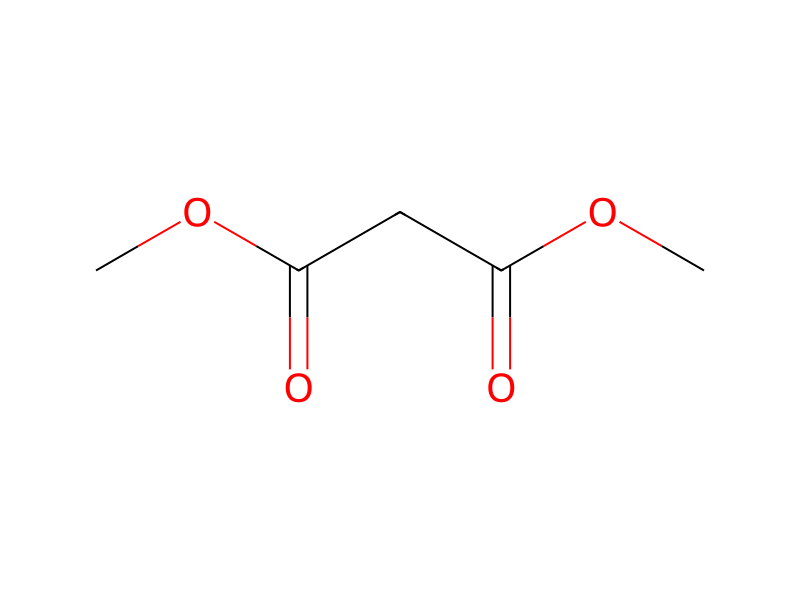
Dimethylmalonat

Dimethyl malonate

HCID 7943
Neue Reaktion
Drucken
GrundinformationenÜberblickNamen und BezeichnerEigenschaftenSicherheit und RegulatorischesChemie und IndustrieZugehörige ReaktionenNotizen zur Verbindung
TeilstruktursucheÄhnliche Strukturen suchen

Grundinformationen

CAS
108-59-8
Standard-SMILES
COC(=O)CC(=O)OC
InChIKey
BEPAFCGSDWSTEL-UHFFFAOYSA-N
Summenformel
C5H8O4
Durchschnittliche Molmasse
132,11 g/mol
Monoisotopische Masse
132,04225873

Überblick

dimethyl malonate has been reported in Astragalus mongholicus, Astragalus membranaceus, and Myrtus communis with data available.

Namen und Bezeichner

Bevorzugter Name
Dimethyl malonate
IUPAC
dimethyl propanedioate
Lokaler Name
Dimethylmalonat
Englischer Name
Dimethyl malonate
Summenformel
C5H8O4
Molmasse
132.11

Namen und Synonyme

Dimethyl malonate108-59-8Dimethyl propanedioateMethyl malonateMALONIC ACID, DIMETHYL ESTERDTXSID4029145EM8Y79998CDTXCID309145RefChem:134253203-597-8Malonic Acid Dimethyl Ester1,3-dimethyl propanedioate
Weitere Namen anzeigen
DMMdimthyl malonateDIMETHYL MALONATdimethyl1,3-propanedioateMINA-009Malonic acid dDimethyl malote
Dimethyl 1,3-propanedioateMFCD000084602,2-dimethylpropanedioateCH2(COOMe)2Malonic acid-dimethyl esterDimethyl ester of malonic acidPropanedioic acid, 1,3-dimethyl esterCAS-108-59-8

Datenbank-Bezeichner

CAS
108-59-8
PubChem CID
7943
DTXSID
DTXSID4029145
ChEMBL
CHEMBL1986332
UNII
EM8Y79998C
EC Number
203-597-8
Nikkaji
J1.499K

Eigenschaften

Berechnete Struktureigenschaften

XLogP
0
Polarare Oberfläche (TPSA)
52,6 Ų
H-Brücken-Donoren
0
H-Brücken-Akzeptoren
4
Frei drehbare Bindungen
4
Schwere Atome
9
Formalladung
0
Komplexität
104

Experimentelle und physikochemische Eigenschaften

Chemical ClassesOther Classes -> Esters, Other
SpringerMaterials PropertiesBoiling point
LogP-0.05
Flavoring AgentsEU Flavoring substances
Vapor Pressure14.7 [mmHg]
Physical Description · 2 Einträge

Liquid

Liquid; [Merck Index] Colorless liquid with an ester-like odor; [OECD SIDS: Malonic Acid Diesters - 2005]

Ionization Efficiency · 6 Einträge

Positive

1.58

2.7

Agilent XCT

Electrospray ionization

formic acid (5.3nM)

Physikochemische Eigenschaften

Schmelzpunkt
62 °C · −62 °C (−80 °F; 211 K)

Sicherheit und Regulatorisches

Sicherheitsangaben dienen nur zur Orientierung und ersetzen weder das Sicherheitsdatenblatt (SDB) des Lieferanten noch geltende Vorschriften oder eine fachliche Bewertung.

GHS-Klassifizierung

GHS Classification · 5 Einträge

This chemical does not meet GHS hazard criteria for 86.3% (1530 of 1773) of all reports.

Warning

H319 (13.6%): Causes serious eye irritation [Warning Serious eye damage/eye irritation]

P264+P265, P280, P305+P351+P338, and P337+P317 (click each P-code to see the statement)

Aggregated GHS information provided per 1773 reports by companies from 16 notifications to the ECHA C&L Inventory.

Gefahrenhinweise

Regulatory Information · 4 Einträge

Commission Regulation (EC) No 1565/2000 (Repealed by Com. Implementing Reg. (EU) No 872/2012)

Propanedioic acid, 1,3-dimethyl ester is listed on the EPA's Chemical Data Reporting (CDR) system. Manufacturers and importers of Propanedioic acid, 1,3-dimethyl ester are required to report information about their production and use of this chemical to the EPA under the Toxic Substances Control Act (TSCA). (40 eCFR Part 711)

REACH registered substance: Dimethyl malonate (EC: 203-597-8)

Dimethyl malonate: Does not have an individual approval but may be used under an appropriate group standard

Hazards Summary · 1 Eintrag

Causes no skin irritation and mild to moderate eye irritation in rabbits; No adverse effects observed in oral or dermal lethal-dose studies of rats (LD50s > 2,000 mg/kg); Reversible hepatocellular hypertrophy (considered indicative of liver metabolism rather than systemic toxicity) observed in an oral repeated-dose study of rats at the highest tested dose (1,000 mg/kg/day); No evidence of reproductive toxicity, developmental toxicity, or mutagenicity; [OECD SIDS: Malonic Acid Diesters - 2005] May cause irritation; [Alfa Aesar MSDS]

Hazard Classes and CategoriesEye Irrit. 2 (13.6%)

Chemie und Industrie

Verwendung und Herstellung

UsesNaturally occurring as a volatile in fruits such as pineapples, bananas, and blackberries; Used as an intermediate for agrochemicals, pharmaceuticals, industrial chemicals, and other compounds; [OECD SIDS: Malonic Acid Diesters - 2005]
U.S. Production2023: 1,000,000 - <5,000,000 lb
Industry UsesIntermediate
General Manufacturing Information · 2 Einträge

Pesticide, Fertilizer, and Other Agricultural Chemical Manufacturing

Propanedioic acid, 1,3-dimethyl ester: ACTIVE

Anwendungen · 2 Einträge

BeschreibungDimethyl malonate is a diester derivative of malonic acid. It is a common reagent for organic synthesis used, for example, as a precursor for barbituric acid. It is also used in the malonic ester synthesis. It can be synthesized from dimethoxymethane and carbon monoxide.

VerwendenDimethyl malonate is a reagent used in organic synthesis. It acts as a precursor for the synthesis of mono-substituted and di-substituted acetic acid, barbiturates, vitamin B1 and vitamin B6. It is used in the pharmaceutical industry to prepare pharmaceuticals like chloroquine and butazolidin. It is involved in the synthesis of diastereomeric pure thienylpyridines by reacting with 1,3-diphenylprop-2-enyl acetate.

Vor- und nachgelagerte Produkte

Vorgelagerte Rohstoffe

ChloressigsäureNatriumcyanidHydrogenchloridMethanol

Zugehörige Reaktionen

723
Reaktionsaufzeichnung erstellen
HRID 5564als Edukt
HRID 5565als Edukt
HRID 5623als Edukt
HRID 17583als Edukt
HRID 24315als Edukt
HRID 24322als Edukt
HRID 24441als Edukt
HRID 24462als Edukt
ZurückSeite 1 von 91

Notizen zur Verbindung

Auf dieser SeiteGrundinformationenÜberblickNamen und BezeichnerEigenschaftenSicherheit und RegulatorischesChemie und IndustrieZugehörige ReaktionenNotizen zur Verbindung
Siedepunkt
180 to · 180 to 181 °C (356 to 358 °F; 453 to 454 K)
Dichte
1.154 · 1.154
Dampfdichte
1 · >1 (vs air)
Dampfdruck
0.15 hPa · 0.15 hPa (20 °C)
Brechungsindex
1.41 · 1.41
Flammpunkt
91 °C · 91 °C
storage temp.
30 °C · Store below +30°C.
Löslichkeit
alcohol: miscible
pka
11.8 · 11.80±0.46(Predicted)
Aggregatzustand
liquid
Farbe
Colorless
Geruch (Odor)
fruity
Explosionsgrenze
1.3 · 1.3-17.4%(V)
Wasserlöslichkeit
negligible
Merck
14 · 14,6096
BRN
774261 · 774261
Henry's Law Constant
3.8 · 3.8×101 mol/(m3Pa) at 25℃, Katrib et al. (2003)
Dielectric constant
10.4 · 10.4(20℃)
Stabilität
Stable. Incompatible with strong oxidizing agents. Flammable.
InChI
1S/C5H8O4/c1-8-4(6)3-5(7)9-2/h3H2,1-2H3
InChIKey
BEPAFCGSDWSTEL-UHFFFAOYSA-N
SMILES
COC(=O)CC(=O)OC
LogP
-0.05 at · -0.05 at 20-25℃ and pH6.4
CAS Datenbank
108 · 108-59-8(CAS DataBase Reference)
NIST chemische Informationen
Propanedioic acid, dimethyl ester(108-59-8)
EPA chemische Informationen
Dimethyl malonate (108-59-8)

Sicherheitsdaten

wgk
1
tsca
TSCA listed
ridadr
NA1993
hs_code
2917190090
RTECS-Nr.
OO0950000
risk_code
36/37/38
Toxizität
LD50 orally in Rabbit: 5331 mg/kg LD50 dermal Rabbit > 5000 mg/kg
hazard_code
Xi
hazard_note
Irritant
safety_code
26-36
hazard_class
CBL
Speicherklasse
10 - Combustible liquids
Hazard Classifications
Eye Irrit. 2
Selbstentzündungstemperatur
440 °C
Cyanessigsäure
Dinatriummalonat
Schwefelsure
Natriumchloracetat
Natriumcarbonat

Nachgelagerte Produkte

DimethylethylmalonatMethyl 3-cyclopentenecarboxylate7-Hydroxy-2-oxo-2H-chromene-3-carboxylic acid methyl ester2-MethylpyrimidineDimethylmethoxymalonatPrimisulfuron-methyl5-Fluoro-2-oxindolePipemidinsure5-(2-Ethylthio propyl)-1,3-cyclohexanedione3-(4-Fluorophenyl)propionic acid8-Methoxy-2-oxo-2H-chromene-3-carboxylic acid amide7-Hydroxy-2-oxo-2H-chromene-3-carboxylic acid amide5-(Tetrahydro-2H-thiopyran-3-yl)-1,3-cyclohexanedione(1-Aminocyclopropyl)methanol1,1-Cyclopropanedicarboxylic acid dimethyl esterChlorimuron-ethylADSDimethylbrommalonat7-Hydroxy-2-oxo-2H-chromene-3-carboxylic acid methyl esterMalonic acid di-n-butyl ester3-Carbethoxy-4-hydroxycoumarin6-Chloro-2-oxo-2H-chromene-3-carboxylic acidtert-Butylmethylmalonat2-[1-(Ethoxyimino)butyl]-5-(2-ethylthiopropyl)-3-hydroxycyclohex-2-en-1-onDimethyl chloromalonate6-Chlorooxindole5-Mesityl-1,3-cyclohexanedione