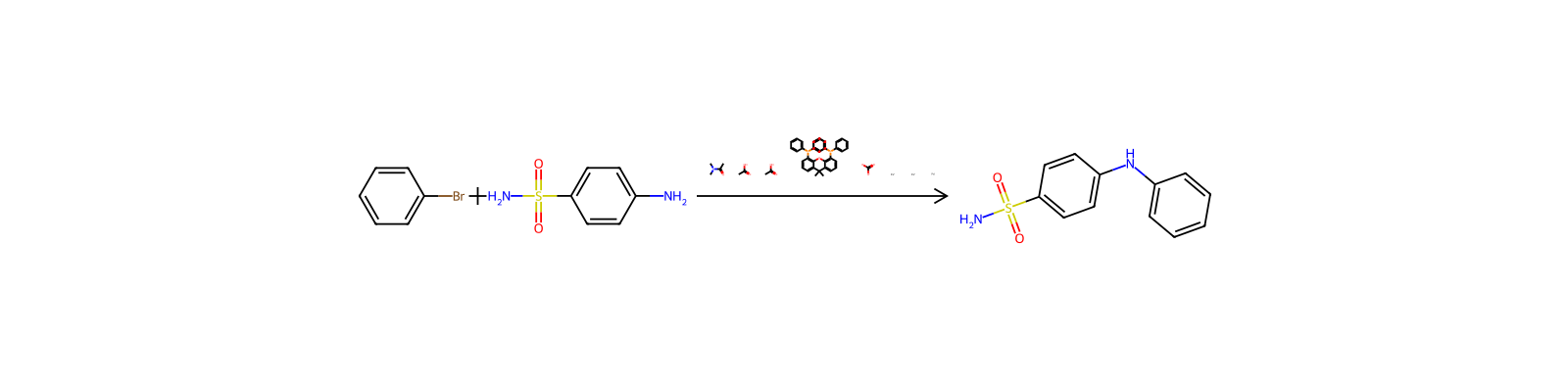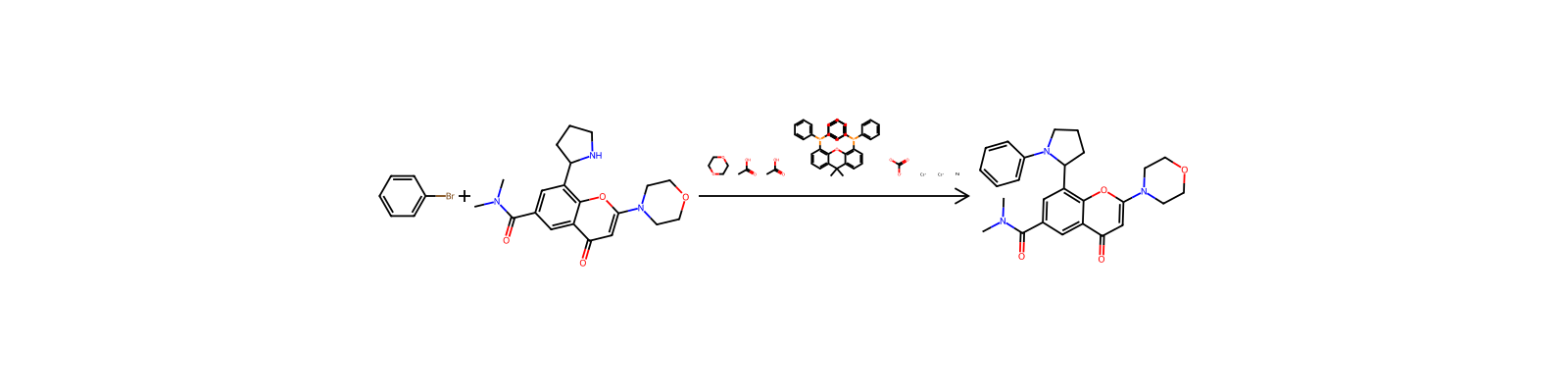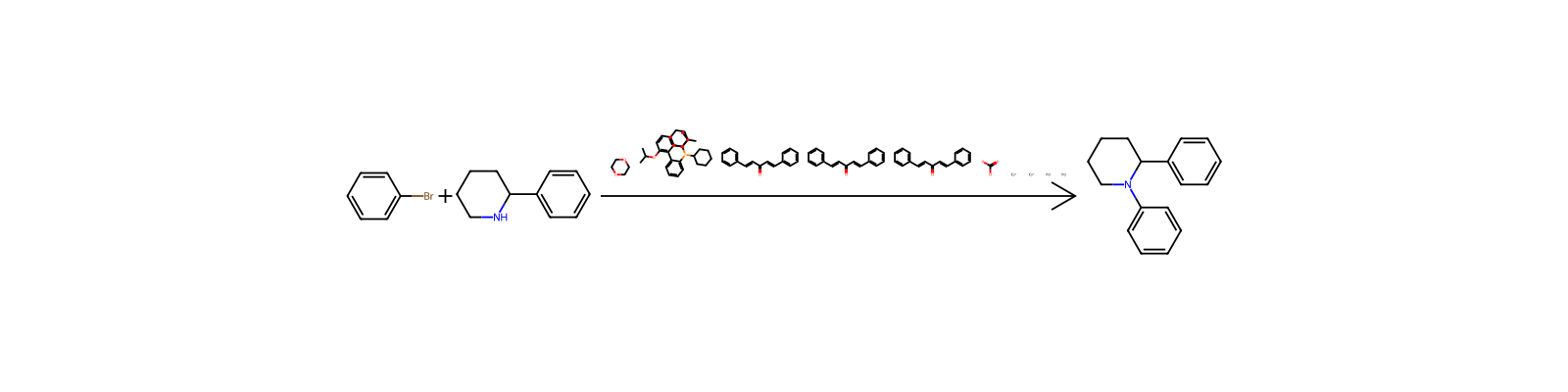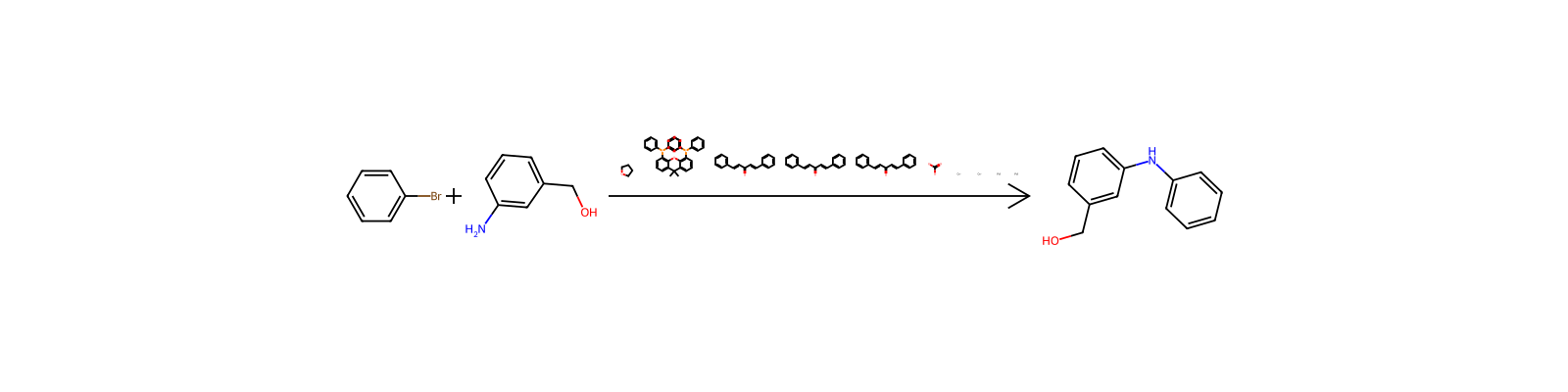
HRID 223作为反应物
Bromobenzene
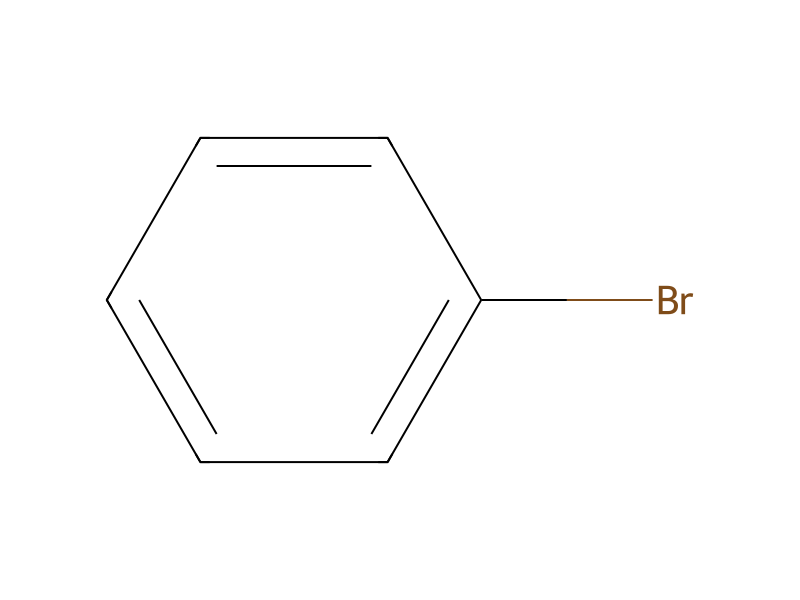
108-86-1Brc1ccccc1QARVLSVVCXYDNA-UHFFFAOYSA-NMobile clear colorless liquid with a pungent odor. Flash point 124 °F. Denser than water and insoluble in water. Hence sinks in water. Vapors are heavier than air. A skin irritant.
108-86-1、52753-63-6DTXSID5024637CHEMBL16068CHEBI:3179Flammable agents - 2nd degree
Volatile Organic Compound (VOC)
log Kow = 2.99
2.99
2.97
AROMATIC ODOR
Pungent odor
1.49 at 77 °F (USCG, 1999) - Denser than water; will sink
@ 10 °C/4 °C: 1.5083; @ 15 °C/4 °C: 1.5017; @ 20 °C/4 °C: 1.4952; @ 30 °C/4 °C: 1.4815; @ 71 °C/4 °C: 1.426; @ 0 °C/4 °C: 1.5220
Relative density (water = 1): 1.5
1.495 @ 20°C
MOBILE LIQUID
Heavy, mobile, colorless liquid
less than 1 mg/mL at 68.9 °F (NTP, 1992)
安全信息仅供参考,不能替代供应商安全技术说明书(SDS)、适用法规与专业评估。
Warning
H226: Flammable liquid and vapor [Warning Flammable liquids]
P210, P233, P240, P241, P242, P243, P264, P273, P280, P302+P352, P303+P361+P353, P321, P332+P317, P362+P364, P370+P378, P391, P403+P235, and P501 (click each P-code to see the statement)
Warning
H226 (100%): Flammable liquid and vapor [Warning Flammable liquids]
P210, P233, P240, P241, P242, P243, P264, P273, P280, P302+P352, P303+P361+P353, P321, P332+P317, P362+P364, P370+P378, P391, P403+P235, and P501 (click each P-code to see the statement)
Chemical: Benzene, bromo-
Benzene, bromo- is listed on the EPA's Chemical Data Reporting (CDR) system. Manufacturers and importers of Benzene, bromo- are required to report information about their production and use of this chemical to the EPA under the Toxic Substances Control Act (TSCA). (40 eCFR Part 711)
TP - indicates a substance that is the subject of a proposed TSCA section 4 test rule.
REACH registered substance: Bromobenzene (EC: 203-623-8)
Bromobenzene: Does not have an individual approval but may be used under an appropriate group standard
The New Jersey Worker and Community Right to Know Act requires public and private employers to provide information about hazardous substances at their workplaces. (N.J.S.A. 34:5A-1 et. seq.)
Special Hazards of Combustion Products: Irritating hydrogen bromide and other gases may be produced in fire. (USCG, 1999)
· HIGHLY FLAMMABLE: Will be easily ignited by heat, sparks or flames.
Flammable. Above 51 °C explosive vapour/air mixtures may be formed.
FOLLOWING BROMOBENZENE (1.0 MMOL) ADMIN TO RAT HEPATOCYTES, LIPID PEROXIDATION OCCURRED ONLY AT A LATER STAGE, COMPARED TO TREATMENT WITH CCL4, AND ONLY AFTER CELL DEATH. APPARENTLY LIPID PEROXIDATION DURING BROMOBENZENE TOXICITY WAS MERELY A CONSEQUENCE OF GSH DEPLETION AND CELL DEATH. APPARENTLY, ARYLATION OF CRITICAL CELLULAR NUCLEOPHILES IS MORE IMPORTANT THAN LIPID PEROXIDATION IN BROMOBENZENE HEPATOTOXICITY.
FRESHLY ISOLATED HEPATOCYTES FROM PHENOBARBITAL-TREATED RATS WERE INCUBATED IN THE PRESENCE OR ABSENCE OF EXTRACELLULAR CALCIUM WITH BROMOBENZENE. IN THE ABSENCE OF CALCIUM IT WAS FAR MORE TOXIC TO THE CELLS THAN IN ITS PRESENCE. THIS RESULT IS INCONSISTENT WITH THE HYPOTHESIS THAT AN INFLUX OF EXTRACELLULAR CALCIUM IS REQUIRED AS THE FINAL STEP IN TOXIC LIVER CELL INJURY.
A NOVEL METHOD IS DESCRIBED FOR MEASURING THE COVALENT BINDING OF BROMOBENZENE TO MACROMOLECULES IN RAT HEPATIC MICROSOMES OF HEPATOCYTES. COVALENT BINDING IN HEPATOCYTES SUGGESTS THAT THE BINDING OCCURS FIRST WITH MACROMOLECULES IN 20000-40000 DALTON RANGE.
IT APPEARS THAT IN BROMOBENZENE NECROSIS /OF LIVER/, THE TOXIC /SRP: BROMOBENZENE EPOXIDE METABOLITES, MAINLY THE 3,4-EPOXIDE, ARE/...DEGRADED THROUGH THE ACTION OF GLUTATHIONE TRANSFERASE & EPOXIDE HYDRATASE.
BROMOBENZENE IS METABOLIZED VIA THE HEPATIC MIXED-FUNCTION OXIDASE SYSTEM TO REACTIVE INTERMEDIATES 2,3- AND 3,4-BROMOBENZENE EPOXIDES. THESE METABOLITES PRESUMABLY BIND TO TISSUE MACROMOLECULES. THE SPECIFIC SITES OF MACROMOLECULAR PROTEINS WERE INVESTIGATED. THE 3,4-EPOXIDE IS MORE REACTIVE, BINDING COVALENTLY TO MICROSOMAL PROTEIN AT THE SITE OF ITS SYNTHESIS, WHEREAS BROMOBENZENE 2,3-EPOXIDE IS MORE STABLE, LEAVING THE MICROSOMAL PROTEIN COMPARTMENT AND BINDING COVALENTLY TO SOL PROTEIN, IE THE HEMOGLOBIN BETA CHAIN.
BROMOBENZENE YIELDS N-ACETYL-S-(4-BROMO-1,2-DIHYDRO-2-HYDROXYPHENYL)-L-CYSTEINE IN RABBIT & RAT; N-ACETYL-S-(P-BROMOPHENYL)-L-CYSTEINE IN DOG & IN MOUSE. /FROM TABLE/
BROMOBENZENE MAY BE METABOLIZED TO AN EPOXIDE...EXCRETED IN BILE, REABSORBED THROUGH ENTEROHEPATIC CIRCULATION, & METABOLIZED IN SEVERAL STEPS TO S-P-BROMOPHENYL MERCAPTURIC ACID, WHICH IS THEN EXCRETED IN URINE.
For more Metabolism/Metabolites (Complete) data for BROMOBENZENE (13 total), please visit the HSDB record page.
Bromobenzene is converted to either the 3,4-oxide derivative catalyzed primarily by phenobarbital-induced cytochrome isozymes (e.g., CYP 450 1A2, 2A6, 2B6, and 3A4), or the 2,3-oxide derivative catalyzed primarily by 3-methylcholanthrene and β-naphthoflavone-induced CYP isozymes (e.g., CYP 450 1A1, 1A2, and 1B1). This is followed by urinary excretion as premercapturic and mercapturic acids.
MISCIBLE WITH CHLOROFORM, BENZENE, PETROLEUM HYDROCARBONS; SOL IN ALCOHOL (10.4 G/100 G @ 25 °C), IN ETHER (71.3 G/100 G @ 25 °C); PRACTICALLY INOL IN WATER (0.045 G/100 G @ 30 °C)
SOL IN CARBON TETRACHLORIDE
Miscible with most organic solvents; insoluble in water
Very soluble in ethanol, ethyl ether, and benzene
Solubility in water = 410 mg/l @ 25 °C
123.8 °F (NTP, 1992)
Flash point equals 124 °F
51 °C (124 °F) (CLOSED CUP)
51 °C c.c.
313 °F at 760 mmHg (NTP, 1992)
boiling point equals 313 °F
156.2 °C @ 760 MM HG
Boiling point: 132.3 °C @ 400 mm Hg; 110.1 °C @ 200 mm Hg; 68.6 °C @ 40 mm Hg; 53.8 °C @ 20 mm Hg; 40.0 °C @ 10 mm Hg; 27.8 °C @ 5 mm Hg; 2.9 °C @ 1 mm Hg
156.2 °C
156.06 °C @760 [mm Hg]
无色油状液体。 不溶于水,溶于苯、醇、醚、氯苯等有机溶剂。
Contact with liquid causes irritation of eyes and mild irritation of skin. Ingestion causes mild irritation of mouth and stomach. (USCG, 1999)
· May cause toxic effects if inhaled or absorbed through skin.
Pursuant to section 8(d) of TSCA, EPA promulgated a model Health and Safety Data Reporting Rule. The section 8(d) model rule requires manufacturers, importers, and processors of listed chemical substances and mixtures to submit to EPA copies and lists of unpublished health and safety studies. Bromobenzene is included on this list.
Excerpt from ERG Guide 130 [Flammable Liquids (Water-Immiscible / Noxious)]:
Use water spray, powder, alcohol-resistant foam, carbon dioxide.
Fresh air, rest. Refer for medical attention.
Remove contaminated clothes. Rinse and then wash skin with water and soap. Refer for medical attention .
First rinse with plenty of water for several minutes (remove contact lenses if easily possible), then refer for medical attention.
Do NOT induce vomiting. Refer for medical attention .
· CALL 911. Then call emergency response telephone number on shipping paper. If shipping paper not available or no answer, refer to appropriate telephone number listed on the inside back cover.
· ELIMINATE all ignition sources (no smoking, flares, sparks or flames) from immediate area.
EYES: First check the victim for contact lenses and remove if present. Flush victim's eyes with water or normal saline solution for 20 to 30 minutes while simultaneously calling a hospital or poison control center. Do not put any ointments, oils, or medication in the victim's eyes without specific instructions from a physician. IMMEDIATELY transport the victim after flushing eyes to a hospital even if no symptoms (such as redness or irritation) develop.
General First Aid:
A MIXT OF PIPERIDINE, CYCLOHEXANONE, AND BROMOBENZENE WAS BURNED IN A HOUSE TO SIMULATE A FIRE IN A PHENCYCLIDINE LAB. BROMOBENZENE WAS DETECTED IN/ON THE DEBRIS HEADSPACE, SHOES WORN DURING THE INCIDENT, AND LIQ DISTILLATE FROM THE DEBRIS. IT WAS ALSO DETECTED IN A VACUUM GRAB SAMPLE AND ON VAPORS TRAPPED ON A CHARCOAL TUBE.
If material on fire or involved in fire: Do not extinguish fire unless flow can be stopped or safely confined. Use water in flooding quantities as fog. Solid streams of water may be ineffective. Cool all affected containers with flooding quantities of water. Apply water from as far a distance as possible. Use foam, dry chemical or carbon dioxide.
SRP: At the time of review, criteria for land treatment or burial (sanitary landfill) disposal practices are subject to significant revision. Prior to implementing land disposal of waste residue (including waste sludge), consult with environmental regulatory agencies for guidance on acceptable disposal practices.
Personal protection: filter respirator for organic gases and vapours adapted to the airborne concentration of the substance. Remove all ignition sources. Absorb remaining liquid in sand or inert absorbent. Then store and dispose of according to local regulations. Do NOT let this chemical enter the environment. Collect leaking and spilled liquid in sealable containers as far as possible.
If material not on fire and not involved in fire: Keep sparks, flames, and other sources of ignition away. Keep material out of water sources and sewers. Build dikes to contain flow as necessary. Use water spray to knock-down vapors.
Personnel protection: Avoid breathing vapors. Keep upwind. ... Do not handle broken packages unless wearing appropriate personal protective equipment. Wash away any material which may have contacted the body with copious amounts of water or soap and water.
EYES: irrigate opened eyes for several minutes under running water. INGESTION: do not induce vomiting. Rinse mouth with water (never give anything by mouth to an unconscious person). Seek immediate medical advice. SKIN: should be treated immediately by rinsing the affected parts in cold running water for at least 15 minutes, followed by thorough washing with soap and water. If necessary, the person should shower and change contaminated clothing and shoes, and then must seek medical attention. INHALATION: supply fresh air. If required provide artificial respiration.
...BROMOBENZENE...CENTRILOBULAR NECROSIS. ...COULD BE PREVENTED BY COADMINISTRATION OF CYSTEINE & METHIONINE... PIPERONYL BUTOXIDE /ALSO/ PREVENTED LIVER NECROSIS...
IN ISOLATED RAT HEPATOCYTES, METHIONINE PREVENTED BROMOBENZENE TOXICITY, PRESUMABLY BY STIMULATING GSH SYNTHESIS & THEREBY DECR AMT OF REACTIVE METABOLITES AVAILABLE. HEPATOCYTES FROM DIETHYLMALEATE-TREATED RATS WERE SENSITIVE TO BROMOBENZENE TOXICITY UNDER INCUBATION CONDITIONS.
PRIOR CONSUMPTION OF A DIET CONTAINING BUTYLATED HYDROXYANISOLE BY FEMALE MICE PREVENTED THE DEVELOPMENT OF OR MINIMIZED THE ACUTE LIVER DAMAGE CAUSED BY BROMOBENZENE.
CHOLESTYRAMINE-FED RATS AND PAIR-FED CONTROLS WERE ADMIN BROMOBENZENE IP FIVE DAYS LATER. CHOLESTYRAMINE PREVENTED LIVER NECROSIS.
For more Interactions (Complete) data for BROMOBENZENE (8 total), please visit the HSDB record page.
The toxic effects of bromobenzene following acute exposure have been extensively studied in animals. Liver, kidney, and lung have been identified as the target organs for this chemical by a variety of routes. It can cause liver and nervous system damage if inhaled, ingested, or absorbed through the skin (L1987).
TERRESTRIAL FATE: Based on a recommended classification scheme(1), an estimated Koc value of 268(SRC), determined from an experimental log Kow(2,SRC) and a recommended regression-derived equation(3), indicates that bromobenzene will have moderate mobility in soil(SRC). Volatilization of bromobenzene may be important from moist soil surfaces(SRC) given an experimental Henry's Law constant of 2.08X-3 atm-cu m/mole(4,SRC). Based on limited screening test data, bromobenzene is resistant to biodegradation; after a period of four weeks, 0% biodegradation occurred(5).
AQUATIC FATE: Based on a recommended classification scheme(1), an estimated Koc value of 268(SRC), determined from an experimental log Kow(2,SRC) and a recommended regression-derived equation(1), indicates that bromobenzene may adsorb to suspended solids and sediment in water(SRC). Bromobenzene will volatilize from water surfaces(1,SRC) based on an experimental Henry's Law constant of 2.08X10⁻³ atm-cu m/mole(3,SRC). Estimated half-lives for a model river and model lake are 4 hours and 5 days, respectively(1,SRC). According to a classification scheme(4), experimental BCF values in the range of 8.8 to 190(5,6,SRC) suggests that bioconcentration in aquatic organisms is low to moderately high(SRC). Based on limited screening test data, bromobenzene is moderately resistant to biodegradation; after a period of four weeks, 0% biodegradation occurred(5).
ATMOSPHERIC FATE: According to a model of gas/particle partitioning of semivolatile organic compounds in the atmosphere(1), bromobenzene, which has an experimental vapor pressure of 4.18 mm Hg at 25 °C(2,SRC), will exist solely as a vapor in the ambient atmosphere. Vapor-phase bromobenzene is degraded in the atmosphere by reaction with photochemically produced hydroxyl radicals(SRC); the half-life for this reaction in air is estimated to be about 21 days(SRC) from the experimentally measured hydroxyl radical rate constant of 7.7X10⁻¹³ at 25 °C(3). Particulate-phase bromobenzene may be physically removed from the air by wet and dry deposition(SRC).
The substance can be absorbed into the body by inhalation and by ingestion.
Oral (L626) ; inhalation (L626) ; dermal (L626)
The hepatotoxicity of bromobenzene is due to the production of reactive metabolites that modify or alkylated DNA, RNA and proteins. These reactive metabolites arise from the action of the CYP enzymes that are concentrated in the liver that lead to the production of cytotoxic compounds such as the 2,3- and 3,4-oxides of bromobenzene, the oxides of the bromophenols, 1,4-benzoquinone, and the radicals and quinones derived from redox cycling of the 2- and 4-bromocatechols. Similar reactive metabolites lead to renal damage, albeit at higher doses.
Dizziness.
Redness.
Nausea. Diarrhoea.
If inhaled, bromobenzene causes irritation to the respiratory tract. Symptoms may include coughing, shortness of breath. Affects central nervous system causing dizziness, incoordination and unconsciousness. May be absorbed into the bloodstream with symptoms similar to ingestion. If the compound is ingested it can cause abdominal pain, nausea, vomiting, diarrhea, headache, dullness, central nervous system effects and liver damage. Estimated lethal human dose is 50 - 500 mg/kg. Contact with skin or eyes causes irritation, redness and pain.
Pursuant to section 8(d) of TSCA, EPA promulgated a model Health and Safety Data Reporting Rule. The section 8(d) model rule requires manufacturers, importers, and processors of listed chemical substances and mixtures to submit to EPA copies and lists of unpublished health and safety studies. Bromobenzene is included on this list.
急性毒性口服- 大鼠 LD50: 2699 毫克/ 公斤; 口服- 小鼠 LD50: 2700 毫克/ 公斤
职业标准TWA 3 毫克/ 立方米; STEL 6 毫克/ 立方米
爆炸物危险特性与空气混合可爆
可燃性危险特性遇明火、高温、强氧化剂可燃; 燃烧产生有毒溴化物烟雾
储运特性包装完整、轻装轻放; 库房通风、远离明火、高温、与氧化剂分开存放
灭火剂泡沫、二氧化碳、干粉、砂土、雾状水
ABSORBED THROUGH LUNGS, GI TRACT & INTACT SKIN. EXCRETED AS CATECHOL DERIVATIVES BOTH FREE & CONJUGATED WITH SULFATE OR MERCAPTURIC ACID.
BROMOBENZENE MAY BE METAB TO AN EPOXIDE...EXCRETED IN BILE, REABSORBED THROUGH ENTEROHEPATIC CIRCULATION, & METAB IN SEVERAL STEPS TO S-(P-BROMOPHENYL)MERCAPTURIC ACID, WHICH IS THEN EXCRETED IN URINE.
This investigation was designed to determine whether biliary excretion of bromobenzene-glutathione conjugate can be used as an index of in vivo activation of bromobenzene. To test this hypothesis, the effect of chemicals known to alter the toxicity and biotransformation of bromobenzene (ie, cytochrome p450 inducers and inhibitors) on the biliary excretion of bromobenzene-glutathione was studied in rats. Bromobenzene-glutathione was the major bromobenzene metabolite in bile. A linear relationship was observed between the dosage of bromobenzene administered and bromobenzene-glutathione excreted into bile, up to a dosage of 250 umol/kg of bromobenzene. Of the inducers tested, Phenobarbital, which is known to increase the toxicity of bromobenzene, dramatically increased 1700 m1 the rate of biliary excretion of bromobenzene-glutathione over that in control animals. In contrast, 3-methylcholanthrene, which is known to decrease the hepatotoxicity of bromobenzene, decreased the biliary excretion of bromobenzene-glutathione (56%). Inhibitors of p450, such as SKF 525-A and piperonyl butoxide which are known to decrease the activation and hepatotoxicity of bromobenzene, also decreased the biliary excretion of bromobenzene-glutathione. These findings are in agreement with the hypothesis that the biliary excretion of bromobenzene-glutathione reflects the formation of the reactive bromobenzene metabolite in liver and the rate of biliary excretion can be used to determine factors that are important in determining the toxicity of bromobenzene.
Used as a solvent and in organic synthesis; [Merck Index]
IN ORG SYNTHESIS, ESP TO MAKE PHENYL MAGNESIUM BROMIDE; AS ADDITIVE TO MOTOR OILS; AS SOLVENT, ESP FOR CRYSTALLIZATIONS ON A LARGE SCALE & WHERE A HEAVY LIQ IS DESIRABLE
Solvent; top-cylinder compounds; crystallizing solvent; organic synthesis; lubricating-oil additive
Used as an industrial chemical for production of Grignard reagents. Also used as an additive in certain motor oils.
2020: <50,000 lb
(1972) PROBABLY GREATER THAN 4.54X10+5 GRAMS
(1975) GREATER THAN 4.5X10+5 GRAMS
BROMINATION OF BENZENE IN THE PRESENCE OF IRON
PREPD INDUSTRIALLY BY ACTION OF BROMIDE ON BENZENE IN PRESENCE OF IRON POWDER; ALTERNATE PROCEDURE USING PYRIDINE AS HALOGEN CARRIER.
All Other Chemical Product and Preparation Manufacturing
Benzene, bromo-: ACTIVE
用途用作溶剂、汽车燃料、有机合成原料、制药中间体等
用途用于合成医药、农药、染料等
用途溴苯是精细化工品的原料,也是制备农药的基本原料。
用途有机合成原料。医药中间体。
用途用作溶剂、分析试剂,用于有机合成等。
生产方法由苯与溴反应而得。先将铁粉和苯加入反应器,在搅拌下慢慢加入溴素,加完后于70-80℃保温反应1h,所得粗品用水及5%氢氧化钠溶液洗涤,静置分层,蒸馏、干燥、过滤,最后经常压分馏,取155-157℃馏分而得成品。
生产方法其制备方法是用苯与溴反应,以铁粉为催化剂进行溴化,溴加完后在70~80℃保温反应1h,然后水洗、干燥、蒸馏而得产品。