
HRID 1740als Edukt
Cyclohexene

110-83-8C1=CCCCC1HGCIXCUEYOPUTN-UHFFFAOYSA-NCyclohexene appears as a colorless liquid. Insoluble in water and less dense than water. Flash point 20 °F. Vapors heavier than air. Inhalation of high concentrations may have a narcotic effect. Used to make other chemicals.
110-83-8DTXSID9038717CHEMBL16396CHEBI:36404Other Classes -> Aliphatics, Unsaturated
Flammable agents - 3rd degree
log Kow = 2.86
2.86
2.86
0.81 (NIOSH, 2024) - Less dense than water; will float
0.8110 at 20 °C/4 °C
Relative density (water = 1): 0.81
0.81
0.8102 @25 °C
0.81
Insoluble (NIOSH, 2024)
MISCIBLE IN BENZENE, CARBON TETRACHLORIDE, PETROLEUM ETHER
Miscible with ethanol, ether, acetone, and benzene
In water, 213 mg/L at 25 °C
Solubility in water: none
Sicherheitsangaben dienen nur zur Orientierung und ersetzen weder das Sicherheitsdatenblatt (SDB) des Lieferanten noch geltende Vorschriften oder eine fachliche Bewertung.
Danger
H225 (100%): Highly Flammable liquid and vapor [Danger Flammable liquids]
P210, P233, P240, P241, P242, P243, P262, P264, P270, P273, P280, P301+P316, P301+P317, P302+P352, P303+P361+P353, P316, P321, P330, P331, P361+P364, P370+P378, P391, P403+P235, P405, and P501 (click each P-code to see the statement)
Aggregated GHS information provided per 104 reports by companies from 12 notifications to the ECHA C&L Inventory. Each notification may be associated with multiple companies.
Danger
H225: Highly Flammable liquid and vapor [Danger Flammable liquids]
Chemical: Cyclohexene
REACH registered substance: Cyclohexene (EC: 203-807-8)
Cyclohexene: HSNO Approval: HSR001113 Approved with controls
The New Jersey Worker and Community Right to Know Act requires public and private employers to provide information about hazardous substances at their workplaces. (N.J.S.A. 34:5A-1 et. seq.)
Excerpt from ERG Guide 130 [Flammable Liquids (Water-Immiscible / Noxious)]:
· HIGHLY FLAMMABLE: Will be easily ignited by heat, sparks or flames.
Highly flammable. Vapour/air mixtures are explosive.
Highly flammable.
Dangerous; keep away from heat and open flame.
Excerpt from ERG Guide 130 [Flammable Liquids (Water-Immiscible / Noxious)]:
Following incubation of Aspergillus niger with cyclohexene, 3 transformation products were isolated: 2-cyclohexen-1-one, (+)-2-cyclohexen-1-ol, and (+)-3-cyclohexene-1,2-cis-diol.
Microsomal oxidases have been detected in the rabbit liver, which readily hydroxylate cyclohexene and a number of related aromatic compounds to the corresponding dihydroxy derivatives.
Hydroxylation of cyclohexene @ allylic position occurred in hepatic microsomes & 9000 g supernatant fractions of rats & rabbits. Formation of product, 2-cyclohexen-1-ol, required presence of NADPH-generating system, was inhibited by CO, and induced by phenobarbital.
In the rabbit, hydroxylation and conjugation occur, with the formation of sulfur-containing metabolites.
Hydroxylated and conjugated metabolites are eliminated in the urine ...
Cyclohexene is readily adsorbed following skin, eye, or respiratory exposure or following ingestion.
These hydrocarbons are poorly absorbed from the GI tract and do not cause appreciable systemic toxicity by this route unless aspiration has occurred.
... Two male Holtzman rats were each given 0.1 mL (81.1 mg/kg bw) of cyclohexene by stomach tube ... The urine sample for 24 hr contained 2-cyclohexen-1-one (0.1 % of the oral dose) but 2-cyclohexen-1-ol was not detected even by beta-glucuronidase treatment.
In an inhalation study, male F344/N rats were exposed nose-only to gaseous cyclohexene at 600 ppm (2,015 mg/cu m) for 60 minutes ... During exposure, the blood levels of cyclohexene increased up to 2 ug/g blood.
Used in organic synthesis and as a solvent for oil extraction and catalysts; [ACGIH]
Petroleum Production and Refining [Category: Industry]
ALKYLATION COMPONENT; IN MFR OF ADIPIC ACID, MALEIC ACID, HEXAHYDROBENZOIC ACID AND ALDEHYDE. TO PREPARE BUTADIENE IN THE LABORATORY.
Catalyst solvent; oil extraction
Cyclohexene ... is used as stabilizer for high octane gasoline ...




Insoluble
11 °F (NIOSH, 2024)
11 °F
<20 °F (<-7 °C) (Closed cup)
11 °F CC
-6 °C c.c.
11 °F
181 °F at 760 mmHg (NIOSH, 2024)
83 °C at 760 mm Hg
83 °C
181 °F
83 °C @760 [mm Hg]
181 °F
-154 °F (NIOSH, 2024)
-103.5 °C
-104 °C
-154 °F
-103.7 °C
-154 °F
2.8 (Air = 1)
Relative vapor density (air = 1): 2.8
· May cause toxic effects if inhaled or absorbed through skin.
TLV Basis = Liver effects; No human studies available; [ACGIH] Exposed laboratory animals show loss of righting reflex and staggering gait. [HSDB] A skin, eye, and respiratory tract irritant; Inhalation of high concentrations may cause CNS effects; [ICSC]
2256 130
2256 130
Section 8(a) of TSCA requires manufacturers of this chemical substance to report preliminary assessment information concerned with production, exposure, and use to EPA as cited in the preamble in 51 FR 41329.
Pursuant to section 8(d) of TSCA, EPA promulgated a model Health and Safety Data Reporting Rule. The section 8(d) model rule requires manufacturers, importers, and processors of listed chemical substances and mixtures to submit to EPA copies and lists of unpublished health and safety studies. Cyclohexene is included on this list.
Excerpt from ERG Guide 130 [Flammable Liquids (Water-Immiscible / Noxious)]:
Use water spray, powder, foam, carbon dioxide. In case of fire: keep drums, etc., cool by spraying with water.
Fresh air, rest.
Remove contaminated clothes. Rinse and then wash skin with water and soap.
First rinse with plenty of water for several minutes (remove contact lenses if easily possible), then refer for medical attention.
Rinse mouth. Do NOT induce vomiting. Refer for medical attention .
· CALL 911. Then call emergency response telephone number on shipping paper. If shipping paper not available or no answer, refer to appropriate telephone number listed on the inside back cover.
· ELIMINATE all ignition sources (no smoking, flares, sparks or flames) from immediate area.
Excerpt from NIOSH Pocket Guide for Cyclohexene:
General First Aid:
(General first aid procedures)
The vapour is heavier than air and may travel along the ground; distant ignition possible. As a result of flow, agitation, etc, electrostatic charges can be generated.
A harmful contamination of the air will be reached rather slowly on evaporation of this substance at 20 °C.
If material on fire or involved in fire: Do not extinguish fire unless flow can be stopped or safely confined. Use water in flooding quantities as fog. Solid streams of water may be ineffective. Cool all affected containers with flooding quantities of water. Use foam, dry chemical, or carbon dioxide. Keep run-off water out of sewers and water sources.
Evacuation: If fire becomes uncontrollable or container is exposed to direct flame - consider evacuation of one-half (1/2) mile radius.
Fireproof. Separated from strong oxidants. Cool. Well closed. Store only if stabilized.
A harmful contamination of the air will be reached rather slowly on evaporation of this substance at 20 °C.
Remove all ignition sources. Collect leaking and spilled liquid in sealable containers as far as possible. Absorb remaining liquid in sand or inert absorbent and remove to safe place. Do NOT wash away into sewer. Filter respirator for organic gases and vapours.
SRP: The most favorable course of action is to use an alternative chemical product with less inherent propensity for occupational exposure or environmental contamination. Recycle any unused portion of the material for its approved use or return it to the manufacturer or supplier. Ultimate disposal of the chemical must consider: the material's impact on air quality; potential migration in soil or water; effects on animal, aquatic, and plant life; and conformance with environmental and public health regulations.
EC50; Species: Daphnia magna (Water flea); Conditions: freshwater; /conditions of bioassay not specified/; Concentration: = 720 mg/L for 24 hr; Effect: behavior, equilibrium /formulated product/
EC50; Species: Daphnia magna (Water flea); Conditions: freshwater; renewal; Concentration: 2900 ug/L for 15 d; Effect: reproduction, reproduction, general /active ingredient/
EC50; Species: Daphnia magna (Water flea); Conditions: freshwater; static; Concentration: 5300 ug/L for 48 hr; Effect: intoxication, immobile /active ingredient/
LC50; Species: Daphnia magna (Water flea); Conditions: freshwater; static; Concentration: > 50000 ug/L for 24 hr /formulated product/
For more Ecotoxicity Values (Complete) data for CYCLOHEXENE (9 total), please visit the HSDB record page.
TERRESTRIAL FATE: Based on a classification scheme(1), an estimated Koc value of 850(SRC), determined from a log Kow of 2.86(2) and a regression-derived equation(3), indicates that cyclohexene is expected to have low mobility in soil(SRC). Volatilization of cyclohexene from moist soil surfaces is expected to be an important fate process(SRC) given a Henry's Law constant of 4.55X10⁻² atm-cu m/mole(4). Cyclohexene is expected to volatilize from dry soil surfaces(SRC) based upon an extrapolated vapor pressure of 89 mm Hg(5). A 0% theoretical BOD in 4 weeks using an activated sludge inoculum and the Japanese MITI test(6), suggests that biodegradation is not a fast process in soil(SRC).
AQUATIC FATE: Based on a classification scheme(1), an estimated Koc value of 850(SRC), determined from a log Kow of 2.86(2) and a regression-derived equation(3), indicates that cyclohexene is expected to adsorb to suspended solids and sediment(SRC). Volatilization from water surfaces is expected(3) based upon a Henry's Law constant of 4.55X10⁻² atm-cu m/mole(4). Using this Henry's Law constant and an estimation method(3), volatilization half-lives for a model river and model lake are 1 hour and 4 days, respectively(SRC). According to a classification scheme(5), BCF values ranging from 23-45 measured in fish(6), suggests bioconcentration in aquatic organisms is low to moderate(SRC). A 0% theoretical BOD in 4 weeks using an activated sludge inoculum and the Japanese MITI test(6), suggests that biodegradation is not a fast process in water(SRC).
ATMOSPHERIC FATE: According to a model of gas/particle partitioning of semivolatile organic compounds in the atmosphere(1), cyclohexene, which has a an extrapolated vapor pressure of 89 mm Hg at 25 °C(2), is expected to exist solely as a vapor in the ambient atmosphere. Vapor-phase cyclohexene is degraded in the atmosphere by reaction with photochemically-produced hydroxyl radicals, ozone, and nitrate radicals(SRC). The half-life for the reaction with hydroxyl radicals is estimated to be 6 hours(SRC), calculated from its rate constant of 6.77X10⁻¹¹ cu cm/molecule-sec(3). The half-life for the reaction with ozone is estimated to be 2 hours(SRC), calculated from its rate constant of 2.04X10⁻¹⁶ cu-cm/molec-sec(4). The half-life for the reaction with nitrate radicals is estimated to be 4 hours(SRC), calculated from its rate constant of 1.9X10⁻¹² cu-cm/molec-sec(5).
The substance can be absorbed into the body by inhalation and by ingestion.
inhalation, ingestion, skin and/or eye contact
Cough. Drowsiness.
Redness. Dry skin.
Redness.
Drowsiness. Laboured breathing. Nausea.
irritation eyes, skin, respiratory system; drowsiness
Cyclohexene has been detected in 2 of 46 US industrial effluent samples; electronics effluent at 83 ng/uL and at 1476 ng/uL(1). Cyclohexene was qualitatively detected in roadside ambient air samples(2), and air samples taken in the Allegheny Mountain Tunnel of the Pennsylvania Turnpike, 1979(3), and in roadway samples in Raleigh, NC, May 1983(4). Cyclohexene was detected at a concentration of 0.19 mg/cu m in the vicinity of an oil fire(5).
The Koc of cyclohexene is estimated as 850 (SRC), using a log Kow of 2.86(1) and a regression-derived equation(2). According to a classification scheme(3), this estimated Koc value suggests that cyclohexene is expected to have low mobility in soil(SRC).
/SIGNS AND SYMPTOMS/ Hydrophobic hydrocarbons of this type would be expected to induce pulmonary damage, transient CNS depression of excitement, and secondary effects of hypoxia, infection, pneumatocele formation, and chronic lung dysfunction. Cardiac complications are rare.[Bingham, E.; Cohrssen, B.; Powell, C.H.; Patty's Toxicology Volumes 1-9 5th ed. John Wiley & Sons. New York, N.Y. (2001)., p. 4:178]
/SIGNS AND SYMPTOMS/ ACUTE ... SYMPTOMS: Inhalation--cough and drowsiness; Skin--redness and dry skin; Eyes--redness; Ingestion--drowsiness, labored breathing and nausea.[IPCS, CEC; International Chemical Safety Card on Cyclohexene. (October 1999). Available from, as of October 04, 2006: http://www.inchem.org/documents/icsc/icsc/eics1054.htm]
/SIGNS AND SYMPTOMS/ EFFECTS OF SHORT-TERM EXPOSURE: /Cyclohexene/ irritates the eyes, the skin and the respiratory tract. Swallowing the liquid may cause aspiration into the lungs with the risk of chemical pneumonitis ... /It/ may cause effects on the central nervous system. EFFECTS OF LONG-TERM OR REPEATED EXPOSURE: The liquid defats the skin.[IPCS, CEC; International Chemical Safety Card on Cyclohexene. (October 1999). Available from, as of October 04, 2006: http://www.inchem.org/documents/icsc/icsc/eics1054.htm]
/BIOMONITORING/ Hydroxylated and conjugated metabolites are eliminated in the urine and may be quantitated by gas or high pressure liquid chromatography.[Bingham, E.; Cohrssen, B.; Powell, C.H.; Patty's Toxicology Volumes 1-9 5th ed. John Wiley & Sons. New York, N.Y. (2001)., p. 4:177]
/OTHER TOXICITY INFORMATION/ Toxicity ... is low, although it is an irritant, and defats the skin on direct contact. It is an anesthetic and CNS depressant. When ingested, it represents a low to moderate pulmonary aspiration hazard.[Bingham, E.; Cohrssen, B.; Powell, C.H.; Patty's Toxicology Volumes 1-9 5th ed. John Wiley & Sons. New York, N.Y. (2001)., p. 4:177]
Cyclohexene's production and use as an intermediate in the manufacture of adipic acid, maleic acid, and hexahydrobenzoic acid(1) may result in its release to the environment through various waste streams(SRC).
OCCURS IN COAL TAR.
AEROBIC: Cyclohexene, present at 100 mg/L, reached 0% of its theoretical BOD in 4 weeks using an activated sludge inoculum at 30 mg/L and the Japanese MITI test(1). Approximately 20% of THOD was observed when cyclohexene was incubated with activated sewage sludge acclimated to benzene(2). Cyclohexene did not support growth of two strains of Cladosporium resinae isolated from aircraft jet fuels systems when used as the sole carbon source(3,4). 2- and 3-cyclohexene-1-ol were produced in the oxidation of cyclohexene by Pseudomonas oleovorans(5).
SEDIMENT: Cyclohexene was detected in sediment samples taken off the coast of South Africa, Dec to Jan 1975-76, at 10 ng/g dry weight at 8-12 cm depth and 0.1 ng/g at 36-40 cm depth; it was not detected at samples depths of 4-8 or 8-36 cm(1).
Section 8(a) of TSCA requires manufacturers of this chemical substance to report preliminary assessment information concerned with production, exposure, and use to EPA as cited in the preamble in 51 FR 41329.
Pursuant to section 8(d) of TSCA, EPA promulgated a model Health and Safety Data Reporting Rule. The section 8(d) model rule requires manufacturers, importers, and processors of listed chemical substances and mixtures to submit to EPA copies and lists of unpublished health and safety studies. Cyclohexene is included on this list.
This action promulgates standards of performance for equipment leaks of Volatile Organic Compounds (VOC) in the Synthetic Organic Chemical Manufacturing Industry (SOCMI). The intended effect of these standards is to require all newly constructed, modified, and reconstructed SOCMI process units to use the best demonstrated system of continuous emission reduction for equipment leaks of VOC, considering costs, non air quality health and environmental impact and energy requirements. Cyclohexene is produced, as an intermediate or a final product, by process units covered under this subpart.
... Used in the prepn of butadiene in lab ... Inorganic synth ...
(1972) 3.85X10+7 GRAMS (PRINCPL CUSTMS DISTS)
(1975) 1.2X10+7 GRAMS
(1983) 3.40X10+5 g
(1972) PROBABLY GREATER THAN 4.54X10+5 GRAMS
(1975) GREATER THAN 1.4X10+6 GRAMS
Production volumes for non-confidential chemicals reported under the Inventory Update Rule. [Table#3366]
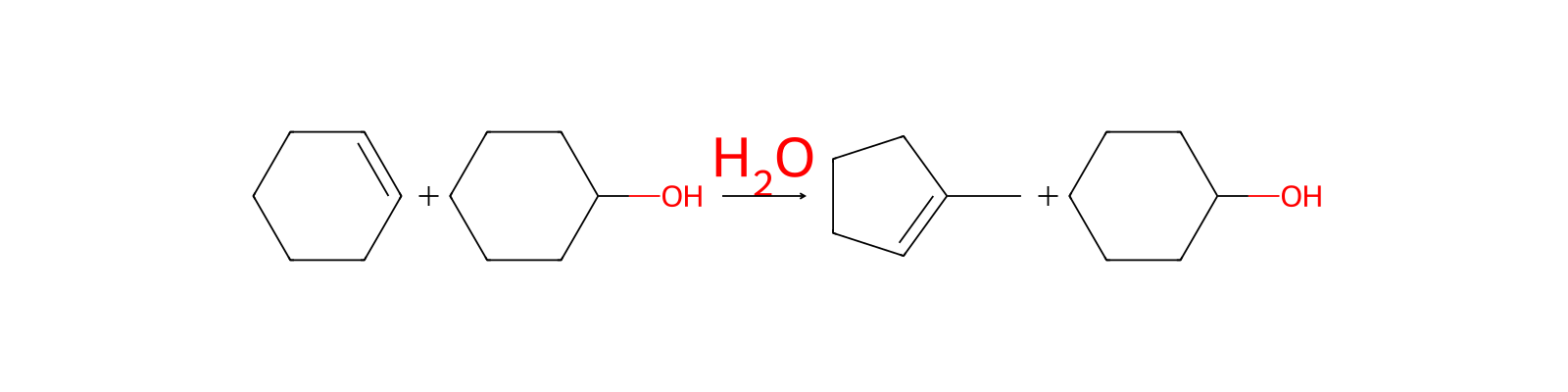
Cyclohexene is prepared by dehydration of cyclohexanol by thermal reaction of a ethylene-propylene-butadiene mixture.
Prepared by dehydration of cyclohexanol at high temps over various catalysts.
In Japan, cyclohexene is synthesized in a closed system by catalytic hydrogenation of benzene, isolated by fractionation.
Grade: Technical 95%; 99%; research 99.9 mole%.
CYCLOHEXENE: 99+% (GOLD LABEL), 99%; BOTH INHIBITED WITH 0.01% 2,6-DI-TERT-BUTYL-4 METHYLPHENOL
CYCLOHEXENE: 99.5% ASSAY; INHIBITOR-SODIUM HYDROXIDE
Cyclohexene: ACTIVE
Cyclohexene occurs in coal tar.
In Japan, cyclohexene is synthesized in a closed system by catalytic hydrogenation of benzene, isolated by fractionation, stored temporarily in storage tanks and used solely as an intermediate for cyclohexanol synthesis in the same factory. Workers take quality control samples of fractionated cyclohexene once a day and stored cyclohexene once a month. ... Workers wear goggles and protecting gloves during sampling, exposure through dermal contact is therefore expected to be minimal.
BeschreibungCyclohexene is a hydrocarbon, mostly obtained from the hydrogenation of benzene.
VerwendenIt occurs in coal tar and is obtained by catalyticdehydration of cyclohexanol and dehydrogenationof cyclohexane. Cyclohexene isused in making adipic acid, maleic acid,and butadiene; in oil extraction; as a stabilizerfor high-octane gasoline; and in organicsynthesis.
DefinitionChEBI: A cycloalkene that is cylohexane with a single double bond.