
uspto-grants-2010_06 · 10.6084/m9.figshare.5104873.v1 · US07728038B2
查看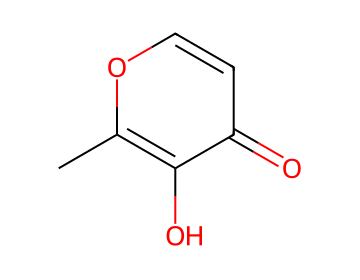
IDENTITY
COMPUTED
PROPERTIES
pH of 0.5% aqueous solution = 5.3
log Kow = 0.09
0.09
Fragrant, caramel-like odor
Characteristic caramel-butterscotch odor and suggestive of a fruity-strawberry aroma in dilute solution
Caramel-like odor, reminiscent of freshly baked cakes
Taste characteristics at 200.00 ppm: Sweet, caramellic, cotton candy with fruity, jammy strawberry nuance
Monoclinic prisms from chloroform, orthorhombic bypyramidal crystals + monoclinic prisms from 50% alcohol
White crystalline powder
1 to 10 mg/mL at 72 °F (NTP, 1992)
In water, 10900 mg/L at 15 °C
One gram dissolves in 82 mL water, 80 mL glycerin, 21 mL alcohol, 28 mL propylene glycol; Freely soluble in hot water, chloroform; sparingly soluble in benzene, ether, petroleum ether; soluble in alkali hydroxides giving yellow solutions
10.9 mg/mL at 15 °C
Sparingly soluble in water, soluble in propylene glycol
Soluble (in ethanol)
199 °F at 760 mmHg (Sublimes) (NTP, 1992)
Sublimes at 93 °C
When heated to decomposition it emits acrid smoke and irritating fumes.
324 to 327 °F (NTP, 1992)
161.5 °C
161 - 162 °C
0.000507 [mmHg]
3.26X10⁻⁴ mm Hg at 25 °C (extrapolated from reduced pressure boiling point)
Maltol is a white crystalline powder with a fragrant caramel-butterscotch odor. pH (5% aqueous solution) 5.3. (NTP, 1992)
Other Solid; Dry Powder; Liquid
Solid with a fragrant odor like caramel; [Merck Index] White powder; [Alfa Aesar MSDS]
Solid
White crystalline powder; Caramel-butterscotch aroma
Stable under recommended storage conditions.
GHS
This chemical does not meet GHS hazard criteria for 15.5% (303 of 1955) of reports.
Warning
H302 (84.5%): Harmful if swallowed [Warning Acute toxicity, oral]
P264, P270, P301+P317, P330, and P501 (click each P-code to see the statement)
Aggregated GHS information provided per 1955 reports by companies from 20 notifications to the ECHA C&L Inventory.;Reported as not meeting GHS hazard criteria per 303 of 1955 reports by companies.;There are 18 notifications provided by 1652 of 1955 reports by companies with hazard statement code(s).;Information may vary between notifications depending on impurities, additives, and other factors. The percentage value in parenthesis indicates the notified classification ratio from companies that provide hazard codes. Only hazard codes with percentage values above 10% are shown. For more detailed information, please visit ECHA C&L website.
HAZARDS
Chemical: 4H-Pyran-4-one, 3-hydroxy-2-methyl-
Regulation (EC) No 1831/2003 (amended)
4H-Pyran-4-one, 3-hydroxy-2-methyl- is listed on the EPA's Chemical Data Reporting (CDR) system. Manufacturers and importers of 4H-Pyran-4-one, 3-hydroxy-2-methyl- are required to report information about their production and use of this chemical to the EPA under the Toxic Substances Control Act (TSCA). (40 eCFR Part 711)
Status: Active Update: 02-07-2020 https://echa.europa.eu/registration-dossier/-/registered-dossier/24008;Status: Active Update: 09-05-2018 https://echa.europa.eu/registration-dossier/-/registered-dossier/25904
3-Hydroxy-2-methyl-4-pyranone: Does not have an individual approval but may be used under an appropriate group standard
Flash point data on this compound are not available; however, it is probably combustible. (NTP, 1992)
No reproductive toxicity observed in rats at doses up to 200 mg/kg; [Shepard's Catalog of Teratogenic Agents] A moderate skin irritant; Causes changes in renal tubules and weight loss in 90-day oral studies of rats; [RTECS] Demonstrates depressant properties in mice (potentiates hexobarbital-induced narcosis and inhibits spontaneous motor activity); [ChemIDplus] Acceptable daily intake (ADI) of 0-1 mg/kg; [JECFA] A skin and strong eye irritant; Toxic by ingestion; [Alfa Aesar MSDS]
Maltol is a food additive permitted for direct addition to food for human consumption as a synthetic flavoring substance and adjuvant in accordance with the following conditions: a) they are used in the minimum quantity required to produce their intended effect, and otherwise in accordance with all the principles of good manufacturing practice, and b) they consist of one or more of the following, used alone or in combination with flavoring substances and adjuvants generally recognized as safe in food, prior-sanctioned for such use, or regulated by an appropriate section in this part.
Ethers;Ketones;Phenols and Cresols
WHO/JEFCA; WHO Food Additives Series 56; Maltol and Related Substances (2006)[Available from, as of May 26, 2016: http://www.inchem.org/pages/jecfa.html]
MALTOL is weakly acidic. Reacts with bases. May react with reducing agents. Volatile with steam. (NTP, 1992)
May be sensitive to prolonged exposure to light and air. Somewhat soluble in water at room temperature. Freely soluble in hot water [Merck]. Slightly soluble in cold water.
Special hazards arising from the substance or mixture: Carbon oxides
Acute Tox. 4 (84.5%)
Acute toxicity (Oral) - Category 4;Germ cell mutagenicity - Category 2
A skin irritant.
Incompatible materials: Strong oxidizing agents
SAFETY
Fires involving this compound should be controlled with a dry chemical, carbon dioxide or Halon extinguisher. (NTP, 1992)
EYES: First check the victim for contact lenses and remove if present. Flush victim's eyes with water or normal saline solution for 20 to 30 minutes while simultaneously calling a hospital or poison control center. Do not put any ointments, oils, or medication in the victim's eyes without specific instructions from a physician. If symptoms (such as redness or irritation) develop, immediately transport the victim to a hospital.;SKIN: IMMEDIATELY flood affected skin with water while removing and isolating all contaminated clothing. Gently wash all affected skin areas thoroughly with soap and water. If symptoms such as redness or irritation develop, IMMEDIATELY call a physician and be prepared to transport the victim to a hospital for treatment.;INHALATION: IMMEDIATELY leave the contaminated area; take deep breaths of fresh air. If symptoms (such as wheezing, coughing, shortness of breath, or burning in the mouth, throat, or chest) develop, call a physician and be prepared to transport the victim to a hospital. Provide proper respiratory protection to rescuers entering an unknown atmosphere. Whenever possible, Self-Contained Breathing Apparatus (SCBA) should be used; if not available, use a level of protection greater than or equal to that advised under Protective Clothing.;INGESTION: DO NOT INDUCE VOMITING. If the victim is conscious and not convulsing, give 1 or 2 glasses of water to dilute the chemical and IMMEDIATELY call a hospital or poison control center. Be prepared to transport the victim to a hospital if advised by a physician. If the victim is convulsing or unconscious, do not give anything by mouth, ensure that the victim's airway is open and lay the victim on his/her side with the head lower than the body. DO NOT INDUCE VOMITING. IMMEDIATELY transport the victim to a hospital. (NTP, 1992)
Suitable extinguishing media: Use water spray, alcohol-resistant foam, dry chemical or carbon dioxide.
Advice for firefighters: Wear self contained breathing apparatus for fire fighting if necessary.
Keep container tightly closed in a dry and well-ventilated place.
ACCIDENTAL RELEASE MEASURES: Personal precautions, protective equipment and emergency procedures: Use personal protective equipment. Avoid dust formation. Avoid breathing vapors, mist or gas. Ensure adequate ventilation. Evacuate personnel to safe areas. Avoid breathing dust. Environmental precautions: Do not let product enter drains. Methods and materials for containment and cleaning up: Pick up and arrange disposal without creating dust. Sweep up and shovel. Keep in suitable, closed containers for disposal.
SMALL SPILLS AND LEAKAGE: Should a spill occur while you are handling this chemical, FIRST REMOVE ALL SOURCES OF IGNITION, then you should dampen the solid spill material with 60-70% ethanol and transfer the dampened material to a suitable container. Use absorbent paper dampened with 60-70% ethanol to pick up any remaining material. Seal the absorbent paper, and any of your clothes, which may be contaminated, in a vapor-tight plastic bag for eventual disposal. Solvent wash all contaminated surfaces with 60-70% ethanol followed by washing with a soap and water solution. Do not reenter the contaminated area until the Safety Officer (or other responsible person) has verified that the area has been properly cleaned.;STORAGE PRECAUTIONS: You should protect this chemical from exposure to light. Keep the container tightly closed under an inert atmosphere, and store under refrigerated temperatures. (NTP, 1992)
SRP: Recycle any unused portion of the material for its approved use or return it to the manufacturer or supplier. Ultimate disposal of the chemical must consider: the material's impact on air quality; potential migration in air, soil or water; effects on animal, aquatic and plant life; and conformance with environmental and public health regulations. If it is possible or reasonable use an alternative chemical product with less inherent propensity for occupational harm/injury/toxicity or environmental contamination.
Product: Contact a licensed professional waste disposal service to dispose of this material. Offer surplus and non-recyclable solutions to a licensed disposal company; Contaminated packaging: Dispose of as unused product.
ACCIDENTAL RELEASE MEASURES: Personal precautions, protective equipment and emergency procedures: Use personal protective equipment. Avoid dust formation. Avoid breathing vapors, mist or gas. Ensure adequate ventilation. Evacuate personnel to safe areas. Avoid breathing dust. Environmental precautions: Do not let product enter drains.
Precautions for safe handling: Avoid contact with skin and eyes. Avoid formation of dust and aerosols. Provide appropriate exhaust ventilation at places where dust is formed.
Appropriate engineering controls: Handle in accordance with good industrial hygiene and safety practice. Wash hands before breaks and at the end of workday.
Gloves must be inspected prior to use. Use proper glove removal technique (without touching glove's outer surface) to avoid skin contact with this product. Dispose of contaminated gloves after use in accordance with applicable laws and good laboratory practices. Wash and dry hands.
For more Preventive Measures (Complete) data for Maltol (6 total), please visit the HSDB record page.
RECOMMENDED RESPIRATOR: Where the neat test chemical is weighed and diluted, wear a NIOSH-approved half face respirator equipped with an organic vapor/acid gas cartridge (specific for organic vapors, HCl, acid gas and SO2) with a dust/mist filter. (NTP, 1992)
Eye/face protection: Safety glasses with side-shields conforming to EN166. Use equipment for eye protection tested and approved under appropriate government standards such as NIOSH (US) or EN 166(EU).
Skin protection: Handle with gloves.
Body Protection: Complete suit protecting against chemicals. The type of protective equipment must be selected according to the concentration and amount of the dangerous substance at the specific workplace.
Respiratory protection: For nuisance exposures use type P95 (US) or type P1 (EU EN 143) particle respirator. For higher level protection use type OV/AG/P99 (US) or type ABEK-P2 (EU EN 143) respirator cartridges. Use respirators and components tested and approved under appropriate government standards such as NIOSH (US) or CEN (EU).
TOXICITY
The pyrones, 3-hydroxy-2-methyl-4-pyrone (maltol) and 3-hydroxy-2-ethyl-4-pyrone (ethyl maltol) chelate iron with a high affinity and selectivity. The resulting 1:3 (metal-ligand) complexes, being neutral, are able to partition readily across cell membranes and thus may facilitate iron transport across the intestinal wall. Absorption of radioactive iron ((59)Fe) in the presence of these pyrones was investigated in male rats 1, 2, 4 and 6 hr after intraduodenal administration of a 7 micrograms dose and compared with that of (59)Fe given as the sulfate, gluconate, fumarate or complexed to EDTA. Total body absorption and distribution were calculated from the (59)Fe content of various tissue samples. With all the iron preparations used, blood levels of (59)Fe were highest 1 hr after injection whilst the (59)Fe content at the major site of deposition, i.e. the bone marrow, increased up to 6 hr. No (59)Fe was found in the urine. Total body absorption of (59)Fe was significantly higher from the pyrones than from the other four preparations. Over the dose range 0.7-700 micrograms, the proportion of (59)Fe absorbed from both iron maltol and iron sulphate decreased with increasing dose. Enhanced (59)Fe uptake from maltol was evident at 0.7-70 micrograms but not at 700 micrograms suggesting that use of these pyrones will not result in iron overload. Absorption of (59)Fe given into the stomach was slower in onset but was sustained longer presumably via a steady delivery of iron to the duodenum from the gastric reservoir.
Neurofilamentous tangles have been induced in cultured neurons from rat brain hemispheres by application of both aluminum and maltol. Quantitative evaluation revealed a significantly higher percentage of tangle containing neurons when using the aluminum-maltol mixture than after application of aluminum alone. Tangles were found to be consistently stained with monoclonal antibodies to neurofilament proteins but failed to react with polyclonal antibodies against microtubule-associated proteins 1, 2 and tau.
Aluminum (Al) has been observed to cause neurofilament protein accumulation in both experimental animals and cultured cells. Impairment of axonal transport is thought to be a mechanism of toxicity. Inhibition of the degradation of neurofilament proteins, however, resulting in accumulation of these proteins may be an alternative mechanism for Al toxicity. In the present study, the effect of calcium (Ca) on the proteolysis of the neurofilament triplet proteins by calcium-activated neutral proteases (CANP) was studied in the isolated sciatic nerve explants. The extent of the degradation was found to be dependent on the Ca concentration. The effect of Al chloride, -citrate and -maltol on the calcium-induced degradation was studied. No effect of any of the Al compounds was observed, suggesting that the metal may exert its neurotoxic effect via a mechanism other than impairment of neurofilament proteolysis. Maltol itself was found to enhance the effect of Ca on the degradation of neurofilament proteins, probably by facilitating the movement of Ca across the neuronal membrane.
Deposition of aluminum in the body is responsible for the development of dialysis-related diseases in patients with renal dysfunction and may play a role in the development of certain neurodegenerative disorders. Although citric acid is known to be a strong enhancer of gastrointestinal absorption of aluminum, its effect on aluminum distribution and accumulation is not yet clear. Maltol has been shown to increase the neurotoxicity of aluminum, but little is known about its effect on aluminum deposition in the body. To elucidate the role of citric acid and maltol in aluminum accumulation and toxicity, rats were loaded intraperitoneally during a 7-day period with different amounts of aluminum chloride in absence or presence of citric acid or maltol before analysis of aluminum in serum, brain, bone, and urine. Coadministration of citric acid led to relatively reduced serum levels, as compared with aluminum and aluminum-maltol treatment. This is explained by both tissue elimination and enhanced renal elimination. ... Maltol was shown to be a strong enhancer of aluminum accumulation in serum, brain, and bone. The rise of aluminum in these target tissues was dose dependent.
For more Interactions (Complete) data for Maltol (7 total), please visit the HSDB record page.
TERRESTRIAL FATE: Based on a classification scheme(1), an estimated Koc value of 1(SRC), determined from a structure estimation method(2), indicates that maltol is expected to have very high mobility in soil(SRC). Volatilization of maltol from moist soil surfaces is not expected to be an important fate process(SRC) given an estimated Henry's Law constant of 5.0X10⁻⁹ atm-cu m/mole(SRC), derived from its extrapolated vapor pressure, 3.26X10⁻⁴ mm Hg(2), and water solubility, 1.09X10+4 mg/L(3). Maltol is not expected to volatilize from dry soil surfaces(SRC) based upon its extrapolated vapor pressure(2); however, maltol does have a characteristic fragrant odor(4) even though it exists as a solid. Biodegradation data in soil were not available(SRC, 2016).
AQUATIC FATE: Based on a classification scheme(1), an estimated Koc value of 1(SRC), determined from a structure estimation method(2), indicates that maltol is not expected to adsorb to suspended solids and sediment(SRC). Volatilization from water surfaces is not expected(3) based upon an estimated Henry's Law constant of 5.0X10⁻⁹ atm-cu m/mole(SRC), derived from its extrapolated vapor pressure, 3.26X10⁻⁴ mm Hg(2), and water solubility, 1.09X10+4 mg/L(4). According to a classification scheme(5), an estimated BCF of 3(SRC), from its log Kow of 0.09(6) and a regression-derived equation(2), suggests the potential for bioconcentration in aquatic organisms is low(SRC). Biodegradation data in water were not available(SRC, 2016). Maltol is not expected to undergo hydrolysis in the environment due to the lack of functional groups that hydrolyze under environmental conditions(3). Maltol is an olefinic compound and olefins in surface waters exposed to sunlight react with photo-oxidants with a half-life on the order of 25 days(7).
ATMOSPHERIC FATE: According to a model of gas/particle partitioning of semivolatile organic compounds in the atmosphere(1), maltol, which has an extrapolated vapor pressure of 3.26X10⁻⁴ mm Hg at 25 °C(SRC), determined from a fragment constant method(2), is expected to exist solely as a vapor in the ambient atmosphere. Vapor-phase maltol is degraded in the atmosphere by reaction with photochemically-produced hydroxyl radicals(SRC); the half-life for this reaction in air is estimated to be 7.7 hours(SRC), calculated from its rate constant of 5.0X10⁻¹¹ cu cm/molecule-sec at 25 °C(SRC) that was derived using a structure estimation method(2). Vapor-phase maltol is also degraded in the atmosphere by reaction with ozone(SRC); the half-life for this reaction in air is estimated to be 21 hours(SRC), calculated from its rate constant of 1.3X10⁻¹⁷ cu cm/molecule-sec at 25 °C(SRC) that was derived using a structure estimation method(2). Maltol absorbs at wavelengths >290 nm(3) and, therefore, may be susceptible to direct photolysis by sunlight(SRC).
Maltol has been reportedly been found in wheat and rye bread, milk, butter, smoked pork, beer, cocoa, coffee, roasted barley, filberts, peanuts, soybean, beans, tamarind, licorice, sake, dried bonito, clam and cocoa butter(1). A maltol concentration of 490 ug/kg was detected in microwave-oven popcorn(2). Volatiles emitted from rice cakes from two commercial companies contained maltol levels of 29 and 60 ppb respectively(3). Maltol was identified at concentrations ranging from 35.5 to 209 ug/L in red wines aged in wooden barrels(4). Maltol was identified in volatiles from roasted chestnuts(5). The volatile compounds extracted from the red-skinned cultivar of rambutan, Jitlee (Nephelium lappaceum L.), a tropical fruit native to Southeast Asia, contained a maltol concentration of 53.79 ug/L in the juice(6).
Neurotoxin - Other CNS neurotoxin
IDENTIFICATION AND USE: Maltol is a white crystalline powder. It is used as a flavoring agent, to impart "freshly baked" odor and flavor to breads and cakes. It is also used as medication. HUMAN EXPOSURE AND TOXICITY: Maltol at concentrations ranging from 0.1 to 1.5 umol/mL induced sister chromatid exchanges in human lymphocytes. It was suggested that these results were due to an indirect action of maltol and not to its direct reactivity with DNA. ANIMAL STUDIES: Eight female mice were fed a diet containing maltol at a level of 0.5% (w/w) for 21 weeks, calculated to provide an average daily intake of 750 mg/kg bw. At termination, no differences in general health, behavior, body-weight gain or relative liver weights were reported. Gross and microscopic examination revealed no histological abnormalities in the livers of the treated mice when compared with the controls. A three-generation study of reproductive toxicity was conducted, in which groups of 20 male and 20 female rats were given diets containing maltol at concentrations resulting in 100, 200 or 400 mg/kg bw per day. On day 134, animals of the F1 generation showed signs of sialodacryodenitis due to a contagious virus. No deaths occurred, and the signs diminished within 10 days. Maltol had no effect on copulation rate, mating viability index, lactation, offspring sex ratio or 21-day pup survival index. Maltol at concentrations ranging from 0.1 to 1.5 umol/mL induced sister chromatid exchanges in Chinese hamster ovary cells. It was suggested that these results were due to an indirect action of maltol and not to its direct reactivity with DNA. Maltol was weakly mutagenic (two- to threefold increases in number of revertants) in Salmonella typhimurium TA100 at concentrations of 1-3 mg/plate either alone or with metabolic activation. Activity against TA98 was not detected. Maltol tested at concentrations of 0.1-10.0 mg/plate increased the number of revertants in strain TA97 at 1 mg/plate by about twofold. No incre
The average daily intake of maltol for an individual is 0.02132 mg/kg/day(1).
Maltol occurs in Mayapple shoot (Passiflora incarnata; Passifloraceae) at 500 ppm and in the flower of Purple Clover (Trifolium pratense; Fabaceae) at 140 ppm. It was detected, not quantified in the following plants(1):[Table#8334]
EPA has released the Interactive Chemical Safety for Sustainability (iCSS) Dashboard. The iCSS Dashboard provides an interactive tool to explore rapid, automated (or in vitro high-throughput) chemical screening data generated by the Toxicity Forecaster (ToxCast) project and the federal Toxicity Testing in the 21st century (Tox21) collaboration. /The title compound was tested by ToxCast and/or Tox21 assays/[USEPA; ICSS Dashboard Application; Available from, as of July 7, 2016: http://actor.epa.gov/dashboard/]
The following link will take the user to the National Toxicology Program (NTP) Test Agent Search Results page, which tabulates all of the "Genetic Toxicology Studies" performed with this chemical. Clicking on the "Testing Status" link will take the user to the status (i.e., in review, in progress, in preparation, on test, completed, etc.) and results of all the studies that the NTP has done on this chemical.[Available from, as of May 26, 2016: http://ntp.niehs.nih.gov/testing/status/agents/ts-m20103.html]
Using a structure estimation method based on molecular connectivity indices(1), the Koc of maltol can be estimated to be 1(SRC). According to a classification scheme(2), this estimated Koc value suggests that maltol is expected to have very high mobility in soil.
Maltol is found in the bark of young larch trees (Larix decidua Mill.), in pine needles (Abies alba Mill., Pinaceae), in chickory, in wood tars and oils, and in roasted malt(1). Maltol is found in a variety of plants including clover, ginseng, licorice, pepper, paprika and raspberry(2).
/GENOTOXICITY/ Maltol at concentrations ranging from 0.1 to 1.5 umol/mL induced sister chromatid exchanges in ... human lymphocytes. /It was/ suggested that these results were due to an indirect action of maltol and not to its direct reactivity with DNA.
/ALTERNATIVE and IN VITRO TESTS/ Maltol (3-hydroxy-2-methyl-4-pyrone), a product of carbohydrate degradation, is known to enhance aluminum-induced neurofibrillary degeneration in neuronal systems, but few toxicological studies have been conducted. We report maltol toxicity in neuroblastoma cell lines of mouse (Neuro 2a) and human (IMR 32) origin, and in primary murine fetal hippocampal neuronal cultures. As determined by MTS [3-(4,5-dimethylthiazol-2-yl)-5-(3-carboxymethoxyphenyl)-2 -(4-sulfophenyl)-2H-tetrazolium, inner salt] conversion, maltol exhibited a dose-dependent toxicity on the viability of both neuroblastoma cell lines, but the toxicity was more pronounced in Neuro 2a cells. Maltol was also toxic in a dose-dependent manner in primary murine fetal hippocampal neurons at micromolar concentrations. Electrophoresis of DNA extracted from maltol-intoxicated cells showed a laddering pattern, suggestive of apoptotic cell death. In the maltol-exposed hippocampal neuronal cultures, fragmented DNA ends were visualized in situ in morphologically condensed nuclei by terminal deoxynucleotidyl transferase with digoxigenin-labelled UTP and subsequent immunohistochemistry. Collectively, our findings suggest that the toxic effect of maltol is mediated through apoptosis. ...
/ALTERNATIVE and IN VITRO TESTS/ Hydroxyketone chelators, deferiprone (HK1), maltol (HK3) and their related compounds (HK2, 4-8), were characterized for their cytotoxic profiles against oral human normal and tumor cells. ... The cytotoxic activity of ... /maltol/ was significantly increased by FeCl3. ... /Maltol/ did not induce DNA fragmentation in HL-60 cells, regardless of the presence or absence of FeCl3. In HSC-2 cells, ... /maltol/ did not induce DNA fragmentation in the presence or absence of FeCl3. ... /maltol/ did not activate the caspase 3, 8 and 9 in HL-60 cells, but activated the caspase 3 only slightly in the presence of FeCl3. ... /Maltol/ also activated the caspase 3, 8 and 9 in HSC-2 cells, but to a lesser extent. The present study suggested that the antitumor activity of hydroxyketones may be modified by Fe3+ concentration.
Maltol's production and use as a flavoring agent to impart "freshly baked" odor and flavor to bread and cakes(1) and as a flavor enhancer in confections, cookies, ice cream, fruit juices, puddings, and beverages(2) may result in its release to the environment through various waste streams(SRC). Maltol has been detected in emissions from burning wood(3) and in tobacco smoke and substitute-tobacco smoke(4). Maltol has use as a flavor chemical in electronic cigarette fluids(5). Maltol is produced when cellulose or starch is heated(6).
REGULATORY
Chemical: 4H-Pyran-4-one, 3-hydroxy-2-methyl-
Regulation (EC) No 1831/2003 (amended)
4H-Pyran-4-one, 3-hydroxy-2-methyl- is listed on the EPA's Chemical Data Reporting (CDR) system. Manufacturers and importers of 4H-Pyran-4-one, 3-hydroxy-2-methyl- are required to report information about their production and use of this chemical to the EPA under the Toxic Substances Control Act (TSCA). (40 eCFR Part 711)
Status: Active Update: 02-07-2020 https://echa.europa.eu/registration-dossier/-/registered-dossier/24008;Status: Active Update: 09-05-2018 https://echa.europa.eu/registration-dossier/-/registered-dossier/25904
3-Hydroxy-2-methyl-4-pyranone: Does not have an individual approval but may be used under an appropriate group standard
Maltol is a food additive permitted for direct addition to food for human consumption as a synthetic flavoring substance and adjuvant in accordance with the following conditions: a) they are used in the minimum quantity required to produce their intended effect, and otherwise in accordance with all the principles of good manufacturing practice, and b) they consist of one or more of the following, used alone or in combination with flavoring substances and adjuvants generally recognized as safe in food, prior-sanctioned for such use, or regulated by an appropriate section in this part.
PHARMACOLOGY
Maltol (3-hydroxy-2-methyl-4-pyrone) produced reactive oxygen species as a complex with transition metals. Maltol/iron complex inactivated aconitase the most sensitive enzyme to oxidative stress. The inactivation of aconitase was iron-dependent, and prevented by TEMPOL, a scavenger of reactive oxygen species, suggesting that the maltol/iron-mediated generation of superoxide anion is responsible for the inactivation of aconitase. Addition of maltol effectively enhanced the ascorbate/copper-mediated formation of 8-hydroxy-2'-deoxyguanosine in DNA. Oxidation of ascorbic acid by CuSO(4) was effectively stimulated by addition of maltol, and the enhanced oxidation rate was markedly inhibited by the addition of catalase and superoxide dismutase. These results suggest that maltol can stimulate the copper reduction coupled with the oxidation of ascorbate, resulting in the production of superoxide radical which in turn converts to hydrogen peroxide and hydroxyl radical. Cytotoxic effect of maltol can be explained by its prooxidant properties: maltol/transition metal complex generates reactive oxygen species causing the inactivation of aconitase and the production of hydroxyl radical causing the formation of DNA base adduct.
... We examined the ability of maltol to induce the cytochrome P450 1a1 (Cyp1a1), an enzyme known to play an important role in the chemical activation of xenobiotics to carcinogenic derivatives. Our results showed that treatment of Hepa 1c1c7 cells with maltol significantly induced Cyp1a1 at mRNA, protein, and activity levels in a concentration-dependent manner. The RNA synthesis inhibitor, actinomycin D, completely blocked the Cyp1a1 mRNA induction by maltol, indicating a requirement of de novo RNA synthesis through transcriptional activation. In addition, maltol induced aryl hydrocarbon receptor (AhR)-dependent luciferase reporter gene expression in stably transfected H1L1.1c2 cells, suggesting an AhR-dependent mechanism. This is the first demonstration that the food flavoring agent, maltol, can directly induce Cyp1a1 gene expression in an AhR-dependent manner and represents a novel mechanism by which maltol promotes carcinogenicity and toxicity.
Maltol has antioxidant properties, presumably through its ability to complex metal ions such as Fe++ and to promote the formation of reduced glutathione (GSH). Maltol at a concentration of 130 umol/L inhibited iron-mediated lipid peroxidation and increased scavenging of reactive oxygen species by enhancing the supply of NADPH required for regeneration of GSH. Maltol inhibited the formation of thiobarbituric acid-reactive substances when incubated with rat liver microsomes in the presence of Fe++ and ascorbate. Maltol at concentrations of 130-140 umol/L also effectively inhibited the inactivation of NADP-isocitrate dehydrogenase, the principal NADPH-generating enzyme, by Fe++. Maltol significantly increased the oxidation of Fe++, while dimethylpyrone had no effect. The latter results suggest that the 3-hydroxy substituent in maltol is necessary to promote Fe++ oxidation.
Maltol and derivatives contain a gamma-pyrone ring system. Gamma-pyrones are relatively basic, and the behavior as a base is partly due to the aromatic character and relative stability of the conjugate acid. As the gamma-pyrone ring also contains a 3-hydroxy substituent, it is expected that maltol and its derivatives will be readily conjugated with glucuronic acid or sulfate. In addition, maltol may form a complex with metal ions (e.g. Fe++), like phenols.
Groups of two beagle dogs of each sex were given a single intravenous injection of 10 mg/kg bw maltol, and urine samples were collected for 72 hr. An average of 58.5% of the administered dose was excreted as a mixture of sulfate and glucuronic acid conjugates of maltol. About 98% of the total urinary excretion of conjugates occurred within the first 24 hr, males and females excreting an average of 42% and 73% of the administered dose, respectively.
Cytoplasm;Extracellular
USES
Present in the bark of young larch trees, pine needles, chicory, wood tars and oils, and roasted malt; Used as a flavoring agent (gives bread and cakes a freshly baked odor); [Merck Index] Used as a flavoring agent, nutritive sweetener, and processing aid for food; [FDA] Permitted for use as an inert ingredient in non-food pesticide products; [EPA]
Flavoring agent, to impart "freshly baked" odor and flavor to breads and cakes.
Reported uses (ppm):;Table: Reported uses (ppm): (Flavor and Extract Manufacturers' Association, 1994) [Table#8335]
MEDICATION
2023: 50,000 - <75,000 lb;2022: 100,000 - <250,000 lb;2021: 75,000 - <100,000 lb;2020: 50,000 - <250,000 lb
Fragrance
Fragrance;Flavoring and nutrient
By alkaline hydrolysis of streptomycin salts; also from piperdine to pyromeconic acid and subsequent methylation at the 2 position.
It is produced when cellulose or starch is heated and is a constituent of wood tar oils. It forms crystals (mp 162 -164 °C) with a caramel-like odor, reminiscent of freshly baked cakes. Maltol can be produced synthetically starting from kojic acid or isolated from beechwood tar or extracts of needles from the genus Abies. Commercially available extracts from Abies balsamea needles, which are also used as flavor and fragrance materials, usually contain 3-8% maltol.
Grade: FCC /Food Chemicals Codex/
Information on 6 consumer products that contain Maltol in the following categories is provided:;• Inside the Home;• Personal Care
Fragrance Ingredients
Flavouring Agent -> FLAVOURING_AGENTFood Additives -> FLAVOUR_ENHANCER; STABILIZER -> JECFA Functional Classes
Flavoring Agents -> JECFA Flavorings Index
Soap, Cleaning Compound, and Toilet Preparation Manufacturing;Pesticide, Fertilizer, and Other Agricultural Chemical Manufacturing;Food, beverage, and tobacco product manufacturing;All Other Basic Organic Chemical Manufacturing;All Other Chemical Product and Preparation Manufacturing;Not Known or Reasonably Ascertainable
4H-Pyran-4-one, 3-hydroxy-2-methyl-: ACTIVE
ALIASES
REACTIONS
uspto-grants-2010_06 · 10.6084/m9.figshare.5104873.v1 · US07728038B2
查看
uspto-grants-1979_04 · 10.6084/m9.figshare.5104873.v1 · US04147705
查看
uspto-grants-1979_04 · 10.6084/m9.figshare.5104873.v1 · US04147705
查看
uspto-grants-1979_04 · 10.6084/m9.figshare.5104873.v1 · US04147705
查看
uspto-grants-1979_04 · 10.6084/m9.figshare.5104873.v1 · US04147705
查看
uspto-grants-1979_04 · 10.6084/m9.figshare.5104873.v1 · US04147705
查看
uspto-grants-1979_04 · 10.6084/m9.figshare.5104873.v1 · US04147705
查看
uspto-grants-1979_04 · 10.6084/m9.figshare.5104873.v1 · US04147705
查看