HRID 2841반응물로
Ethyl Acetoacetate

141-97-9CCOC(=O)CC(C)=OXYIBRDXRRQCHLP-UHFFFAOYSA-NEthyl acetoacetate appears as a colorless liquid with a fruity odor. Flash point 185 °F. Boiling point 365 °F. May cause adverse health effects if ingested or inhaled. May irritate to skin, eyes and mucous membranes. Used in organic synthesis and in lacquers and paints.
log Kow = 0.25
0.25
0.27
0.25
1.028 at 68 °F (USCG, 1999) - Denser than water; will sink
1.0282 AT 20 °C/4 °C
Relative density (water = 1): 1.021
1.022-1.027
1.0282 @ 20°C
안전 정보는 참고용이며, 공급업체의 물질안전보건자료(SDS), 관련 법규 및 전문가 평가를 대체하지 않습니다.
This chemical does not meet GHS hazard criteria for 76.8% (1836 of 2392) of all reports.
Warning
H319 (17.4%): Causes serious eye irritation [Warning Serious eye damage/eye irritation]
P264+P265, P280, P305+P351+P338, and P337+P317 (click each P-code to see the statement)
Aggregated GHS information provided per 2392 reports by companies from 13 notifications to the ECHA C&L Inventory.
Warning
Chemical: Butanoic acid, 3-oxo-, ethyl ester
Regulation (EC) No 1831/2003 (amended)
Butanoic acid, 3-oxo-, ethyl ester is listed on the EPA's Chemical Data Reporting (CDR) system. Manufacturers and importers of Butanoic acid, 3-oxo-, ethyl ester are required to report information about their production and use of this chemical to the EPA under the Toxic Substances Control Act (TSCA). (40 eCFR Part 711)
REACH registered substance: Ethyl acetoacetate (EC: 205-516-1)
Ethyl acetoacetate: Does not have an individual approval but may be used under an appropriate group standard
Excerpt from ERG Guide 128 [Flammable Liquids (Water-Immiscible)]:
Combustible. Above 70 °C explosive vapour/air mixtures may be formed.
A skin and eye irritant; [Hawley] A mutagen; Severe irritant in rabbit eye; [RTECS] A skin, eye, and respiratory tract irritant; [ICSC] Following repeated oral exposure of ethyl acetoacetate in rats, no treatment-related adverse effects (including haematology, clinical chemistry, gross necropsy and histopathology) were reported up to 1000 mg/kg bw/d. There is no information on health effects in humans following repeated exposure to ethyl acetoacetate via any route. [ChemPortal: SIDS] Safe when used as a flavoring agent in food; [JECFA] An eye irritant; A moderate skin and mucous membrane irritant; Emergency treatment: irritants; [HSDB] An irritant; May cause serious eye injury; [MSDSonline]
Used in lacquers and plastics, to make pharmaceuticals, and as a flavoring agent; [Hawley] Used to make inks, photographic and vat dyes, yellow pigments in paints, amino acids, methionine, analgesics, and aminopyrene; [HSDB] Primarily used as a chemical intermediate; Also used in consumer cleaning supplies and cosmetics and as a solvent in paints; [ExPub: European Commission]
Painting (Solvents) [Category: Paint]
FLAVORING AGENT IN FOOD
CHEMICAL INTERMEDIATE FOR YELLOW PIGMENTS IN PAINTS, LACQUERS, INKS, PHOTOGRAPHIC & VAT DYES, AMINO ACIDS, METHIONINE, ANTIMALARIAL AGENTS (ATABRINE), THIAMINE (VITAMIN B1), ANALGESICS, ANTIPYRENE, & AMINOPYRENE
(1972) No Data
(1975) No Data
(1986) No Data
(1972) No Data
(1975) No Data
(1986) No Data
2023: 8,500,000 - <10,000,000 lb
(1972) GREATER THAN 9.08X10+5 GRAMS
(1975) GREATER THAN 4.54X10+5 GRAMS
(1986) No Data
REACTION OF HIGH-PURITY ETHYL ACETATE WITH METALLIC SODIUM FOLLOWED BY NEUTRALIZATION WITH SULFURIC ACID
...FROM ETHYL ACETATE BY ACTION OF SODIUM, SODIUM ETHOXIDE, SODAMIDE OR CALCIUM: INGLIS, ROBERTS, ORG SYN COLL VOL 1, 2ND EDITION (1941) PAGE 235; HANSLEY, SCHOTT, US PATENT 2,843,623 (1958 TO NATIONAL DISTILLERS)...
...BY CLAISEN CONDENSATION OF ETHYL ACETATE IN PRESENCE OF SODIUM ETHYLATE; ALSO BY REACTING DIKETENE WITH ETHANOL IN PRESENCE OF SULFURIC ACID OR TRIETHYLAMINE & SODIUM ACETATE, WITH OR WITHOUT SOLVENT.




141-97-9DTXSID2027092CHEMBL169176CHEBI:4893SOL IN ABOUT 35 PARTS WATER
SOL IN BENZENE, & CHLOROFORM; MISCIBLE WITH ETHER, & ACETONE
water solubility = 1.11X10+5 mg/l @ 17 °C
110 mg/mL at 17 °C
Solubility in water, g/100ml at 20 °C: 2.86
miscible in alcohol, ether, ethyl acetate, 1 ml in 12 ml water
135 °F (USCG, 1999)
184 °F CC (84.4 °C)
70 °C c.c.
Ethyl 3-Oxobutanoate is a colorless liquid with a fruity, ethereal, sweet odor reminiscent of green apples. It is used to create fresh, fruity top notes in feminine fine fragrances. Ethyl acetoacetate occurs in flavors of natural materials such as coffee, strawberries, and yellow passion fruits.
FDA 121.1164.
FDA 172.515. FLAVOR USEFUL IN STRAWBERRY, FRUIT FLAVORS.
ETHYL ACETOACETATE, a beta-keto ester, is more reactive than many esters. Undergoes an exothermic cleavage reaction in the presence of concentrated base. Reacts with acids to liberate heat along with alcohols and acids. Strong oxidizing acids may cause a vigorous reaction that is sufficiently exothermic to ignite the reaction products. Flammable hydrogen is generated by mixing esters with alkali metals and hydrides. Mixing with 2,2,2-tris(bromomethyl)ethanol and zinc led to an explosion [US Patent 3 578 619, Crotonaldehyde may rapidly polymerize with ethyl acetoacetate (Soriano, D.S. et al. 1988. Journal of Chemical Education 65:637.).1971].
Excerpt from ERG Guide 128 [Flammable Liquids (Water-Immiscible)]:
Use water spray, powder, foam, carbon dioxide.
Fresh air, rest.
Remove contaminated clothes. Rinse and then wash skin with water and soap.
First rinse with plenty of water for several minutes (remove contact lenses if easily possible), then refer for medical attention.
Rinse mouth. Give one or two glasses of water to drink. Rest.
Cough. Sore throat.
Redness.
Redness. Pain.
MODERATELY IRRITATING TO SKIN, MUCOUS MEMBRANES.
MODERATELY TOXIC BY INGESTION & INHALATION IRRITANT TO...EYES.
RATS EXPOSED TO CONCENTRATED VAPOR FOR 8 HR SHOWED NO MORTALITIES. /FROM TABLE/
IT IS LESS TOXIC THAN ITS METHYL HOMOLOGUE, WITH AN ORAL LD50 IN RAT OF 3.98 G/KG & A DERMAL LD50 IN RABBIT OF MORE THAN 10 ML/KG. IT IS LESS IRRITANT TO SKIN & EYES THAN METHYL ESTER.
RATED 4 ON RABBIT EYES. SUBSTANCES DESIGNATED IN THIS MANNER HAVE BEEN TESTED EXTERNALLY ON EYES OF RABBITS & HAVE BEEN RATED NUMERICALLY ON SCALE OF 1 TO 10 ACCORDING TO DEGREE OF INJURY OBSERVED AFTER 24 HR, PAYING PARTICULAR ATTENTION TO CONDITION OF CORNEA. MOST SEVERE INJURIES HAVE BEEN RATED 10.
FDA 121.1164.
FDA 172.515. FLAVOR USEFUL IN STRAWBERRY, FRUIT FLAVORS.
EPA Safer Chemical Functional Use Classes -> Solvents
Safer Chemical Classes -> Green circle - The chemical has been verified to be of low concern
Fragrance Ingredients
Flavouring Agent -> FLAVOURING_AGENT -> JECFA Functional Classes
Flavoring Agents -> JECFA Flavorings Index
Flavouring Agent -> FLAVOURING_AGENT -> JECFA Functional Classes
Soap, Cleaning Compound, and Toilet Preparation Manufacturing
Butanoic acid, 3-oxo-, ethyl ester: ACTIVE
17 PPM IN NON-ALCOHOLIC BEVERAGES; 24 PPM IN ICE CREAM, ICES, ETC; 110 PPM IN CANDY; 120 PPM IN BAKED GOODS; 93 PPM IN GELATINS & PUDDINGS; & 530 PPM IN CHEWING GUM.
USEFUL AS STRAWBERRY, FRUIT FLAVORS. FEMA NUMBER 2415.
용도주로 의학, 염료, 살충제 등에 사용됩니다. 또한 식품 첨가물 및 향료 및 향수에 사용할 수 있습니다.
개요The organic compound ethyl acetoacetate (EAA) is the ethyl ester of acetoacetic acid. It is mainly used as a chemical intermediate in the production of a wide variety of compounds, such as amino acids, analgesics, antibiotics, antimalarial agents, antipyrine and amino pyrine, and vitamin B1; as well as the manufacture of dyes, inks, lacquers, perfumes, plastics, and yellow paint pigments. Alone, it is used as a flavoring for food.
출처Naturally occurring in strawberry, coffee, sherry, passion fruit juice (yellow), babaco fruit (Carica pentagona Heilborn) and bread.
일반 설명A colorless liquid with a fruity odor. Flash point 185°F. Boiling point 365°F. May cause adverse health effects if ingested or inhaled. May irritate to skin, eyes and mucous membranes. Used in organic synthesis and in lacquers and paints.
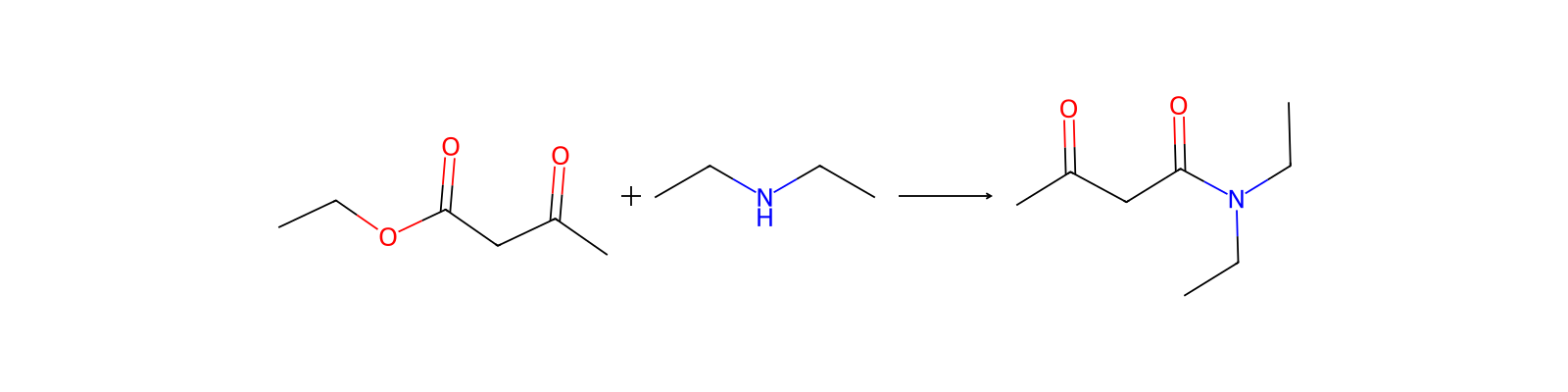
Ethyl acetoacetate is produced industrially by treatment of diketene with ethanol. The preparation of ethyl acetoacetate is a classic laboratory procedure . It is prepared via the Claisen condensation of ethyl acetate. Two moles of ethyl acetate condense to form one mole each of ethyl acetoacetate and ethanol.
황산으로 중화시킨 후 금속 나트륨과 에틸 아세테이트를 반응시킴
순도시험(1) 비중 : 이 품목의 비중은 1.022~1.027이어야 한다. (2) 굴절률 : 이 품목의 굴절률 은 1.418~1.421이어야 한다. (3) 용상 : 이 품목 1mL를 30% 에탄올 3mL에 녹일 때, 그 액은 징명하여야 한다. (4) 유리산 : 이 품목 15mL에 새로 끓여 식힌 물 15mL를 넣어 2분간 흔들어 섞어 정치한 후 그 물층 10mL를 취해 페놀프탈레인시액 2방울 및 0.1N 수산화칼륨용액 3.4mL를 넣을 때, 홍색을 나타낸다.
확인시험(1) 이 품목 1mL를 에탄올 3mL에 녹여 염화제이철시액 1방울을 넣으면 적자색을 나타낸다. (2) 이 품목 0.5mL에 10% 알콜성수산화칼륨시액 5mL를 넣어 온탕 중에서 5분간 가열하고 식힌 다음 이에 물 10mL 및 묽은염산 2mL를 넣은 액은 확인시험법 중 초산염 (다)의 반응을 나타낸다.
정량법이 품목 약 0.8g을 정밀히 달아 향료시험법 중 알데히드류 및 케톤류함량측정법의 히드록실아민법 중 제2법에 따라 시험한다. 다만, 방치시간은 15분간으로 한다.0.5N 염산 1mL = 65.07mg C6H10O3
정의ChEBI: Ethyl acetoacetate is an ethyl ester resulting from the formal condensation of the carboxy group of acetoacetic acid with ethanol. It has a role as a flavouring agent, an antibacterial agent and a plant metabolite. It is functionally related to an acetoacetic acid.