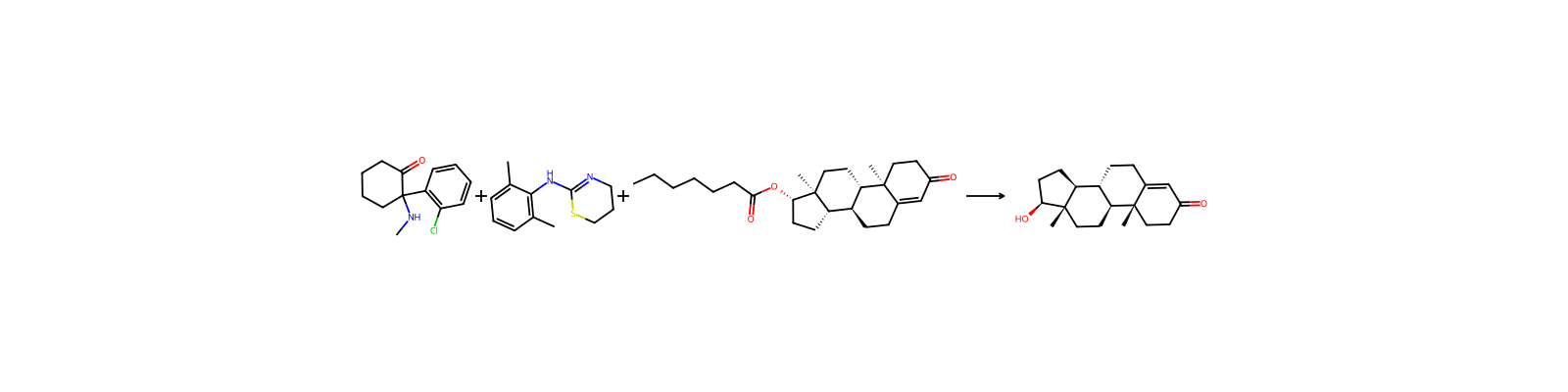
HRID 12014반응물로
데이터를 보충하는 중입니다. 잠시 후 페이지를 새로 고치면 최신 내용을 볼 수 있습니다

315-37-7CCCCCCC(=O)O[C@H]1CC[C@H]2[C@@H]3CCC4=CC(=O)CC[C@]4(C)[C@H]3CC[C@]12CVOCBWIIFXDYGNZ-IXKNJLPQSA-NTestosterone Enanthate can cause developmental toxicity according to state or federal government labeling requirements.
315-37-7DTXSID701016540FDA approved drugs -> Active ingredient
FDA approved drugs -> Active ingredient
Pharmaceuticals
34-39ºC
36 - 37.5 °C
안전 정보는 참고용이며, 공급업체의 물질안전보건자료(SDS), 관련 법규 및 전문가 평가를 대체하지 않습니다.
Danger
H302 (96.8%): Harmful if swallowed [Warning Acute toxicity, oral]
P203, P261, P264, P270, P271, P280, P301+P317, P302+P352, P304+P340, P317, P318, P321, P330, P362+P364, P405, and P501 (click each P-code to see the statement)
Aggregated GHS information provided per 62 reports by companies from 8 notifications to the ECHA C&L Inventory. Each notification may be associated with multiple companies.
Drug Induced Liver Injury Rank (DILIrank 2.0)
Testosterone enanthate
vMost-DILI-concern
8
Warnings & precautions
DOI:10.1016/j.drudis.2016.02.015
Administration of ester derivatives of testosterone as testosterone enanthate generates an increase in serum testosterone to levels reaching 400% from the baseline within 24 hours of administration. These androgen levels remain elevated for 3-5 days after initial administration. Continuous administration of testosterone enanthate shows a significant suppression of dihydrotestosterone, serum PSA, HDL and FSH, as well as a slight increase in serum estradiol. The levels of dihydrotestosterone and FSH can remain suppressed even 14 days after treatment termination. There are no changes in mood and sexual activity by the presence of testosterone enanthate.
The effects of testosterone in humans and other vertebrates occur by way of two main mechanisms: by activation of the androgen receptor (directly or as DHT), and by conversion to estradiol and activation of certain estrogen receptors. Free testosterone (T) is transported into the cytoplasm of target tissue cells, where it can bind to the androgen receptor, or can be reduced to 5α-dihydrotestosterone (DHT) by the cytoplasmic enzyme 5α-reductase. DHT binds to the same androgen receptor even more strongly than T, so that its androgenic potency is about 2.5 times that of T. The T-receptor or DHT-receptor complex undergoes a structural change that allows it to move into the cell nucleus and bind directly to specific nucleotide sequences of the chromosomal DNA. The areas of binding are called hormone response elements (HREs), and influence transcriptional activity of certain genes, producing androgen effects. Such activities are useful as endogenous androgens like testosterone and dihydrotestosterone are responsible for the normal growth and development of the male sex organs and for maintenance of secondary sex characteristics. These effects include the growth and maturation of the prostate, seminal vesicles, penis, and scrotum; the development of male hair distribution, such as facial, pubic, chest, and axillary hair; laryngeal enlargement, vocal cord thickening, and alterations in body musculature and fat distribution. Male hypogonadism, a clinical syndrome resulting from insufficient secretion of testosterone, has two main etiologies. Primary hypogonadism is caused by defects of the gonads, such as Klinefelter’s syndrome or Leydig cell aplasia, whereas secondary hypogonadism is the failure of the hypothalamus (or pituitary) to produce sufficient gonadotropins (FSH, LH).
CHEMBL1200335CHEBI:9464White or yellowish-white, crystalline powder.
To start its activity, testosterone enanthate has to be processed by enzymes in the bloodstream. These enzymes will catalyze the molecule at the ester location of the moiety. Once processed in this manner, the testosterone enanthate molecule is metabolized to various 17-keto steroids through two different pathways. Subsequently, the major active metabolites are estradiol and DHTd. Testosterone is metabolized to DHT by steroid 5α-reductase in skin, liver and urogenital tract. In reproductive tissues DHT is further metabolized to androstanediol.
TESTOSTERONE ENANTHATE
Androstanes [CS]; Androgen [EPC]; Androgen Receptor Agonists [MoA]
Compounds that interact with ANDROGEN RECEPTORS in target tissues to bring about the effects similar to those of TESTOSTERONE. Depending on the target tissues, androgenic effects can be on SEX DIFFERENTIATION; male reproductive organs, SPERMATOGENESIS; secondary male SEX CHARACTERISTICS; LIBIDO; development of muscle mass, strength, and power.
The pharmacokinetic profile of testosterone enanthate was studied in a regime of multiple dosing and the testosterone level was reported to present a Cmax above 1200 ng/dl after 24 hours of the last dose. The concentration decreased sequentially until it reached 600 ng/dl after one week. The pharmacokinetic profile of testosterone enanthate presented differences depending on the administered dose in which the tmax was shifted to a range of 36-48 hours. The plasma testosterone level plateaued below the therapeutic range after 3-4 weeks. This reports showed that the different formulation of testosterone enanthate and testosterone cypionate generates a different profile and thus, they are not therapeutically equivalent.
About 90% of a dose of testosterone given intramuscularly is excreted in the urine as glucuronic and sulfuric acid conjugates of testosterone and its metabolites; about 6% of a dose is excreted in the feces, mostly in the unconjugated form. The inactivation of testosterone occurs primarily in the liver.
The volume of distribution following intravenous administration of testosterone is of approximately 1 L/kg.
개요Testosterone enanthate (Item No. 22546) is an analytical reference standard categorized as an anabolic androgenic steroid. It is an ester of the naturally occurring androgen, testosterone (Item Nos. 15645 | ISO60154) with a longer half-life. Formulations containing testosterone enanthate have been tested for use in hypogonadism and as a potential male contraceptive. Formulations containing it have been associated with higher levels of total cholesterol, low density lipoproteins, and triglycerides and lower levels of high density lipoproteins. Anabolic steroids, including testosterone enanthate, have been used to enhance physical performance in racehorses and athletes, and methods to detect steroids, their derivatives, and their metabolites have been developed. This product is intended for research and forensic applications.
용도Testosterone Enanthate is a derivative of testosterone (T155000), the principal hormone of the testes, produced by the interstitial cells.
정의ChEBI: Testosterone enanthate is a heptanoate ester and a sterol ester. It has a role as an androgen. It is functionally related to a testosterone.