HomeMCPWorkbenchSkills
HomeWorkbenchNotificationsMe
llms.txt · MCP GuidePrivacy Policy · Terms of Service · Supportv1.8.2
  1. Home
  2. /Compound

2-Fluorophenol

HCID 9707
New reaction
Print

Completing data — refresh the page later to see the latest

Basic informationOverviewNames & identifiersPropertiesSafety & regulationChemistry & industryRelated reactionsCompound notes
Substructure searchFind similar structures

Basic information

CAS
367-12-4
Standard SMILES
Oc1ccccc1F
InChIKey
HFHFGHLXUCOHLN-UHFFFAOYSA-N
Molecular formula
C6H5FO
Average molar mass
112.1 g/mol
Monoisotopic mass
112.03244294

Overview

2-fluorophenol appears as liquid or crystalline solid melting at 14-16 °C. Corrosive. Density 1.246 g / cm3.

Names & identifiers

Preferred name
2-Fluorophenol
IUPAC
2-fluorophenol
English name
2-Fluorophenol
Molecular formula
C6H5FO
Molecular weight
112.1

Names & synonyms

2-FLUOROPHENOL367-12-4o-FluorophenolPhenol, 2-fluoro-1-Fluoro-2-hydroxybenzenePhenol, o-fluoro-DTXSID0047745I9OW1NLY9RNSC-10294DTXCID0027729RefChem:472648206-681-2
Show more names
1-Bromo-3-fluorobezeneuorophenoL2-Florophenol2-Flurophenolo-fluoro-pheno2-fluoro-pheno2-Fluorophenole2-Fluorophenol f
Fluorophenol2-fluoro-phenolMFCD000021552-fluorohydroxybenzenePhenol, fluoro-CCRIS 1226EINECS 206-681-2UNII-I9OW1NLY9R

Database identifiers

CAS
367-12-4
PubChem CID
9707
DTXSID
DTXSID0047745
ChEMBL
CHEMBL224144
UNII
I9OW1NLY9R
EC Number
206-681-2
Nikkaji
J110.443H

Properties

Computed structural propertiesFilling in

XLogP
1.7
Topological polar surface area
20.2 Ų
Hydrogen bond donors
1
Hydrogen bond acceptors
2
Rotatable bonds
0
Heavy atoms
8
Formal charge
0
Complexity
74.9

Experimental & physicochemical properties

Chemical ClassesOther Classes -> Phenols
SpringerMaterials Properties13C nuclear magnetic resonance spectrum
LogP1.71
Boiling Point304 to 306 °F at 760 mmHg (NTP, 1992)
Melting Point61 °F (NTP, 1992)
Vapor Pressure1.19 [mmHg]
Physical Description · 2 items

2-fluorophenol appears as liquid or crystalline solid melting at 14-16 °C. Corrosive. Density 1.246 g / cm3.

Liquid or solid; mp = 14-16 deg C; [CAMEO] Colorless liquid; [MSDSonline]

Physicochemical properties

Melting point
16.1 °C · 16.1 °C (lit.)

Safety & regulation

Safety information is for reference only and does not replace the supplier’s Safety Data Sheet (SDS), applicable regulations, or professional assessment.

GHS classification

GHS Classification · 5 items

This chemical does not meet GHS hazard criteria for 3.3% (1 of 30) of reports.

Danger

H226 (96.7%): Flammable liquid and vapor [Warning Flammable liquids]

P210, P233, P240, P241, P242, P243, P260, P261, P264, P264+P265, P270, P271, P280, P301+P317, P301+P330+P331, P302+P352, P302+P361+P354, P303+P361+P353, P304+P340, P305+P351+P338, P305+P354+P338, P316, P317, P319, P321, P330, P332+P317, P337+P317, P362+P364, P363, P370+P378, P403+P233, P403+P235, P405, and P501 (click each P-code to see the statement)

Aggregated GHS information provided per 30 reports by companies from 12 notifications to the ECHA C&L Inventory. Each notification may be associated with multiple companies.

Hazard information

Regulatory Information · 2 items

Chemical: Phenol, 2-fluoro-

2-Fluorophenol: Does not have an individual approval but may be used under an appropriate group standard

DOT LabelCombustible Liquid
Fire HazardsExcerpt from ERG Guide 128 [Flammable Liquids (Water-Immiscible)]:
Health HazardsACUTE/CHRONIC HAZARDS: Toxic and irritant. (NTP, 1992)
Hazards SummaryAn irritant; [CAMEO] A skin and eye irritant; [eChemPortal: ERMA] An irritant; [MSDSonline]
Reactive GroupPhenols and Cresols
Reactivity AlertsHighly Flammable
Reactivity Profile

Chemistry & industry

Uses & manufacturing

General Manufacturing InformationPhenol, 2-fluoro-: ACTIVE
Applications · 2 items

Uses2-Fluorophenol is a competitive inhibitor in the oxidation of 3,4-dihydroxyphenylalanine (L-DOPA), a catecholamine precursor that is used as a therapeutic agent for patients with ParkinsonтАЩs disease. 2-Fluorophenol is also used as a sole carbon energy source for bacteria.

General DescriptionLiquid or crystalline solid melting at 14-16°C. Corrosive. Density 1.246 g / cm3.

Upstream & downstream products

Upstream raw materials

2-NitrochlorobenzenePotassium fluorideHydrogen1-ACETOXY-2-FLUOROBENZENE3'-Fluoro-4'-hydroxyacetophenone

Downstream products

3-Fluoro-4-hydroxybenzaldehyde1,4-Benzodioxan4-BROMO-2-FLUORO-3-METHOXY-BENZOIC ACID4-Bromo-2-fluorophenol3''-Fluoro-2''-Hydroxyacetophenone

Related reactions

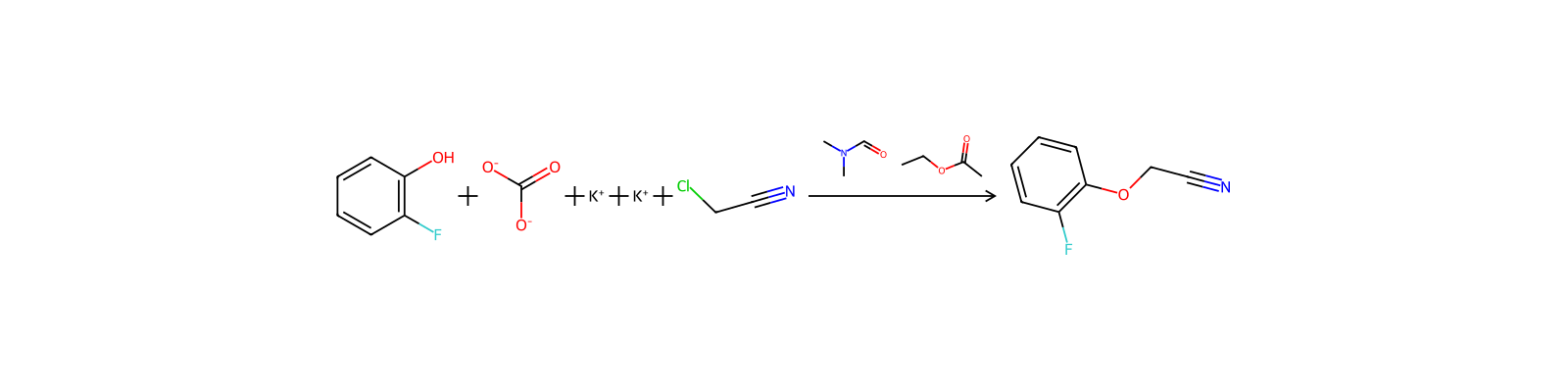
266 records
New reaction record
HRID 13326 reaction equation
HRID 13326As reactant
HRID 13372 reaction equation
HRID 13372As reactant
HRID 16276 reaction equation
HRID 16276As reactant
HRID 18799 reaction equation
HRID 18799As reactant
HRID 65592 reaction equation
HRID 65592As reactant
HRID 78003 reaction equation
HRID 78003As reactant
HRID 78040 reaction equation
HRID 78040As reactant
HRID 81359 reaction equation
HRID 81359As reactant
PreviousPage 1 of 34

Compound notes

On this pageBasic informationOverviewNames & identifiersPropertiesSafety & regulationChemistry & industryRelated reactionsCompound notes
Boiling point
171 · 171-172 °C/741 mmHg (lit.)
Density
1.256 g/mL · 1.256 g/mL at 25 °C (lit.)
refractive index
20 · n20/D 1.511(lit.)
Flash point
116 °F · 116 °F
storage temp.
Inert atmosphere,Room Temperature
solubility
37.7 g/l · 37.7g/l
form
Liquid
pka
8.73 · 8.73(at 25℃)
Specific Gravity
1.256 · 1.256
color
Clear colorless to light yellow-brownish
Water Solubility
80.72 g/L · 80.72g/L(25 ºC)
BRN
1905112 · 1905112
Henry's Law Constant
3.1 · 3.1×100 mol/(m3Pa) at 25℃, Abraham et al. (1994)
Stability
Stable. Flammable. Incompatible with strong oxidizing agents.
InChI
1S/C6H5FO/c7-5-3-1-2-4-6(5)8/h1-4,8H
InChIKey
HFHFGHLXUCOHLN-UHFFFAOYSA-N
SMILES
Oc1ccccc1F
CAS DataBase Reference
367 · 367-12-4(CAS DataBase Reference)
EWG's Food Scores
1 · 1
FDA UNII
9 OW1NLY9R · I9OW1NLY9R
NIST Chemistry Reference
2 · Phenol, 2-fluoro-(367-12-4)
EPA Substance Registry System
o-Fluorophenol (367-12-4)
UNSPSC Code
12352100 · 12352100
NACRES
22 · NA.22
Symbol(GHS)
2 · GHS02,GHS07
Signal word
Warning
Hazard statements
226 · H226-H315-H319
Precautionary statements
210 · P210-P233-P240-P241-P303+P361+P353-P305+P351+P338
PPE
Eyeshields, Faceshields, Gloves, type ABEK (EN14387) respirator filter
Hazard Codes
Xn,F,C,Xi,T
Risk Statements
20 · 20/21/22-36/37/38-10-63-43-23/24/25-45-40
Safety Statements
28 · 28-36/37-36/37/39-26-16-24/25-23-53-36
RIDADR
1993 · UN 1993 3/PG 3
WGK Germany
3 · 3
RTECS
4530000 · SL4530000
Hazard Note
Flammable/Corrosive
TSCA
TSCA listed
HazardClass
3 · 3
PackingGroup
III
HS Code
29081000 · 29081000
Storage Class
3 · 3 - Flammable liquids
Hazard Classifications
4 DermalAcute · Acute Tox. 4 DermalAcute Tox. 4 InhalationAcute Tox. 4 OralAquatic Chronic 3Eye Irrit. 2Flam. Liq. 3Skin Irrit. 2
Limited Quantities
5 L · 5.0 L (1.3 gallons) (liquid)
Excepted Quantities
Max Inner Pack (30g or 30ml) and Max Outer Pack (1Kg or 1L)
· 1 item

2-FLUOROPHENOL reacts as a weak organic acid. May be incompatible with strong reducing substances such as hydrides, nitrides, alkali metals, and sulfides. Flammable gas (H2) is often generated, and the heat of the reaction may ignite the gas. Heat is also generated by the acid-base reaction with bases. Such heating may initiate polymerization of the organic compound. Sulfonated very readily (for example, by concentrated sulfuric acid at room temperature). The reactions generate heat. Nitrated very rapidly, even by dilute nitric acid.

Air and Water ReactionsHighly flammable.
Hazard Classes and CategoriesFlam. Liq. 3 (96.7%)

Safety & protection

Fire Fighting · 1 item

This compound is not very flammable but any fire involving this compound may produce dangerous vapors. You should evacuate the area. All firefighters should wear full-body protective clothing and use self-contained breathing apparatuses. You should extinguish any fires involving this chemical with a dry chemical, carbon dioxide, foam, or halon extinguisher. (NTP, 1992)

First Aid · 1 item

EYES: First check the victim for contact lenses and remove if present. Flush victim's eyes with water or normal saline solution for 20 to 30 minutes while simultaneously calling a hospital or poison control center. Do not put any ointments, oils, or medication in the victim's eyes without specific instructions from a physician. IMMEDIATELY transport the victim after flushing eyes to a hospital even if no symptoms (such as redness or irritation) develop.

Nonfire Spill Response · 1 item

SMALL SPILLS AND LEAKAGE: Should a spill occur while you are handling this chemical, you should dampen the solid spill material with alcohol, then transfer the dampened material to a suitable container. Use absorbent paper dampened with alcohol to pick up any remaining material. Seal the absorbent paper, and any of your clothes, which may be contaminated, in a vapor-tight plastic bag for eventual disposal. Solvent wash all contaminated surfaces with alcohol followed by washing with a strong soap and water solution. Do not reenter the contaminate area until the Safety Officer (or other responsible person) has verified that the area has been properly cleaned.

Isolation and EvacuationExcerpt from ERG Guide 128 [Flammable Liquids (Water-Immiscible)]:
Personal Protective Equipment (PPE)MINIMUM PROTECTIVE CLOTHING: If Tyvek-type disposable protective clothing is not worn during handling of this chemical, wear disposable Tyvek-type sleeves taped to your gloves.

Toxicology

EPA Provisional Peer-Reviewed Toxicity Values · 3 items

2-Fluorophenol

PDF Document

2004

Safety data

PPE
Eyeshields, Faceshields, Gloves, type ABEK (EN14387) respirator filter
wgk
3
tsca
TSCA listed
rtecs
SL4530000
ridadr
UN 1993 3/PG 3
hs_code
29081000
risk_code
20/21/22-36/37/38-10-63-43-23/24/25-45-40
Signal word
Warning
Symbol(GHS)
GHS02,GHS07
hazard_code
Xn,F,C,Xi,T
hazard_note
Flammable/Corrosive
safety_code
28-36/37-36/37/39-26-16-24/25-23-53-36
hazard_class
3
Storage Class
3 - Flammable liquids
packing_group
III
Hazard statements
H226-H315-H319
Limited Quantities
5.0 L (1.3 gallons) (liquid)
Excepted Quantities
Max Inner Pack (30g or 30ml) and Max Outer Pack (1Kg or 1L)
Hazard Classifications
Acute Tox. 4 DermalAcute Tox. 4 InhalationAcute Tox. 4 OralAquatic Chronic 3Eye Irrit. 2Flam. Liq. 3Skin Irrit. 2
Precautionary statements
P210-P233-P240-P241-P303+P361+P353-P305+P351+P338
2-FLUORO-3-HYDROXYBENZALDEHYDE
3-FLUORO-2-METHOXYBENZALDEHYDE
2-Bromo-6-fluorophenol
2-Fluoro-6-nitrophenol
2,4,5-Trichlorobenzoic acid