StartseiteMCPWorkbenchSkills
StartseiteWorkbenchBenachrichtigungenMein Bereich
llms.txt · MCP-AnleitungDatenschutz · Nutzungsbedingungen · Supportv1.8.0
  1. Startseite
  2. /Verbindung

5-Isopropyl-2-methylphenol

Carvacrol

HCID 10364
Neue NotizNeue ReaktionAnfrage stellen
Druckvorschau
GrundinformationenÜberblickNamen und BezeichnerEigenschaftenSicherheit und RegulatorischesChemie und IndustrieZugehörige ReaktionenNotizen zur Verbindung
TeilstruktursucheÄhnliche Strukturen suchen

Grundinformationen

CAS
499-75-2
Standard-SMILES
Cc1ccc(C(C)C)cc1O
InChIKey
RECUKUPTGUEGMW-UHFFFAOYSA-N
Summenformel
C10H14O
Durchschnittliche Molmasse
150,22 g/mol
Monoisotopische Masse
150,10446507

Überblick

Carvacrol is a phenol that is a natural monoterpene derivative of cymene. An inhibitor of bacterial growth, it is used as a food additive. Potent activator of the human ion channels transient receptor potential V3 (TRPV3) and A1 (TRPA1). It has a role as a TRPA1 channel agonist, a volatile oil component, an antimicrobial agent, an agrochemical and a flavouring agent. It is a p-menthane monoterpenoid, a member of phenols and a botanical anti-fungal agent. It derives from a hydride of a p-cymene.

Namen und Bezeichner

Bevorzugter Name
Carvacrol
IUPAC
2-methyl-5-propan-2-ylphenol
Lokaler Name
5-Isopropyl-2-methylphenol
Englischer Name
Carvacrol
Summenformel
C10H14O
Molmasse
150.22

Namen und Synonyme

CARVACROL5-Isopropyl-2-methylphenol499-75-2Isopropyl-o-cresolAntioxine2-p-Cymenol5-Isopropyl-o-cresol2-Hydroxy-p-cymenePhenol, 2-methyl-5-(1-methylethyl)-Karvakrolp-Cymen-2-ol2-Methyl-5-isopropylphenol
Weitere Namen anzeigen
o-ThymolISOTHYMOLCymenolFEMA 22452-hydroxy-p-cymen
2-methyl-5-propan-2-ylphenol3-Isopropyl-6-methylphenolp-Cymene, 2-hydroxy-1-Hydroxy-2-methyl-5-isopropylbenzeneFEMA No. 2245Phenol, 5-isopropyl-2-methyl-1-Methyl-2-hydroxy-4-isopropylbenzeneDENTOL

Datenbank-Bezeichner

CAS
499-75-2
PubChem CID
10364
DTXSID
DTXSID6042074
ChEMBL
CHEMBL281202
ChEBI
CHEBI:3440
UNII
9B1J4V995Q
EC Number
207-889-6

Eigenschaften

Berechnete Struktureigenschaften

XLogP
3,1
Polarare Oberfläche (TPSA)
20,2 Ų
H-Brücken-Donoren
1
H-Brücken-Akzeptoren
1
Frei drehbare Bindungen
1
Schwere Atome
11
Formalladung
0
Komplexität
120

Experimentelle und physikochemische Eigenschaften

Chemical ClassesBiological Agents -> Plant Oils and Extracts
LipidsLipids -> Prenol Lipids [PR] -> Isoprenoids [PR01] -> C10 isoprenoids (monoterpenes) [PR0102]
CosmeticsCosmetic ingredients (Carvacrol) -> CIR (Cosmetic Ingredient Review)
SpringerMaterials PropertiesDensity
Fragrances · 2 Einträge

Fragrance Ingredient (Carvacrol) -> IFRA transparency List

Fragrance

Pesticides · 2 Einträge

Other Treatment

Active substance -> EU Pesticides database: Pending

LogP · 2 Einträge

3.49

3.49

Odor · 2 Einträge

THYMOL ODOR

MEDICINAL SMOKE ODOR

TasteEXCELLENT SMOKE TASTE, @ 1-5 PPM

Sicherheit und Regulatorisches

Sicherheitsangaben dienen nur zur Orientierung und ersetzen weder das Sicherheitsdatenblatt (SDB) des Lieferanten noch geltende Vorschriften oder eine fachliche Bewertung.

GHS-Klassifizierung

GHS Classification · 5 Einträge

This chemical does not meet GHS hazard criteria for 0.1% (2 of 1828) of reports.

Warning

H302 (99.8%): Harmful if swallowed [Warning Acute toxicity, oral]

P261, P264, P264+P265, P270, P272, P280, P301+P317, P302+P352, P305+P351+P338, P321, P330, P332+P317, P333+P317, P337+P317, P362+P364, and P501 (click each P-code to see the statement)

Aggregated GHS information provided per 1828 reports by companies from 13 notifications to the ECHA C&L Inventory. Each notification may be associated with multiple companies.

Gefahrenhinweise

Regulatory Information · 5 Einträge

Chemical: Phenol, 2-methyl-5-(1-methylethyl)-

Regulation (EC) No 1831/2003 (amended)

Phenol, 2-methyl-5-(1-methylethyl)- is listed on the EPA's Chemical Data Reporting (CDR) system. Manufacturers and importers of Phenol, 2-methyl-5-(1-methylethyl)- are required to report information about their production and use of this chemical to the EPA under the Toxic Substances Control Act (TSCA). (40 eCFR Part 711)

REACH registered substance: Carvacrol (EC: 207-889-6)

5-Isopropyl-2-methylphenol: Does not have an individual approval but may be used under an appropriate group standard

Hazards SummaryEmergency treatment: Irritants; [HSDB] Causes severe irritation on rabbit skin; Causes somnolence and convulsions at lethal doses; [RTECS] Safe when used as a flavoring agent in food; [JECFA]
FDA Requirements · 2 Einträge

172.515

121.1164; LIMITATIONS: SYNTHETIC FLAVOR.

Special Reports · 1 Eintrag

REVIEW WITH 42 REF ON CARVACROL INCL TOXICITY, IRRITATION, SENSITIZATION, METAB, PERCUTANEOUS ABSORPTION, PHARMACOLOGY, CYTOTOXICITY, CHEMOTHERAPY, & EFFECT ON ISOLATED TISSUES & ORGANELLES.[OPDYKE DL J; MONOGRAPH ON FRAGRANCE RAW MATERIALS. CARVACROL; FOOD COSMET TOXICOL 17(ISS SUPPL) 743 (1979)]

Chemie und Industrie

Pharmakologische Informationen

Metabolism/Metabolites · 3 Einträge

/WHEN FED TO RABBITS,/ THE SUBSTITUTED MONOPHENOLS, THYMOL & CARVACROL, WHICH OCCUR IN ESSENTIAL OILS OF PLANTS...ARE...CONJUGATED WITH GLUCURONIC ACID & SULFATE.

CARVACROL IS METABOLIZED BY CONJUGATION WITH GLUCURONIC ACID & SULFATE.

Carvacrol has known human metabolites that include (2S,3S,4S,5R)-3,4,5-trihydroxy-6-(2-methyl-5-propan-2-ylphenoxy)oxane-2-carboxylic acid and (2-methyl-5-propan-2-ylphenyl) hydrogen sulfate.

Absorption, Distribution and Excretion · 2 Einträge

CARVACROL APPEARS TO BE SLOWLY ABSORBED FROM INTESTINE IN RABBIT, SINCE 22 HR AFTER ADMIN OF 1.5 G, SOME 30% WAS STILL IN GASTRO-INTESTINAL TRACT, ABOUT 25% OF DOSE HAVING BEEN EXCRETED IN URINE.

CARVACROL APPLIED TO INTACT SHAVED ABDOMINAL SKIN OF MOUSE WAS NOT ABSORBED WITHIN 2 HR.

Cellular LocationsExtracellular

Verwendung und Herstellung

Uses · 6 Einträge

CIR ingredient: Carvacrol

Found in oil of origanum, thyme, marjoram, and summer savory; Used as a disinfectant, fungicide, and anthelmintic (nematodes); Also used in organic syntheses and in perfumes and flavorings; [Hawley] Origanum oil is about 60% carvacrol; [HSDB]

Using Disinfectants or Biocides [Category: Clean]

DISINFECTANT; IN ORGANIC SYNTHESES

MEDICATION: ANTIFUNGAL; ANTHELMINTIC AGENT

PERFUMES; FLAVORING

U.S. Production2023: 2,500 lb
Consumer UsesNot Known or Reasonably Ascertainable
Industry UsesNot Known or Reasonably Ascertainable
Methods of Manufacturing · 2 Einträge

Zugehörige Reaktionen

13
Reaktionsaufzeichnung erstellen
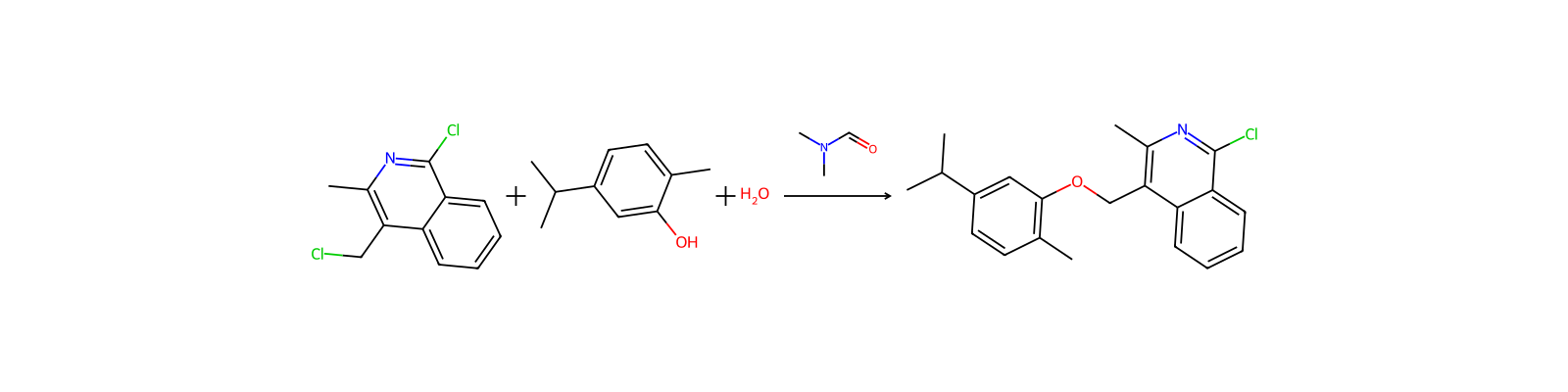
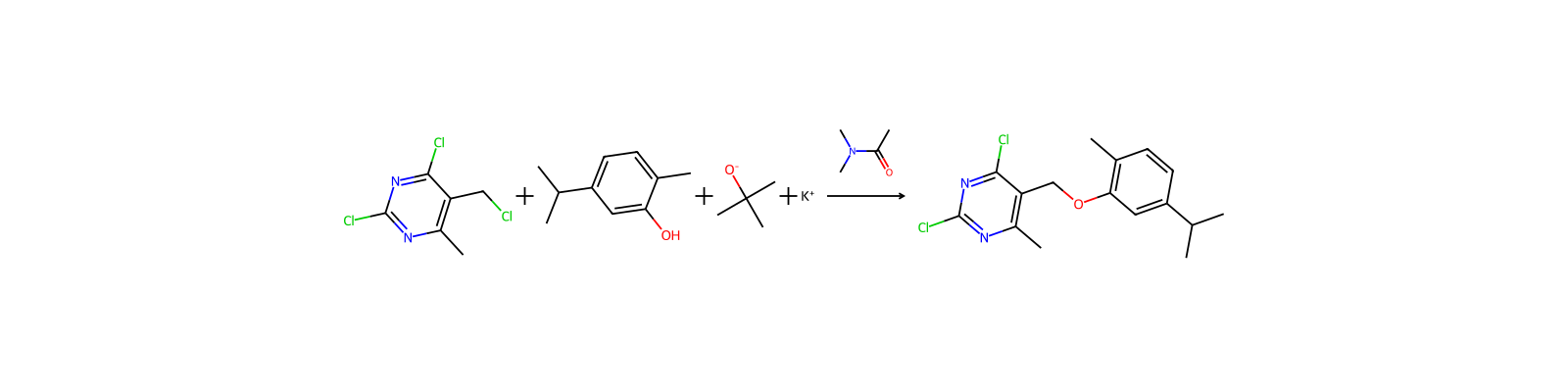
Reaktionsgleichung von HRID 80823
HRID 80823als Produktuspto-grants-2014_09
Reaktionsgleichung von HRID 251647
HRID 251647als Eduktuspto-grants-2011_01
Reaktionsgleichung von HRID 273664
HRID 273664als Produktuspto-grants-1995_02
Reaktionsgleichung von HRID 296675
HRID 296675als EduktTraining data from https://doi.org/10.1039/C8SC04228D (8/10)
Reaktionsgleichung von HRID 606305
HRID 606305als Eduktuspto-grants-2011_03
Reaktionsgleichung von HRID 1091938
HRID 1091938als Eduktuspto-grants-2012_03
Reaktionsgleichung von HRID 1392681
HRID 1392681als Eduktuspto-grants-2008_03
Reaktionsgleichung von HRID 1455756
HRID 1455756als Eduktuspto-grants-2009_01
Seite 1 von 2

Notizen zur Verbindung

Wird geladen…

Auf dieser SeiteGrundinformationenÜberblickNamen und BezeichnerEigenschaftenSicherheit und RegulatorischesChemie und IndustrieZugehörige ReaktionenNotizen zur Verbindung
Weitere Aktionen
Neue NotizNeue ReaktionAnfrage stellen
Nikkaji
J6.180H
Food Additives
FLAVORING AGENT OR ADJUVANT -> FDA Substance added to food
Density · 2 Einträge

0.976 @ 20 °C/4 °C

0.974-0.979

Flavoring AgentsEU Flavoring substances

Physikochemische Eigenschaften

Schmelzpunkt
3 · 3-4 °C(lit.)
Siedepunkt
236 · 236-237 °C(lit.)
Dichte
0.976 g/mL · 0.976 g/mL at 20 °C(lit.)
Dampfdruck
3.09 · 3.09-6.664Pa at 25℃
FEMA
2245 · 2245 | CARVACROL
Brechungsindex
20 · n20/D 1.522(lit.)
Flammpunkt
224 °F · 224 °F
storage temp.
-20 °C · -20°C
Löslichkeit
1.25 g/l · 1.25g/l
pka
10.38 · 10.38±0.10(Predicted)
Aggregatzustand
Liquid
Farbe
Colorless to Light orange to Yellow
Geruch (Odor)
Penetrating, dry-medicinal (“-phenolic”) - herbaceous odor with a spicy undertone.
Geruchsart
spicy
Biologische Quelle
synthetic
Wasserlöslichkeit
Insoluble
Merck
14 · 14,1872
JECFA Number
710 · 710
BRN
1860514 · 1860514
Henry's Law Constant
1.5 · 1.5×100 mol/(m3Pa) at 25℃, Martins et al. (2017)
Stabilität
Stable. Combustible. Incompatible with strong bases, strong oxidizing agents.
Major Application
cleaning productscosmeticsflavors and fragrancesfood and beveragespersonal care
Kosmetik-Inhaltsstoffe Funktionen
PERFUMING
InChI
1S/C10H14O/c1-7(2)9-5-4-8(3)10(11)6-9/h4-7,11H,1-3H3
InChIKey
RECUKUPTGUEGMW-UHFFFAOYSA-N
SMILES
CC(C)c1ccc(C)c(O)c1
LogP
3.33 · 3.33-3.49
CAS Datenbank
499 · 499-75-2(CAS DataBase Reference)
NIST chemische Informationen
2 · Phenol, 2-methyl-5-(1-methylethyl)-(499-75-2)
EPA chemische Informationen
Isopropyl-o-cresol (499-75-2)
Hazard Classes and CategoriesAcute Tox. 4 (99.8%)

Toxikologische Informationen

Adverse EffectsNeurotoxin - Other CNS neurotoxin
Toxicity Summary · 2 Einträge

The CIR Expert panel concludes Sodium p-Chloro-m-Cresol, p-Chloro-m-Cresol, Chlorothymol, m-Cresol, o-Cresol, Isopropyl Cresols, Thymol, o-Cymen-5-ol, Cavacrol are safe at concentrations up to 0.5% in cosmetics; however, the available data are insufficient to support the safety of p-Cresol and Mixed Cresols for use in cosmetic products.

Safe for use in cosmetics, with qualifications

Natural Pollution Sources · 2 Einträge

FOUND IN OIL OF ORIGANUM, THYME, MARJORAM, SUMMER SAVORY...

OCCURS IN BARK OIL OF THUJA ARTICULATA, CAMPHOR OIL, IN OILS OF MONARDA CITRIODORA & MONARDA FISTULOSA, IN SOME SPECIES OF SATUREJA, IN OIL OF VARIOUS SPECIES OF ORIGANUM, THYME, THYMBRA SPICATA L, IN SEED OIL OF PTYCHOTIS AJOWAN DC, & OTHERS.

Human Toxicity Excerpts · 2 Einträge

TECHNICAL GRADE (1.0 & 0.1% IN ETHANOL) PRODUCED POS PATCH TESTS IN PT WITH ACUTE DERMATITIS OF FACE, BUT NO POS RESPONSES IN CONTROL SUBJECTS. TESTED @ 4% IN PETROLATUM, IT PRODUCED NO IRRITATION AFTER 48-HR.

CARVACROL SHOWED MODERATE CYTOTOXIC EFFECTS IN HELA CELLS.

Non-Human Toxicity Excerpts · 5 Einträge

SOMEWHAT MORE TOXIC THAN THYMOL IN RATS & RABBITS.

EVALUATED FOR MUTAGENIC EFFECTS TO 5 STRAINS OF SALMONELLA TYPHIMURIUM EMPLOYING PROCEDURES DESCRIBED BY AMES, ISOTHYMOL HAD PRONOUNCED MUTAGENICITY.

CARVACROL APPLIED FULL STRENGTH TO INTACT OR ABRADED RABBIT SKIN FOR 24 HR UNDER OCCLUSION WAS SEVERELY IRRITATING.

WHEN MIXT OF 93% CARVACROL & 7% THYMOL IN ARACHIS OIL WAS ADMIN BY GASTRIC INTUBATION TO CFE STRAIN RATS IN SINGLE DOSE OF 1.5 MMOL/KG, SLIGHT INCR IN PRODUCTION OF LIVER BIPHENYL-4-HYDROXYLASE WAS NOTED.

CARVACROL SHOWED PAPAVERINE-LIKE ANTISPASMODIC ACTION ON ISOLATED SMALL INTESTINE OF MOUSE. ADDED TO BOVINE SEMINAL VESICLE MICROSOMES @ 4.1 UG/ML, IT INHIBITED THE IN VITRO FORMATION OF PROSTAGLANDIN E1 BY 50%.

Effects During Pregnancy and Lactation◉ Summary of Use during Lactation

Regulatorische Informationen

FDA Requirements · 2 Einträge

172.515

121.1164; LIMITATIONS: SYNTHETIC FLAVOR.

Sicherheitsdaten

wgk
3
tsca
TSCA listed
ridadr
UN 3265 8/PG 3
hs_code
29071990
RTECS-Nr.
FI1225000
risk_code
22-34
Toxizität
LD orally in rabbits: 100 mg/kg (Kochmann)
hazard_code
C
safety_code
26-36/37/39-45
hazard_class
8
packing_group
III
Speicherklasse
8A - Combustible corrosive hazardous materials
Giftige Stoffe Daten
499-75-2(Hazardous Substances Data)
Hazard Classifications
Acute Tox. 4 OralAquatic Chronic 2Eye Dam. 1Skin Corr. 1B

FROM P-CYMENE BY SULFONATION & SUBSEQUENT ALKALI FUSION. HIXSON & MCKEE, CHEM ZENTR, II: 851, 1919; GIBBS & PHILLIPS, J IND ENG CHEM, 12: 145, 1920.

...BY CHLORINATION OF ALPHA-PINENE WITH TERT-BUTYL HYPOCHLORITE: RITTER, GINSBURG, J AM CHEM SOC 72, 2381 (1950); FROM 2-BROMO-P-CYMOL: STRUBELL, BAUMGARTEL, ARCH PHARM 291, 66 (1958).

Formulations/Preparations · 2 Einträge

THE COMMERCIAL PRODUCT CONSISTS OF A MIXTURE OF ISOMERS DIFFERING BECAUSE OF THE POSITION OF THE ISOPROPYL RADICAL. THE TECHNICAL & PURE QUALITY ARE DIFFERENT BECAUSE OF THE ODOR CHARACTERISTICS.

THE MAIN CONSTITUENT/OF ORIGANUM OIL/IS CARVACROL (ca 60%)

Household ProductsInformation on 1 consumer products that contain Carvacrol in the following categories is provided:
Use Classification · 6 Einträge

Fragrance Ingredients

Flavouring Agent -> FLAVOURING_AGENT -> JECFA Functional Classes

Flavoring Agents -> JECFA Flavorings Index

Flavouring Agent -> FLAVOURING_AGENT -> JECFA Functional Classes

Flavouring Agent -> FLAVOURING_AGENT -> JECFA Functional Classes

Flavouring Agent -> FLAVOURING_AGENT -> JECFA Functional Classes

General Manufacturing Information · 5 Einträge

Not Known or Reasonably Ascertainable

Phenol, 2-methyl-5-(1-methylethyl)-: ACTIVE

FLAVORS USEFUL IN: SMOKE FLAVORS, SPICE, MEAT FLAVORS.

REPORTED USES: /IN/ NON-ALCOHOLIC BEVERAGES 26 PPM; ICE CREAM, ICES, ETC 34 PPM; CANDY 92 PPM; BAKED GOODS 120 PPM; CONDIMENTS 37 PPM.

FEMA NUMBER 2245

Anwendungen · 2 Einträge

OccurrenceReported found in cumin seed, thyme, oregano, calamus, lovage, myrtle and lemon balm.

VerwendenCarvacrol is a flavoring agent that is a colorless to pale yellow liquid. it has a spicy and pungent odor, resembling thymol. it is insoluble in water and soluble in alcohol and ether. it is a mixture of the isomeric carvacrols (isopropyl o-creols), and is obtained by chemical synthesis. it is also an ingredient of savory, a fragrant herb in nature.

Darstellung

synthetischeFrom p-cymene by sulfonation and subsequent alkali fusion.

Vor- und nachgelagerte Produkte

Vorgelagerte Rohstoffe

Eucalyptus Citriodara OilThymolBicyclo[4.1.0]hept-3-en-2-one, 4,7,7-trimethyl-Bicyclo[4.1.0]hept-3-en-2-one, 3,7,7-trimethyl-2,4-Cycloheptadien-1-one, 3,6,6-trimethyl-Bicyclo[4.1.0]hept-4-en-3-one, 4,7,7-trimethyl-2,6,6-Trimethyl-2,4-cycloheptadien-1-one5-Isopropyl-m-kresol

Nachgelagerte Produkte

Acetamid2-(5-Isopropyl-2-methyl-phenoxy)-ethylamine

Ergänzende Hinweise

DefinitionChEBI: A phenol that is a natural monoterpene derivative of cymene. An inhibitor of bacterial growth, it is used as a food additive. Potent activator of the human ion channels transient receptor potential V3 (TRPV3) and A1 (TRPA1).