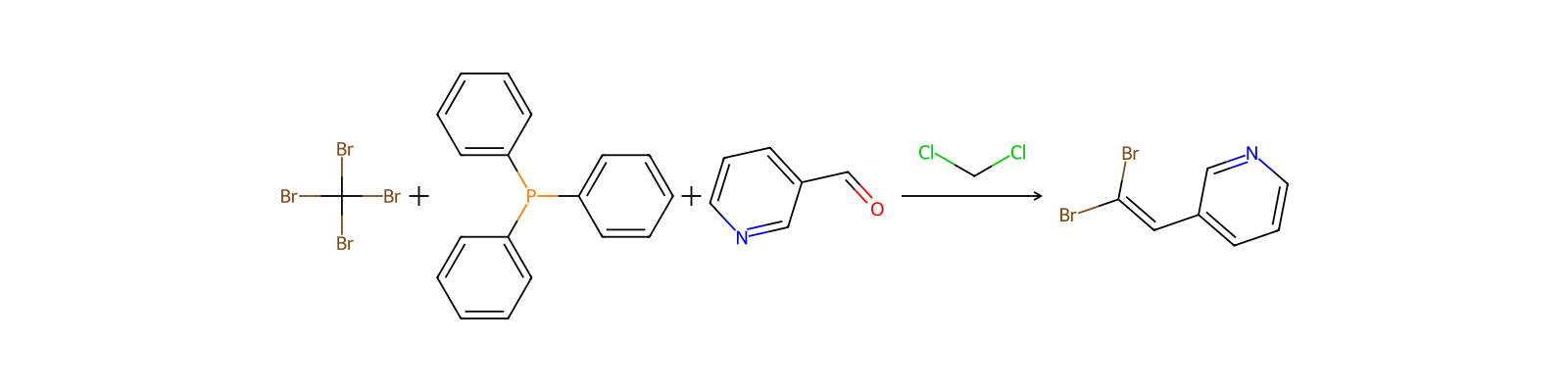
Nicotinaldehyd
3-Pyridinecarboxaldehyde
Grundinformationen
- CAS
500-22-1- Standard-SMILES
O=Cc1cccnc1- InChIKey
QJZUKDFHGGYHMC-UHFFFAOYSA-N- Summenformel
- C6H5NO
- Durchschnittliche Molmasse
- 107,11 g/mol
- Monoisotopische Masse
- 107,03711378
Überblick
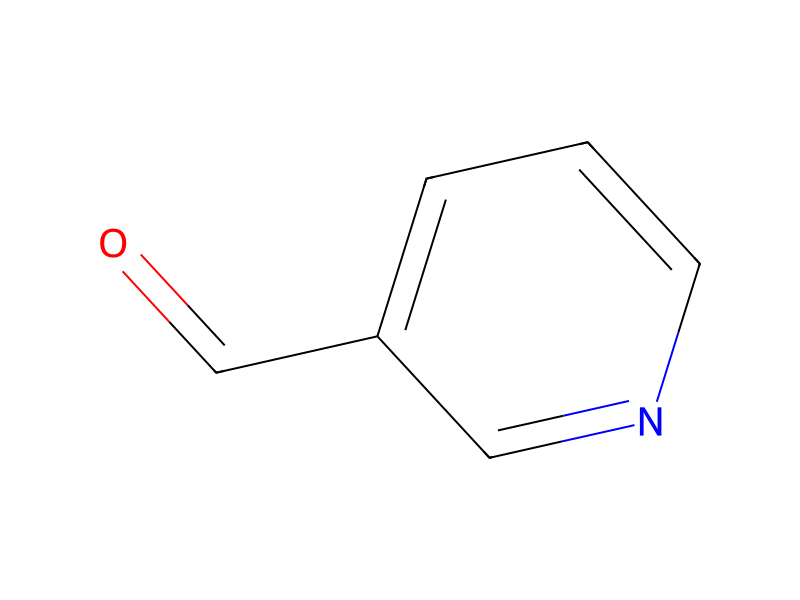
Pyridine-3-carbaldehyde is a pyridinecarbaldehyde that is pyridine substituted by a formyl group at position 3.
Namen und Bezeichner
- Bevorzugter Name
- 3-Pyridinecarboxaldehyde
- IUPAC
- pyridine-3-carbaldehyde
- Lokaler Name
- Nicotinaldehyd
- Englischer Name
- 3-Pyridinecarboxaldehyde
- Summenformel
- C6H5NO
- Molmasse
- 107.11
Namen und Synonyme
3-PyridinecarboxaldehydeNicotinaldehyde500-22-1Pyridine-3-carbaldehyde3-PyridinaldehydeNicotinic aldehyde3-Pyridylcarboxaldehyde3-FORMYLPYRIDINE3-PyridylaldehydeRowalind840R4IDQ1TNSC-8952
Weitere Namen anzeigen
3-NicotinaldehydeNicotinaldehyde 98%3-PYRIDINECARBALDEHYDE3-PYRIDINECARBOXYALDEHYDE
DTXSID2022044CHEBI:28345RefChem:95393DTXCID002044207-900-4Pyridine-3-carboxaldehydeNicotinealdehydePyridine-3-aldehyde
Datenbank-Bezeichner
- CAS
500-22-1- PubChem CID
- 10371
- DTXSID
DTXSID2022044- ChEMBL
CHEMBL268493- ChEBI
CHEBI:28345- UNII
- 840R4IDQ1T
- EC Number
- 207-900-4
- Nikkaji
- J28.015A
Eigenschaften
Berechnete Struktureigenschaften
- XLogP
- 0,3
- Polarare Oberfläche (TPSA)
- 30 Ų
- H-Brücken-Donoren
- 0
- H-Brücken-Akzeptoren
- 2
- Frei drehbare Bindungen
- 1
- Schwere Atome
- 8
- Formalladung
- 0
- Komplexität
- 82,6
Experimentelle und physikochemische Eigenschaften
Chemical ClassesNitrogen Compounds -> Pyridines
SpringerMaterials PropertiesCoriolis coupling
PesticidesEnvironmental transformation -> Pesticide transformation products (metabolite, successor)
LogP0.29
Vapor Pressure0.56 [mmHg]
Physical DescriptionPale yellow liquid; mp = 8 deg C; [Alfa Aesar MSDS]
Physikochemische Eigenschaften
- Schmelzpunkt
- 8 °C · 8°C
- Siedepunkt
- 78 · 78-81 °C/10 mmHg (lit.)
- Dichte
- 1.141 g/mL · 1.141 g/mL at 20 °C (lit.)
- Dampfdruck
- 0.3 hPa · 0.3 hPa (20 °C)
- Brechungsindex
- 20 · n20/D 1.549(lit.)
- Flammpunkt
- 140 °F · 140 °F
Sicherheit und Regulatorisches
Sicherheitsangaben dienen nur zur Orientierung und ersetzen weder das Sicherheitsdatenblatt (SDB) des Lieferanten noch geltende Vorschriften oder eine fachliche Bewertung.
GHS-Klassifizierung
GHS Classification
Danger
H226 (61.3%): Flammable liquid and vapor [Warning Flammable liquids]
P203, P210, P233, P240, P241, P242, P243, P260, P261, P264, P264+P265, P270, P271, P272, P273, P280, P284, P301+P317, P302+P352, P303+P361+P353, P304+P340, P305+P354+P338, P317, P318, P319, P321, P330, P332+P317, P333+P317, P342+P316, P362+P364, P370+P378, P403, P403+P233, P403+P235, P405, and P501 (click each P-code to see the statement)
Aggregated GHS information provided per 75 reports by companies from 8 notifications to the ECHA C&L Inventory. Each notification may be associated with multiple companies.
Gefahrenhinweise
Regulatory Information
Chemical: 3-Pyridinecarboxaldehyde
3-Pyridinecarbaldehyde: Does not have an individual approval but may be used under an appropriate group standard
Hazards Summary
Causes burns; Inhalation may cause corrosive injuries to upper respiratory tract and lungs; May cause skin sensitization; [Alfa Aesar MSDS] Search for (500-22-1[EC/RN Number]) AND (allergic OR dermatitis OR sensitizer OR sensitization): no results; [PubMed]
Hazard Classes and CategoriesFlam. Liq. 3 (61.3%)
Toxikologische Informationen
Adverse EffectsDermatotoxin - Skin burns.
Sicherheitsdaten
- F
- 8-10-23
- wgk
Chemie und Industrie
Verwendung und Herstellung
Use ClassificationEnvironmental transformation -> Pesticide transformation products (metabolite, successor)
General Manufacturing Information3-Pyridinecarboxaldehyde: ACTIVE
Anwendungen
BeschreibungPyridine-3-carbaldehyde, also known as nicotinaldehyde or 3-Pyridinecarboxaldehyde, belongs to the class of organic compounds known as pyridine carboxaldehydes. These are aromatic compounds containing a pyridine ring which bears a carboxaldehyde group. 3-pyridinecarboxaldehyde is not a naturally occurring metabolite and is only found in those individuals exposed to this compound or its derivatives. Pyridine-3-carbaldehyde, an aldehyde containing a nitrogen atom, reacts faster than benzaldehyde with diethylzinc to afford enantioenriched 3-pyridyl alkanol in a reaction in which the same chiral catalyst, i.e., (1S,2R)-N, N-dibutylnorephedrine, is used.
Verwenden3-Pyridinecarboxaldehyde is a substituted pyridine with niacin activity. 3-Pyridinecarboxaldehyde is a component of tobacco smoke.
Vor- und nachgelagerte Produkte
Vorgelagerte Rohstoffe
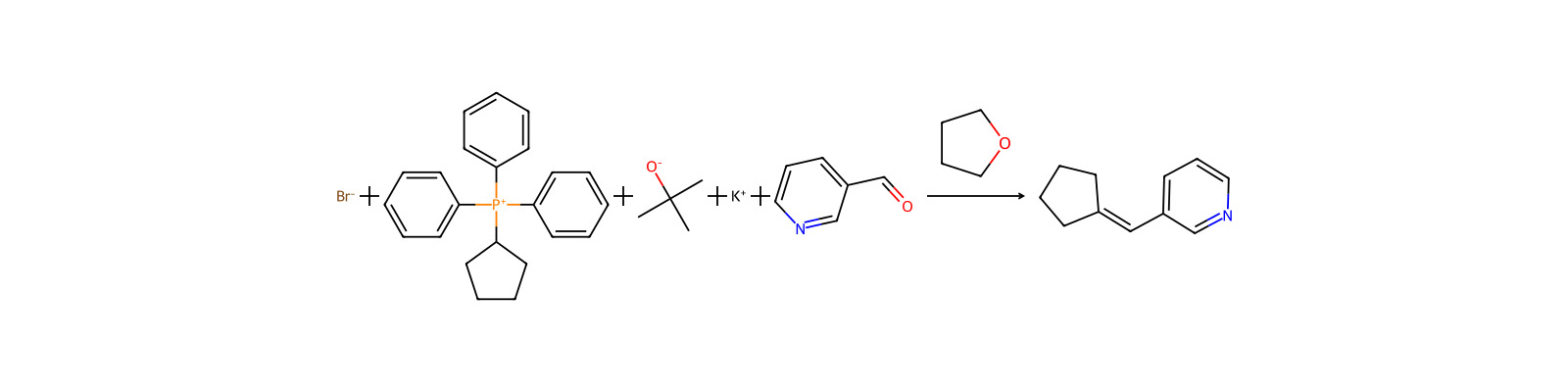
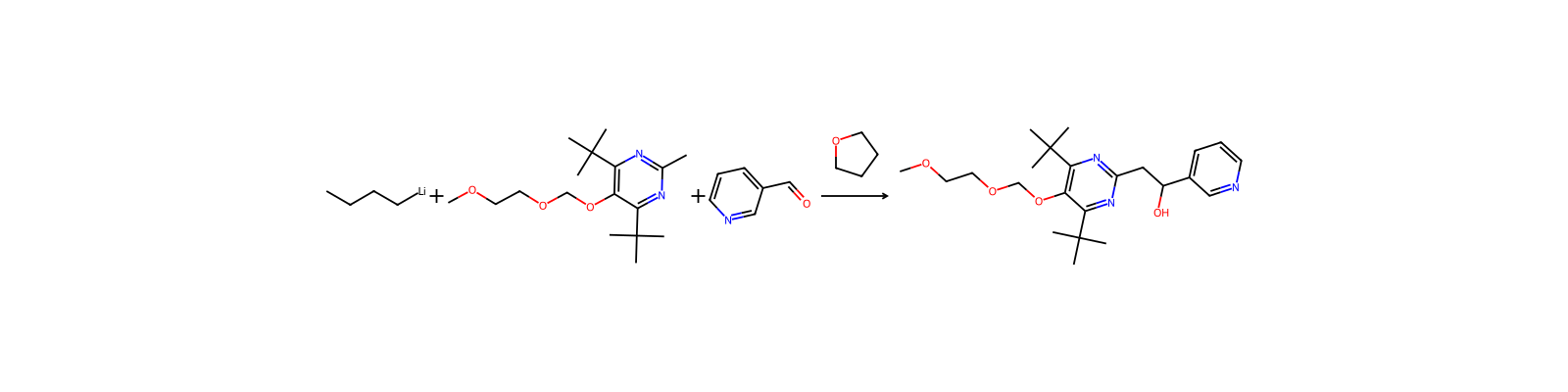
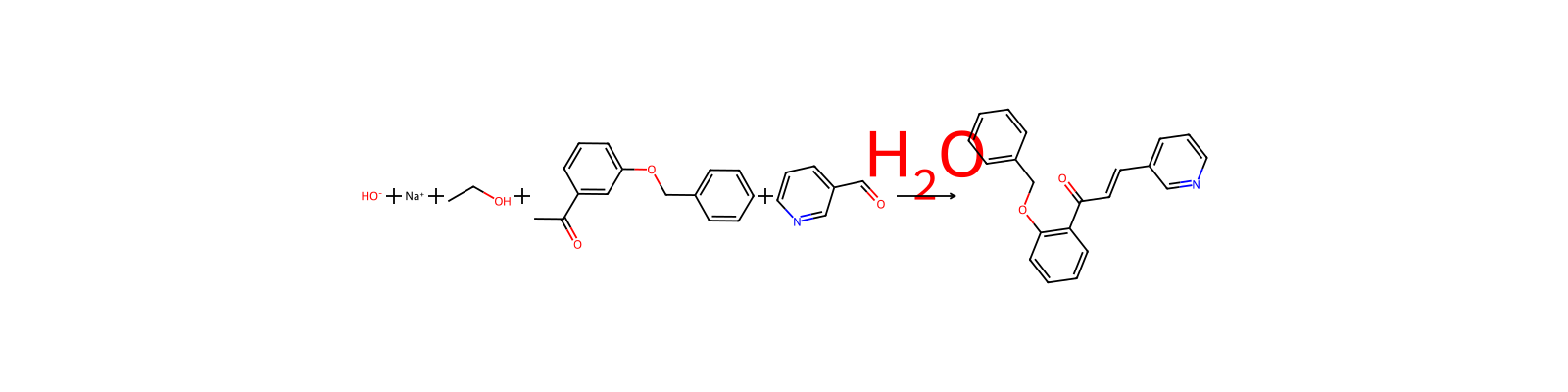
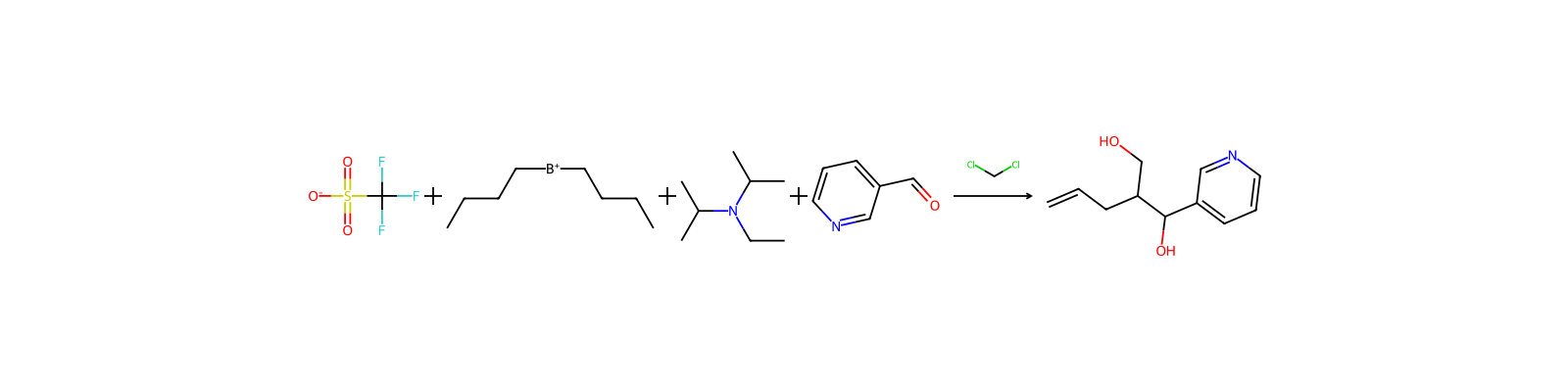
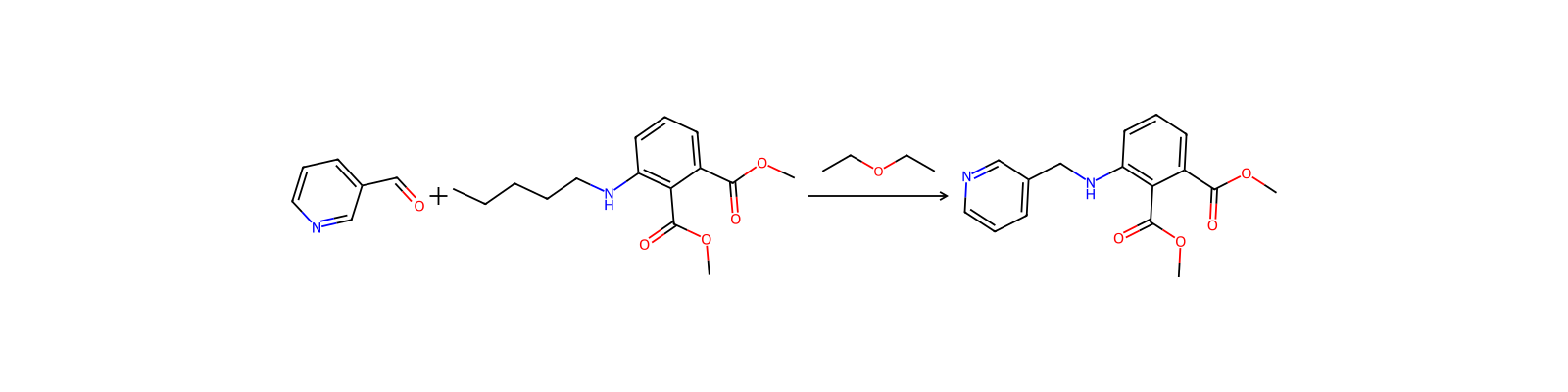
Zugehörige Reaktionen
736


Notizen zur Verbindung
Wird geladen…