
Trichlormethylchlorformiat
Diphosgene
Daten werden ergänzt – lade die Seite später neu, um den aktuellen Stand zu sehen
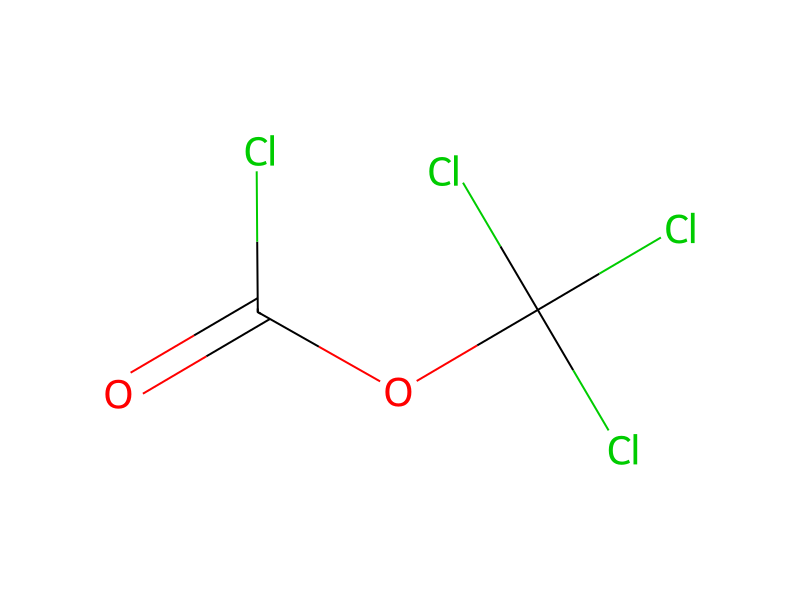
Grundinformationen
- CAS
503-38-8- Standard-SMILES
O=C(Cl)OC(Cl)(Cl)Cl- InChIKey
HCUYBXPSSCRKRF-UHFFFAOYSA-N- Summenformel
- C2Cl4O2
- Durchschnittliche Molmasse
- 197,8 g/mol
- Monoisotopische Masse
- 195,86523996
Überblick
Diphosgene is a moderately persistent synthetic organic compound, formed by chlorination of methyl chloroformate, that is a respiratory irritant and lachrymator. Trichloromethyl Chloroformate has been used as a chemical warfare agent and is characterized as a colorless liquid with an odor that is like newly mown hay. Exposure occurs by inhalation, ingestion, or contact.
Namen und Bezeichner
- Bevorzugter Name
- Diphosgene
- IUPAC
- trichloromethyl carbonochloridate
- Lokaler Name
- Trichlormethylchlorformiat
- Englischer Name
- Diphosgene
- Summenformel
- C2Cl4O2
- Molmasse
- 197.83
Namen und Synonyme
Trichloromethyl chloroformateDIPHOSGENE503-38-8DiphosgenDifosgenPerchloromethyl formateCarbonochloridic acid, trichloromethyl esterMethanol, trichloro-, chloroformateCarbonochloridic acid trichloromethyl esterPO4Q4R80LVFormic acid, chloro-, trichloromethyl esterTrichlormethylester kyseliny chlormravenci
Weitere Namen anzeigen
DPASP-PROPerstoffDisphosgeneDiphosgene,99%perchloromethylformate
DTXSID60862065RefChem:134712DTXCID80810886207-965-9trichloromethyl carbonochloridatechloroformic acid trichloromethyl estertrichloromethylchloroformateMFCD00015553
Datenbank-Bezeichner
- CAS
503-38-8- PubChem CID
- 10426
- DTXSID
DTXSID60862065
Eigenschaften
Berechnete StruktureigenschaftenWird ergänzt
- XLogP
- 3,1
- Polarare Oberfläche (TPSA)
- 26,3 Ų
- H-Brücken-Donoren
- 0
- H-Brücken-Akzeptoren
- 2
- Frei drehbare Bindungen
- 1
- Schwere Atome
- 8
- Formalladung
- 0
- Komplexität
- 94,7
Experimentelle und physikochemische Eigenschaften
Chemical ClassesToxic Gases & Vapors -> Acid Halides
SpringerMaterials PropertiesNuclear quadrupole resonance spectroscopy
LogP1.49
OdorODOR SIMILAR TO PHOSGENE (NEWMOWN HAY)
Density
1.6525 @ 14 °C
1.6 g/cm³
Relative density of the vapour/air-mixture at 20 °C (air = 1): 1.08
Color/FormCOLORLESS LIQUID
Solubility
INSOL IN WATER; SOL IN ETHANOL, VERY SOL IN ETHER
SOL IN BENZENE, ALCOHOL, AND ETHER
Solubility in water: reaction
Boiling Point
128 °C @ 760 MM HG
Suffocating liquid; Boiling point = 49 °C at 50 mm Hg; Stable at room temp, decomposes to phosgene at approximately 300 °C
at 101.3 kPa: 128 °C
Sicherheit und Regulatorisches
Sicherheitsangaben dienen nur zur Orientierung und ersetzen weder das Sicherheitsdatenblatt (SDB) des Lieferanten noch geltende Vorschriften oder eine fachliche Bewertung.
GHS-Klassifizierung
GHS Classification
Danger
H300 (87%): Fatal if swallowed [Danger Acute toxicity, oral]
P260, P264, P270, P271, P280, P284, P301+P316, P301+P330+P331, P302+P361+P354, P304+P340, P305+P354+P338, P316, P320, P321, P330, P363, P403+P233, P405, and P501 (click each P-code to see the statement)
Aggregated GHS information provided per 46 reports by companies from 4 notifications to the ECHA C&L Inventory. Each notification may be associated with multiple companies.
Gefahrenhinweise
Regulatory Information
Chemical: Carbonochloridic acid, trichloromethyl ester
Trichloromethyl chloroformate: Does not have an individual approval but may be used under an appropriate group standard
Other Safety InformationEvaluation - Chemicals that are unlikely to require further regulation to manage risks to human health
Fire HazardsNot combustible.
Hazards SummarySimilar to phosgene in reactivity; Decomposes slowly in water or moisture to release hydrochloric acid and carbon monoxide; Skin contact may cause burns or frostbite; [CAMEO] Causes lachrymation; [ICSC] See Phosgene.
Chemical DangersDecomposes on heating. This produces toxic and corrosive fumes including chlorine and phosgene. Reacts with water. This produces toxic and corrosive fumes.
Physical DangersThe vapour is heavier than air.
DOT Emergency Guidelines
Chemie und Industrie
Verwendung und Herstellung
Uses
Used as a chemical intermediate and miltary weapon; [CAMEO]
ORGANIC SYNTHESIS; MILITARY POISON GAS
Used in synthesis of isocyanides
ImpuritiesCarbon dioxide, hydrogen chloride, phosgene, and alkyl chlorides; main impurities are corresponding carbonates /Chloroformic esters/
Methods of Manufacturing
Prepared by photochlorination of methyl formate: W Hentschel, J Prakt Chem 36: 209 (1887); F Grignard et al, CR Acad Sci 169: 1074 (1919); eidem, ibid 1143; by photochlorination of methyl chloroformate: A Kling et al, ibid 1046; K Kurita, Y Iwakura, Org Syn 59: 195 (1980).
Formulations/Preparations
GRADE: TECHNICAL.
99% purity
Typical specifications of commercial chloroformates: purity, 98%; phosgene, <0.1%, iron, <10 ppm; acidity as HCl, <0.1%; alcohol or phenol, <2% /Chloroformic esters/
Commercial products have concentrations of 97-99 wt% /Chloroformic esters/
General Manufacturing Information
Carbonochloridic acid, trichloromethyl ester: ACTIVE
Most chloroformate production is used captively and production figures are not available /Chloroformic esters/
On a laboratory scale, trichloromethyl chloroformate (diphosgene) ... can be used as substitute for phosgene to synthesize isocyanates from amines
Anwendungen
BeschreibungDiphosgene (DP), trichloromethyl chloroformate, is a clear, colorless liquid with an odor similar to phosgene. It is noncombustible, a strong irritant to the eyes and tissues, and is toxic by inhalation and ingestion. DP has a boiling point of 127°C–128°C (263°F) and a vapor pressure of 4.2 at 68°F (20°C). The liquid density is 1.65, which is heavier than water, and a melting/freezing point of 314°F (157°C). Inhalation LC50 is 3600 mg/m3 for 10 min. Effects of exposure are quite similar to phosgene gas. Its molecular formula is ClCOOCCl3, and the structure and molecular formula are shown in Figure 8.38. The DOT lists diphosgene as a 6.1 poison liquid. The NFPA 704 designation for CG is estimated to be health 4, flammability 0, reactivity 1, and special 0. It has a four-digit UN identification number of 2972.
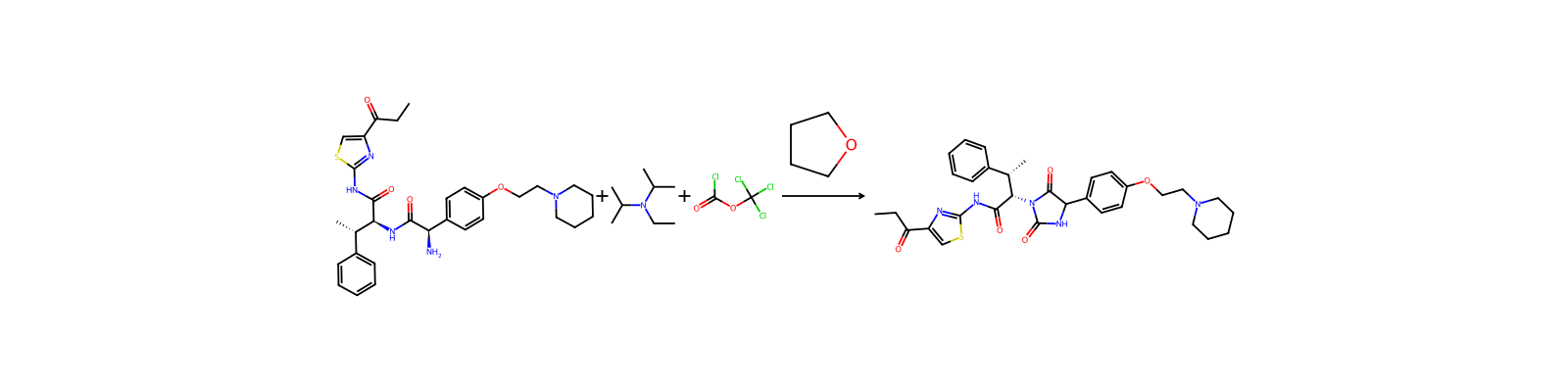
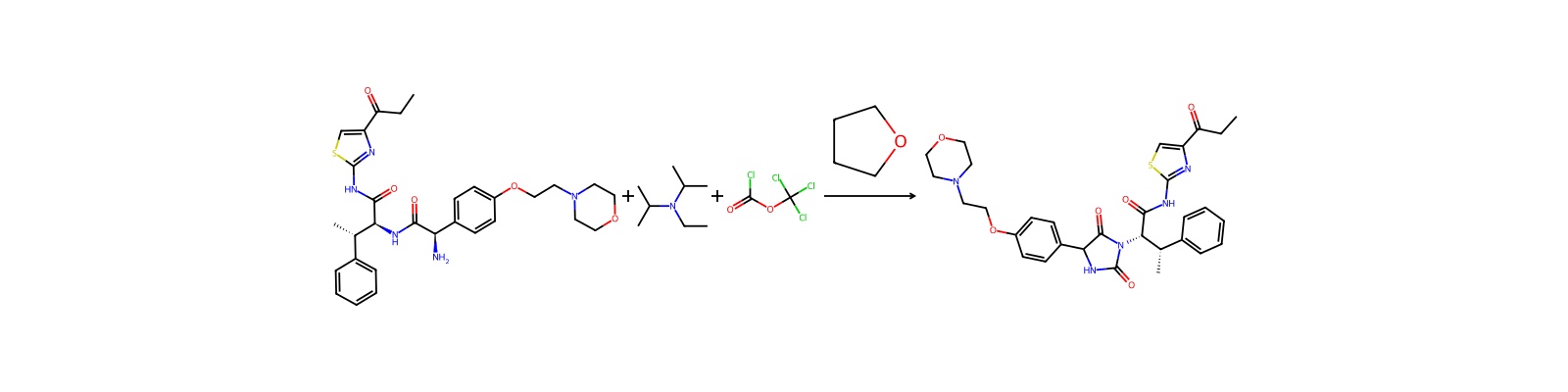
Zugehörige Reaktionen
993





Notizen zur Verbindung
Wird geladen…