
HRID 261181als Produkt
Ammonium Bisulfite
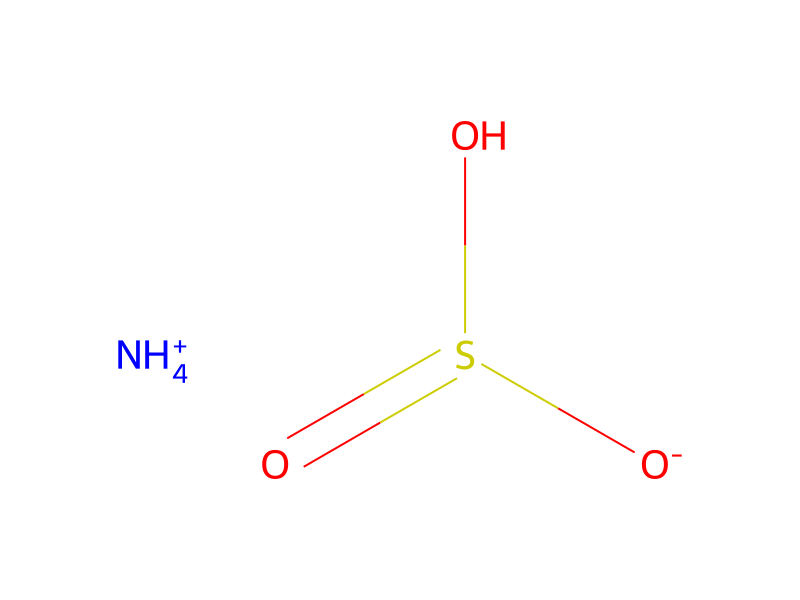
10192-30-0O=S([O-])O.[NH4+]ZETCGWYACBNPIH-UHFFFAOYSA-NAmmonium bisulfite is colorless crystals which are soluble in water. It is noncombustible. It is corrosive to aluminum. It is a strong irritant to skin and mucous membranes. It is toxic by skin absorption.
10192-30-0、10196-04-0DTXSID1050462Other Classes -> Sulfites
Corrosives
Cosmetic ingredients (Ammonium Bisulfite) -> CIR (Cosmetic Ingredient Review)
Preservative
2.03 at 68 °F 1.40 (72% aqueous solution) (USCG, 1999) - Denser than water; will sink
Sp gr: 2.03
Relative density (water = 1): 2.0
Colorless crystals
Colorless to yellow
In water: 267 g/100 ml @ 10 °C, 620 G/100 ml @ 60 °C
In water: 71.8 g/100 ml @ 0 deg
Solubility in water, g/100ml at 10 °C: 267 (very good)
Sublimates at 302.0 °F (USCG, 1999)
at 101.1kPa: 100 °C
Sicherheitsangaben dienen nur zur Orientierung und ersetzen weder das Sicherheitsdatenblatt (SDB) des Lieferanten noch geltende Vorschriften oder eine fachliche Bewertung.
This chemical does not meet GHS hazard criteria for 3.7% (6 of 162) of reports.
Warning
H315 (38.3%): Causes skin irritation [Warning Skin corrosion/irritation]
P261, P264, P264+P265, P271, P280, P302+P352, P304+P340, P305+P351+P338, P319, P321, P332+P317, P337+P317, P362+P364, P403+P233, P405, and P501 (click each P-code to see the statement)
Aggregated GHS information provided per 162 reports by companies from 11 notifications to the ECHA C&L Inventory. Each notification may be associated with multiple companies.
Danger
Chemical: Sulfurous acid, monoammonium salt
Sulfurous acid, ammonium salt (1:1) is listed on the EPA's Chemical Data Reporting (CDR) system. Manufacturers and importers of Sulfurous acid, ammonium salt (1:1) are required to report information about their production and use of this chemical to the EPA under the Toxic Substances Control Act (TSCA). (40 eCFR Part 711)
REACH registered substance: Ammonium hydrogensulphite (EC: 233-469-7)
Ammonium bisulphite: Does not have an individual approval but may be used under an appropriate group standard
The New Jersey Worker and Community Right to Know Act requires public and private employers to provide information about hazardous substances at their workplaces. (N.J.S.A. 34:5A-1 et. seq.)
Corrosive
Corrosive
Special Hazards of Combustion Products: None (USCG, 1999)
CIR ingredient: Ammonium Bisulfite
Used in preservatives, fertilizers, grain treatments, explosives, paper production, and corrosion control in drilling fluids; [HSDB] Also used in photography, food preservation, and the gold industry (cyanide destruction process); [MSDSonline]
Pulp and Paper Processing [Category: Industry]
SOURCE OF SULFUR IN FLUID FERTILIZERS.
IN LIQ ANTIMICROBIAL TREATMENT FOR STORAGE GRAIN.
Manufacture of industrial explosives & blasting agents.
Agriculture, Forestry, Fishing and Hunting
Sulfurous acid, ammonium salt (1:1): ACTIVE
Sold as solution only
Hexavalent chromium removal by ammonium bisulfite in wastewater.
IN PERMANENT HAIR WAVING LOTION.
IN REMOVAL OF NITROGEN OXIDES & SULFUR OXIDES FROM WASTE GAS.
VerwendenPreservative.


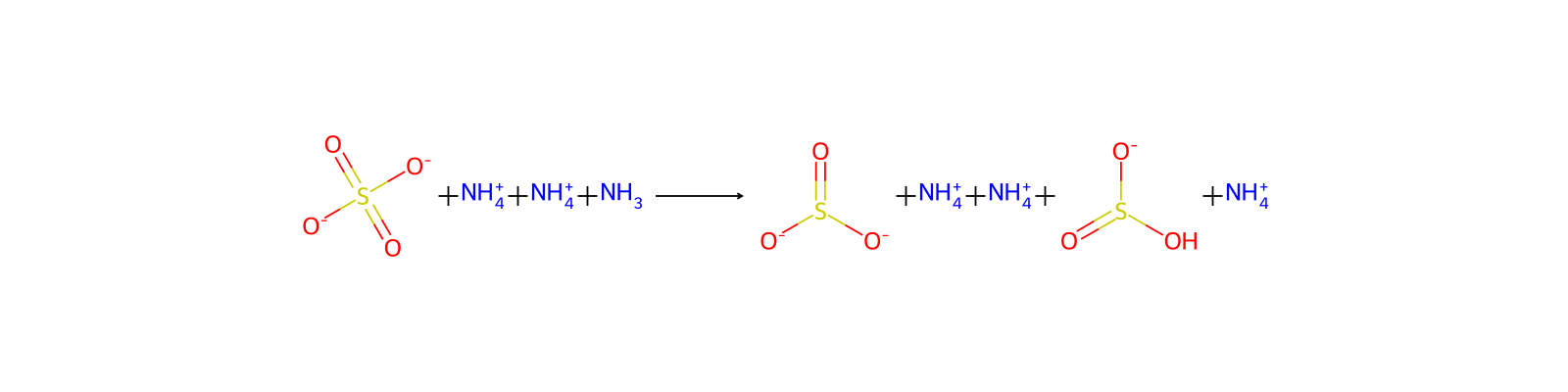
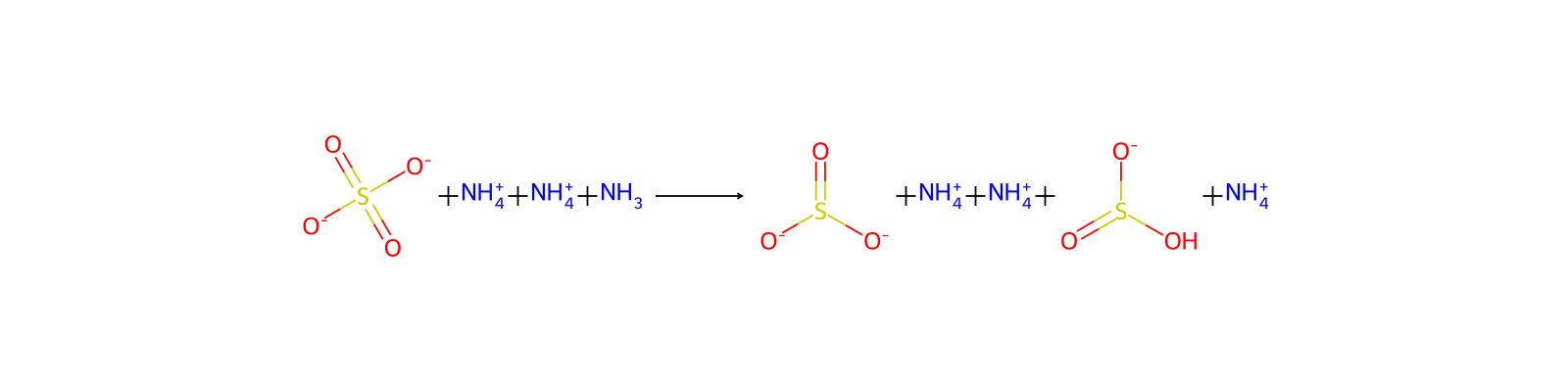

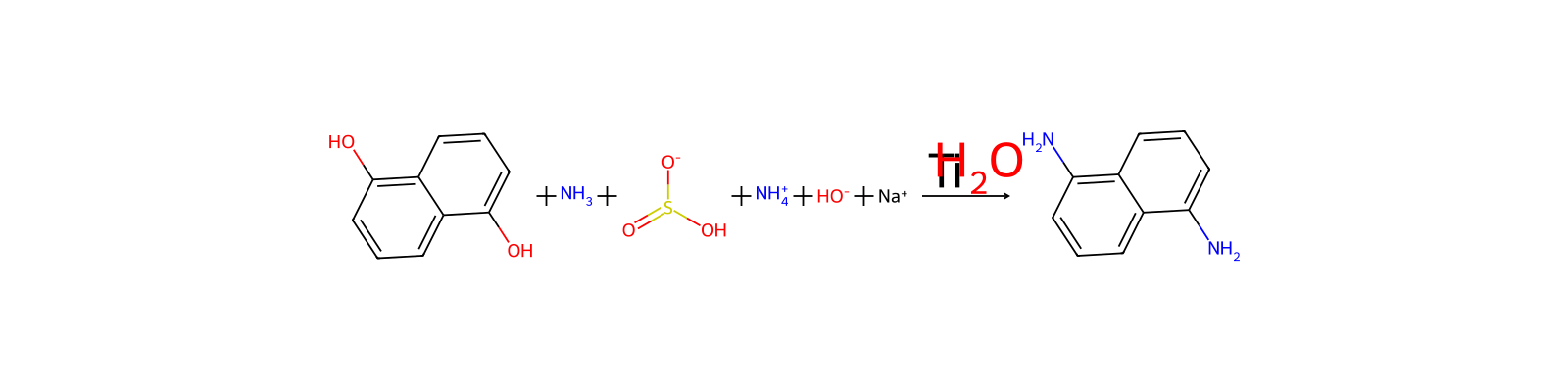
When heated to decomp it emits toxic vapors of /ammonia/.
When heated to decomposition it emits very toxic fumes of SO(x) /sulfur oxides/, NO(x) /nitrogen oxides/ and NH(3).
Ammonium bisulfite is colorless crystals which are soluble in water. It is noncombustible. It is corrosive to aluminum. It is a strong irritant to skin and mucous membranes. It is toxic by skin absorption.
Ammonium bisulfite is a solution of yellow crystals. It is a strong irritant to skin and mucous membranes. It is toxic by skin absorption. It may be corrosive to metals.
Liquid
Colorless to yellow solid; [ICSC] Sold only in solution; [Merck Index] Available as 44% and 68% solution; [MSDSonline]
COLOURLESS-TO-YELLOW LIQUID OR CRYSTALS WITH CHARACTERISTIC ODOUR.
Excerpt from ERG Guide 154 [Substances - Toxic and/or Corrosive (Non-Combustible)]:
Not combustible. Gives off irritating or toxic fumes (or gases) in a fire. Risk of fire and explosion on contact with acids or oxidants.
Excerpt from ERG Guide 154 [Substances - Toxic and/or Corrosive (Non-Combustible)]:
Excerpt from ERG Guide 154 [Substances - Toxic and/or Corrosive (Non-Combustible)]:
No listed effects of short-term or long-term exposure; [ICSC] Toxic by inhalation, ingestion, and skin absorption; A strong skin and mucous membrane irritant; [CAMEO] A skin, eye, and respiratory tract irritant; Some individuals are sensitive to sulfites; [MSDSonline] See SULFITES.
Salts, Acidic
Salts, Acidic
Strong Reducing Agent
Strong Reducing Agent
Inorganic reducing agents, such as AMMONIUM BISULFITE, react with oxidizing agents to generate heat and products that may be flammable, combustible, or otherwise reactive. Their reactions with oxidizing agents may be violent. Sulfites and hydrosulfites (dithionites) can react explosively with strong oxidizing agents. Sulfites generate gaseous sulfur dioxide in contact with oxidizing acids and nonoxidizing acids.
Inorganic reducing agents, such as AMMONIUM BISULFITE, react with oxidizing agents to generate heat and products that may be flammable, combustible, or otherwise reactive. Their reactions with oxidizing agents may be violent. Sulfites and hydrosulfites (dithionites) can react explosively with strong oxidizing agents. Sulfites generate gaseous sulfur dioxide in contact with oxidizing acids and nonoxidizing acids.
Decomposes on contact with acids. This produces toxic fumes including sulfur oxides, nitrogen oxides and ammonia. Reacts violently with oxidants. This generates fire hazard. The substance is a weak acid. Attacks many metals in the presence of water.
Excerpt from ERG Guide 154 [Substances - Toxic and/or Corrosive (Non-Combustible)]:
Excerpt from ERG Guide 154 [Substances - Toxic and/or Corrosive (Non-Combustible)]:
In case of fire in the surroundings, use appropriate extinguishing media.
Fresh air, rest. Artificial respiration may be needed. Refer for medical attention.
Rinse skin with plenty of water or shower.
Rinse with plenty of water for several minutes (remove contact lenses if easily possible).
Rinse mouth. Refer for medical attention .
Call a physician.
Excerpt from ERG Guide 154 [Substances - Toxic and/or Corrosive (Non-Combustible)]:
Excerpt from ERG Guide 154 [Substances - Toxic and/or Corrosive (Non-Combustible)]:
Excerpt from ERG Guide 154 [Substances - Toxic and/or Corrosive (Non-Combustible)]:
SRP: At the time of review, criteria for land treatment or burial (sanitary landfill) disposal practices are subject to significant revision. Prior to implementing land disposal of waste residue (including waste sludge), consult with environmental regulatory agencies for guidance on acceptable disposal practices.
Personal protection: filter respirator for acid gases and vapours adapted to the airborne concentration of the substance. Collect leaking and spilled liquid in covered non-metallic containers as far as possible. Absorb liquid in sand or inert absorbent. Wash away remainder with plenty of water. Then store and dispose of according to local regulations.
Excerpt from ERG Guide 154 [Substances - Toxic and/or Corrosive (Non-Combustible)]:
Excerpt from ERG Guide 154 [Substances - Toxic and/or Corrosive (Non-Combustible)]:
Cough. Shortness of breath. Wheezing.
Redness.
Redness.
Abdominal pain. Nausea. Vomiting.
...WITH LARGE DOSES OF...AMMONIUM /SALTS/, THERE ARISES THE POSSIBILITY OF SUFFICIENT ABSORPTION TO PRODUCE DIURESIS & SYSTEMIC AMMONIA POISONING, PARTICULARLY IF MATERIAL IS ADMIN PARENTERALLY. /AMMONIUM SALTS/
... If swallowed they may cause irritation of the stomach by liberating sulfurous acid. /Sulfites/
Basic treatment: Establish a patent airway. Suction if necessary. Watch for signs of respiratory insufficiency and assist ventilations if necessary. Administer oxygen by nonrebreather mask at 10 to 15 L/min. Monitor for signs of pulmonary edema and treat if necessary ... . Monitor for shock and treat if necessary ... . For eye contamination, flush eyes immediately with water. Irrigate each eye continuously with normal saline during transport ... . Do not use emetics. For ingestion, rinse mouth and administer 5 mg/kg up to 200 ml of water for dilution if the patent can swallow, has a strong gag reflex, and does not drool ... . Do not attempt to neutralize. /Ammonia and related compounds/
Advanced treatment: Consider orotracheal or nasotracheal intubation for airway control if signs of upper airway obstruction are present or if the patient is unconscious or has severe pulmonary edema. Positive-pressure ventilation techniques with a bag-valve-mask device may be beneficial. Monitor cardiac rhythm and treat arrhythmias if necessary ... . Start an IV with D5W /SRP: "To keep open", minimal flow rate/. Use lactated Ringer's if signs of hypovolemia are present. Watch for signs of fluid overload. Consider drug therapy for pulmonary edema ... . For hypotension with signs of hypovolemia, administer fluid cautiously. Consider vasopressors if patient is hypotensive with a normal fluid volume. Watch for signs of fluid overload ... . Use proparacaine hydrochloride to assist eye irrigation ... . /Ammonium and related compounds/
Basic treatment: Establish a patent airway. Suction if necessary. Watch for signs of respiratory insufficiency and assist ventilations if necessary. Administer oxygen by nonrebreather mask at 10 to 15 L/min. Monitor for pulmonary edema and treat if necessary ... . Anticipate seizures and treat if necessary ... . For eye contamination, flush eyes immediately with water. Irrigate each eye continuously with normal saline during transport ... . Do not use emetics. For ingestion, rinse mouth and administer 5 m1/kg up to 200 ml of water for dilution if the patient can swallow, has a strong gag reflex, and does not drool ... . Administer activated charcoal ... . Cover skin burns with dry sterile dressings after decontamination ... . /Sulfur and related compounds/
Advanced treatment: Consider orotracheal or nasotracheal intubation for airway control in the patient who is unconscious. Early intubation at the first sign of upper airway obstruction may be necessary. Monitor cardiac rhythm and treat arrhythmias if necessary ... . Start an IV with D5W /SRP: "To keep open", minimal flow rate/. Use lactated Ringer's if signs of hypovolemia are present. Watch for signs of fluid overload. Consider drug therapy for pulmonary edema ... . Treat seizures with diazepam (Valium) ... . For hypotension with signs of hypovolemia, administer fluid cautiously. Consider vasopressors for hypotension with a normal fluid volume. Watch for signs of fluid overload ... . Use proparacaine hydrochloride to assist eye irrigation ... . /Sulfur and related compounds/
Persons in charge of vessels or facilities are required to notify the National Response Center (NRC) immediately, when there is a release of this designated hazardous substance, in an amount equal to or greater than its reportable quantity of 5000 lb or 2270 kg. The toll free number of the NRC is (800) 424-8802; In the Washington D.C. metropolitan area (202) 426-2675. The rule for determining when notification is required is stated in 40 CFR 302.4 (section IV. D.3.b).
Ammonium bisulfite is designated as a hazardous substance under section 311(b)(2)(A) of the Federal Water Pollution Control Act and further regulated by the Clean Water Act Amendments of 1977 and 1978. These regulations apply to discharges of this substance. This designation includes any isomers and hydrates, as well as any solutions and mixtures containing this substance.