α-Acetyl-γ-butyrolacton
2-Acetylbutyrolactone
Daten werden ergänzt – lade die Seite später neu, um den aktuellen Stand zu sehen
Grundinformationen
- CAS
517-23-7- Standard-SMILES
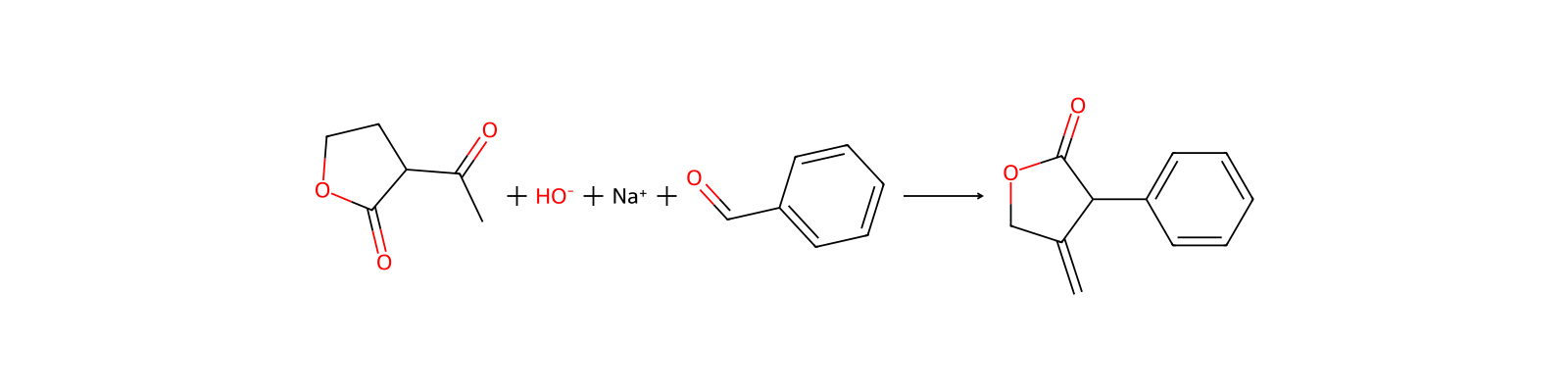
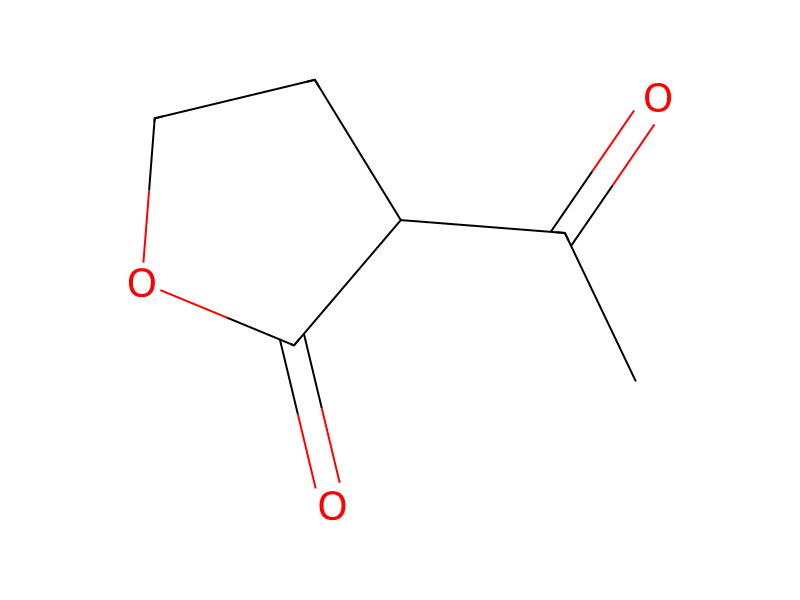
CC(=O)C1CCOC1=O- InChIKey
OMQHDIHZSDEIFH-UHFFFAOYSA-N- Summenformel
- C6H8O3
- Durchschnittliche Molmasse
- 128,13 g/mol
- Monoisotopische Masse
- 128,04734412
Überblick
3-Acetyldihydro-2(3H)-furanone is a gamma-lactone.
Namen und Bezeichner
- Bevorzugter Name
- 2-Acetylbutyrolactone
- IUPAC
- 3-acetyloxolan-2-one
- Lokaler Name
- α-Acetyl-γ-butyrolacton
- Englischer Name
- 2-Acetylbutyrolactone
- Summenformel
- C6H8O3
- Molmasse
- 128.13
Namen und Synonyme
2-Acetylbutyrolactone517-23-7ALPHA-ACETYLBUTYROLACTONE2(3H)-Furanone, 3-acetyldihydro-2-Oxo-3-acetyltetrahydrofuranDihydro-3-acetyl-2(3H)-furanonealpha-AcetobutyrolactoneI3D73T5K0QNSC-2019RefChem:5553584,5-dihydro-3-acetylfuran-2(3H)-one208-235-2
Weitere Namen anzeigen
ABLα-Acetyl-γ-butyrolactoneACETYLBUTYROLACTONEα-Acetylbutyrolactonea-Acetyl-y-Butyrolactone
3-acetyldihydrofuran-2(3H)-one3-acetyloxolan-2-one3-Acetyldihydro-2(3H)-furanonealpha-Acetyl-gamma-butyrolactone2-Acetylbutanolide2-Acetyl-gamma-butyrolactone3-acetyltetrahydrofuran-2-one3-Acetyltetrahydro-2-furanone
Datenbank-Bezeichner
- CAS
517-23-7- PubChem CID
- 10601
- DTXSID
DTXSID6044436- ChEMBL
CHEMBL3187921- ChEBI
CHEBI:179633- UNII
- I3D73T5K0Q
- EC Number
- 208-235-2
- Nikkaji
- J6.575G
Eigenschaften
Berechnete StruktureigenschaftenWird ergänzt
- XLogP
- 0,1
- Polarare Oberfläche (TPSA)
- 43,4 Ų
- H-Brücken-Donoren
- 0
- H-Brücken-Akzeptoren
- 3
- Frei drehbare Bindungen
- 1
- Schwere Atome
- 9
- Formalladung
- 0
- Komplexität
- 150
Experimentelle und physikochemische Eigenschaften
Chemical ClassesOther Classes -> Lactones
LipidsFatty Acyls [FA] -> Fatty esters [FA07] -> Lactones [FA0704]
Physical Description
Liquid
Liquid with an ester-like odor; [Merck Index] Clear colorless to pale yellow liquid; [Acros Organics MSDS]
Physikochemische Eigenschaften
- Schmelzpunkt
- 25 °C · <25 °C
- Siedepunkt
- 107 · 107-108 °C5 mm Hg(lit.)
- Dichte
- 1.19 g/mL · 1.19 g/mL at 25 °C(lit.)
- Dampfdruck
- 0.131 Pa · 0.131Pa at 20℃
- Brechungsindex
- 20 · n20/D 1.459(lit.)
- Flammpunkt
- 230 °F · >230 °F
- storage temp.
- Keep in dark place,Sealed in dry,Room Temperature
- Löslichkeit
- 200 g/l · 200g/l
Sicherheit und Regulatorisches
Sicherheitsangaben dienen nur zur Orientierung und ersetzen weder das Sicherheitsdatenblatt (SDB) des Lieferanten noch geltende Vorschriften oder eine fachliche Bewertung.
GHS-Klassifizierung
GHS Classification
This chemical does not meet GHS hazard criteria for 0.5% (1 of 202) of reports.
Warning
H315 (97.5%): Causes skin irritation [Warning Skin corrosion/irritation]
P261, P264, P264+P265, P271, P280, P302+P352, P304+P340, P305+P351+P338, P319, P321, P332+P317, P337+P317, P362+P364, P403+P233, P405, and P501 (click each P-code to see the statement)
Aggregated GHS information provided per 202 reports by companies from 15 notifications to the ECHA C&L Inventory. Each notification may be associated with multiple companies.
Gefahrenhinweise
Regulatory Information
Chemical: 2(3H)-Furanone, 3-acetyldihydro-
2(3H)-Furanone, 3-acetyldihydro- is listed on the EPA's Chemical Data Reporting (CDR) system. Manufacturers and importers of 2(3H)-Furanone, 3-acetyldihydro- are required to report information about their production and use of this chemical to the EPA under the Toxic Substances Control Act (TSCA). (40 eCFR Part 711)
Status: Active Update: 26-11-2021 https://echa.europa.eu/registration-dossier/-/registered-dossier/25715
2-Acetyl-gamma-butyrolactone: Does not have an individual approval but may be used under an appropriate group standard
Hazards SummaryA skin and mucous membrane irritant; [Merck Index] A skin and strong eye irritant; [ECHA REACH Registrations] An irritant; [Acros Organics MSDS] See beta-Butyrolactone and Butyrolactone.
Hazard Classes and CategoriesSkin Irrit. 2 (97.5%)
Sicherheitsdaten
- wgk
- 1
- tsca
- TSCA listed
Chemie und Industrie
Verwendung und Herstellung
UsesUsed to make 3,4-disubstituted pyridines and 5-(beta-hydroxethyl)-4-methylthiazole; [Merck Index] Used as an intermediate; [ECHA REACH Registrations]
U.S. Production2023: 5,000,000 - <10,000,000 lb
Industry UsesIntermediate
General Manufacturing Information
Pesticide, Fertilizer, and Other Agricultural Chemical Manufacturing
2(3H)-Furanone, 3-acetyldihydro-: ACTIVE
Anwendungen
VerwendenAn intermediate in the synthesis of 2,4-disubstituted pyridines. A fluorogenic reagent for the spectrofluorimetric determination of primary amines.
Vor- und nachgelagerte Produkte
Vorgelagerte Rohstoffe
Nachgelagerte Produkte
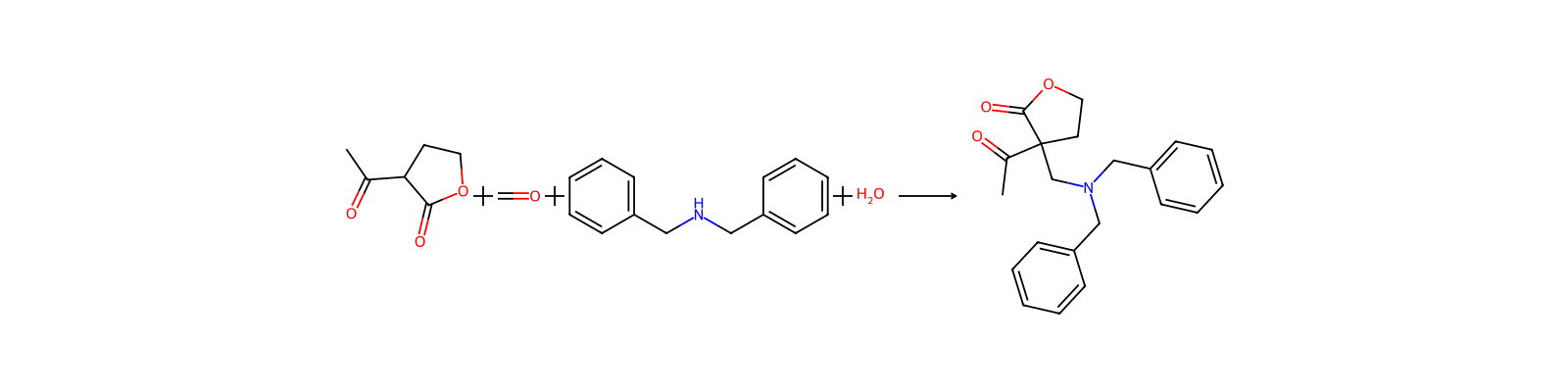
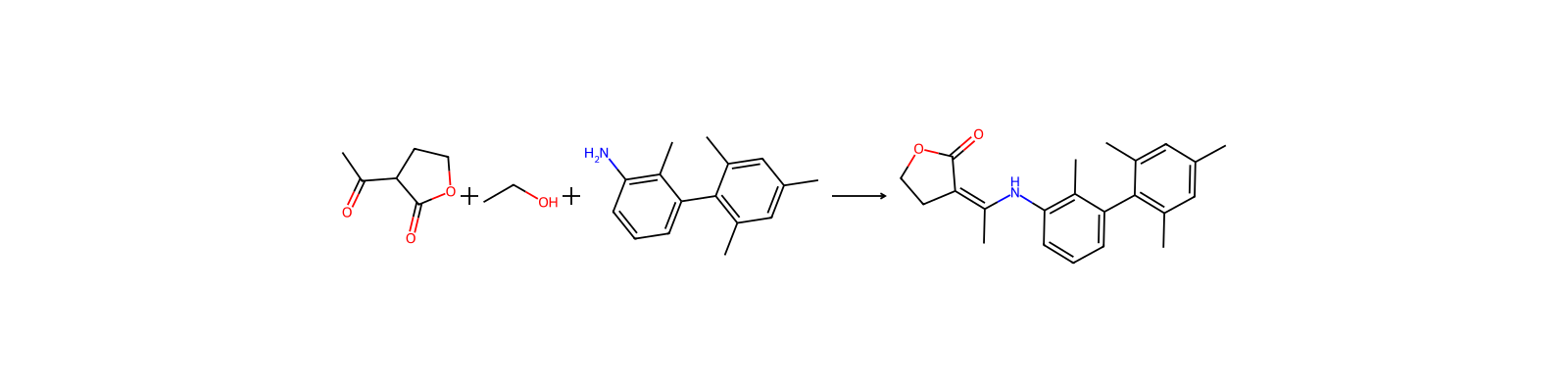
Zugehörige Reaktionen
100




Notizen zur Verbindung
Wird geladen…