

Grundinformationen
- Standard-SMILES
CC(C)(C)ON=O- InChIKey
IOGXOCVLYRDXLW-UHFFFAOYSA-N- Summenformel
- C4H9NO2
- Durchschnittliche Molmasse
- 103,12 g/mol
- Monoisotopische Masse
- 103,06332853
Namen und Bezeichner
- Bevorzugter Name
- Tert-Butyl nitrite
- IUPAC
- tert-butyl nitrite
- Lokaler Name
- tert-Butylnitrit
- Englischer Name
- tert-Butyl nitrite
- Summenformel
- C4H9NO2
- Molmasse
- 103.12
Namen und Synonyme
tert-Butyl nitrite540-80-71,1-Dimethylethyl nitriteNitrous acid, 1,1-dimethylethyl esterNitrous Acid tert-Butyl EsterCCRIS 2098alpha,alpha-Dimethylethyl nitriteNITROUS ACID, t-BUTYL ESTEREINECS 208-757-0(CH3)3CONOUNII-4780H7U8LUBRN 1209339
Weitere Namen anzeigen
tBuoNoT-BUTYL NITRITEt-BuNO2t-butyl esterTertiary butyl nitritetert-Butyl nitrite 90%2-methyl-2-nitritopropane2-Methyl-2-nitrosooxy-propaneert-buty nitritet-Buthyl nitrite
4780H7U8LU.alpha.,.alpha.-Dimethylethyl nitriteNitrous acid 1,1-dimethyl ethyl esterTERT-BUTYL NITRITE [MI]IOGXOCVLYRDXLW-UHFFFAOYSA-DTXSID102023164-01-00-01622 (Beilstein Handbook Reference)NITROUS ACID, TERT-BUTYL ESTER
Datenbank-Bezeichner
- CAS
540-80-7- PubChem CID
- 10906
- DTXSID
DTXSID10202316- UNII
- 4780H7U8LU
- EC Number
- 208-757-0
- Nikkaji
- J6.388F
Eigenschaften
Berechnete Struktureigenschaften
- XLogP
- 1
- Polarare Oberfläche (TPSA)
- 38,7 Ų
- H-Brücken-Donoren
- 0
- H-Brücken-Akzeptoren
- 3
- Frei drehbare Bindungen
- 1
- Schwere Atome
- 7
- Formalladung
- 0
- Komplexität
- 64,6
Experimentelle und physikochemische Eigenschaften
Chemical ClassesNitrogen Compounds -> Nitrates and Nitrites
Physical DescriptionYellow liquid with an agreeable odor; [Merck Index] Sweet odor; [Alfa Aesar MSDS]
Physikochemische Eigenschaften
- Siedepunkt
- 61 · 61-63 °C(lit.)
- Dichte
- 0.867 g/mL · 0.867 g/mL at 25 °C(lit.)
- Dampfdruck
- 13.466 kPa · 13.466kPa at 25℃
- Brechungsindex
- 20 · n20/D 1.368(lit.)
- Flammpunkt
- 10 °F · −10 °F
- storage temp.
- 2 · 2-8°C
- Löslichkeit
- alcohol: very soluble(lit.)
- Aggregatzustand
- Liquid
- Farbe
- Clear yellow
- Wasserlöslichkeit
- slightly soluble
- Merck
- 14 · 14,1583
- BRN
- 1209339 · 1209339
- Henry's Law Constant
- 7.9 · 7.9×10-3 mol/(m3Pa) at 25℃, Hilal et al. (2008)
- InChI
- 1S/C4H9NO2/c1-4(2,3)7-5-6/h1-3H3
- InChIKey
- IOGXOCVLYRDXLW-UHFFFAOYSA-N
- SMILES
- CC(C)(C)ON=O
- LogP
- 2.24 at · 2.24 at 20℃
- CAS Datenbank
- 540 · 540-80-7(CAS DataBase Reference)
- NIST chemische Informationen
- 3 · (CH3)3CONO(540-80-7)
Sicherheit und Regulatorisches
GHS-Klassifizierung
GHS Classification
Danger
H225: Highly Flammable liquid and vapor [Danger Flammable liquids]
P210, P233, P240, P241, P242, P243, P261, P264, P270, P271, P280, P301+P317, P303+P361+P353, P304+P340, P317, P330, P370+P378, P403+P235, and P501 (click each P-code to see the statement)
Danger
H225 (100%): Highly Flammable liquid and vapor [Danger Flammable liquids]
P210, P233, P240, P241, P242, P243, P261, P264, P270, P271, P280, P301+P317, P303+P361+P353, P304+P340, P317, P330, P370+P378, P403+P235, and P501 (click each P-code to see the statement)
Gefahrenhinweise
Regulatory Information
Status: Active Update: 27-09-2019 https://echa.europa.eu/registration-dossier/-/registered-dossier/30024
t-Butyl nitrite: Does not have an individual approval but may be used under an appropriate group standard
Hazards Summary
Causes cyanosis in inhalation lethal-concentration studies of mice; Causes methemoglobinemia in oral lethal-dose studies of mice; [RTECS] A mild skin and eye irritant; May induce methemoglobinemia; Harmful by ingestion and inhalation; [Alfa Aesar MSDS] See n-Butyl nitrite and Isobutyl nitrite.
Hazard Classes and Categories
Flam. Liq. 2 (100%)
Flammable liquid - category 2
Flammable liquids - Category 2
Flam. Liq. 2
Toxikologische Informationen
Adverse EffectsMethemoglobinemia - The presence of increased methemoglobin in the blood; the compound is classified as secondary toxic effect
Toxicity DataLC50 (mouse) = 10,852 ppm/1hr
Sicherheitsdaten
- F
- 8
- wgk
- 1
- ridadr
- UN 2351 3/PG 2
- hs_code
- 29209085
- RTECS-Nr.
- RA0802000
- risk_code
- 11-20/22
- hazard_code
- F,Xn
- safety_code
- 16-24-46
- hazard_class
- 3
- packing_group
- II
- Speicherklasse
- 3 - Flammable liquids
- Hazard Classifications
- Acute Tox. 4 InhalationAcute Tox. 4 OralFlam. Liq. 2
Chemie und Industrie
Verwendung und Herstellung
UsesUsed as a jet propellant; [Merck Index]
Anwendungen
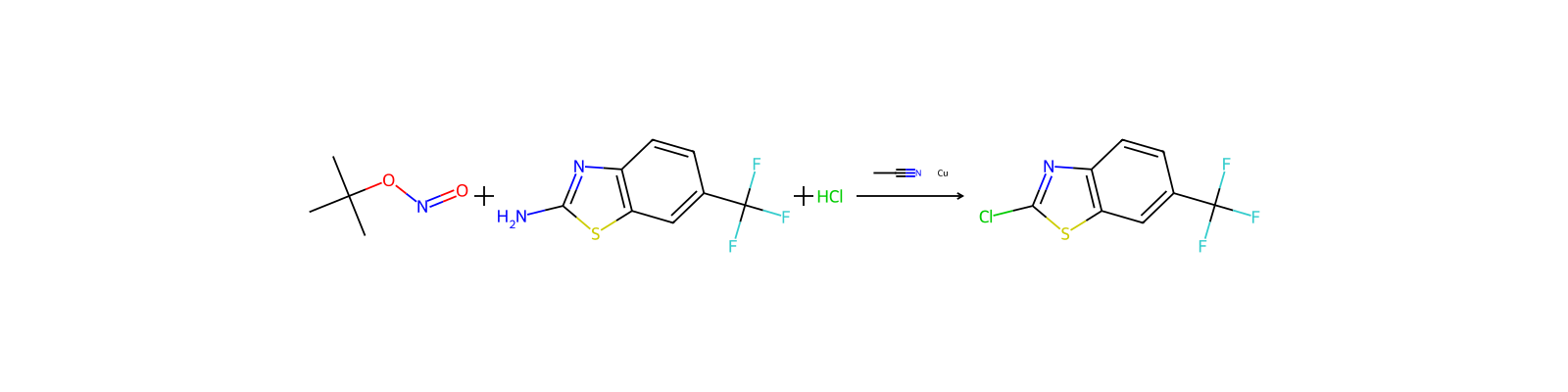
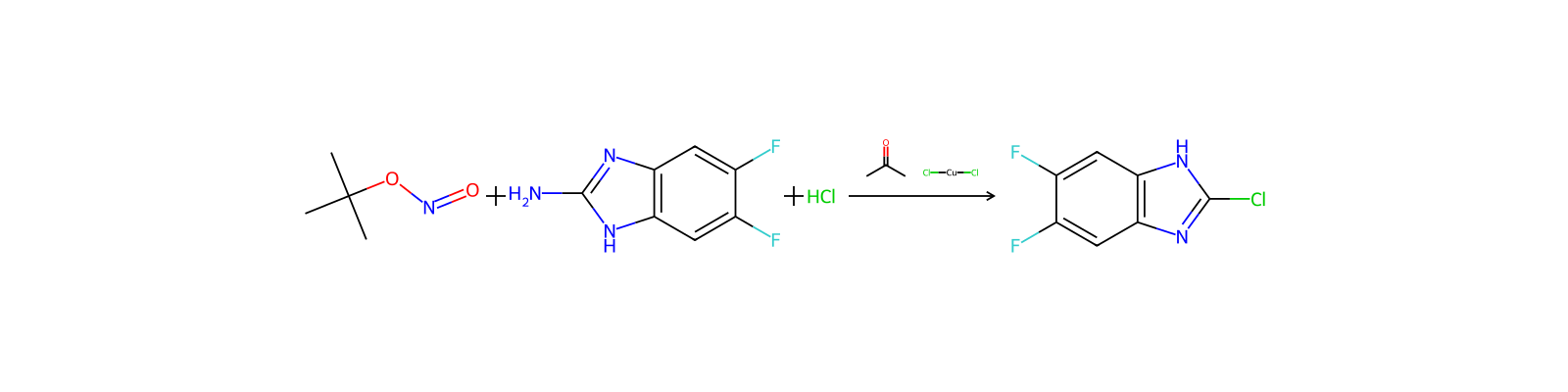
Verwendentert-Butyl nitrite is employed as a reagent for diazotization and nitrosation of alcohols, thiols, amines and cycloalkanes. It plays an important role in photocatalyzed conversion of aryl and heteroarylamines to selenides. It finds application in the preparation of aryl azides from aryl amines. It is also useful for radical multifunctionalization reactions of aliphatic alkenes and source of nitric oxide.
Vor- und nachgelagerte Produkte
Vorgelagerte Rohstoffe
Nachgelagerte Produkte
Anbieter50 Anbieter
国药集团化学试剂有限公司86-21-63210123 · [email protected]
梯希爱(上海)化成工业发展有限公司021-67121386 · [email protected]
衢州润东化工有限公司0570-8789886 18892685668 · [email protected]
上海阿拉丁生化科技股份有限公司400-6206333 13167063860 · [email protected]
上海炎泽化工有限公司15345144255 19975051755 · [email protected]
邹平创新药业有限公司13561560789 · [email protected]
T&W GROUP021-61551611 13296011611 · [email protected]
爱斯特(成都)生物制药股份有限公司+86-28-85122536 85324413 · [email protected]
韶远科技(上海)有限公司021-50795510 4000665055 · [email protected]
科瑞迪化学400-821-5857 021-64326257 · [email protected]
Syntechem Co.,Ltd[email protected]
上海迈瑞尔生化科技有限公司4006356688 18621169109 · [email protected]
阿法埃莎(中国)化学有限公司400-6106006 · [email protected]
太原市瑞和丰科贸有限公司+86 351 7031519 · [email protected]
安耐吉化学&3A(安徽泽升科技股份有限公司)400-0056266 · [email protected]
上海瀚鸿科技股份有限公司021-54306202 13764082696 · [email protected]
南京欣丰康生物科技有限公司025-84683399 13952017251 · [email protected]
上海景颜化工科技有限公司13817811078 · [email protected]
嘉兴市艾森化工有限公司0573-85285100 18627885956 · [email protected]
上海攀鸿化工科技有限公司021-56491756 13512199871 · [email protected]
孝感深远化工有限公司15527621225; 15527621225 · [email protected]
山东西亚化学有限公司13355009207 13355009207 · [email protected]
玛雅试剂+86 (573) 82222445 (0)18006601000 452520369 · [email protected]
四川库利南科技有限公司400-1166-196 18981987031 · [email protected]
天津希恩思生化科技有限公司400 638 7771 · [email protected]
南京维奥化工有限公司Please Send Email 18652950785 · [email protected]
河南多贝化工有限公司0370-2785118 17550508557 · [email protected]
艾科试剂4008-755-333 18080918076 · [email protected]
上海思域化工科技有限公司86-21-34053660 · [email protected]
赛默飞世尔科技(中国)有限公司800-810-5118 · [email protected]
北京伊诺凯科技有限公司400-810-7969 010-59572699 · [email protected]
Wuhan NCE Biomedical Co.,Ltd.4000-027-021 |24 +86-13986109188 | +86-15623472865 | +81-08033611988
上海健超生物科技有限公司150-2103-5486 18017383231 · [email protected]
TCI AMERICA800-4238616 · [email protected]
TOKYO CHEMICAL INDUSTRY CO., LTD.03-36680489 · [email protected]
TCI Europe320-37350700 · [email protected]
深圳振强药物研发有限公司0755-66853366 13670046396 · [email protected]
深圳康特腾科技有限公司86-0755-86635001 · [email protected]
越林试剂021-62960152 · [email protected]
Chempioneer Limited+86-398-3831668 · [email protected]
上海洪创医药科技有限公司18151128828 · [email protected]
上海湄水化工科技有限公司021-60549325 18616193163
上海将来实业股份有限公司021-61552785 · [email protected]
HBCChem, Inc.+1-510-219-6317 · [email protected]
日照力德士化工有限公司010-51268198 · [email protected]
美岚实业(上海)有限公司021-58958189 · [email protected]
重庆星灿医药科技有限公司13594048950 19923294409 · [email protected]
上海爱蝶实业有限公司021-58957966 18930537195 · [email protected]
成都零六生物科技有限公司400-1166-196 13458535857 · [email protected]
广拓化学(上海)有限公司021-60899189-8001 18918189673 · [email protected]
Zugehörige Reaktionen
1.323



Verknüpfte Notizen
Wird geladen…