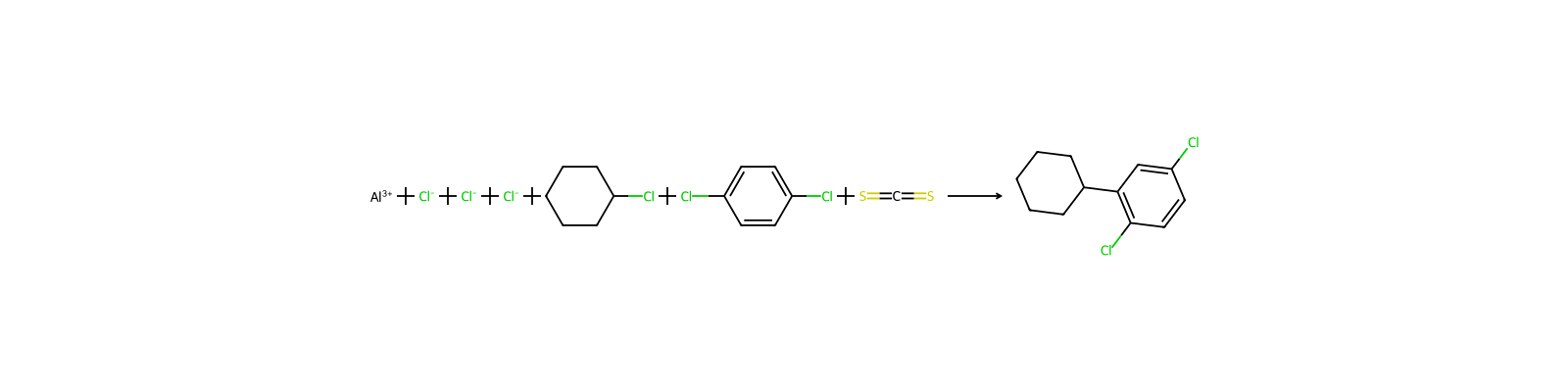

Grundinformationen
- Standard-SMILES
ClC1CCCCC1- InChIKey
UNFUYWDGSFDHCW-UHFFFAOYSA-N- Summenformel
- C6H11Cl
- Durchschnittliche Molmasse
- 118,6 g/mol
- Monoisotopische Masse
- 118,05492803
Überblick
Monochlorocyclohexane is a chlorocyclohexane carrying a single chloro group.
Namen und Bezeichner
- Bevorzugter Name
- Chlorocyclohexane
- IUPAC
- chlorocyclohexane
- Lokaler Name
- Chlorcyclohexan
- Englischer Name
- Chlorocyclohexane
- Summenformel
- C6H11Cl
- Molmasse
- 118.6
Namen und Synonyme
CHLOROCYCLOHEXANE542-18-7Cyclohexyl chlorideCyclohexane, chloro-MonochlorocyclohexaneChlorcyclohexanChlorzyklohexanchloro-cyclohexaneMFCD00003822PNV8C821FHNSC-8434EINECS 208-806-6
Weitere Namen anzeigen
CCCyclohexylchloridIL8RAIL8R2CDw128b)CHLORHEXAMETHYLENECHLOROHEXAMETHYLENE
HSDB 2801NSC 8434Monochlorocyclohexane; Cyclohexyl Chloride; NSC 8434UNII-PNV8C821FHBRN 1900796AI3-23841chlor-cyclohexanecyclohexylchloride
Datenbank-Bezeichner
- CAS
542-18-7- PubChem CID
- 10952
- DTXSID
DTXSID3052193- ChEBI
CHEBI:39156- UNII
- PNV8C821FH
- EC Number
- 208-806-6
- Nikkaji
- J1.598I
Eigenschaften
Berechnete Struktureigenschaften
- XLogP
- 3
- Polarare Oberfläche (TPSA)
- 0 Ų
- H-Brücken-Donoren
- 0
- H-Brücken-Akzeptoren
- 0
- Frei drehbare Bindungen
- 0
- Schwere Atome
- 7
- Formalladung
- 0
- Komplexität
- 46,1
Experimentelle und physikochemische Eigenschaften
Chemical Classes
Other Classes -> Halogenated Cyclic Hydrocarbons
Flammable agents - 3rd degree
SpringerMaterials PropertiesCoriolis coupling
OdorSUFFOCATING ODOR
Density1.000 @ 20 °C/4 °C
Color/FormCOLORLESS LIQUID
SolubilityINSOL IN WATER, VERY SOL IN CHLOROFORM; SOL IN ALL PROP IN ALCOHOL, ETHER, ACETONE, BENZENE
Flash Point90 °F
Boiling Point142 °C
DecompositionWHEN HEATED TO DECOMP...EMITS TOXIC VAPORS OF /HYDROGEN CHLORIDE/.
Melting Point-44.0 °C
Vapor Density4.08 (AIR= 1)
Refractive IndexINDEX OF REFRACTION: 1.4626 @ 20 °C
Physikochemische Eigenschaften
- Schmelzpunkt
- -44 °C · -44 °C (lit.)
- Siedepunkt
- 142 °C · 142 °C (lit.)
- Dichte
- 1 g/mL · 1 g/mL at 25 °C (lit.)
- Dampfdruck
- 7 hPa · 7 hPa (20 °C)
- Brechungsindex
- 20 · n20/D 1.462(lit.)
- Flammpunkt
- 84 °F · 84 °F
- storage temp.
- 30 °C · Store below +30°C.
- Löslichkeit
- 0.4 g/l · 0.40g/l
- Aggregatzustand
- Liquid
- Farbe
- Clear
- Explosionsgrenze
- 1.1 · 1.1-7.5%(V)
- Wasserlöslichkeit
- 0.02 g/L · 0.02 g/L (20 ºC)
- Merck
- 14 · 14,2732
- BRN
- 1900796 · 1900796
- Henry's Law Constant
- 2.8 · 2.8×10-3 mol/(m3Pa) at 25℃, Bakierowska and Trzeszczy\'nski (2003)
- Dielectric constant
- 7.6 · 7.6(24℃)
- InChI
- 1S/C6H11Cl/c7-6-4-2-1-3-5-6/h6H,1-5H2
- InChIKey
- UNFUYWDGSFDHCW-UHFFFAOYSA-N
- SMILES
- ClC1CCCCC1
- CAS Datenbank
- 542 · 542-18-7(CAS DataBase Reference)
- NIST chemische Informationen
- Cyclohexane, chloro-(542-18-7)
- EPA chemische Informationen
- Cyclohexane, chloro- (542-18-7)
Sicherheit und Regulatorisches
GHS-Klassifizierung
GHS Classification
Warning
H226 (100%): Flammable liquid and vapor [Warning Flammable liquids]
P210, P233, P240, P241, P242, P243, P261, P264, P264+P265, P271, P273, P280, P302+P352, P303+P361+P353, P304+P340, P305+P351+P338, P317, P319, P321, P332+P317, P337+P317, P362+P364, P370+P378, P391, P403+P233, P403+P235, P405, and P501 (click each P-code to see the statement)
Aggregated GHS information provided per 188 reports by companies from 11 notifications to the ECHA C&L Inventory. Each notification may be associated with multiple companies.
Warning
H226: Flammable liquid and vapor [Warning Flammable liquids]
Gefahrenhinweise
Regulatory Information
Chemical: Cyclohexane, chloro-
Cyclohexane, chloro- is listed on the EPA's Chemical Data Reporting (CDR) system. Manufacturers and importers of Cyclohexane, chloro- are required to report information about their production and use of this chemical to the EPA under the Toxic Substances Control Act (TSCA). (40 eCFR Part 711)
Status: Active Update: 07-03-2019 https://echa.europa.eu/registration-dossier/-/registered-dossier/11240
Chlorocyclohexane: Does not have an individual approval but may be used under an appropriate group standard
The New Jersey Worker and Community Right to Know Act requires public and private employers to provide information about hazardous substances at their workplaces. (N.J.S.A. 34:5A-1 et. seq.)
Fire PotentialMODERATE, WHEN EXPOSED TO HEAT OR FLAME... IT CAN REACT WITH OXIDIZING MATERIALS.
Hazards SummaryIn lethal-dose inhalation studies, causes excitement, spasticity, and dyspnea; [RTECS] Alicyclic hydrocarbons act like aliphatic hydrocarbons causing CNS depression; [HSDB] An irritant; [MSDSonline]
Hazard Classes and Categories
Flam. Liq. 3 (100%)
Flammable liquids - Category 3
Flammable agents - 3rd degree
Skin, Eye, and Respiratory IrritationsMILDLY IRRITATING TO HUMAN SKIN. /CYCLOHEXANE/
Hazardous Reactivities and IncompatibilitiesDANGEROUS...ON CONTACT WITH ACIDS OR ACID FUMES THEY EVOLVE HIGHLY TOXIC CHLORIDE FUMES. /CHLORIDES/
Sicherheit und Schutzausrüstung
Storage Conditions
...MATERIALS WHICH ARE TOXIC AS STORED OR WHICH CAN DECOMP INTO TOXIC COMPONENTS DUE TO CONTACT WITH HEAT, MOISTURE, ACID, OR ACID FUMES, SHOULD BE STORED IN COOL, WELL-VENTILATED PLACE, OUT OF DIRECT RAYS OF SUN, AWAY FROM AREAS OF HIGH FIRE HAZARD & SHOULD BE PERIODICALLY INSPECTED & MONITORED.
Preventive MeasuresBASIC VENTILATION METHODS ARE LOCAL & EXHAUST VENTILATION & DILUTION OR GENERAL VENTILATION.
Toxikologische Informationen
Effluent ConcentrationsANALYSIS OF SECONDARY MUNICIPAL WASTE WATER AFTER SUPER CHLORINATION SHOWED PRESENCE OF OVER 30 HALOGENATED ORG SPECIES NOT PRESENT IN NON-CHLORINATED CONTROL.
Human Toxicity Excerpts
MILDLY IRRITATING TO HUMAN SKIN. NO SYSTEMIC POISONINGS HAVE BEEN REPORTED... /CYCLOHEXANE/
LIQUID ALICYCLIC HYDROCARBONS WILL DEHYDRATE & DELIPIDIZE SKIN ON REPEATED OR PROLONGED CONTACT & CAUSE DERMATITIS. DIRECT CONTACT...WITH LUNG TISSUE (ASPIRATION) WILL CAUSE PULMONARY EDEMA, PNEUMONITIS & HEMORRHAGE. VAPORS IN SUFFICIENT CONCN WILL CAUSE IRRITATION OF MUCOUS MEMBRANES. /LIQUID ALICYCLIC HYDROCARBONS/
...ALICYCLIC HYDROCARBONS RESEMBLE...ALIPHATIC HYDROCARBONS...THEY ARE ANESTHETICS & CNS DEPRESSANTS WITH RELATIVELY LOW ORDER OF ACUTE TOXICITY... CUMULATIVE TOXICITY FROM REPEATED EXPOSURE TO LOW ATMOSPHERIC CONCN IS IMPROBABLE...NO EVIDENCE.../THEY/ ARE SPECIFIC BLOOD-FORMING TISSUE TOXICANTS. /ALICYCLIC HYDROCARBONS/
Non-Human Toxicity Excerpts
HIGH VAPOR CONCN HAVE PRODUCED CONVULSIONS IN RABBITS. TOXIC ORAL DOSES IN RABBITS LED TO SEVERE DIARRHEA, CIRCULATORY COLLAPSE, & DEATH, WITHOUT PROMINENT CENTRAL NERVOUS DEPRESSION OR ANESTHESIA. AUTOPSY REVEALED GENERALIZED VASCULAR DAMAGE WITH DEGENERATIVE LESIONS IN BRAIN & VISCERA. /CYCLOHEXANE/
Toxicity DataLCLo (rat) = 40,000 mg/m3/2h
Sicherheitsdaten
- wgk
- 1
- tsca
- TSCA listed
- ridadr
- UN 1993 3/PG 3
- hs_code
- 29035990
- RTECS-Nr.
- GU8685000
- risk_code
- 10-36/37/38-20
- Toxizität
- LD50 orally in Rabbit: 3000 mg/kg
- hazard_code
- Xi,Xn
- safety_code
- 26-36-37/39-16
- hazard_class
- 3
- packing_group
- III
- Speicherklasse
- 3 - Flammable liquids
- Giftige Stoffe Daten
- 542-18-7(Hazardous Substances Data)
- Hazard Classifications
- Aquatic Chronic 2Flam. Liq. 3
- Selbstentzündungstemperatur
- 290 °C
Chemie und Industrie
Pharmakologische Informationen
Absorption, Distribution and ExcretionTHEY DO NOT TEND TO ACCUMULATE IN BODY TISSUES... /ALICYCLIC HYDROCARBONS/
Verwendung und Herstellung
U.S. Production2023: 23,810 lb
Industry UsesPolymerization promoter
General Manufacturing Information
Fabricated Metal Product Manufacturing
Cyclohexane, chloro-: ACTIVE
Anwendungen
VerwendenChlorocyclohexane is used as the raw material in synthesis agrochemical and medicine chemical engineering products.
Vor- und nachgelagerte Produkte
Vorgelagerte Rohstoffe
Nachgelagerte Produkte
Anbieter50 Anbieter
国药集团化学试剂有限公司86-21-63210123 · [email protected]
梯希爱(上海)化成工业发展有限公司021-67121386 · [email protected]
上海阿拉丁生化科技股份有限公司400-6206333 13167063860 · [email protected]
爱斯特(成都)生物制药股份有限公司+86-28-85122536 85324413 · [email protected]
南京兰亚化工贸易有限公司+86-25-8331-5620 · [email protected]
Hebei Yanxi Chemical Co., Ltd.+86-17531190177 · [email protected]
科瑞迪化学400-821-5857 021-64326257 · [email protected]
上海迈瑞尔生化科技有限公司4006356688 18621169109 · [email protected]
阿法埃莎(中国)化学有限公司400-6106006 · [email protected]
安耐吉化学&3A(安徽泽升科技股份有限公司)400-0056266 · [email protected]
上海瀚鸿科技股份有限公司021-54306202 13764082696 · [email protected]
上海景颜化工科技有限公司13817811078 · [email protected]
嘉兴市艾森化工有限公司0573-85285100 18627885956 · [email protected]
南京哈柏医药科技有限公司13376080562 13376090521 · [email protected]
孝感深远化工有限公司15527621225; 15527621225 · [email protected]
山东西亚化学有限公司13355009207 13355009207 · [email protected]
玛雅试剂+86 (573) 82222445 (0)18006601000 452520369 · [email protected]
四川库利南科技有限公司400-1166-196 18981987031 · [email protected]
上海耐士化工科技有限公司400-188-0725 +86 21 34310725 13611771617
天津希恩思生化科技有限公司400 638 7771 · [email protected]
Syntor Fine Chemicals Ltd.+44 (0) 1928 579865 · [email protected]
Syntor Fine Chemicals Ltd.+44 (0) 1928 579865 · [email protected]
艾科试剂4008-755-333 18080918076 · [email protected]
上海思域化工科技有限公司86-21-34053660 · [email protected]
赛默飞世尔科技(中国)有限公司800-810-5118 · [email protected]
北京伊诺凯科技有限公司400-810-7969 010-59572699 · [email protected]
江苏艾康生物医药研发有限公司025-66113011 13913916777 · [email protected]
TCI AMERICA800-4238616 · [email protected]
TOKYO CHEMICAL INDUSTRY CO., LTD.03-36680489 · [email protected]
TCI Europe320-37350700 · [email protected]
上海贤鼎生物科技有限公司4009209199 · [email protected]
深圳康特腾科技有限公司86-0755-86635001 · [email protected]
北京环宇世纪化学科技有限公司hysj_bj.com
上海将来实业股份有限公司400-0066400 13621662912 · [email protected]
上海将来实业股份有限公司021-61552785 · [email protected]
HBCChem, Inc.+1-510-219-6317 · [email protected]
日照力德士化工有限公司010-51268198 · [email protected]
美岚实业(上海)有限公司021-58958189 · [email protected]
上海石洋化工有限公司021-56795766 · [email protected]
上海爱蝶实业有限公司021-58957966 18930537195 · [email protected]
广拓化学(上海)有限公司021-60899189-8001 18918189673 · [email protected]
上海创赛科技有限公司400-6087598 15021221957 · [email protected]
上海御略医药科技有限公司021-60345187 13671753212 · [email protected]
上海麦克林生化科技股份有限公司15221275939 15221275939 · [email protected]
上海孚一生物科技有限公司+86 (21) 61124340
成都润泽本土化工有限公司13096311329 028-88469284 616445927 · [email protected]
Sigma-Aldrich西格玛奥德里奇(上海)贸易有限公司021-61415566 800-8193336 · [email protected]
潍坊市前进精细化工有限公司18753684562 · [email protected]
中山市迪欣化工有限公司19849939632; 19849939632 · [email protected]
菏泽开发区德昊化工有限公司0530-5368699 18705301117 · [email protected]
Ergänzende Hinweise
DefinitionChEBI: A chlorocyclohexane carrying a single chloro group.
Zugehörige Reaktionen
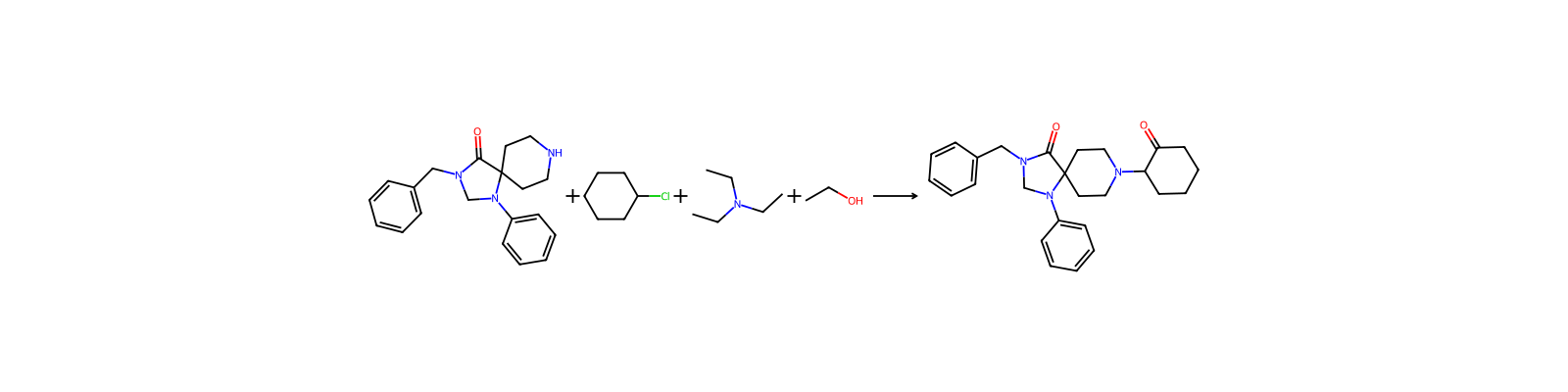
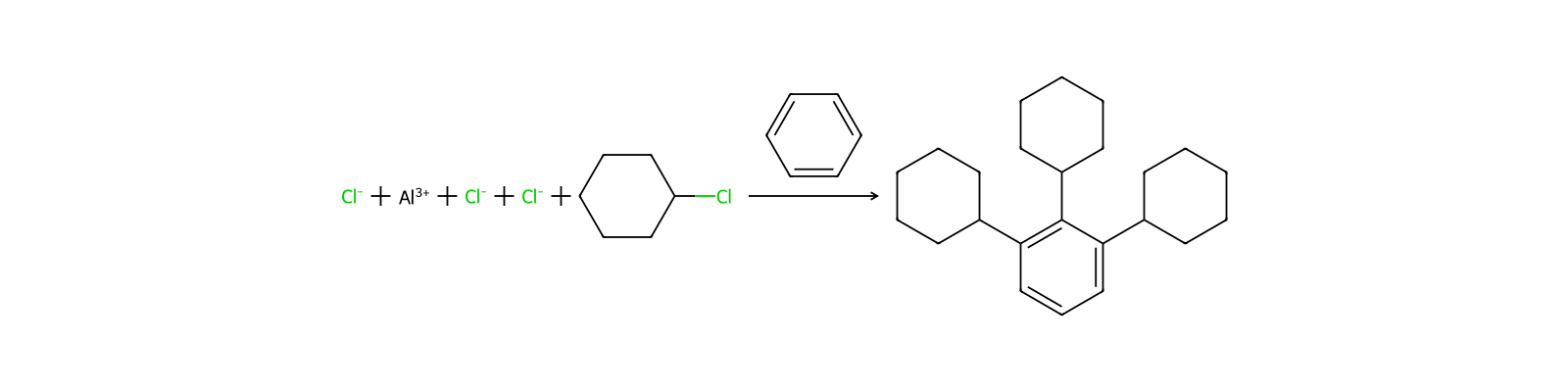
23



Verknüpfte Notizen
Wird geladen…