

Grundinformationen
- Standard-SMILES
COc1ccc2cnccc2c1- InChIKey
XZNUJESLPUNSNO-UHFFFAOYSA-N- Summenformel
- C10H9NO
- Durchschnittliche Molmasse
- 159,18 g/mol
- Monoisotopische Masse
- 159,06841391
Namen und Bezeichner
- Bevorzugter Name
- 6-Methoxyisoquinoline
- IUPAC
- 6-methoxyisoquinoline
- Englischer Name
- 6-Methoxyisoquinoline
- Summenformel
- C10H9NO
- Molmasse
- 159.18
Namen und Synonyme
6-methoxyisoquinoline52986-70-6DTXSID60452920RefChem:543715DTXCID00403739836-137-56-methoxy-isoquinoline6-Methoxy IsoquinolineMFCD04114861ISOQUINOLINE, 6-METHOXY-6-isoquinolinyl methyl etherSCHEMBL1204577
Weitere Namen anzeigen
6-methoxylisoquinoline6-Methoxyisoquinoline 90%6-Methoxy-2-azanaphthalene6-Methoxyisoquinoline, 98% (Custom work)6-Methoxyisoquinoline ISO 9001:2015 REACH
S-3536AKOS005255310AB19119FS-3055AMY18040SCHEMBL577971SCHEMBL8344902SCHEMBL27163536
Datenbank-Bezeichner
- CAS
52986-70-6- PubChem CID
- 11040978
- DTXSID
DTXSID60452920- EC Number
- 836-137-5
- Nikkaji
- J708.180D
Eigenschaften
Berechnete Struktureigenschaften
- XLogP
- 2,2
- Polarare Oberfläche (TPSA)
- 22,1 Ų
- H-Brücken-Donoren
- 0
- H-Brücken-Akzeptoren
- 2
- Frei drehbare Bindungen
- 1
- Schwere Atome
- 12
- Formalladung
- 0
- Komplexität
- 149
Experimentelle und physikochemische Eigenschaften
LogP2.22
Physikochemische Eigenschaften
- Siedepunkt
- 88 · 88-95C/0.8 Torr
- Dichte
- 1.13 · 1.130±0.06 g/cm3(Predicted)
- storage temp.
- Sealed in dry,Room Temperature
- Löslichkeit
- Chloroform, Dichloromethane
- Aggregatzustand
- Oil
- pka
- 6.11 · 6.11±0.10(Predicted)
- Farbe
- Pale Yellow
- InChI
- InChI=1S/C10H9NO/c1-12-10-3-2-9-7-11-5-4-8(9)6-10/h2-7H,1H3
- InChIKey
- XZNUJESLPUNSNO-UHFFFAOYSA-N
- SMILES
- C1C2=C(C=C(OC)C=C2)C=CN=1
- CAS Datenbank
- 52986 · 52986-70-6(CAS DataBase Reference)
Sicherheit und Regulatorisches
GHS-Klassifizierung
GHS Classification
Warning
H302 (100%): Harmful if swallowed [Warning Acute toxicity, oral]
P261, P264, P264+P265, P270, P271, P280, P301+P317, P302+P352, P304+P340, P305+P351+P338, P319, P321, P330, P332+P317, P337+P317, P362+P364, P403+P233, P405, and P501 (click each P-code to see the statement)
The GHS information provided by 1 company from 1 notification to the ECHA C&L Inventory.
Gefahrenhinweise
Hazard Classes and CategoriesAcute Tox. 4 (100%)
Sicherheitsdaten
- hs_code
- 2933499090
- hazard_code
- Xi
- hazard_note
- Irritant
Chemie und Industrie
Anwendungen
Verwenden6-Methoxy Isoquinoline (cas# 52986-70-6) is a compound useful in organic synthesis.
Darstellung
synthetische6-Methoxyisoquinoline synthesis: Using benzaldehyde as the starting material, m-methoxybenzaldehyde is obtained through nitration, reduction, diazotization, hydrolysis and methylation, and 3-methoxybenzaldehyde is obtained through condensation with nitromethane Shiff base and reduction of aluminum hydride -p-Phenylethylamine. The Pictet-Spengler reaction of 3-methoxyl-p-phenylethylamine and 40% aqueous formaldehyde produces 6-methoxyl-1,2,3,4-tetrahydroisoquinoline, and then obtains the target compound in dehydrogenation 6-Methoxyisoquinoline.
Vor- und nachgelagerte Produkte
Vorgelagerte Rohstoffe
Nachgelagerte Produkte
Anbieter50 Anbieter
上海康恩博医药科技有限公司17510465506 · [email protected]
上海凌富药物研究有限公司+86(21)5895 0110 19945755304 · [email protected]
陕西缔都新材料有限公司81124267 17392282731 · [email protected]
上海策嵘生物科技有限公司[email protected]
毕佳索(上海毕得医药科技股份有限公司)400-6005915 · [email protected]
上海凌凯科技股份有限公司58950110 13124863828 · [email protected]
宁波季诺化学品有限公司0574-87314919 057487319282 · [email protected]
河北展药生物科技有限公司15369953316 +8615369953316 · [email protected]
Dayang Chem (Hangzhou) Co.,Ltd.+86-0571-88938639 17705817739 · [email protected]
上海弘顺生物科技有限公司15901914505 · [email protected]
韶远科技(上海)有限公司021-50795510 4000665055 · [email protected]
Syntechem Co.,Ltd[email protected]
北京索莱宝科技有限公司010-50973130 17801761073 · [email protected]
安耐吉化学&3A(安徽泽升科技股份有限公司)400-0056266 · [email protected]
武汉凯威斯科技有限公司86-027-67849912 · [email protected]
成都添福瑞生物科技有限公司18030648795 18030648795 · [email protected]
常州科化生物科技有限公司0519-68985668 13685222090 · [email protected]
上海恩诺生物科技有限公司+86 (21) 6435-5022
上海钰康生物科技有限公司18939844854 · [email protected]
上海隆盛化工有限公司58099637 13585536065 · [email protected]
北京零式京安科技有限责任公司10-61256048 13810278579 · [email protected]
常州布克化工有限公司13606129753 13775119556 · [email protected]
杰达维(上海)医药科技发展有限公司/J & W PharmLab021-64340559 · [email protected]
南通惠创化学品有限公司13776905367; 13776905367 · [email protected]
吉林中科研伸科技有限公司18143011203 · [email protected]
杭州东帆化学有限公司86-0571-85151182
山东西亚化学有限公司13355009207 13355009207 · [email protected]
同创医药(苏州)有限公司0512-63263366 18912765016 · [email protected]
上海特伯化学科技有限公司+86-21-60341587 · [email protected]
上海卡洛化学有限公司21-33526724 18930996265 · [email protected]
台州南峰药物研究所[email protected] 18616377689 · [email protected]
上海睿升化工科技有限公司+86-021-50935922
上海丽康新材料有限公司+86-16631818819 +86-17736933208 · [email protected]
苏州爱玛特生物科技有限公司0512-56316828 4008675858 · [email protected]
安徽科迪达化工有限公司0554-2106669 · [email protected]
HBCChem, Inc.+1-510-219-6317 · [email protected]
上海毕得医药科技股份有限公司400-164-7117 18317119277 · [email protected]
上海石洋化工有限公司021-56795766 · [email protected]
成都零六生物科技有限公司400-1166-196 13458535857 · [email protected]
上海永叶生物科技有限公司86-021-61559134 15921386130 · [email protected]
上海嵩爰化工科技有限公司010-1234567 18521000990 · [email protected]
江苏艾康生物医药研发有限公司025-66028182 17714375163 · [email protected]
凯试(上海)科技有限公司021-50135380 · [email protected]
AN PharmaTech Co Ltd86(21)68097365 · [email protected]
上海孟善化工有限公司21-58226973 18917146209 · [email protected]
北京六合宁远医药科技股份有限公司010-60400365-8001 15910885229 · [email protected]
Accela ChemBio Inc.+1(858) 699-3322 · [email protected]
诺尔凯立科技有限公司86-(0)21-31261262 373522135 · [email protected]
HANGZHOU LEAP CHEM CO., LTD.+86-571-87711850 +86-15355479329 · [email protected]
厦门志信化学有限公司+86-5922680277 +86-13806087780 · [email protected]
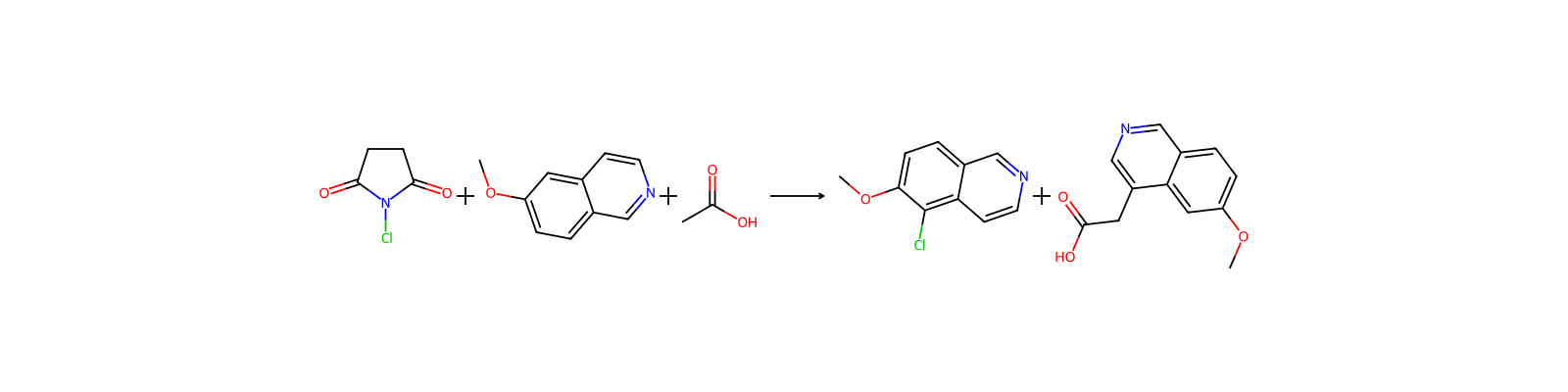
Zugehörige Reaktionen
18






Verknüpfte Notizen
Wird geladen…