StartseiteMCPWorkbenchSkills
StartseiteWorkbenchBenachrichtigungenMein Bereich
llms.txt · MCP-AnleitungDatenschutz · Nutzungsbedingungen · Supportv1.8.0
  1. Startseite
  2. /Verbindung

Kohlenstofftetrabromid

Carbon tetrabromide

HCID 11205
Neue NotizNeue ReaktionAnfrage stellen
Druckvorschau

Daten werden ergänzt – lade die Seite später neu, um den aktuellen Stand zu sehen

GrundinformationenÜberblickNamen und BezeichnerEigenschaftenSicherheit und RegulatorischesChemie und IndustrieZugehörige ReaktionenNotizen zur Verbindung
TeilstruktursucheÄhnliche Strukturen suchen

Grundinformationen

CAS
558-13-4
Standard-SMILES
BrC(Br)(Br)Br
InChIKey
HJUGFYREWKUQJT-UHFFFAOYSA-N
Summenformel
CBr4
Durchschnittliche Molmasse
331,63 g/mol
Monoisotopische Masse
327,6733484

Überblick

Carbon tetrabromide appears as a colorless crystalline solid. Much more dense than water and insoluble in water. Toxic by ingestion. Vapors are narcotic in high concentration. Used to make other chemicals.

Namen und Bezeichner

Bevorzugter Name
Carbon tetrabromide
IUPAC
tetrabromomethane
Lokaler Name
Kohlenstofftetrabromid
Englischer Name
Carbon tetrabromide
Summenformel
CBr4
Molmasse
331.63

Namen und Synonyme

Carbon tetrabromideTETRABROMOMETHANE558-13-4Methane, tetrabromo-Carbon bromideCBr4Methane tetrabromideCarbon bromide (CBr4)Bromid uhlicityTetrabrommethanMethane, tetrabromidetetrabromidocarbon
Weitere Namen anzeigen
PERBROMOMETHANETETRABROMOETHANETetrabroMoMethCarbon tetrabroMide, 98% 100GRcarbonbromidebromiduhlicity
TetrabromkohlenstoffKohlenstofftetrabromidNLH657095LNSC-6179DTXSID8060327CHEBI:47875Carboneum BromatumRefChem:58674

Datenbank-Bezeichner

CAS
558-13-4
PubChem CID
11205
DTXSID
DTXSID8060327
ChEBI
CHEBI:47875
UNII
NLH657095L
EC Number
209-189-6
Nikkaji
J2.667K

Eigenschaften

Berechnete StruktureigenschaftenWird ergänzt

XLogP
3,4
Polarare Oberfläche (TPSA)
0 Ų
H-Brücken-Donoren
0
H-Brücken-Akzeptoren
0
Frei drehbare Bindungen
0
Schwere Atome
5
Formalladung
0
Komplexität
19,1

Experimentelle und physikochemische Eigenschaften

SolventsSolvents -> Brominated Solvents
SpringerMaterials PropertiesSchoenflies notation
LogP · 2 Einträge

log Kow= 3.42

3.42

Odor · 2 Einträge

Slight odor.

Lacrymator

Density · 5 Einträge

3.42 (NIOSH, 2024) - Denser than water; will sink

2.9608 @ 100 °C/4 °C

Relative density (water = 1): 3.42

3.42

3.42

Color/Form · 3 Einträge

Colorless, monoclinic tablets

Colorless crystals

Colorless to yellow-brown crystals.

Solubility · 6 Einträge

0.02 % (NIOSH, 2024)

Sol in alcohol, ether, chloroform

Soluble in ethanol, chloroform, and ethyl ether.

In water, 0.024 g/100 ml @ 30 °C

Solubility in water: none

0.02%

Boiling Point

Sicherheit und Regulatorisches

Sicherheitsangaben dienen nur zur Orientierung und ersetzen weder das Sicherheitsdatenblatt (SDB) des Lieferanten noch geltende Vorschriften oder eine fachliche Bewertung.

GHS-Klassifizierung

GHS Classification · 6 Einträge

Danger

H302 (100%): Harmful if swallowed [Warning Acute toxicity, oral]

P261, P264, P264+P265, P270, P271, P280, P301+P317, P302+P352, P304+P340, P305+P354+P338, P317, P319, P321, P330, P332+P317, P362+P364, P403+P233, P405, and P501 (click each P-code to see the statement)

Aggregated GHS information provided per 111 reports by companies from 11 notifications to the ECHA C&L Inventory. Each notification may be associated with multiple companies.

Danger

H302: Harmful if swallowed [Warning Acute toxicity, oral]

Gefahrenhinweise

Regulatory Information · 3 Einträge

Chemical: Methane, tetrabromo-

Carbon tetrabromide: Does not have an individual approval but may be used under an appropriate group standard

The New Jersey Worker and Community Right to Know Act requires public and private employers to provide information about hazardous substances at their workplaces. (N.J.S.A. 34:5A-1 et. seq.)

DOT LabelPoison
Fire Hazards · 3 Einträge

Excerpt from ERG Guide 151 [Substances - Toxic (Non-Combustible)]:

· Non-combustible, substance itself does not burn but may decompose upon heating to produce corrosive and/or toxic fumes.

Not combustible. Gives off irritating or toxic fumes (or gases) in a fire.

Fire PotentialNot flammable by standard tests in air
Health Hazards · 2 Einträge

Excerpt from ERG Guide 151 [Substances - Toxic (Non-Combustible)]:

· Highly toxic, may be fatal if inhaled, ingested or absorbed through skin.

Chemie und Industrie

Pharmakologische Informationen

Mechanism of ActionCardiac arrhythmia, possibly aggravated by elevated levels of catecholamines due to stress ... is suggested as the cause of these adverse responses, which may lead to death. /Fluorocarbons/
Biological Half-LifeFor bromide (depends on compound and route of administration) whole body: 1 hour to 12 days; [TDR, p. 214]
Metabolism/Metabolites · 3 Einträge

UNDER ANAEROBIC REDUCING CONDITIONS POLYHALOGENATED METHANES, CBR4, FORM COMPLEXES WITH FERROUS CYTOCHROME P450. CARBON MONOXIDE DETECTED AS A METABOLIC PRODUCT OF THE INTERACTION.

Carbon tetrabromide is metabolized in vitro to produce carbon monoxide but the in vivo significance has not been established.

Bromine is mainly absorbed via inhalation, but may also enter the body through dermal contact. Bromine salts can be ingested. Due to its reactivity, bromine quickly forms bromide and may be deposited in the tissues, displacing other halogens. (L626)

Verwendung und Herstellung

Uses · 4 Einträge

Used in organic syntheses; [ACGIH]

Organic synthesis

CHEMICAL INTERMEDIATE

It is used as a solvent for greases, waxes and oils, in plastic and rubber industry for blowing, vulcanization, and polymerization, as a sedative and as an intermediate in manufacturing agrochemicals. Due to its non-flammability it is used as an ingredient in fire resistant chemicals. It is also used for separating minerals because of its high density. Diatomic bromine does not occur naturally, but bromine salts can be found in crustal rock.

General Manufacturing InformationMethane, tetrabromo-: ACTIVE
Anwendungen · 2 Einträge

BeschreibungCarbon tetrabromide is considered a highly toxic chemical, may be fatal if inhaled, swallowed, or absorbed through skin. It is metabolized in vitro to produce carbon monoxide but the in vivo significance has not been established. Under anaerobic reducing conditions it forms complexes with ferrous cytochrome P450. Carbon monoxide is detected as a metabolic product of the interaction. Carbon tetrabromide’s production and use in organic syntheses may result in its release to the environment through various waste streams. Carbon tetrabromide has been isolated from red algae, Asparagopsis toxiformis, found in the ocean near Hawaii. It was detected in water from treated chlorinated seawater used for drinking at oil platforms. Occupational exposure to carbon tetrabromide may occur through inhalation and dermal contact with this compound at workplaces where it is produced or used. The general population may be exposed to carbon tetrabromide via ingestion of drinking water. Acute exposures to high concentrations may cause upper respiratory tract irritation and injury to lungs, liver (hepatotoxicity) and kidneys (nephrotoxicity). Chronic exposure effects at very low levels will be almost entirely limited to liver injury. It is a potent lachrymator even at low exposure concentrations. Although carbon tetrabromide may release bromine ions during metabolism, clinical bromism is not expected to occur.

Zugehörige Reaktionen

2.879
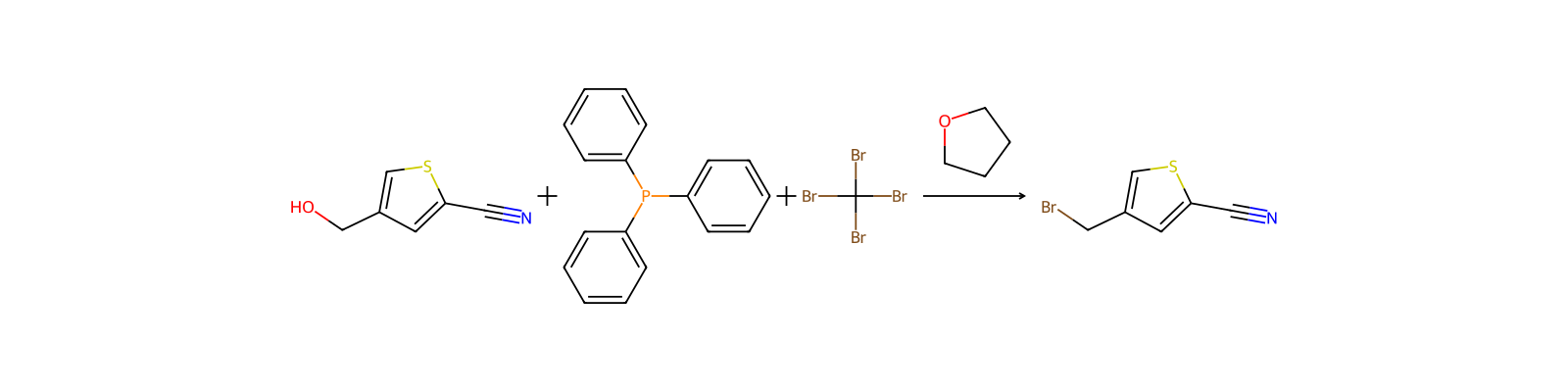
Reaktionsaufzeichnung erstellen
Reaktionsgleichung von HRID 1597
HRID 1597als Eduktuspto-grants-1998_03
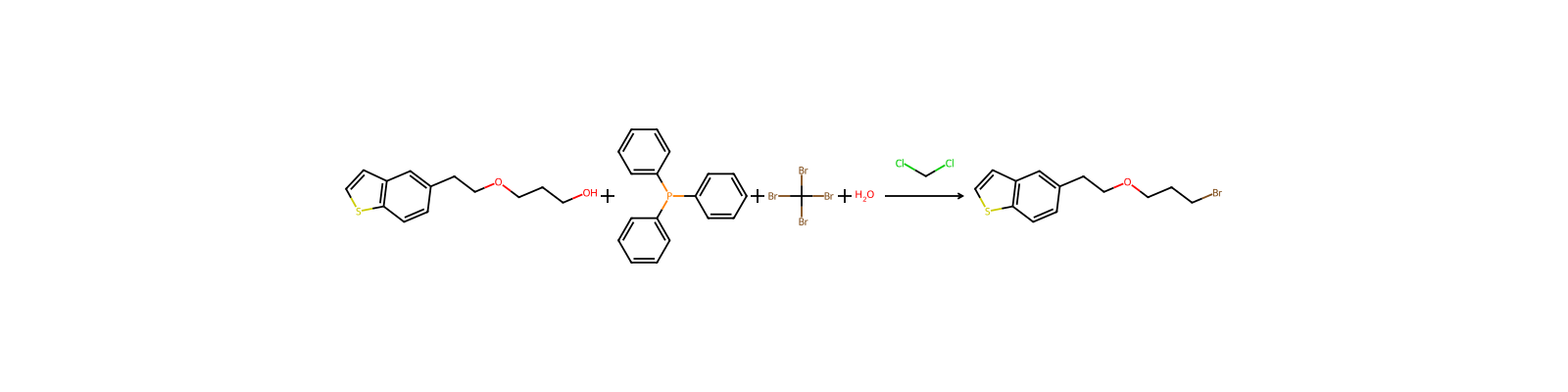
Reaktionsgleichung von HRID 1760
HRID 1760als Eduktuspto-grants-1998_03
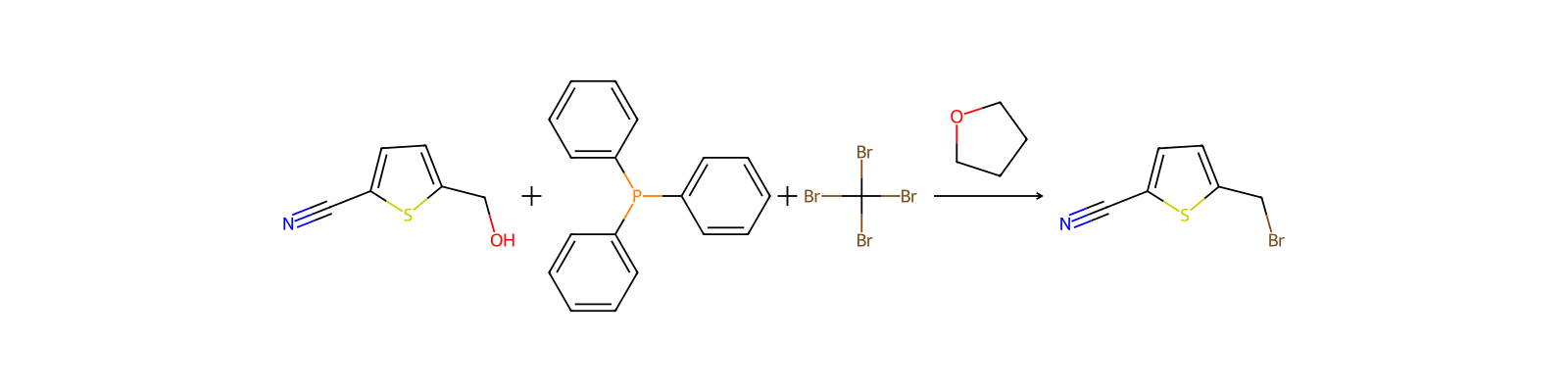
Reaktionsgleichung von HRID 2719
HRID 2719als Eduktuspto-grants-1998_03
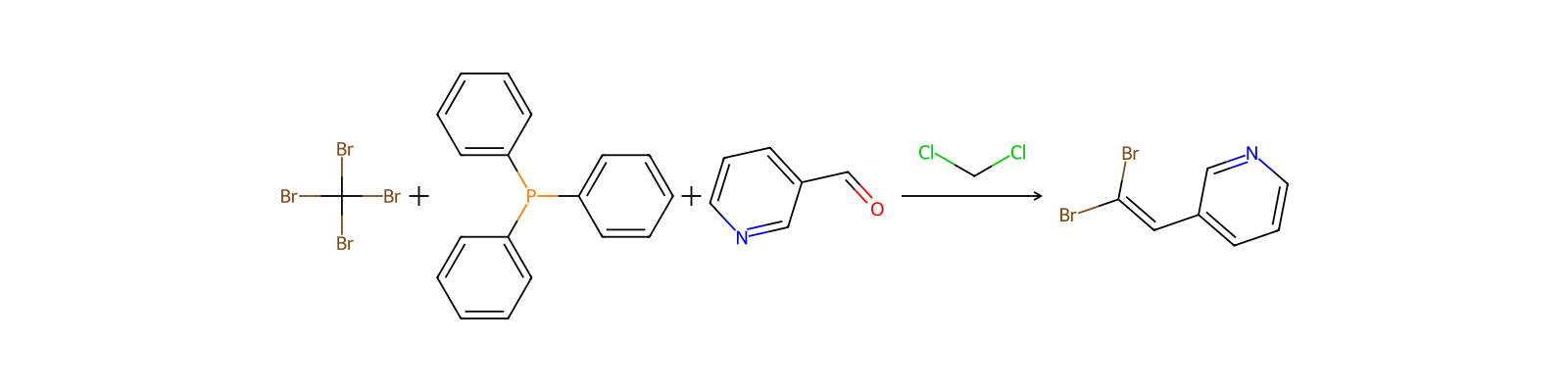
Reaktionsgleichung von HRID 2749
HRID 2749als Eduktuspto-grants-1998_03
Reaktionsgleichung von HRID 7374
HRID 7374als Eduktuspto-grants-2006_08
Reaktionsgleichung von HRID 7462
HRID 7462als Eduktuspto-grants-2006_08
Reaktionsgleichung von HRID 8038
HRID 8038als Eduktuspto-grants-2006_08
Reaktionsgleichung von HRID 9632
HRID 9632als Eduktuspto-grants-2006_08
Seite 1 von 360

Notizen zur Verbindung

Wird geladen…

Auf dieser SeiteGrundinformationenÜberblickNamen und BezeichnerEigenschaftenSicherheit und RegulatorischesChemie und IndustrieZugehörige ReaktionenNotizen zur Verbindung
Weitere Aktionen
Neue NotizNeue ReaktionAnfrage stellen
· 5 Einträge

374 °F at 760 mmHg (NIOSH, 2024)

189.5 °C

190 °C

374 °F

374 °F

DecompositionWhen heated to decomp it emits toxic fumes of /hydrogen bromide/.
Melting Point · 5 Einträge

194 °F (NIOSH, 2024)

90.1 °C

90 °C

194 °F

194 °F

Vapor Density · 2 Einträge

11.4

Relative vapor density (air = 1): 11.4

Vapor Pressure · 6 Einträge

40 mmHg at 205 °F (NIOSH, 2024)

0.72 [mmHg]

0.72 mm Hg @ 25 °C

Vapor pressure, kPa at 96 °C: 5.33

40 mmHg at 205 °F

(205 °F): 40 mmHg

Physikochemische Eigenschaften

Schmelzpunkt
88 · 88-90 °C(lit.)
Siedepunkt
190 °C · 190 °C(lit.)
Dichte
3 · 3,42 g/cm3
Dampfdruck
40 mm · 40 mm Hg ( 96 °C)
Brechungsindex
1.5942 · 1.5942
Flammpunkt
190 °C · 190°C
storage temp.
30 °C · Store below +30°C.
Löslichkeit
soluble in Chloroform
Aggregatzustand
Crystalline Solid
Farbe
White to off-white
Wasserlöslichkeit
insoluble
Spezifische Wärmekapazität
0.44 J/ · Cp(crystal): 0.44 J/(g·K); Cp(gas): 0.28 J/(g·K), at 25℃
BRN
1732799 · 1732799
Henry's Law Constant
2 · 2.0×10-2 mol/(m3Pa) at 25℃, Duchowicz et al. (2020)
Dielectric constant
7 · 7(22.0℃)
InChI
1S/CBr4/c2-1(3,4)5
InChIKey
HJUGFYREWKUQJT-UHFFFAOYSA-N
SMILES
BrC(Br)(Br)Br
CAS Datenbank
558 · 558-13-4(CAS DataBase Reference)
NIST chemische Informationen
Carbon tetrabromide(558-13-4)
EPA chemische Informationen
Carbon tetrabromide (558-13-4)
Hazards Summary · 1 Eintrag

In an acute study of mice, carbon tetrabromide was determined to be 2.2 times more toxic to the liver than carbon tetrachloride. It causes significant eye irritation (tearing) in workers even at lower exposure levels. [ACGIH] A lachrymator; [HSDB] Inhalation of high concentrations can cause CNS depression; Causes corrosive burns to eyes [ICSC]

DOT ID and Guide · 2 Einträge

2516 151

2516 151

Reactive GroupHalogenated Organic Compounds
UN ClassificationUN Hazard Class: 6.1; UN Pack Group: III
Reactivity ProfileCARBON TETRABROMIDE is incompatible with the following: Strong oxidizers, hexacyclohexyldilead, lithium (NIOSH, 2024).
Atmospheric Standards · 1 Eintrag

This action promulgates standards of performance for equipment leaks of Volatile Organic Compounds (VOC) in the Synthetic Organic Chemical Manufacturing Industry (SOCMI). The intended effect of these standards is to require all newly constructed, modified, and reconstructed SOCMI process units to use the best demonstrated system of continuous emission reduction for equipment leaks of VOC, considering costs, non air quality health and environmental impact and energy requirements. Carbon tetrabromide is produced, as an intermediate or a final product, by process units covered under this subpart.

Chemical DangersDecomposes on heating. This produces toxic and corrosive fumes. Reacts with alkali metals. This generates explosion hazard.

Sicherheit und Schutzausrüstung

Fire Fighting · 2 Einträge

Excerpt from ERG Guide 151 [Substances - Toxic (Non-Combustible)]:

In case of fire in the surroundings, use appropriate extinguishing media.

First Aid Measures · 4 Einträge

Fresh air, rest. Refer for medical attention.

Remove contaminated clothes. Rinse skin with plenty of water or shower. Refer for medical attention .

First rinse with plenty of water for several minutes (remove contact lenses if easily possible), then refer for medical attention.

Rinse mouth. Refer for medical attention .

Accidental Release Measures · 2 Einträge

· CALL 911. Then call emergency response telephone number on shipping paper. If shipping paper not available or no answer, refer to appropriate telephone number listed on the inside back cover.

· Do not touch damaged containers or spilled material unless wearing appropriate protective clothing.

First Aid · 3 Einträge

Excerpt from NIOSH Pocket Guide for Carbon tetrabromide:

General First Aid:

(General first aid procedures)

Safe StorageWell closed.
Exposure Control and Personal Protection· Wear positive pressure self-contained breathing apparatus (SCBA).
Cleanup MethodsCollect on paper and evaporate on a glass dish in a hood. Burn the paper.
Nonfire Spill ResponseExcerpt from ERG Guide 151 [Substances - Toxic (Non-Combustible)]:
Disposal Methods · 1 Eintrag

SRP: At the time of review, criteria for land treatment or burial (sanitary landfill) disposal practices are subject to significant revision. Prior to implementing land disposal of waste residue (including waste sludge), consult with environmental regulatory agencies for guidance on acceptable disposal practices.

Spillage Disposal · 1 Eintrag

Personal protection: particulate filter respirator adapted to the airborne concentration of the substance. Sweep spilled substance into covered containers. If appropriate, moisten first to prevent dusting. Carefully collect remainder. Then store and dispose of according to local regulations.

Preventive Measures · 3 Einträge

Respirators may be used when engineering and work practice controls are not technically feasible, when such controls are in the process of being installed, or when they fail and need to be supplemented. Respirators may also be used for operations which require entry into tanks or closed vessels, and in emergency situations. ... Non-impervious clothing which becomes contaminated with bromoform should be removed promptly and not reworn until the bromoform is removed from the clothing. /Bromoform/

The worker should wash daily at the end of each work shift.

Workers whose clothing may have become contaminated should change into uncontaminated clothing before leaving the work premises.

Isolation and Evacuation · 2 Einträge

Excerpt from ERG Guide 151 [Substances - Toxic (Non-Combustible)]:

Immediate precautionary measure

Toxikologische Informationen

Treatment · 1 Eintrag

EYES: irrigate opened eyes for several minutes under running water. INGESTION: do not induce vomiting. Rinse mouth with water (never give anything by mouth to an unconscious person). Seek immediate medical advice. SKIN: should be treated immediately by rinsing the affected parts in cold running water for at least 15 minutes, followed by thorough washing with soap and water. If necessary, the person should shower and change contaminated clothing and shoes, and then must seek medical attention. INHALATION: supply fresh air. If required provide artificial respiration.

Target OrgansEyes, skin, respiratory system, liver, kidneys
Health Effects · 1 Eintrag

Bromine vapour causes irritation and direct damage to the mucous membranes. Elemental bromine also burns the skin. The bromide ion is a central nervous system depressant and chronic exposure produces neuronal effects. This is called bromism and can result in central reactions reaching from somnolence to coma, cachexia, exicosis, loss of reflexes or pathologic reflexes, clonic seizures, tremor, ataxia, loss of neural sensitivity, paresis, papillar edema of the eyes, abnormal speech, cerebral edema, delirium, aggressiveness, and psychoses. (L625, L626, L627)

Environmental Fate · 3 Einträge

TERRESTRIAL FATE: Based on a classification scheme(1), an estimated Koc value of 49(SRC), determined from a structure estimation method(2), indicates that tetrabromomethane is expected to have very high mobility in soil(SRC). Volatilization of tetrabromomethane from moist soil surfaces may be an important fate process(SRC) given an estimated Henry's Law constant of 4.9X10⁻⁴ atm-cu m/mole(SRC), from its vapor pressure, 0.72 mm Hg(3) and water solubility, 240 mg/l(4). Tetrabromomethane is not expected to volatilize from dry soil surfaces(SRC) based upon a vapor pressure of 0.72 mm Hg(4). Based upon the highly halogenated structure of tetrabromomethane, biodegradation is expected to be slow(5).

AQUATIC FATE: Based on a classification scheme(1), an estimated Koc value of 49(SRC), determined from a structure estimation method(2), indicates that tetrabromomethane is not expected to adsorb to suspended solids and sediment in water(SRC). Volatilization from water surfaces may occur based on an estimated Henry's Law constant of 4.9X10⁻⁴ atm-cu m/mole(SRC), from its vapor pressure, 0.72 mm Hg(4) and water solubility, 240 mg/l(5). Using this Henry's Law constant and an estimation method(3), volatilization half-lives for a model river and model lake are 4.0 hrs and 8.2 days, respectively(SRC). According to a classification scheme(6), an estimated BCF of 86(SRC), from its log Kow value of 3.42(7) and a regression-derived equation(8), suggests the potential for bioconcentration in aquatic organisms is moderate. Based upon the highly halogenated structure of tetrabromomethane, biodegradation is expected to be slow(9).

ATMOSPHERIC FATE: According to a model of gas/particle partitioning of semivolatile organic compounds in the atmosphere(1), tetrabromomethane, which has a vapor pressure of 0.72 mm Hg at 30 °C(2), is expected to exist solely as a vapor in the ambient atmosphere. The rate constant for the vapor-phase reaction of tetrabromomethane with photochemically-produced hydroxyl radicals could not be estimated but is expected to be very slow since there are no abstractable hydrogens(3).

Adverse EffectsNeurotoxin - Acute solvent syndrome
Exposure Routes · 3 Einträge

The substance can be absorbed into the body by inhalation and by ingestion.

inhalation, ingestion, skin and/or eye contact

Oral (L626) ; inhalation (L626) ; dermal (L626)

Toxicity Summary · 1 Eintrag

Bromine is a powerful oxidizing agent and is able to release oxygen free radicals from the water in mucous membranes. These free radicals are also potent oxidizers and produce tissue damage. In additon, the formation of hydrobromic and bromic acids will result in secondary irritation. The bromide ion is also known to affect the central nervous system, causing bromism. This is believed to be a result of bromide ions substituting for chloride ions in the in actions of neurotransmitters and transport systems, thus affecting numerous synaptic processes. (L626, L627, A543)

Signs and Symptoms · 6 Einträge

Cough. Drowsiness. Lethargy. Laboured breathing. Shortness of breath. Sore throat.

Redness. Pain.

Redness. Pain. Blurred vision. Severe deep burns.

Abdominal pain. Diarrhoea. Dullness. Sore throat. See Inhalation.

irritation eyes, skin, respiratory system; lacrimation (discharge of tears); lung, liver, kidney injury; In Animals: corneal damage

Bromine vapour causes irritation and direct damage to the mucous membranes. Symptoms include lacrimation, rhinorrhoea, eye irritation with mucous secretions from the oropharyngeal and upper airways, coughing, dyspnoea, choking, wheezing, epistaxis, and headache. The bromide ion is a central nervous system depressant producing ataxia, slurred speech, tremor, nausea, vomiting, lethargy, dizziness, visual disturbances, unsteadiness, headaches, impaired memory and concentration, disorientation and hallucinations. This is called bromism. (L626, L627)

Soil Adsorption/Mobility · 1 Eintrag

Using a structure estimation method based on molecular connectivity indices(1), the Koc for tetrabromomethane can be estimated to be about 49(SRC). According to a classification scheme(2), this estimated Koc value suggests that tetrabromomethane is expected to have very high mobility in soil.

TSCA Test Submissions · 2 Einträge

Carbon tetrabromide (CAS # 558-13-4) was evaluated for acute oral toxicity in 5 groups of fasted Sprague-Dawley rats (3 male, 2 female rats/group) administered single doses (unspecified) anticipated to produce partial mortality (based on initial range-finding study) in at least 2 groups. Mortality occurred from 24 to 96 hours post-dosing and, according to a method of Berkson, an oral LD50 for carbontetrabromide 60TC (20% in corn oil) was 4,471 mg/kg (fiducial limits: 2,875-6,953 mg/kg). Symptoms included diarrhea, chromodacryorrhea, and lethargy. No further information regarding methods or results was provided.

Carbon tetrabromide (CAS # 558-13-4) was evaluated for acute dermal toxicity in 6 rabbits (strain unspecified) administered single occluded applications of 2 g/kg (volume unspecified) upon clipped, intact skin for 24 hours. All rabbits (6/6) died within 2 to 48 hours and signs of toxicity included expression of pain and inability to stand. No further information regarding methods or results was provided.

Natural Pollution SourcesCarbon tetrabromide has been isolated from red algae, Asparagopsis toxiformis, found in the ocean near Hawaii.
Human Toxicity Excerpts · 2 Einträge

ACUTE EXPOSURES TO HIGH CONCN CAUSE UPPER RESP IRRITATION & INJURY TO LUNGS, LIVER & KIDNEYS. CHRONIC EXPOSURE EFFECTS @ VERY LOW LEVELS WILL BE ALMOST ENTIRELY LIMITED TO LIVER INJURY. THE MATERIAL IS A POTENT LACHRIMATOR EVEN @ LOW EXPOSURE CONCENTRATIONS.

CNS DEPRESSANT IN HIGH CONCN.

Regulatorische Informationen

Atmospheric Standards · 1 Eintrag

This action promulgates standards of performance for equipment leaks of Volatile Organic Compounds (VOC) in the Synthetic Organic Chemical Manufacturing Industry (SOCMI). The intended effect of these standards is to require all newly constructed, modified, and reconstructed SOCMI process units to use the best demonstrated system of continuous emission reduction for equipment leaks of VOC, considering costs, non air quality health and environmental impact and energy requirements. Carbon tetrabromide is produced, as an intermediate or a final product, by process units covered under this subpart.

Sicherheitsdaten

OEB
B
OEL
TWA: 0.1 ppm (1.4 mg/m3), STEL: 0.3 ppm (4 mg/m3)
wgk
3
tsca
TSCA listed
ridadr
UN 2516
hs_code
29033036
RTECS-Nr.
FG4725000
risk_code
37/38-41-36-26-52/53-22
hazard_code
Xi,T+,N,Xn
safety_code
26-36-45-27-24-61
hazard_class
6.1
packing_group
III
Speicherklasse
6.1C - Combustible acute toxic Cat.3toxic compounds or compounds which causing chronic effects
Giftige Stoffe Daten
558-13-4(Hazardous Substances Data)
Hazard Classifications
Acute Tox. 4 OralEye Dam. 1Skin Irrit. 2STOT SE 3

VerwendenCarbon tetrabromide is used to a limited extent as a chemical intermediate. It has been isolated from red algae, Asparagopsis toxiformis, found in the ocean near Hawaii.

Vor- und nachgelagerte Produkte

Vorgelagerte Rohstoffe

Tetrachlormethan

Nachgelagerte Produkte

Benzyl 4-(bromomethyl)tetrahydro-1(2H)-pyridinecarboxylate4-Chloro-3-(trifluoromethyl)benzyl bromide5-Aminomethyl-pyrrolidin-2-oneChinolin-3-carbonitril2-(Trifluormethyl)phenylessigsure6-(Boc-amino)-hexyl bromide3,5-Bis(benzyloxy)benzyl bromide(5-Methoxymethyl-pyridin-2-yl)-carbamic acid tert-butyl ester1-Methylpyrrolidin-2-ethylaminBOC-D-Phenylalanine4-Bromophenylacetylene5-(Aminomethyl)-1-methylpyrrolidin-2-one1-Bromheptadecafluoroctan1-Cbz-3-(broMoMethyl)piperidinePent-4-inylbenzol5-Fluoro-2-nitro benzylbromide3-methylphenethyl bromide3,4-Dichlorophenylacetylenemethyl 12-bromododecanoate1-Bromo-8-phenyloctane

Ergänzende Hinweise

DefinitionChEBI: A one-carbon compound substituted by 4 bromo groups.