StartseiteMCPWorkbenchSkills
StartseiteWorkbenchBenachrichtigungenMein Bereich
llms.txt · MCP-AnleitungDatenschutz · Nutzungsbedingungen · Supportv1.8.0
  1. Startseite
  2. /Verbindung

3-Chlor-2-methylpropen

3-Chloro-2-methyl-1-propene

HCID 11241
Neue NotizNeue ReaktionAnfrage stellen
Druckvorschau

Daten werden ergänzt – lade die Seite später neu, um den aktuellen Stand zu sehen

GrundinformationenÜberblickNamen und BezeichnerEigenschaftenSicherheit und RegulatorischesChemie und IndustrieZugehörige ReaktionenNotizen zur Verbindung
TeilstruktursucheÄhnliche Strukturen suchen

Grundinformationen

CAS
563-47-3
Standard-SMILES
C=C(C)CCl
InChIKey
OHXAOPZTJOUYKM-UHFFFAOYSA-N
Summenformel
C4H7Cl
Durchschnittliche Molmasse
90,55 g/mol
Monoisotopische Masse
90,0236279

Überblick

3-Chloro-2-methylpropene can cause cancer according to an independent committee of scientific and health experts.

Namen und Bezeichner

Bevorzugter Name
3-Chloro-2-methyl-1-propene
IUPAC
3-chloro-2-methylprop-1-ene
Lokaler Name
3-Chlor-2-methylpropen
Englischer Name
3-Chloro-2-methylpropene
Summenformel
C4H7Cl
Molmasse
90.55

Namen und Synonyme

3-Chloro-2-methylpropene563-47-33-Chloro-2-methylprop-1-ene3-CHLORO-2-METHYL-1-PROPENE2-Methylallyl chlorideIsobutenyl chloride1-Propene, 3-chloro-2-methyl-2-Methyl-2-propenyl chloridebeta-Methallyl chloride2-Methallyl chlorideCloruro di metallile1-Chloro-2-methyl-2-propene
Weitere Namen anzeigen
METHALLYL CHLORIDEMacbeta-methylallylchlorideMethylallyl chloride
Propene, 3-chloro-2-methyl-2-Methyl-allylchloridChlorure de methallyleNCI-C54820beta-Methylallyl chloride3-Chloroisobutylenegamma-Chloroisobutylenemethallylchloride

Datenbank-Bezeichner

CAS
563-47-3
PubChem CID
11241
DTXSID
DTXSID1020279
ChEMBL
CHEMBL157368
ChEBI
CHEBI:82419
UNII
7A9X1C3I3O
EC Number
209-251-2
Nikkaji
J2.671I

Eigenschaften

Berechnete StruktureigenschaftenWird ergänzt

XLogP
2,1
Polarare Oberfläche (TPSA)
0 Ų
H-Brücken-Donoren
0
H-Brücken-Akzeptoren
0
Frei drehbare Bindungen
1
Schwere Atome
5
Formalladung
0
Komplexität
38,9

Experimentelle und physikochemische Eigenschaften

Chemical Classes · 2 Einträge

Other Classes -> Halogenated Aliphatics, Unsaturated

Flammable agents - 3rd degree

SpringerMaterials PropertiesSchoenflies notation
LogP · 2 Einträge

1.98

1.98

Odor · 2 Einträge

SHARP, PENETRATING

Disagreeable odor

Density · 5 Einträge

0.928 at 68 °F (USCG, 1999) - Less dense than water; will float

0.9210 at 15 °C/4 °C; 0.9165 at 20 °C/4 °C

Density of commercial grade = 0.926-0.930 at 20 °C/20 °C

Relative density (water = 1): 0.92

0.9257 @ 20°C

Viscosity4.2X10-4 Pa.s
Color/FormCOLORLESS TO STRAW-COLORED LIQUID
Solubility · 5 Einträge

less than 1 mg/mL at 70 °F (NTP, 1992)

Miscible in alcohol and ether, very soluble in chloroform, and soluble in acetone.

Sicherheit und Regulatorisches

Sicherheitsangaben dienen nur zur Orientierung und ersetzen weder das Sicherheitsdatenblatt (SDB) des Lieferanten noch geltende Vorschriften oder eine fachliche Bewertung.

GHS-Klassifizierung

GHS Classification · 6 Einträge

Danger

H225: Highly Flammable liquid and vapor [Danger Flammable liquids]

P210, P233, P240, P241, P242, P243, P260, P261, P264, P270, P271, P272, P273, P280, P301+P317, P301+P330+P331, P302+P352, P302+P361+P354, P303+P361+P353, P304+P340, P305+P354+P338, P316, P317, P321, P330, P333+P317, P362+P364, P363, P370+P378, P391, P403+P235, P405, and P501 (click each P-code to see the statement)

Danger

H225 (100%): Highly Flammable liquid and vapor [Danger Flammable liquids]

P203, P210, P233, P240, P241, P242, P243, P260, P261, P264, P264+P265, P270, P271, P272, P273, P280, P301+P316, P301+P317, P301+P330+P331, P302+P352, P302+P361+P354, P303+P361+P353, P304+P340, P305+P354+P338, P316, P317, P318, P321, P330, P331, P333+P317, P362+P364, P363, P370+P378, P391, P403+P233, P403+P235, P405, and P501 (click each P-code to see the statement)

Gefahrenhinweise

Regulatory Information · 6 Einträge

Chemical: 1-Propene, 3-chloro-2-methyl-

Hazard Traits - Carcinogenicity

Commission Regulation No 844/2012

1-Propene, 3-chloro-2-methyl- is listed on the EPA's Chemical Data Reporting (CDR) system. Manufacturers and importers of 1-Propene, 3-chloro-2-methyl- are required to report information about their production and use of this chemical to the EPA under the Toxic Substances Control Act (TSCA). (40 eCFR Part 711)

Status: Active Update: 24-09-2020 https://echa.europa.eu/registration-dossier/-/registered-dossier/20647

1-Propene, 3-chloro-2-methyl-: Does not have an individual approval but may be used under an appropriate group standard

Other Safety InformationIMAP assessments - 1-Propene, 3-chloro-2-methyl-: Environment tier I assessment
DOT LabelFlammable Liquid
Fire Hazards

Chemie und Industrie

Pharmakologische Informationen

Metabolism/Metabolites · 2 Einträge

The main urinary metabolite was N-acetyl-S-(2-methylpropenyl)cysteine, which constituted 45% of the total urinary radiolabel. This metabolite is presumed to arise from direct conjugation of glutathione with 3-chloro-2-methylpropene.

... Daily doses of 150 mg/kg 2-(14)C-1-chloro-2-methylpropene (DMVC) or 2-(14)C-3-chloro-2-methylpropene (CMP) were admin to male Fischer 344 rats for 1, 2, or 4 consecutive days. One daily dose of 150 mg/kg DMVC was admin to male B6C3F1 mice. Both DMVC and CMP were rapidly metabolized; however, CMP was cleared at a slightly slower rate. Rats exhaled approx 25 and 10% of the DMVC and CMP as carbon dioxide, respectively. Mice exhaled 25% of the DMVC as carbon dioxide. Rats expired 30% of the admin DMVC unchanged in the 24 hr after dosing compared to only 7% of the admin CMP. Mice expired 5% of the admin DMVC in the same time period. ... The 24 hr urinary excretion in rats was 35% of the admin DMVC compared to 58% of CMP. Mice excreted 47% of the admin DMVC in 24 hr in the urine. An unusual metabolite of DMVC, 2-amino-6-methyl-4-thia-5-heptene-1,7-dioic acid was identified.

Absorption, Distribution and Excretion · 1 Eintrag

2-(14)C 3-Chloro-2-methylpropene (specific activity, 2.5 mCi/umol; radiochemical purity, 93%; 5% 1-chloro-2-methylpropene) was administered by gavage to male Fischer 344 rats as single or up to four daily doses of 150 mg/kg body weight in corn oil. The compound was extensively absorbed and rapidly excreted: 82% of the single dose was eliminated within 24 hours after treatment. It was rapidly distributed to tissues, and the highest concentrations were found in forestomach, liver and kidney; the concentration of radiolabel was considerably lower in glandular stomach than in forestomach. The tissue concentrations were approximately doubled after two doses, but little additional increase was observed after four doses. The concentrations decreased after cessation of treatment. After a single dose, about 58% of the administered radiolabel was found in the urine, 22% was exhaled and 2% was detected in the feces. In the expired air, about 12% of the dose was (14)C-carbon dioxide and 7% was volatile compounds.

Verwendung und Herstellung

Zugehörige Reaktionen

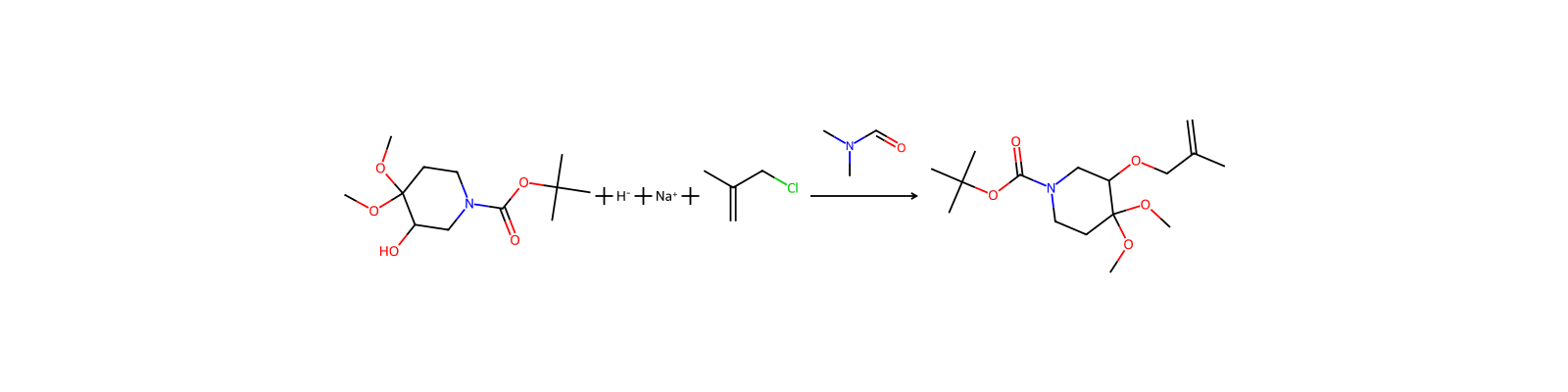
351
Reaktionsaufzeichnung erstellen
Reaktionsgleichung von HRID 1102
HRID 1102als Eduktuspto-grants-1998_03
Reaktionsgleichung von HRID 17915
HRID 17915als Eduktuspto-grants-2010_06
Reaktionsgleichung von HRID 22575
HRID 22575als Eduktuspto-grants-1995_06
Reaktionsgleichung von HRID 26187
HRID 26187als Eduktuspto-grants-1979_04
Reaktionsgleichung von HRID 27639
HRID 27639als Eduktuspto-grants-1980_09
Reaktionsgleichung von HRID 37843
HRID 37843als Eduktuspto-grants-2013_09
Reaktionsgleichung von HRID 43677
HRID 43677als Eduktuspto-grants-2013_09
Reaktionsgleichung von HRID 46997
HRID 46997als Eduktuspto-grants-1979_11
Seite 1 von 44

Notizen zur Verbindung

Wird geladen…

Auf dieser SeiteGrundinformationenÜberblickNamen und BezeichnerEigenschaftenSicherheit und RegulatorischesChemie und IndustrieZugehörige ReaktionenNotizen zur Verbindung
Weitere Aktionen
Neue NotizNeue ReaktionAnfrage stellen

Solubility in water at 20 °C is ca. 0.05 wt%; water solubility in methylallyl chloride is 0.04 wt%.

1400 mg/l in water at 25 °C.

Solubility in water, g/100ml at 25 °C: 0.14 (very poor)

Flash Point · 5 Einträge

9 °F (NTP, 1992)

-12 °C

-3 °F (OPEN CUP)

92 °F (-12 °C) (CLOSED CUP)

-12 °C c.c.

Boiling Point · 4 Einträge

160 to 162 °F at 760 mmHg (NTP, 1992)

71-72 °C

72 °C

72.17 °C @760 [mm Hg]

Melting Point · 3 Einträge

less than -112 °F (NTP, 1992)

< -80 °C

-80 °C

Vapor Density · 3 Einträge

3.12 (NTP, 1992) - Heavier than air; will sink (Relative to Air)

3.1 (AIR= 1)

Relative vapor density (air = 1): 3.1

Physikochemische Eigenschaften

Schmelzpunkt
-80 °C · -80 °C
Siedepunkt
71 · 71–72 °C (160–162 °F; 344–345 K)
Dichte
0.921 g/cm3 · 0.9210 g/cm3 (15 °C)
Dampfdichte
3.12 · 3.12 (vs air)
Dampfdruck
102 mm · 102 mm Hg ( 20 °C)
Brechungsindex
1.43 · 1.43
Flammpunkt
12 °C · −12 °C (10 °F; 261 K)
storage temp.
2 · 2-8°C
Löslichkeit
2 O: · H2O: insoluble
Aggregatzustand
liquid
Farbe
Colorless
Explosionsgrenze
2.2 · 2.2-10.4%(V)
Wasserlöslichkeit
0.5 g/L · 0.5 g/L (20 ºC)
Merck
14 · 14,2148
BRN
878160 · 878160
Henry's Law Constant
1.1 · 1.1×10-3 mol/(m3Pa) at 25℃, Duchowicz et al. (2020)
InChI
1S/C4H7Cl/c1-4(2)3-5/h1,3H2,2H3
InChIKey
OHXAOPZTJOUYKM-UHFFFAOYSA-N
SMILES
CC(=C)CCl
CAS Datenbank
563 · 563-47-3(CAS DataBase Reference)
NIST chemische Informationen
1 · 1-Propene, 3-chloro-2-methyl-(563-47-3)
EPA chemische Informationen
3 · 3-Chloro-2-methyl-1-propene (563-47-3)
· 3 Einträge

Special Hazards of Combustion Products: Irritating and toxic hydrogen chloride and phosgene vapors may be formed.

· HIGHLY FLAMMABLE: Will be easily ignited by heat, sparks or flames.

Highly flammable. Gives off irritating or toxic fumes (or gases) in a fire. Vapour/air mixtures are explosive. Heating will cause rise in pressure with risk of bursting.

Fire PotentialFLAMMABLE, DANGEROUS FIRE RISK.
Health Hazards · 2 Einträge

Inhalation causes irritation of nose and throat. Contact of vapor or liquid with eyes causes irritation. Liquid irritates skin. Ingestion causes irritation of mouth and stomach. (USCG, 1999)

· May cause toxic effects if inhaled or absorbed through skin.

Hazards Summary · 1 Eintrag

A skin, eye, and respiratory tract irritant; Tear drawing; Inhalation of high concentrations may cause CNS effects; May cause skin sensitization; [ICSC] Dangerous fire risk; Explosive limits in air are 3.2 - 8.1%; [Hawley] Harmful by inhalation and ingestion; Causes burns; Lachrymatory effect; May cause skin sensitization; [MSDSonline] See Carcinogenicity of some industrial chemicals, Volume 115. [IARC, News Release, 23 February 2016] Methylallyl chloride (UN2554) has warning of explosive polymerization; [ERG 2016]

DOT ID and Guide2554 130P
Reactive GroupHalogenated Organic Compounds
EC ClassificationSymbol: F, C, N; R: 11-20/22-34-43-51/53; S: (2)-9-16-26-29-36/37/39-45-61
UN ClassificationUN Hazard Class: 3; UN Pack Group: II
Special Reports · 2 Einträge

Toxicology & Carcinogenesis Studies of 3-Chloro-2-methylpropene in F344/N Rats and B6C3F1 Mice Technical Report Series No. 300 (1986) NIH Publication No. 86-2556 U.S. Department of Health and Human Services, National Toxicology Program, National Institute of Environmental Health Sciences, Research Triangle Park, NC 27709

National Toxicology Program. Eleventh Report on Carcinogens (2005). The Report on Carcinogens is an informational scientific and public health document that identifies and discusses substances (including agents, mixtures, or exposure circumstances) that may pose a carcinogenic hazard to human health. 3-Chloro-2-methyl-1-propene (563-47-3) is listed as reasonably anticipated to be a human carcinogen.[Available from, as of July 31, 2009: http://ntp.niehs.nih.gov/ntp/roc/eleventh/profiles/s0403c2m.pdf]

Sicherheit und Schutzausrüstung

Fire Fighting · 2 Einträge

Excerpt from ERG Guide 130 [Flammable Liquids (Water-Immiscible / Noxious); polymerization hazard]:

Use powder, carbon dioxide, foam. In case of fire: keep drums, etc., cool by spraying with water.

First Aid Measures · 4 Einträge

Fresh air, rest. Half-upright position. Artificial respiration may be needed. Refer for medical attention.

Remove contaminated clothes. Rinse and then wash skin with water and soap.

First rinse with plenty of water for several minutes (remove contact lenses if easily possible), then refer for medical attention.

Rinse mouth. Do NOT induce vomiting. Rest. Refer for medical attention .

Accidental Release Measures · 2 Einträge

· CALL 911. Then call emergency response telephone number on shipping paper. If shipping paper not available or no answer, refer to appropriate telephone number listed on the inside back cover.

· ELIMINATE all ignition sources (no smoking, flares, sparks or flames) from immediate area.

First Aid · 2 Einträge

EYES: First check the victim for contact lenses and remove if present. Flush victim's eyes with water or normal saline solution for 20 to 30 minutes while simultaneously calling a hospital or poison control center. Do not put any ointments, oils, or medication in the victim's eyes without specific instructions from a physician. IMMEDIATELY transport the victim after flushing eyes to a hospital even if no symptoms (such as redness or irritation) develop.

General First Aid:

Safe StorageFireproof. Separated from strong oxidants and strong bases. Cooled. Well closed. Ventilation along the floor. Store in an area without drain or sewer access.
Exposure Control and Personal Protection· Wear positive pressure self-contained breathing apparatus (SCBA).
Fire Fighting Procedures · 3 Einträge

Do not extinguish fire unless flow can be stopped. Use water in flooding quantities as fog because solid streams of water may spread fire. Cool all affected containers with flooding quantities of water, being sure to apply water from as far a distance as possible. Use alcohol foam, carbon dioxide or dry chemical.

Personnel protection: Keep upwind of fire and avoid breathing vapors. Do not handle broken packages without protective equipment and be sure to wash away any material which may have contacted the body, with copious amounts of soap and water.

Wear boots, protective gloves, goggles and a self-contained breathing apparatus when fighting fires.

Nonfire Spill ResponseExcerpt from ERG Guide 130 [Flammable Liquids (Water-Immiscible / Noxious); polymerization hazard]:
Disposal Methods · 1 Eintrag

SRP: At the time of review, criteria for land treatment or burial (sanitary landfill) disposal practices are subject to significant revision. Prior to implementing land disposal of waste residue (including waste sludge), consult with environmental regulatory agencies for guidance on acceptable disposal practices.

Spillage Disposal · 1 Eintrag

Evacuate danger area! Consult an expert! Personal protection: chemical protection suit including self-contained breathing apparatus. Remove all ignition sources. Collect leaking and spilled liquid in sealable containers as far as possible. Absorb remaining liquid in sand or inert absorbent. Then store and dispose of according to local regulations. Do NOT wash away into sewer. Do NOT let this chemical enter the environment.

Preventive Measures · 2 Einträge

Do not handle broken packages without protective equipment and be sure to wash away any material which may have contacted the body, with copious amounts of soap and water.

SRP: The scientific literature for the use of contact lenses in industry is conflicting. The benefit or detrimental effects of wearing contact lenses depend not only upon the substance, but also on factors including the form of the substance, characteristics and duration of the exposure, the uses of other eye protection equipment, and the hygiene of the lenses. However, there may be individual substances whose irritating or corrosive properties are such that the wearing of contact lenses would be harmful to the eye. In those specific cases, contact lenses should not be worn. In any event, the usual eye protection equipment should be worn even when contact lenses are in place.

Isolation and Evacuation · 2 Einträge

Excerpt from ERG Guide 130 [Flammable Liquids (Water-Immiscible / Noxious); polymerization hazard]:

Immediate precautionary measure

Toxikologische Informationen

Ecotoxicity Values · 2 Einträge

MEDIAN LETHAL CONCN OF METHYLALLYL CHLORIDE FOR THE SMALL BLACK BEETLE, TRIBOLIUM DESTRUCTOR, WAS 21.9-22.9 G/CU M.

LD50 Goldfish 14 mg/l/24 hr

Environmental Fate · 3 Einträge

TERRESTRIAL FATE: Based on a recommended classification scheme(1), an estimated Koc value of 81(SRC), determined from a measured water solubility(2) and a recommended regression-derived equation(3), indicates that 3-chloro-2-methyl-1-propene will have high mobility in soil(SRC). Volatilization of 3-chloro-2-methyl-1-propene may be important from moist soil surfaces(SRC) given an estimated Henry's Law constant of 8.7X10⁻³ atm-cu m/mole(SRC), calculated from experimental values for water solubility(2) and vapor pressure(4). Volatilization from dry soil surfaces(SRC) is expected based on a measured vapor pressure of 101.7 mm Hg(4). Based on limited data, 3-chloro-2-methyl-1-propene is expected to biodegrade under aerobic conditions in soil; in screening tests, this compound reached 42%(5) of the theoretical BOD in 5 days and 89-107% of the theoretical BOD in 28 days(2).

AQUATIC FATE: Based on a recommended classification scheme(1), an estimated Koc value of 81(SRC), determined from a measured water solubility(2) and a recommended regression-derived equation(1), indicates that 3-chloro-2-methyl-1-propene should not adsorb to suspended solids and sediment in water(SRC). 3-Chloro-2-methyl-1-propene may volatilize from water surfaces(1,SRC) based on an estimated Henry's Law constant of 8.7X10⁻³ atm-cu m/mole(SRC), calculated from experimental values for water solubility(2) and vapor pressure(3). Estimated half-lives for a model river and model lake are 3 hours and 4 days, respectively(1,SRC). According to a classification scheme(4), an estimated BCF value of 10(1,SRC), from a measured water solubility(2), suggests that bioconcentration in aquatic organisms is low(SRC). Based on limited data, 3-chloro-2-methyl-1-propene is expected to biodegrade under aerobic conditions in water; in screening tests, this compound reached 42%(5) of the theoretical BOD in 5 days and 89-107% of the theoretical BOD in 28 days(2).

ATMOSPHERIC FATE: According to a model of gas/particle partitioning of semivolatile organic compounds in the atmosphere(1), 3-chloro-2-methyl-1-propene, which has a measured vapor pressure of 101.7 mm Hg at 20 °C(2), will exist solely as a vapor in the ambient atmosphere. Vapor-phase 3-chloro-2-methyl-1-propene is degraded in the atmosphere by reaction with photochemically-produced hydroxyl radicals and ozone(SRC); the half-lives for these reactions in air are estimated to be about 10 and 27 hours, respectively(3,SRC).

Adverse EffectsNeurotoxin - Acute solvent syndrome
Exposure RoutesThe substance can be absorbed into the body by inhalation of its vapour and by ingestion.
Signs and Symptoms · 3 Einträge

Cough. Sore throat. Headache. Shortness of breath.

Redness. Pain.

Watering of the eyes. Redness. Pain.

Ongoing Test Status · 1 Eintrag

The following link will take the user to the National Toxicology Program (NTP) Test Agent Search Results page, which tabulates all of the "Standard Toxicology & Carcinogenesis Studies", "Developmental Studies", and "Genetic Toxicity Studies" performed with this chemical. Clicking on the "Testing Status" link will take the user to the status (i.e., in review, in progress, in preparation, on test, completed, etc.) and results of all the studies that the NTP has done on this chemical. [http://ntp-apps.niehs.nih.gov/ntp_tox/index.cfm?fuseaction=ntpsearch.searchresults&searchterm=563-47-3]

Effluent Concentrations · 1 Eintrag

Samples collected from a chemical plant chlorinated still bottom extract contained 3-chloro-2-methyl-1-propene at unreported concentrations(1). Effluent samples collected from an advanced wastewater treatment plant in Lake Tahoe, California in 1974 contained unreported concentrations of 3-chloro-2-methyl-1-propene(2).

ICSC Environmental DataThe substance is harmful to aquatic organisms.
Soil Adsorption/Mobility · 1 Eintrag

The Koc of 3-chloro-2-methyl-1-propene is estimated as approximately 81(SRC), using a measured water solubility of 1400 mg/l at 25 °C(1) and a regression-derived equation(2,SRC). According to a recommended classification scheme(3), this estimated Koc value suggests that 3-chloro-2-methyl-1-propene has high mobility in soil(SRC).

TSCA Test Submissions · 5 Einträge

The ability of 3-chloro-2-methylpropene (CMP) to induce morphological transformation in the BALB/3T3 mouse cell line (Cell Transformation Assay) in the presence and absence of added metabolic activation by Aroclor-induced rat liver S9 fraction was evaluated. Based on preliminary clonal toxicity determinations (exposure time=2 hrs), CMP was tested at 0.03, 0.1, 0.3 and 1.0 ul/ml in the absence of activation (cell survival ranging from 100-77% relative to acetone solvent control), and at 0.10, 0.15, 0.20 and 0.25 ul/ml in the presence of added metabolic activation (cell survival ranging from 85% to <1%). Test material did not induce the appearance of a significant number of transformed foci.

The ability of 3-chloro-2-methylpropene (CMP) to induce morphological transformation in the BALB/3T3 mouse cell line (Cell Transformation Assay) in the presence and absence of added metabolic activation by Aroclor-induced rat liver S9 fraction was evaluated. Based on preliminary clonal toxicity determinations (exposure time=2 hrs), CMP was tested at 0.03, 0.1, 0.3 and 1.0 ul/ml in the absence of activation (cell survival ranging from 95-48% relative to acetone solvent control), and at 0.1, 0.18, 0.3 and 0.5 ul/ml in the presence of added metabolic activation (cell survival ranging from 124-48%). Test material did not induce the appearance of a significant number of transformed foci, although a marginal yet dose-responsive increase in transformation was observed in the assay with added metabolic activation.

Toxicity of 1-chloro-2-methylpropene (CMP) with respect to testicular changes was evaluated in male albino Wistar rats (10/treated group, 20 in arachis oil vehicle control group) exposed orally to CMP by gavage at dosage levels of 0, 40 or 60 mg/kg/day for 14 days. On day 15, the animals were sent for pathological examination. Significant differences were observed between treated and control animals in the following: decreased maternal body weight and body weight gain (high-dose group), increased incidence of minor renal changes (increase in eosinophilic intra-cytoplasmic inclusion droplets in the proximal convoluted tubules, high-dose group), and increased incidence of gastric lesions, severe irritative changes in the stomach, and focal erosion of the cardiac mucosa with moderate hyperkeratosis and acanthosis in the stomach (both treated groups). No significant differences between treated and control animals were observed in the following: maternal mortality, clinical observations, testes weights, morphology, or detailed macroscopic and microscopic examination of the testes, epididymides, ductuli efferentes, and vasa deferentes.

The mutagenicity of 3-chloro-2-methylpropene was evaluated in Salmonella tester strains TA1535, TA100, TA1537, TA1538 and TA98 (Ames test), both in the presence and absence of added metabolic activation by Aroclor-induced rat liver S9 fraction. 3-Chloro-2-methylpropene, diluted in DMSO, was tested at concentrations up to 100ul/plate using the plate incorporation technique. 3-Chloro-2-methylpropene did not cause a positive response in any tester strain with or without metabolic activation.

Human Toxicity Excerpts · 2 Einträge

SYMPTOMATOLOGY: 1. A. INHALATION, HIGH VAPOR CONCN: GASPING, REFUSAL TO BREATHE, COUGHING, SUBSTERNAL PAIN, & EXTREME RESP DISTRESS @ ... CONCN OVER 1500 PPM. IRRITATION OF EYES & UPPER RESP MUCOSA APPEARS PROMPTLY AFTER EXPOSURE TO CONCENTRATED VAPORS. LACRIMATION AND HEADACHE ARE PROMINENT. COMA MAY OCCUR RAPIDLY. B. INHALATION, LOW VAPOR CONCN: CENTRAL NERVOUS DEPRESSION & MODERATE IRRITATION OF RESP SYSTEM. 2. DERMAL: SEVERE SKIN IRRITATION WITH MARKED INFLAMMATORY RESPONSE OF EPIDERMIS & UNDERLYING TISSUES. /DICHLOROPROPENES/

SYMPTOMATOLOGY: 3. ORAL: ACUTE GI DISTRESS WITH PULMONARY CONGESTION & EDEMA. CNS DEPRESSION, PERHAPS EVEN IN ABSENCE OF IMPAIRED OXYGEN UPTAKE. 4. BY ANY ROUTE, POSSIBLE INJURIES TO LIVER, KIDNEYS & HEART. /DICHLOROPROPENES/

Artificial Pollution Sources · 1 Eintrag

3-Chloro-2-methyl-1-propene's production and use as a chemical intermediate in the manufacture of insecticides, plastics, pharmaceuticals and other chemicals(1) may result in its release to the environment through various waste streams(SRC). 3-Chloro-2-methyl-1-propene's former use as a fumigant(2) for grains, tobacco, soil(1) and vegetable seeds(4) would have resulted in its direct release to the environment(SRC).

Sicherheitsdaten

wgk
2
tsca
TSCA listed
ridadr
UN 2554
hs_code
2903299090
RTECS-Nr.
UC8050000
risk_code
11-20/22-34-43-51/53
hazard_code
F,C,N
safety_code
9-16-29-36/37/39-45-61-26
hazard_class
3
packing_group
II
Speicherklasse
3 - Flammable liquids
Giftige Stoffe Daten
563-47-3(Hazardous Substances Data)
Hazard Classifications
Acute Tox. 4 InhalationAcute Tox. 4 OralAquatic Chronic 2Eye Dam. 1Flam. Liq. 2Skin Corr. 1BSkin Sens. 1
Selbstentzündungstemperatur
899 °F
Uses · 6 Einträge

Used to make insecticides, plastics, pharmaceuticals, and other chemicals; Also used as a fumigant for grains, tobacco, and soil; [Hawley]

Photographic Processing [Category: Other]

INSECTICIDE; IN ORGANIC SYNTHESES

Intermediate for prodn of insecticides, plastics, pharmaceuticals, & other chemicals; fumigants for grains, tobacco, and soil

Seeds of a number of cultivars of cucumber, tomato, onion, and beetroot, infested with certain insect pests, may be fumigated with methyl bromide, methallyl chloride, and their combinations with carbon dioxide both at atmospheric pressure and 500 mm Hg within the temperature range from -1 °C to 30 °C; doses of fumigants may be 110-33 g/cu m giving actual concn 110-30 g/cu m with various exposure times. These fumigants had no adverse effect on germination of seeds with moisture contents no more than 10-12%. It is not advisable to fumigate vegetable seeds with high initial moiture content of 20-24% in view of loss of germination of the order of 30-35% after 6 mo of storage. Seeds of high moisture content should be first dried to 10 or 12% and then fumigated according to the given schedules.

Used as a chemical intermediate for the synthesis of carbofuran; 3-dimethylamino-2-methylpropyl chloride hydrochloride; ethalfluralin; fenbutatin oxide.

ImpuritiesUnder the influence of light and/or heat, the formation of low concentrations of dimeric methallyl chloride occurs.
U.S. Production · 3 Einträge

2023: 250,000 - <400,000 lb

(1976) APPROXIMATELY 2.3X10+6 GRAMS

(1978) 2.70X10+9 GRAMS (ESTIMATE)

Industry UsesIntermediate
Methods of ManufacturingPREPN BY CHLORINATION OF ISOBUTYLENE; MFR.
General Manufacturing Information · 3 Einträge

All Other Basic Inorganic Chemical Manufacturing

1-Propene, 3-chloro-2-methyl-: ACTIVE

3-Chloro-2-methyl-1-propene is no longer used as a fumigant.

Anwendungen

Verwenden3-Chloro-2-methylpropene has been used as reactant in the synthesis of cyclobutanone. It is used as an intermediate in the production of plastics, pharmaceuticals and other organic chemicals.

Vor- und nachgelagerte Produkte

Vorgelagerte Rohstoffe

IsobutyleneOleic acid

Nachgelagerte Produkte

2,3-Dihydro-2,2-dimethylbenzofuran-7-ol3-Methylbut-3-en-1-ol4,4'-Isopropylidendiphenyldimethacrylat2,2,4,6,7-Pentamethyldihydrobenzofuran-5-sulfonyl chlorideCarbofuran (ISO)2-[(2-Methyl-2-propenyl)oxy]-phenolFenbutatin oxide2,2,4,6,7-PentamethyldihydrobenzofuranNatrium-2-methylprop-2-en-1-sulfonat(2-Chlor-1,1-dimethylethyl)benzol1,2-Dichlor-2-methylpropan2,2,4-Trimethylpentan-1,3-diolIsobutylcyclohexan2-Methylpenta-1,4-dien5-Bromo-3,3-dimethyl-2,3-dihydrobenzofuran2,5-Dimethylhexa-1,5-dien1,1-Diethoxy-2-methylpropan[(2-methyl-2-propenyl)oxy]phenyl]-

For more TSCA Test Submissions (Complete) data for 3-CHLORO-2-METHYL-1-PROPENE (9 total), please visit the HSDB record page.