

Grundinformationen
- Standard-SMILES
CC(C)C(Br)C(=O)O- InChIKey
UEBARDWJXBGYEJ-UHFFFAOYSA-N- Summenformel
- C5H9BrO2
- Durchschnittliche Molmasse
- 181,03 g/mol
- Monoisotopische Masse
- 179,97859
Namen und Bezeichner
- Bevorzugter Name
- 2-Bromoisovaleric acid
- IUPAC
- 2-bromo-3-methylbutanoic acid
- Lokaler Name
- 2-Brom-3-methylbuttersure
- Englischer Name
- 2-Bromo-3-methylbutyric acid
- Summenformel
- C5H9BrO2
- Molmasse
- 181.03
Namen und Synonyme
2-Bromoisovaleric acidRefChem:555416565-74-22-Bromo-3-methylbutyric acid2-Bromo-3-methylbutanoic acidButanoic acid, 2-bromo-3-methyl-alpha-Bromoisovaleric acid2-Bromo-3-methylbutyricacidButyric acid, 2-bromo-3-methyl-NSC 167EINECS 209-291-0UNII-M69LGV465C
Weitere Namen anzeigen
2-broMo acid2-BromoisovaLUNII:M69LGV465C2-Bromo-iso-acid-Bromo-iso-valericacidA-BROMOISOVALERIC ACIDα-bromo isovaleric acid2-BROMOISOPENTANOIC ACID
.alpha.-Bromoisovaleric acidMFCD00004210BRN 1721146M69LGV465CAI3-21065169320-29-0NSC-167NSC-6967
Datenbank-Bezeichner
- CAS
565-74-2- PubChem CID
- 11268
- DTXSID
DTXSID30870617- UNII
- M69LGV465C
- EC Number
- 209-291-0
- Nikkaji
- J6.513G
Eigenschaften
Berechnete Struktureigenschaften
- XLogP
- 1,9
- Polarare Oberfläche (TPSA)
- 37,3 Ų
- H-Brücken-Donoren
- 1
- H-Brücken-Akzeptoren
- 2
- Frei drehbare Bindungen
- 2
- Schwere Atome
- 8
- Formalladung
- 0
- Komplexität
- 90
Physikochemische Eigenschaften
- Schmelzpunkt
- 39 · 39-42 °C(lit.)
- Siedepunkt
- 124 · 124-126 °C20 mm Hg(lit.)
- Dichte
- 1.421 · 1.4210 (rough estimate)
- Brechungsindex
- 1.479 · 1.4790 (estimate)
- Flammpunkt
- 107 °C · 107°C
- storage temp.
- 2 · Storage temp. 2-8°C
- Löslichkeit
- alcohol: soluble(lit.)
- Aggregatzustand
- Crystalline Powder or Chunks
- pka
- 3 · 3.00±0.10(Predicted)
- Farbe
- White to beige
- Merck
- 14 · 14,1422
- BRN
- 1721146 · 1721146
- Dielectric constant
- 6.5 · 6.5(20.0℃)
- InChI
- 1S/C5H9BrO2/c1-3(2)4(6)5(7)8/h3-4H,1-2H3,(H,7,8)
- InChIKey
- UEBARDWJXBGYEJ-UHFFFAOYSA-N
- SMILES
- CC(C)C(Br)C(O)=O
- CAS Datenbank
- 565 · 565-74-2(CAS DataBase Reference)
- NIST chemische Informationen
- 2 · Butanoic acid, 2-bromo-3-methyl-(565-74-2)
- EPA chemische Informationen
- 2 · Butanoic acid, 2-bromo-3-methyl- (565-74-2)
Sicherheit und Regulatorisches
GHS-Klassifizierung
GHS Classification
Danger
H302 (100%): Harmful if swallowed [Warning Acute toxicity, oral];H312 (93.8%): Harmful in contact with skin [Warning Acute toxicity, dermal];H314 (100%): Causes severe skin burns and eye damage [Danger Skin corrosion/irritation]
P260, P264, P270, P280, P301+P317, P301+P330+P331, P302+P352, P302+P361+P354, P304+P340, P305+P354+P338, P316, P317, P321, P330, P362+P364, P363, P405, and P501 (click each P-code to see the statement)
Aggregated GHS information provided per 48 reports by companies from 6 notifications to the ECHA C&L Inventory. Each notification may be associated with multiple companies.;Information may vary between notifications depending on impurities, additives, and other factors. The percentage value in parenthesis indicates the notified classification ratio from companies that provide hazard codes. Only hazard codes with percentage values above 10% are shown. For more detailed information, please visit ECHA C&L website.
Gefahrenhinweise
Regulatory Information
Chemical: Butanoic acid, 2-bromo-3-methyl-
Status: Active Update: 01-04-2020 https://echa.europa.eu/registration-dossier/-/registered-dossier/30273
Hazard Classes and CategoriesAcute Tox. 4 (100%);Acute Tox. 4 (93.8%);Skin Corr. 1B (100%)
Regulatorische Informationen
Regulatory Information
Chemical: Butanoic acid, 2-bromo-3-methyl-
Status: Active Update: 01-04-2020 https://echa.europa.eu/registration-dossier/-/registered-dossier/30273
Sicherheitsdaten
- wgk
- 3
- tsca
- TSCA listed
- ridadr
- UN 3261 8/PG 2
- hs_code
- 29159080
- RTECS-Nr.
- ES8055000
- risk_code
- 21/22-34
- hazard_code
- C
- safety_code
- 26-36/37/39-45
- hazard_class
- 8
- packing_group
- III
- Speicherklasse
- 8A - Combustible corrosive hazardous materials
- Hazard Classifications
- Acute Tox. 4 OralSkin Corr. 1B
Chemie und Industrie
Verwendung und Herstellung
General Manufacturing InformationButanoic acid, 2-bromo-3-methyl-: ACTIVE
Anwendungen
Verwenden2-Bromo-3-methylbutyric acid was used to study the conjugation of glutathione (GSH) with (R)-and (S)-α-bromoisovaleric acid (BI) in the rat 1 .
Vor- und nachgelagerte Produkte
Vorgelagerte Rohstoffe
Nachgelagerte Produkte
Anbieter50 Anbieter
国药集团化学试剂有限公司86-21-63210123 · [email protected]
梯希爱(上海)化成工业发展有限公司021-67121386 · [email protected]
上海阿拉丁生化科技股份有限公司400-6206333 13167063860 · [email protected]
湖北宥澄新材料科技有限公司17764017698 13163370568 · [email protected]
武汉欣扬瑞和化学科技有限公司13720274133 · [email protected]
武汉欣扬瑞和化学科技有限公司153-07155313 15307155313 · [email protected]
爱斯特(成都)生物制药股份有限公司+86-28-85122536 85324413 · [email protected]
Dayang Chem (Hangzhou) Co.,Ltd.+86-0571-88938639 17705817739 · [email protected]
科瑞迪化学400-821-5857 021-64326257 · [email protected]
上海将来实业股份有限公司400-0066400 13621662912 · [email protected]
Syntechem Co.,Ltd[email protected]
上海迈瑞尔生化科技有限公司4006356688 18621169109 · [email protected]
北京华威锐科化工有限公司0757-86329057 18934348241 · [email protected]
宁波亿诺化学品有限公司86-574-27787657 · [email protected]
阿法埃莎(中国)化学有限公司400-6106006 · [email protected]
太原市瑞和丰科贸有限公司+86 351 7031519 · [email protected]
安耐吉化学&3A(安徽泽升科技股份有限公司)400-0056266 · [email protected]
武汉卡诺斯科技有限公司027-83238443 15327105076 · [email protected]
上海瀚鸿科技股份有限公司021-54306202 13764082696 · [email protected]
上海尚饮思生化医药有限公司021-021-57872719 13761402923 · [email protected]
Pure Chemistry Scientific Inc.001-857-928-2050 or 1-888-588-9418 · [email protected]
上海泰坦科技股份有限公司400-6009262 15618770481 · [email protected]
玛雅试剂+86 (573) 82222445 (0)18006601000 452520369 · [email protected]
HONG KONG IPURE BIOLOGY CO.,LIMITED86 18062405514 18062405514 · [email protected]
上海耐士化工科技有限公司400-188-0725 +86 21 34310725 13611771617
天津希恩思生化科技有限公司400 638 7771 · [email protected]
武汉欣扬瑞和化学科技有限公司027-83855316 18171155316
上海思域化工科技有限公司86-21-34053660 · [email protected]
赛默飞世尔科技(中国)有限公司800-810-5118 · [email protected]
江苏艾康生物医药研发有限公司025-66113011 13913916777 · [email protected]
TCI AMERICA800-4238616 · [email protected]
TOKYO CHEMICAL INDUSTRY CO., LTD.03-36680489 · [email protected]
TCI Europe320-37350700 · [email protected]
深圳振强药物研发有限公司0755-66853366 13670046396 · [email protected]
上海睿升化工科技有限公司+86-021-50935922
Yangzhou Model Electronic Materials Co., Ltd.+8613761402923 · [email protected]
北京环宇世纪化学科技有限公司hysj_bj.com
上海湄水化工科技有限公司021-60549325 18616193163
上海将来实业股份有限公司400-0066400 13621662912 · [email protected]
上海将来实业股份有限公司021-61552785 · [email protected]
上海毕得医药科技股份有限公司400-164-7117 18317119277 · [email protected]
北京奥秘佳得医药科技有限公司+86-13522808617 · [email protected]
上海石洋化工有限公司021-56795766 · [email protected]
上海御略医药科技有限公司021-60345187 13671753212 · [email protected]
上海有朋化工有限公司021-69005955 13701776567 · [email protected]
北京海力扬化学科技有限公司13718199399 · [email protected]
北京欣赛维化学科技有限公司010-56218822 13717722232 · [email protected]
四川海诺威科技有限公司13708085536 13708085536 · [email protected]
上海凯赛化工有限公司021-33516722 13701817765 · [email protected]
上海彤源化工有限公司021-021-69182866 13701855675 · [email protected]
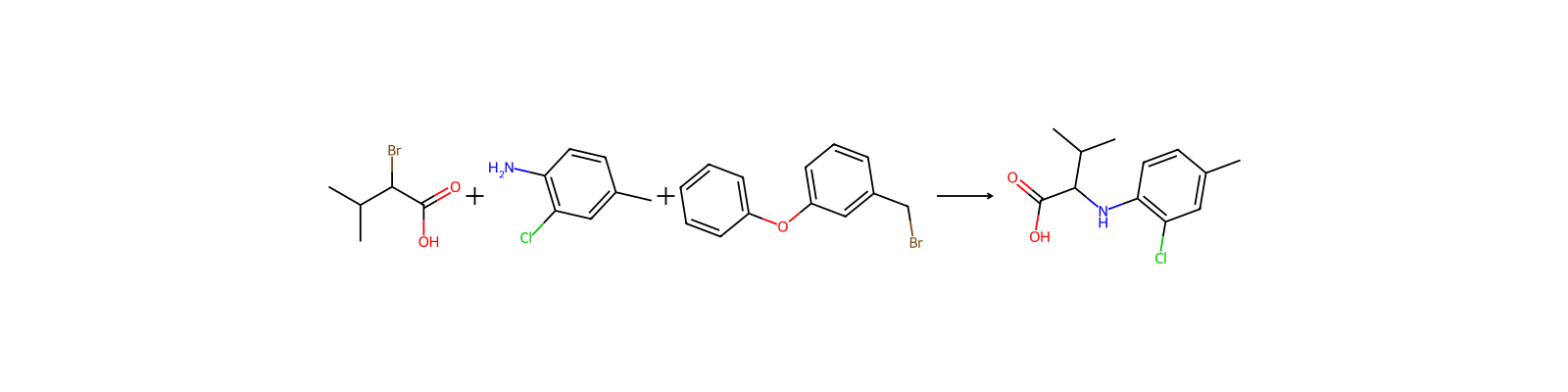
Zugehörige Reaktionen
80



Verknüpfte Notizen
Wird geladen…