
Grundinformationen
- Standard-SMILES
Cc1ccncc1C- InChIKey
NURQLCJSMXZBPC-UHFFFAOYSA-N- Summenformel
- C7H9N
- Durchschnittliche Molmasse
- 107,15 g/mol
- Monoisotopische Masse
- 107,07349929
Namen und Bezeichner
- Bevorzugter Name
- 3,4-Dimethylpyridine
- IUPAC
- 3,4-dimethylpyridine
- Lokaler Name
- 3,4-Dimethylpyridin
- Englischer Name
- 3,4-Lutidine
- Summenformel
- C7H9N
- Molmasse
- 107.15
Namen und Synonyme
3,4-Lutidine3,4-DIMETHYLPYRIDINEPyridine, 3,4-dimethyl-UNII-FCU895KJ7HNSC 4675EINECS 209-511-5FCU895KJ7H3,4-LutideneBRN 0106583NSC-4675DTXSID10522445-20-06-00054 (Beilstein Handbook Reference)
Weitere Namen anzeigen
34L4-Lutidine3,4-Lutidine98%(T)3,4-Lutidine3,4-LUTIDINE 98%AKOS BBS-000043914-DiMethylpyridine
3,4lutidine3,4Dimethylpyridin3,4DimetilpiridinaPyridine, 3,4dimethylRefChem:91225DTXCID6030815UN2929InChI=1/C7H9N/c1-6-3-4-8-5-7(6)2/h3-5H,1-2H
Datenbank-Bezeichner
- CAS
583-58-4- PubChem CID
- 11417
- DTXSID
DTXSID1052244- UNII
- FCU895KJ7H
- EC Number
- 209-511-5
- Nikkaji
- J7.443H
Eigenschaften
Berechnete Struktureigenschaften
- XLogP
- 1,6
- Polarare Oberfläche (TPSA)
- 12,9 Ų
- H-Brücken-Donoren
- 0
- H-Brücken-Akzeptoren
- 1
- Frei drehbare Bindungen
- 0
- Schwere Atome
- 8
- Formalladung
- 0
- Komplexität
- 70,8
Experimentelle und physikochemische Eigenschaften
Chemical ClassesNitrogen Compounds -> Pyridines
SpringerMaterials Properties15N nuclear magnetic resonance spectrum
Flavoring AgentsEU Flavoring substances
Vapor Pressure1.24 [mmHg]
Food Contact Substances
FCS -> FDA Cumulative Estimated Daily Intake (CEDI)
FCS -> FDA Inventory of Food Contact Substances Listed in 21 CFR
Physical DescriptionColorless to light yellow liquid; [Jubilant Life Sciences MSDS]
Physikochemische Eigenschaften
- Schmelzpunkt
- -12 °C · -12 °C
- Siedepunkt
- 163 · 163-164 °C(lit.)
- Dichte
- 0.954 g/mL · 0.954 g/mL at 25 °C(lit.)
- Brechungsindex
- 20 · n20/D 1.511(lit.)
- Flammpunkt
- 129 °F · 129 °F
- storage temp.
- Flammables area
- pka
- 6.46 · 6.46(at 25℃)
- Aggregatzustand
- clear liquid
- Farbe
- yellow
- Wasserlöslichkeit
- 52 g/L · 52 g/L (20 ºC)
- Spezifische Wärmekapazität
- 1.79 J/ · Cp(liquid): 1.79 J/(g·K), at 25℃
- BRN
- 106583 · 106583
- Henry's Law Constant
- 2.7 · 2.7×100 mol/(m3Pa) at 25℃, Andon et al. (1954)
- Dielectric constant
- 11.47 · 11.470000000000001
- LogP
- 1.749 · 1.749 (est)
- CAS Datenbank
- 583 · 583-58-4(CAS DataBase Reference)
- NIST chemische Informationen
- 3 · Pyridine, 3,4-dimethyl-(583-58-4)
- EPA chemische Informationen
- 3 · 3,4-Dimethylpyridine (583-58-4)
Sicherheit und Regulatorisches
GHS-Klassifizierung
GHS Classification
Danger
H226 (97.9%): Flammable liquid and vapor [Warning Flammable liquids]
P210, P233, P240, P241, P242, P243, P261, P262, P264, P264+P265, P270, P271, P280, P301+P316, P301+P317, P302+P352, P303+P361+P353, P304+P340, P305+P351+P338, P316, P319, P321, P330, P332+P317, P337+P317, P361+P364, P362+P364, P370+P378, P403+P233, P403+P235, P405, and P501 (click each P-code to see the statement)
Aggregated GHS information provided per 47 reports by companies from 6 notifications to the ECHA C&L Inventory. Each notification may be associated with multiple companies.
Gefahrenhinweise
Regulatory Information
Chemical: Pyridine, 3,4-dimethyl-
Commission Regulation (EC) No 1565/2000 (Repealed by Com. Implementing Reg. (EU) No 872/2012)
3,4-Dimethylpyridine: Does not have an individual approval but may be used under an appropriate group standard
Hazards SummaryAn irritant; Harmful by ingestion and inhalation; Toxic by skin absorption; [Jubilant Life Sciences MSDS] See Pyridine.
Hazard Classes and CategoriesFlam. Liq. 3 (97.9%)
Toxikologische Informationen
Toxicity DataLCLo (rat) = 500 ppm/4hr
Sicherheitsdaten
- wgk
- 3
- tsca
- TSCA listed
- ridadr
- UN 2929 6.1/PG 2
- hs_code
- 29333999
- RTECS-Nr.
- OK9800000
- risk_code
- 10-23/24/25-36/37/38-24-20/22-23/24-22
- hazard_code
- T,F,Xi
- safety_code
- 16-26-36/37/39-45
- hazard_class
- 6.1
- packing_group
- II
Chemie und Industrie
Verwendung und Herstellung
UsesUsed as an intermediate in drug manufacture; [Jubilant Life Sciences MSDS]
General Manufacturing InformationPyridine, 3,4-dimethyl-: ACTIVE
Anwendungen
Verwenden3,4-Lutidine is used as an intermediate in the preparation of active pharmaceutical ingredient. It is used to prepare tetrhydropyridine derivatives by reduction.
Vor- und nachgelagerte Produkte
Vorgelagerte Rohstoffe
Nachgelagerte Produkte
Anbieter6 Anbieter
浙江珲达生物科技有限公司0571-89903022 18679456698 · [email protected]
上海源叶生物科技有限公司13636370518 · [email protected]
上海巍涛化工有限公司02150630626 17717886015 · [email protected]
广东翁江化学试剂有限公司0751-2815983 13927872582 · [email protected]
上海珅桔化工有限公司13167128868 13248068001 · [email protected]
莱芜医药科技(上海)有限公司15800805830 · [email protected]
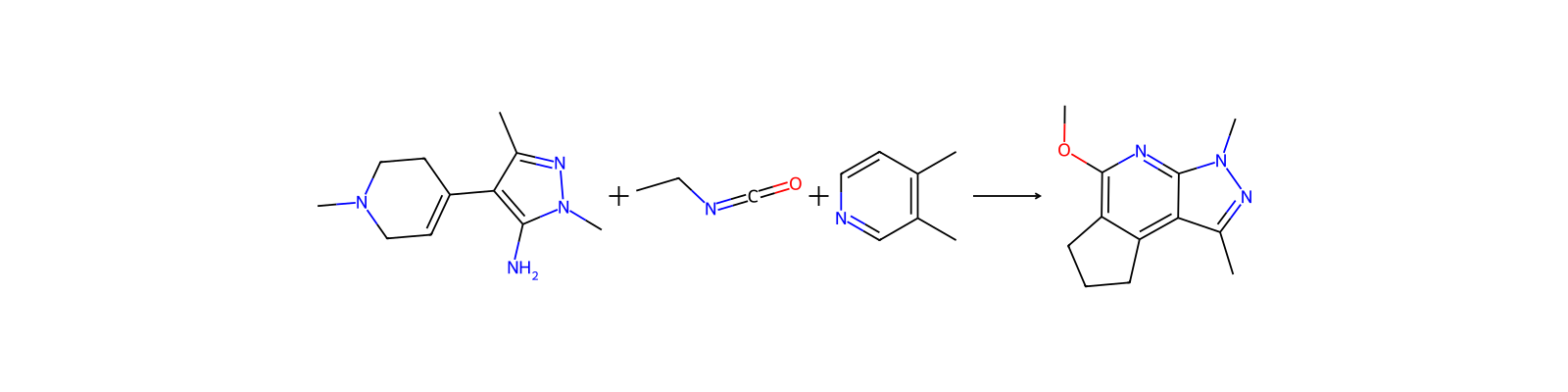
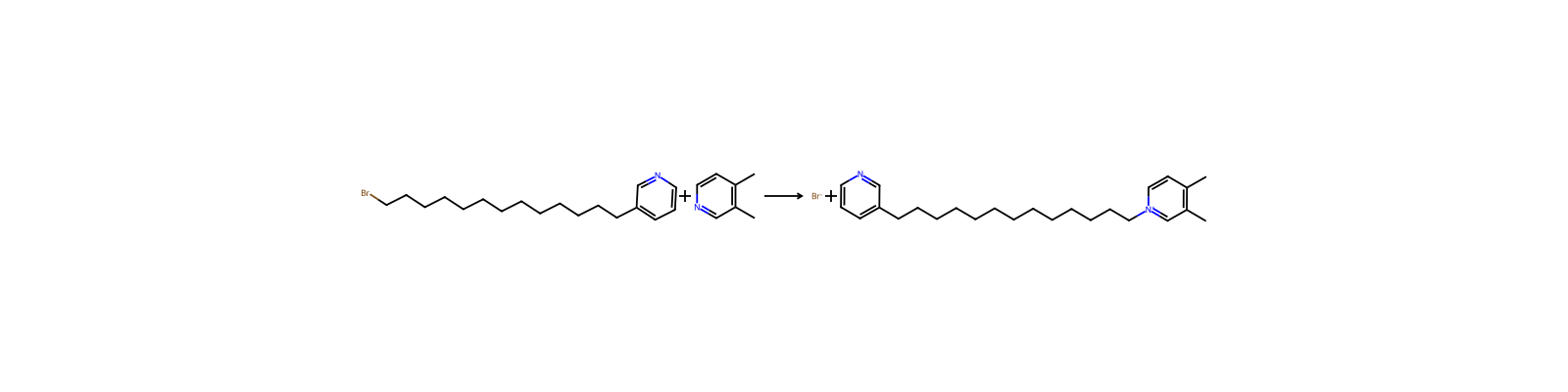
Zugehörige Reaktionen
66




Verknüpfte Notizen
Wird geladen…