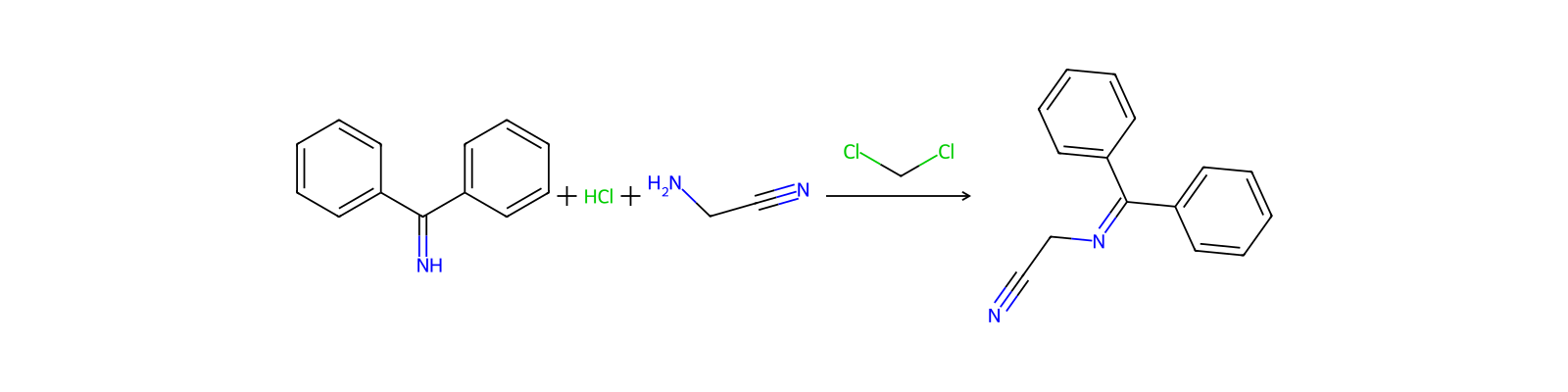
HRID 17008als Edukt
Aminoacetonitrile hydrochloride

6011-14-9Cl.N#CCNXFKYKTBPRBZDFG-UHFFFAOYSA-N6011-14-9DTXSID10884212CHEMBL545492Sicherheitsangaben dienen nur zur Orientierung und ersetzen weder das Sicherheitsdatenblatt (SDB) des Lieferanten noch geltende Vorschriften oder eine fachliche Bewertung.
Danger
H301 (12.3%): Toxic if swallowed [Danger Acute toxicity, oral]
P261, P264, P264+P265, P270, P271, P280, P301+P316, P301+P317, P302+P352, P304+P340, P305+P351+P338, P317, P319, P321, P330, P332+P317, P337+P317, P362+P364, P403+P233, P405, and P501 (click each P-code to see the statement)
Aggregated GHS information provided per 57 reports by companies from 13 notifications to the ECHA C&L Inventory. Each notification may be associated with multiple companies.
Chemical: Acetonitrile, amino-, monohydrochloride
Status: Active Update: 21-08-2017 https://echa.europa.eu/registration-dossier/-/registered-dossier/20345
Acetonitrile, amino-, monohydrochloride: Does not have an individual approval but may be used under an appropriate group standard
VerwendenUsed as pharmaceutical intermediates, organic synthetic raw material transportation.
synthetischeSynthesis of Aminoacetonitrile Hydrochloride by Reaction of Aminoacetonitrile with Hydrogen Chloride in Methanol: mixing the aminoacetonitrile with hydrogen chloride methanol solution, reacting at 45-50°C for 1-2 hours, cooling to below 5°C, filtering, and centrifugalizing to obtain the aminoacetonitrile hydrochloride, wherein in the hydrogen chloride methanol solution, the content of hydrogen chloride is 30-50 wt%, and the water content is less than or equal to 1%.Preparation method of aminoacetonitrile hydrochloride


