StartseiteMCPWorkbenchSkills
StartseiteWorkbenchBenachrichtigungenMein Bereich
llms.txt · MCP-AnleitungDatenschutz · Nutzungsbedingungen · Supportv1.8.1
  1. Startseite
  2. /Verbindung

Hex-1-en

1-Hexene

HCID 11597
Neue Reaktion
Drucken
GrundinformationenÜberblickNamen und BezeichnerEigenschaftenSicherheit und RegulatorischesChemie und IndustrieZugehörige ReaktionenNotizen zur Verbindung
TeilstruktursucheÄhnliche Strukturen suchen

Grundinformationen

CAS
592-41-6
Standard-SMILES
C=CCCCC
InChIKey
LIKMAJRDDDTEIG-UHFFFAOYSA-N
Summenformel
C6H12
Durchschnittliche Molmasse
84,16 g/mol
Monoisotopische Masse
84,09390038

Überblick

1-hexene appears as a clear colorless liquid with a petroleum like odor. Flash point -9 °F. Less dense than water and insoluble in water. Vapors heavier than air. Used as a solvent, paint thinner, and chemical reaction medium.

Namen und Bezeichner

Bevorzugter Name
1-Hexene
IUPAC
hex-1-ene
Lokaler Name
Hex-1-en
Englischer Name
1-Hexene
Summenformel
C6H12
Molmasse
84.16

Namen und Synonyme

1-HEXENEHex-1-ene592-41-6Hexene-1ButylethyleneHexylene1-n-HexeneButyl ethyleneDialene 6alpha-hexeneDTXSID4025402B38ZZ8C206
Weitere Namen anzeigen
HexeneHexenHexedroneHexane-1-ene1-Hexene [Standard Material]1-Hexen
NSC-74121DTXCID105402CHEBI:24579RefChem:6720209-753-1n-HexeneLinealene 6hexacarbene

Datenbank-Bezeichner

CAS
592-41-6、68526-99-8、68783-15-3
PubChem CID
11597
DTXSID
DTXSID4025402
ChEMBL
CHEMBL1548726
ChEBI
CHEBI:24579
UNII
B38ZZ8C206
EC Number
209-753-1
Nikkaji
J6.761J

Eigenschaften

Berechnete Struktureigenschaften

XLogP
3,4
Polarare Oberfläche (TPSA)
0 Ų
H-Brücken-Donoren
0
H-Brücken-Akzeptoren
0
Frei drehbare Bindungen
3
Schwere Atome
6
Formalladung
0
Komplexität
29

Experimentelle und physikochemische Eigenschaften

Chemical Classes · 2 Einträge

Other Classes -> Aliphatics, Unsaturated

Flammable agents - 3rd degree

SpringerMaterials PropertiesSchoenflies notation
LogP · 3 Einträge

log Kow= 3.39

3.39

3.47

Density · 5 Einträge

0.673 at 68 °F (USCG, 1999) - Less dense than water; will float

0.6731 @ 20 °C/4 °C

Relative density (water = 1): 0.7

0.673

0.6732 @25 °C

Viscosity0.39 sq mm/s
Color/FormColorless liquid
Solubility · 3 Einträge

Very sol in ethanol, ethyl ether, benzene, and petroleum ether

In water, 50 mg/l at 25 °C

Solubility in water, g/100ml at 20 °C: 0.005

Flash Point · 4 Einträge

-15 °F (USCG, 1999)

BELOW 20 °F (BELOW -7 °C) (CLOSED CUP)

Sicherheit und Regulatorisches

Sicherheitsangaben dienen nur zur Orientierung und ersetzen weder das Sicherheitsdatenblatt (SDB) des Lieferanten noch geltende Vorschriften oder eine fachliche Bewertung.

GHS-Klassifizierung

GHS Classification · 6 Einträge

Danger

H225 (97.5%): Highly Flammable liquid and vapor [Danger Flammable liquids]

P210, P233, P240, P241, P242, P243, P264+P265, P280, P301+P316, P303+P361+P353, P305+P351+P338, P331, P337+P317, P370+P378, P403+P235, P405, and P501 (click each P-code to see the statement)

Aggregated GHS information provided per 317 reports by companies from 15 notifications to the ECHA C&L Inventory. Each notification may be associated with multiple companies.

H401: Toxic to aquatic life [Hazardous to the aquatic environment, acute hazard]

P273, and P501 (click each P-code to see the statement)

Gefahrenhinweise

Regulatory Information · 5 Einträge

Chemical: 1-Hexene

1-Hexene is listed on the EPA's Chemical Data Reporting (CDR) system. Manufacturers and importers of 1-Hexene are required to report information about their production and use of this chemical to the EPA under the Toxic Substances Control Act (TSCA). (40 eCFR Part 711)

REACH registered substance: Hex-1-ene (EC: 209-753-1)

1-Hexene: HSNO Approval: HSR001170 Approved with controls

The New Jersey Worker and Community Right to Know Act requires public and private employers to provide information about hazardous substances at their workplaces. (N.J.S.A. 34:5A-1 et. seq.)

Other Safety InformationIMAP assessments - 1-Hexene: Human health tier I assessment
DOT LabelFlammable Liquid
Fire Hazards · 3 Einträge

Excerpt from ERG Guide 128 [Flammable Liquids (Water-Immiscible)]:

· HIGHLY FLAMMABLE: Will be easily ignited by heat, sparks or flames.

Extremely flammable. Vapour/air mixtures are explosive.

Chemie und Industrie

Pharmakologische Informationen

Metabolism/Metabolites · 1 Eintrag

The epoxidation of 1-hexene (1a) and 2-methyl-1-hexene (1b), two hydrocarbons present in the ambient air as pollutants, is catalyzed by some human and rat P450 enzymes. The enantioselectivities of these processes, when the reactions were carried out using rat and human liver microsomal preparations, were modest and dependent on both P450 composition and substrate concentrations. Various p450 isoforms (rat p450 2B1 and human P450 2C10 and 2A6) catalyzed the double bond oxidation of 1a and 1b with different product enantioselectivities. In the case of 1a, a moderately enantioselective hydroxylation at the allelic C(3) with the formation of 1-hexen-3-ol (4a) by microsomes from control or preinduced rats was also observed. The oxidation of this metabolite was, in turn, catalyzed by rat liver microsomes and mainly by rat p450 2C11, leading exclusively to the formation of 1-hexen-3-one, with no double bond epoxidation being observed. The stereochemical course of the microsomal epoxide hydrolase-catalyzed hydrolysis of the epoxy alcohols, threo-(:)- and erythro-(:)-1,2-epoxyhexan-3-ol, theoretically expected to be formed from 4a, has been investigated.

Verwendung und Herstellung

Uses · 3 Einträge

Used in fuels and as a chemical intermediate; [ACGIH]

IN LINEAR ALPHA-OLEFIN MIXT FOR PRODN OF PRIMARY ALCOHOLS; COMONOMER FOR HIGH DENSITY POLYETHYLENE

Synthesis of flavors, perfumes, dyes, resins, polymer modifier

ImpuritiesAlpha-olefins of C4, C6-C15 and >C20 are by-products of oligomerization reactions.
U.S. Exports · 2 Einträge

(1974) 3.4X10+10 G (ALL C6-C20 ALPHA OLEFINS)

(1975) 2.27X10+10 G(EST-LINEAR ALPHA-OLEFINS)

U.S. Production · 3 Einträge

2023: 1,000,000,000 - <2,500,000,000 lb

(1972) 1.6X10+11 G (ALL C6-C20 ALPHA-OLEFINS)

(1975) 1.7X10+11 G(EST-LINEAR ALPHA-OLEFINS)

Zugehörige Reaktionen

180
Reaktionsaufzeichnung erstellen
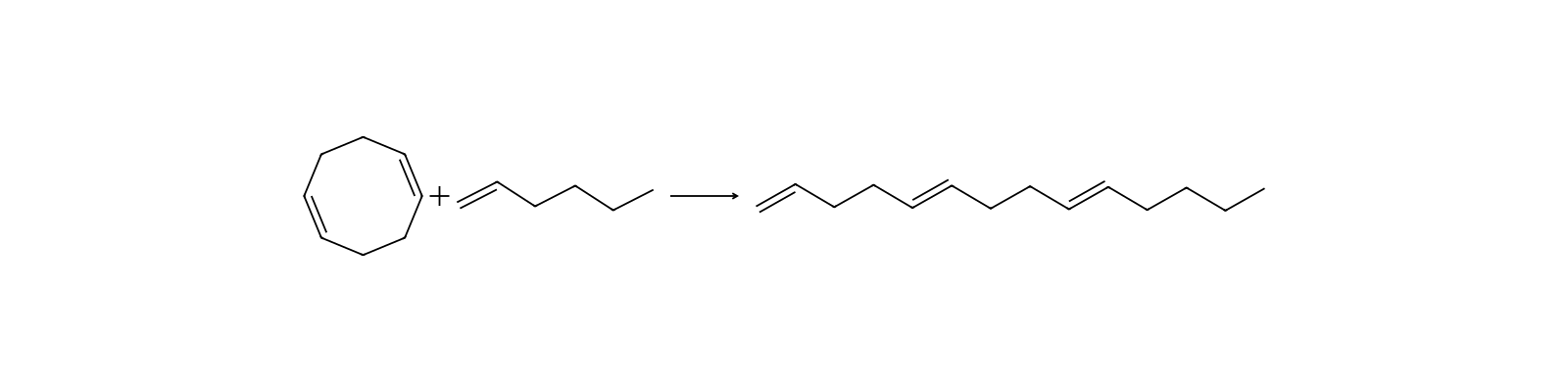
Reaktionsgleichung von HRID 1537
HRID 1537als Eduktuspto-grants-1998_03
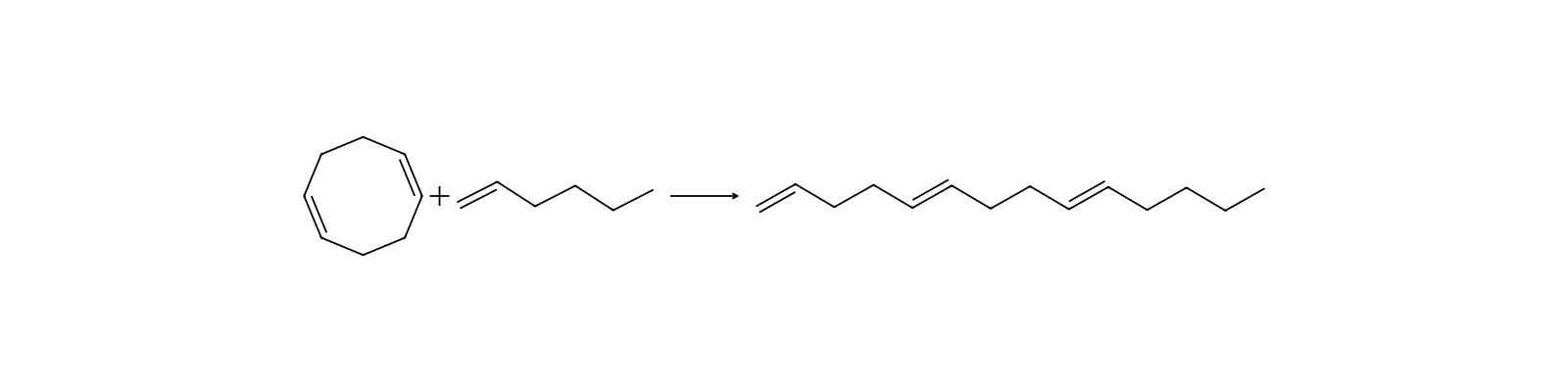
Reaktionsgleichung von HRID 4186
HRID 4186als Eduktuspto-grants-1988_02
Reaktionsgleichung von HRID 9517
HRID 9517als Eduktuspto-grants-2006_08
Reaktionsgleichung von HRID 22579
HRID 22579als Produktuspto-grants-1995_06
Reaktionsgleichung von HRID 37599
HRID 37599als Eduktuspto-grants-1995_05
Reaktionsgleichung von HRID 64595
HRID 64595als Eduktuspto-grants-1986_09
Reaktionsgleichung von HRID 64599
HRID 64599als Eduktuspto-grants-1986_09
Reaktionsgleichung von HRID 160502
HRID 160502als EduktTraining data from https://doi.org/10.1039/C8SC04228D (9/10)
ZurückSeite 1 von 23

Notizen zur Verbindung

Auf dieser SeiteGrundinformationenÜberblickNamen und BezeichnerEigenschaftenSicherheit und RegulatorischesChemie und IndustrieZugehörige ReaktionenNotizen zur Verbindung

-26 °C c.c.

-15 °F

Boiling Point · 5 Einträge

146.3 °F at 760 mmHg (USCG, 1999)

63.4 °C @ 760 mm Hg

63 °C

146.3 °

64.5 °C @760 [mm Hg]

DecompositionWhen heated to decomposition it emits acrid smoke and fumes.
Melting Point · 5 Einträge

-219.6 °F (USCG, 1999)

-139.7 °C

-140 °C

-219.6 °F

-139.9 °C

Vapor Density · 2 Einträge

3.0 (Air= 1)

Relative vapor density (air = 1): 2.9

Physikochemische Eigenschaften

Schmelzpunkt
139.8 °C · −139.8 °C (−219.6 °F; 133.3 K)
Siedepunkt
63 °C · 63 °C (145 °F; 336 K)
Dichte
0.673 g/cm3 · 0.673 g/cm3
Dampfdichte
3 · 3 (vs air)
Dampfdruck
155 mm · 155 mm Hg ( 21.1 °C)
Brechungsindex
1.3879 · 1.3879
Flammpunkt
-31 °C · -31 °C
storage temp.
Refrigerator
Löslichkeit
Soluble in alcohol, benzene, chloroform, ether, petroleum (Weast, 1986), and many other hydrocarbons including alkenes amd alkanes.
pka
14 · >14 (Schwarzenbach et al., 1993)
Aggregatzustand
liquid
Farbe
Colorless
Wichte
0.673 · 0.673
Geruch (Odor)
Mild, pleasant.
Odor Threshold
0.14 ppm · 0.14ppm
Wasserlöslichkeit
0.005 g/100 · 0.005 g/100 mL
Spezifische Wärmekapazität
2.18 J/ · Cp(liquid): 2.18 J/(g·K), at 25℃
BRN
1209240 · 1209240
Henry's Law Constant
3 · (atmm3/mol): 0.435 at 25 °C (Hine and Mookerjee, 1975)
Dielectric constant
2.1 · 2.1(Ambient)
Stabilität
Stable. Highly flammable - note low flash point. Incompatible with strong oxidizing agents, strong acids, combustible material.
Kosmetik-Inhaltsstoffe Funktionen
SOLVENT
InChI
1S/C6H12/c1-3-5-6-4-2/h3H,1,4-6H2,2H3
InChIKey
LIKMAJRDDDTEIG-UHFFFAOYSA-N
SMILES
CCCCC=C
LogP
3.87 at · 3.87 at 20℃
CAS Datenbank
592 · 592-41-6(CAS DataBase Reference)
NIST chemische Informationen
1 · 1-Hexene(592-41-6)
EPA chemische Informationen
1 · 1-Hexene (592-41-6)
Fire Potential
A very dangerous fire and explosion hazard when exposed to heat, flame, or oxidizers.
Health Hazards · 2 Einträge

Inhalation may cause giddiness or incoordination similar to that from gasoline vapor. Prolonged exposure to high concentrations may induce loss of consciousness or death. (USCG, 1999)

CAUTION: Petroleum crude oil (UN1267) may contain TOXIC hydrogen sulphide gas.

Hazards SummaryInhalation of high concentrations can cause CNS depression, narcosis, and unconsciousness. [CHEMINFO MSDS] Critical Effects: CNS; reproductive; [ACGIH]
DOT ID and Guide2370 128
Reactive GroupHydrocarbons, Aliphatic Unsaturated
UN ClassificationUN Hazard Class: 3; UN Pack Group: II
Reactivity AlertsHighly Flammable
Reactivity Profile1-HEXENE may react vigorously with strong oxidizing agents. May react exothermically with reducing agents to release hydrogen gas.

Sicherheit und Schutzausrüstung

Fire Fighting · 2 Einträge

Excerpt from ERG Guide 128 [Flammable Liquids (Water-Immiscible)]:

Use foam, dry powder, carbon dioxide. In case of fire: keep drums, etc., cool by spraying with water.

First Aid Measures · 4 Einträge

Fresh air, rest.

Remove contaminated clothes. Rinse skin with plenty of water or shower.

First rinse with plenty of water for several minutes (remove contact lenses if easily possible), then refer for medical attention.

Rinse mouth. Do NOT induce vomiting. Refer for medical attention .

Accidental Release Measures · 2 Einträge

· CALL 911. Then call emergency response telephone number on shipping paper. If shipping paper not available or no answer, refer to appropriate telephone number listed on the inside back cover.

· ELIMINATE all ignition sources (no smoking, flares, sparks or flames) from immediate area.

First Aid · 2 Einträge

SKIN OR EYES: wash exposed skin areas with soap and water; thoroughly flush eyes with water to remove any splashes; launder contaminated clothing before reuse. (USCG, 1999)

General First Aid:

Safe StorageFireproof. Separated from oxidants. Cool. Store in an area without drain or sewer access.
Exposure Control and Personal Protection· Wear positive pressure self-contained breathing apparatus (SCBA).
Fire Fighting ProceduresTo fight fire, use dry chemical, carbon dioxide, foam.
Nonfire Spill ResponseExcerpt from ERG Guide 128 [Flammable Liquids (Water-Immiscible)]:
Disposal Methods · 1 Eintrag

SRP: At the time of review, criteria for land treatment or burial (sanitary landfill) disposal practices are subject to significant revision. Prior to implementing land disposal of waste residue (including waste sludge), consult with environmental regulatory agencies for guidance on acceptable disposal practices.

Spillage Disposal · 1 Eintrag

Evacuate danger area! Consult an expert! Personal protection: filter respirator for organic gases and vapours adapted to the airborne concentration of the substance. Remove all ignition sources. Do NOT wash away into sewer. Collect leaking and spilled liquid in sealable containers as far as possible. Absorb remaining liquid in sand or inert absorbent. Then store and dispose of according to local regulations.

Preventive Measures · 1 Eintrag

SRP: The scientific literature for the use of contact lenses in industry is conflicting. The benefit or detrimental effects of wearing contact lenses depend not only upon the substance, but also on factors including the form of the substance, characteristics and duration of the exposure, the uses of other eye protection equipment, and the hygiene of the lenses. However, there may be individual substances whose irritating or corrosive properties are such that the wearing of contact lenses would be harmful to the eye. In those specific cases, contact lenses should not be worn. In any event, the usual eye protection equipment should be worn even when contact lenses are in place.

Isolation and Evacuation · 2 Einträge

Excerpt from ERG Guide 128 [Flammable Liquids (Water-Immiscible)]:

Immediate precautionary measure

Toxikologische Informationen

Environmental Fate · 3 Einträge

TERRESTRIAL FATE: Based on a classification scheme(1), an estimated Koc value of 1,660(SRC), determined from a log Kow of 3.39(2) and a regression-derived equation(3), indicates that 1-hexene is expected to have low mobility in soil. Volatilization of 1-hexene from moist soil surfaces is expected to be an important fate process(SRC) given an estimated Henry's Law constant of 0.41 atm-cu m/mole(SRC), from its vapor pressure of 187.6 mm Hg(4) and water solubility of 50 mg/l(5). Volatilization of 1-hexene from dry soil surfaces may occur based upon the vapor pressure of 1-hexene(4). 1-Hexene's linear hydrocarbon structure would suggest that biodegradation is an important process in soil(6).

AQUATIC FATE: Based on a classification scheme(1), an estimated Koc value of 1,660(SRC), determined from a log Kow of 3.39(2) and a regression-derived equation(3), indicates that 1-hexene is expected to adsorb to suspended solids and sediment in water(SRC). Volatilization from water surfaces is expected(3) based upon an estimated Henry's Law constant of 0.41 atm-cu m/mole(SRC), from its vapor pressure of 187.6 mm Hg(4) and water solubility of 50 mg/l(5). Using this Henry's Law constant and an estimation method(3), volatilization half-lives for a model river and model lake are 1 and 87 hours, respectively(SRC). According to a classification scheme(6), an estimated BCF of 81(SRC), from its log Kow(2) and a regression-derived equation(7), suggests the potential for bioconcentration in aquatic organisms is moderate. 1-Hexene's linear hydrocarbon structure would suggest that biodegradation is an important process in water(8).

ATMOSPHERIC FATE: According to a model of gas/particle partitioning of semivolatile organic compounds in the atmosphere(1), 1-hexene, which has a vapor pressure of 183.7 mm Hg at 25 °C(2), is expected to exist solely as a vapor in the ambient atmosphere. Vapor-phase 1-hexene is degraded in the atmosphere by reaction with photochemically-produced hydroxyl radicals and ozone molecules(SRC). The half-life for the reaction with hydroxyl radicals is estimated to be 10 hours(SRC) calculated from its rate constant of 3.75X10⁻¹¹ cu cm/molecule-sec at 25 °C(3). The half-life for the reaction with ozone molecules is estimated to be 23 hours(SRC) calculated from its rate constant of 1.17X10⁻¹⁷ cu cm/molecule-sec at 25 °C(4).

Food Survey Values1-Hexene was identified, not quantified, in chickpeas(1).
Adverse EffectsNeurotoxin - Acute solvent syndrome
Exposure RoutesThe substance can be absorbed into the body by inhalation of its vapour.
Signs and Symptoms · 4 Einträge

Cough. Dizziness. Drowsiness. Sore throat. Vomiting. Unconsciousness.

Dry skin.

Redness.

See Inhalation.

Effluent Concentrations · 1 Eintrag

1-Hexene was identified, not quantified, in automobile emissions in Canada(1) and 4-stroke lawn mowers(2). The emission rate of 1-hexene from typical automobiles was reported as 13 mg per liter of gasoline(3). The emission rate of 1-hexene from ferries with diesel engines was reported as 0.6 and 0.1 mg/kWh(4). Car exhaust in London, England contained 1-hexene at an avg concn of 189 ppb(5).

ICSC Environmental DataThe substance is toxic to aquatic organisms.
Soil Adsorption/Mobility · 1 Eintrag

The Koc of 1-hexene is estimated as 1,660(SRC), using a log Kow of 3.39(1) and a regression-derived equation(2). According to a classification scheme(3), this estimated Koc value suggests that 1-hexene is expected to have low mobility in soil.

Atmospheric Concentrations · 3 Einträge

SOURCE DOMINATED: 1-Hexene was reported at an avg concn of 0.1388 ppb along roadsides and at 0.130 ppb at airports in Atlanta, GA(1). The concn of 1-hexene at an unspecified street in London, England was reported as 2 ppb(2). 1-Hexene was reported in the Caldecott Tunnel, CA at a mean concn of 4.6 mg/l in August of 1994 when low oxygenated fuels (0.3%) were being employed in the San Francisco area(3). 1-Hexene was reported in the Caldecott Tunnel, CA at a mean concn of 5.4 mg/l in October of 1994 when high oxygenated fuels (2%) were being employed in the San Francisco area(3). 1-Hexene was identified, not quantified, in the Tingstad Tunnel, Sweden(4).

URBAN/SUBURBAN: 1-Hexene was reported in urban air in Porto Alegre, Brazil in 1996 at a mean concn of 1.1 mg/cu m(1). 1-Hexene was reported in 1993 at an avg concn of 0.40 ug/cu m (not detected to 1.30 ug/cu m) in Los Angeles, CA(2). 1-Hexene was detected in Tulsa, OK at concns of not detected to 0.7 ppb(3). 1-Hexene was detected at concns of 0.002-0.051 parts per trillion in southwest France(4).

RURAL/REMOTE: 1-Hexene was detected in the atmosphere of the Borden Forest, Canada in 1993 at concns of 0.001-0.008 ppb during daytime hours and 0.002-0.01 ppb during nighttime hours(1).

Human Toxicity Excerpts · 2 Einträge

A low moderate irritant to the skin and eyes.

When inhaled, it produces CNS depression in humans at a concentration of about 0.1%, with accompanying mucous membrane irritation, vertigo, vomiting, and cyanosis.

Fish/Seafood Concentrations1-Hexene was identified, not quantified, in mussels near Holbaek, Holland(1).
Artificial Pollution Sources1-Hexene's production and use in the synthesis of flavors, perfumes, dyes and resins(1) may result in its release to the environment through various waste streams(SRC).

Sicherheitsdaten

wgk
1
tsca
TSCA listed
ridadr
UN 2370
hs_code
2901299090
RTECS-Nr.
MP6670000
risk_code
11-65-67-51/53
hazard_code
F,Xn,N
safety_code
9-16-23-29-62-57-33-22
hazard_class
3
packing_group
II
Speicherklasse
3 - Flammable liquids
Giftige Stoffe Daten
592-41-6(Hazardous Substances Data)
Hazard Classifications
Asp. Tox. 1Flam. Liq. 2
Selbstentzündungstemperatur
487 °F
Consumption Patterns
AN ESTIMATED 5.5X10+9 GRAMS OF ISOLATED 1-HEXENE WAS USED AS A COMONOMER FOR HIGH DENSITY POLYETHYLENE (1974)
Consumer UsesNot Known or Reasonably Ascertainable
Industry UsesFuel
Methods of ManufacturingOLIGOMERIZATION OF ETHYLENE USING TRIETHYLALUMINUM CATALYST AND FRACTIONAL DISTILLATION OF THE RESULTING ALPHA-OLEFIN MIXTURE
Formulations/PreparationsGrade: 95%, 99% research
General Manufacturing Information · 3 Einträge

Other (requires additional information)

1-Hexene: ACTIVE

THE REACTION OF 1-HEXENE WITH OZONE PRODUCED A LARGE QUANTITY OF CONDENSATION NUCLEI (APPROXIMATELY 85,000 PARTICLES/ML).

Anwendungen · 1 Eintrag

Verwenden1-Hexene is used as a solvent, paint thinner and a medium for conducting chemical reactions. It is a commoner and used in the preparation of both low density and high density polyethylenes. It acts as an adhesives, lubricants, lubricant additives and sealant chemicals. Further, it is used in the preparation of hex-1-en-3-one, heptanal and heptanoic acid. It is also employed in the synthesis of linear plasticizers, oxo-alcohols, motor fuels, automotive additives and biodegradable surfactants. In addition to this, it is used in the preparation of mercaptans, flavors and fragrances, alkyl metals, halides and alkyl silanes.

Vor- und nachgelagerte Produkte

Vorgelagerte Rohstoffe

dilute sulphuric acidBariumhydroxidBariumsulfatHexa-1,5-dienHex-5-en-1-ol

Nachgelagerte Produkte

Ethyl-3-(2,2-dichlorvinyl)-2,2-dimethyl-1-cyclopropancarboxylatHex-4-en-3-onHexa-2,4-diensure1,2-Epoxyhexanβ,β-CarotinCyfluthrinethyl 4,6,6-trichloro-3,3-dimethyl-hex-5-enoateMethyl-3-(2,2-dichlorvinyl)-2,2-dimethylcyclopropancarboxylatHeptansure3-Phenoxybenzyl-3-(2,2-dichlorvi-nyl)-2,2-dimethyl-cyclopropancar-boxylatCinitapride hydrogen tartrate3-[2-chloro-2-(4-chlorophenyl)ethenyl]-2,2-dimethyl cyclopropane carboxylic acidChrysanthemsure(2E,6Z)-Nona-2,6-dien-1-ol2-hexanethiol(Z)-Hex-2-en

Ergänzende Hinweise

DefinitionChEBI: An alkene that is hexane carrying a double bond at position 1.