Harnsure
Uric Acid
Daten werden ergänzt – lade die Seite später neu, um den aktuellen Stand zu sehen

Grundinformationen
- CAS
69-93-2- Standard-SMILES
O=c1[nH]c(=O)c2[nH]c(=O)[nH]c2[nH]1- InChIKey
LEHOTFFKMJEONL-UHFFFAOYSA-N- Summenformel
- C5H4N4O3
- Durchschnittliche Molmasse
- 168,11 g/mol
- Monoisotopische Masse
- 168,02834
Überblick
7,9-dihydro-1H-purine-2,6,8(3H)-trione is an oxopurine in which the purine ring is substituted by oxo groups at positions 2, 6, and 8. It has a role as a mouse metabolite, an Escherichia coli metabolite and a human metabolite. It is a tautomer of a 2,6-dihydroxy-7,9-dihydro-8H-purin-8-one, a 9H-purine-2,6,8-triol, a 7H-purine-2,6,8-triol, a 1H-purine-2,6,8-triol and a 5,7-dihydro-1H-purine-2,6,8(9H)-trione.
Namen und Bezeichner
- Bevorzugter Name
- Uric Acid
- IUPAC
- 7,9-dihydro-3H-purine-2,6,8-trione
- Lokaler Name
- Harnsure
- Englischer Name
- Uric acid
- Summenformel
- C5H4N4O3
- Molmasse
- 168.11
Namen und Synonyme
uric acid69-93-2urateLithic acid2,6,8-trioxypurine2,6,8-trihydroxypurine2,6,8-Trioxopurine7,9-Dihydro-1H-purine-2,6,8(3H)-trione1H-Purine-2,6,8-triol1H-Purine-2,6,8(3H)-trione, 7,9-dihydro-Purine-2,6,8(1H,3H,9H)-trione7,9-dihydro-3H-purine-2,6,8-trione
Weitere Namen anzeigen
TRIKETOPURINEUric aciNSC 3975URIC OXIDEUricAcidGrURIC ACID(RG)
2,3,6,7,8,9-hexahydro-1H-purine-2,6,8-trionetrioxopurineUricum acidumIdelalisib metabolite m54DTXSID3042508NSC-3975268B43MJ25DTXCID1022508
Datenbank-Bezeichner
- CAS
69-93-2- PubChem CID
- 1175
- DTXSID
DTXSID3042508- ChEMBL
CHEMBL792- ChEBI
CHEBI:17775
Eigenschaften
Berechnete StruktureigenschaftenWird ergänzt
- XLogP
- -1,9
- Polarare Oberfläche (TPSA)
- 99,3 Ų
- H-Brücken-Donoren
- 4
- H-Brücken-Akzeptoren
- 3
- Frei drehbare Bindungen
- 0
- Schwere Atome
- 12
- Formalladung
- 0
- Komplexität
- 332
Experimentelle und physikochemische Eigenschaften
Chemical ClassesNitrogen Compounds -> Purines
DrugsPharmaceuticals -> Listed in ZINC15
CosmeticsSkin conditioning; Buffering
SpringerMaterials PropertiesCrystal structure
LogP-2.17
Solubility0.06 mg/mL
Melting Point
Greater than 300 °C
> 300 °C
Physical Description
White odorless solid; [Merck Index] Beige powder; [Sigma-Aldrich MSDS]
Solid
Dissociation Constants5.4
Collision Cross Section
126.4 Ų [M-H]- [CCS Type: DT; Buffer gas: N2; Ionization: ESI-; Dataset: TOXCAST; Source Identifier: DTXSID3042508]
Sicherheit und Regulatorisches
Sicherheitsangaben dienen nur zur Orientierung und ersetzen weder das Sicherheitsdatenblatt (SDB) des Lieferanten noch geltende Vorschriften oder eine fachliche Bewertung.
GHS-Klassifizierung
GHS Classification
This chemical does not meet GHS hazard criteria for 96.8% (30 of 31) of all reports.
Not Classified
Aggregated GHS information provided per 31 reports by companies from 2 notifications to the ECHA C&L Inventory.
Gefahrenhinweise
Regulatory Information
Chemical: 1H-Purine-2,6,8(3H)-trione, 7,9-dihydro-
REACH registered substance: Uric acid (EC: 200-720-7)
1H-Purine-2,6,8(3H)-trione, 7,9-dihydro-: Does not have an individual approval but may be used under an appropriate group standard
Other Safety InformationEvaluation - Chemicals that are unlikely to require further regulation to manage risks to environment
Hazards SummaryMay cause irritation; Reproductive effects observed in rats; [Sigma-Aldrich MSDS]
Hazard Classes and CategoriesNot Classified
Sicherheitsdaten
- wgk
- 3
- tsca
- TSCA listed
- hs_code
- 29339900
- RTECS-Nr.
- YU7050080
- risk_code
- 33-36/37/38
- Toxizität
- A nitrogenous end product and the principal excretory product of purine metabolism in mammals. In birds and reptiles, it is the principal end product of nitrogen metabolism in general. Defects in uric acid metabolism and excretion appear to be associated with a number of disease states, and it frequently occurs as a component of renal calculi. It has not been associated closely with toxic insults except in the case of lead poisoning. Lead causes an elevation in blood uric acid concentration (uric acidemia) and a decrease in uric acid excretion.
Chemie und Industrie
Pharmakologische Informationen
Pharmacodynamics
Uric acid is a strong reducing agent (donates electrons) and an antioxidant. Normally in humans, one of the main antioxidants in plasma is uric acid. Several animal studies have found that animals given exogenous uric acid within 3 hours after a stroke had decreased infarct volume, improved neurologic function, and diminished inflammatory responses providing evidence for the neuroprotective effects of uric acid. In some early human studies, uric acid has so far shown similar neuroprotective effects, in both the cortex and subcortex areas, due to its antioxidant effects such as decreased lipid peroxidation, and there appears to be no significant toxicities.
Mechanism of ActionThe exact mechanism of action for uric acid's antioxidant effects have not yet been elucidated.
Metabolism/MetabolitesIn higher primates and humans, the enzyme, uricase, is absent, and thus uric acid is not further metabolized and is excreted. In all other mammals, uric acid is metabolized by uricase to allantoin, which is then excreted.
MeSH Pharmacological ClassificationNaturally occurring or synthetic substances that inhibit or retard oxidation reactions. They counteract the damaging effects of oxidation in animal tissues.
Absorption, Distribution and ExcretionUric acid is eliminated by the kidneys.
Tissue LocationsAdipose Tissue
Cellular LocationsExtracellular
Metabolite PathwaysAdenine phosphoribosyltransferase deficiency (APRT)
Verwendung und Herstellung
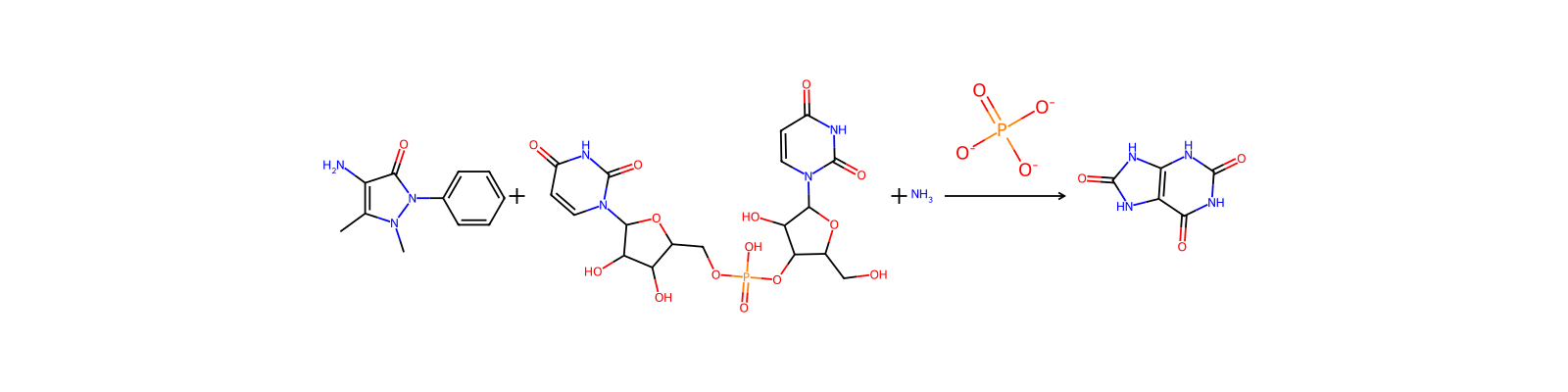
Zugehörige Reaktionen
10


Notizen zur Verbindung
Wird geladen…