

Grundinformationen
- Standard-SMILES
Cc1cccc([N+](=O)[O-])c1[N+](=O)[O-]- InChIKey
DYSXLQBUUOPLBB-UHFFFAOYSA-N- Summenformel
- C7H6N2O4
- Durchschnittliche Molmasse
- 182,13 g/mol
- Monoisotopische Masse
- 182,03275667
Überblick
Dinitrotoluene (Technical Grade) can cause female reproductive toxicity and male reproductive toxicity according to The National Institute for Occupational Safety and Health (NIOSH).
Namen und Bezeichner
- Bevorzugter Name
- 2,3-Dinitrotoluene
- IUPAC
- 1-methyl-2,3-dinitrobenzene
- Lokaler Name
- Dinitrotoluol
- Englischer Name
- DINITROTOLUENE
- Summenformel
- C7H6N2O4
- Molmasse
- 182.13354
Namen und Synonyme
2,3-DINITROTOLUENE602-01-71-Methyl-2,3-dinitrobenzene2,3-DinitrotoluolToluene, 2,3-dinitro-Benzene, 1-methyl-2,3-dinitro-2,3-DNTDTXSID4027236BS660NHC83DTXCID407236CHEBI:142287RefChem:81873
Weitere Namen anzeigen
binitrotoluenedinitro-toluenDINITROTOLUENEdinitrotoluenesToluene, dinitro-top DINITROTOLUENEMethlydinitrobenzenear,ar-dinitro-toluenDinitrophenylmethanemethyldinitro-benzen
210-013-5Benzene, methyldinitro-NCGC00091205-03CCRIS 2837HSDB 5499EINECS 210-013-5BRN 2212428UNII-BS660NHC83
Datenbank-Bezeichner
- CAS
25321-14-6、29656-15-3、602-01-7- PubChem CID
- 11761
- DTXSID
DTXSID4027236- ChEMBL
CHEMBL1531586- ChEBI
CHEBI:142287- UNII
- BS660NHC83
- EC Number
- 210-013-5、608-391-5
- Nikkaji
- J6.803I
Eigenschaften
Berechnete Struktureigenschaften
- XLogP
- 1,9
- Polarare Oberfläche (TPSA)
- 91,6 Ų
- H-Brücken-Donoren
- 0
- H-Brücken-Akzeptoren
- 4
- Frei drehbare Bindungen
- 0
- Schwere Atome
- 13
- Formalladung
- 0
- Komplexität
- 220
Experimentelle und physikochemische Eigenschaften
SpringerMaterials PropertiesFusion temperature
LogP2.0 (calculated)
Density
1.3 (Water = 1)
Relative density (water = 1): 1.3 (liquid)
Color/FormYellow crystals
Solubility
Soluble in ethanol, ether; slightly soluble in chloroform
In water, 161 mg/L at 25 °C
Solubility in water: very poor
Decomposition
When heated to decomposition it emits toxic fumes of /nitrogen oxides/.
250-300 °C
Melting Point
63 °C
59-61 °C
Vapor Density
6.28 (Air = 1)
Relative vapor density (air = 1): 6.28
Physical Description
Other Solid
Other Solid
YELLOW CRYSTALS WITH CHARACTERISTIC ODOUR.
Physikochemische Eigenschaften
- Schmelzpunkt
- 70 °C · 70°C
- Siedepunkt
- 320.51 °C · 320.51°C (rough estimate)
- Dichte
- 1.321 · 1.3210
- Brechungsindex
- 1.479 · 1.4790 (estimate)
- Aggregatzustand
- Yellow crystals
- Henry's Law Constant
- 1.1 · 1.1×102 mol/(m3Pa) at 25℃, HSDB (2015)
- CAS Datenbank
- 25321 · 25321-14-6
- EPA chemische Informationen
- Dinitrotoluene (25321-14-6)
Sicherheit und Regulatorisches
GHS-Klassifizierung
GHS Classification
Danger
H301: Toxic if swallowed [Danger Acute toxicity, oral]
P203, P260, P261, P262, P264, P270, P271, P273, P280, P301+P316, P302+P352, P304+P340, P316, P318, P319, P321, P330, P361+P364, P391, P403+P233, P405, and P501 (click each P-code to see the statement)
Danger
H301 (100%): Toxic if swallowed [Danger Acute toxicity, oral]
P203, P260, P261, P262, P264, P270, P271, P273, P280, P301+P316, P302+P352, P304+P340, P316, P318, P319, P321, P330, P361+P364, P391, P403+P233, P405, and P501 (click each P-code to see the statement)
Gefahrenhinweise
Regulatory Information
Chemical: Benzene, methyldinitro-
Hazard Traits - Carcinogenicity
Benzene, methyldinitro- is listed on the EPA's Chemical Data Reporting (CDR) system. Manufacturers and importers of Benzene, methyldinitro- are required to report information about their production and use of this chemical to the EPA under the Toxic Substances Control Act (TSCA). (40 eCFR Part 711)
Benzene, 1-methyl-2,3-dinitro- is listed on the EPA's Chemical Data Reporting (CDR) system. Manufacturers and importers of Benzene, 1-methyl-2,3-dinitro- are required to report information about their production and use of this chemical to the EPA under the Toxic Substances Control Act (TSCA). (40 eCFR Part 711)
Benzene, methyldinitro-: Does not have an individual approval but may be used as a component in a product covered by a group standard. It is not approved for use as a chemical in its own right.
Other Safety InformationIMAP assessments - Benzene, methyldinitro-: Human health tier II assessment
Fire HazardsCombustible. Gives off irritating or toxic fumes (or gases) in a fire. Finely dispersed particles form explosive mixtures in air. Risk of explosion on contact with many substances.
Fire PotentialCombustible material. /3,4-Dinitrotoluene/
EC ClassificationSymbol: T, N; R: 45-23/24/25-48/22-62-68-50/53; S: 53-45-60-61; Note: E
UN ClassificationUN Hazard Class: 6.1; UN Pack Group: II
Special Reports
USEPA; Ambient Water Quality Criteria Doc: Dinitrotoluene (1980) EPA 440/5-80-045
Rickert DE et al; CRC Crit Rev Toxicol 13 (3): 217-34 (1984). A review on the toxicity, mutagenicity, carcinogenicity and metabolism of 2,3-, 2,4-, 2,5-, 2,6-, 3,4-, and 3,5- dinitrotoluene in man and laboratory animals.
NIOSH; Current Intelligence Bulletin 44 Dinitrotoluenes (DNT) 20 pp. (7/5/85) DHHS Pub No 85-109.
OSHA StandardsPermissible Exposure Limit: Table Z-1 8-hr Time-Weighted Avg: 1.5 mg/cu m. Skin Designation. /Dinitrotoluene/
Atmospheric Standards
This action promulgates standards of performance for equipment leaks of Volatile Organic Compounds (VOC) in the Synthetic Organic Chemical Manufacturing Industry (SOCMI). The intended effect of these standards is to require all newly constructed, modified, and reconstructed SOCMI process units to use the best demonstrated system of continuous emission reduction for equipment leaks of VOC, considering costs, non air quality health and environmental impact and energy requirements. Dinitrotoluene is produced, as an intermediate or a final product, by process units covered under this subpart. /Dinitrotoluene/
Chemical DangersDecomposes on heating. This produces toxic and corrosive fumes including nitrogen oxides even in the absence of air. Reacts with reducing agents, strong bases and oxidants. This generates explosion hazard.
Physical DangersDust explosion possible if in powder or granular form, mixed with air.
Packaging and LabellingDo not transport with food and feedstuffs.
Sicherheit und Schutzausrüstung
Fire FightingUse water spray, powder, foam, carbon dioxide. In case of fire: keep drums, etc., cool by spraying with water. Combat fire from a sheltered position.
First Aid Measures
Fresh air, rest. Artificial respiration may be needed. Refer for medical attention.
Remove contaminated clothes. Rinse and then wash skin with water and soap. Refer for medical attention .
First rinse with plenty of water for several minutes (remove contact lenses if easily possible), then refer for medical attention.
Rinse mouth. Give one or two glasses of water to drink. Refer for medical attention .
Safe StorageFireproof. Separated from strong bases, food and feedstuffs, oxidants and strong reducing agents. Well closed. Keep in a well-ventilated room. Store in an area without drain or sewer access.
Fire Fighting Procedures
WATER, DRY CHEMICAL, OR CARBON DIOXIDE FROM PROTECTED LOCATION.
If material on fire or involved in fire: Use water in flooding quantities as fog. Use foam, dry chemical, or carbon dioxide. Apply water from as far a distance as possible. Keep run-off water out of sewers and water sources. /Dinitrotoluenes, molten/
If material on fire or involved in fire: Use water in flooding quantities as fog. Cool all affected containers with flooding quantities of water. Apply water from as far a distance as possible. Solid streams of water may be ineffective. Use foam, dry chemical, or carbon dioxide. /Dinitrotoluene, liquid; dinitrotoluene, solid/
Storage ConditionsNormally stored as a molten liquid. Separate from strong oxidizers & reducing agents. Hot water coils should not exceed 194 °F (90 °C). /Dinitrotoluenes/
Cleanup Methods
1) REMOVE ALL IGNITION SOURCES. 2) VENTILATE AREA OF SPILL. 3) FOR SMALL QUANTITIES, SWEEP ONTO PAPER OR OTHER SUITABLE MATERIAL & BURN IN SUITABLE COMBUSTION CHAMBER WHICH ALLOWS BURNING IN UNCONFINED CONDITION & IS EQUIPPED WITH APPROPRIATE EFFLUENT GAS CLEANING DEVICE. LARGE QUANTITIES MAY BE RECLAIMED; ... IF ... NOT PRACTICAL, DISSOLVE IN FUEL OIL & ATOMIZE IN SUITABLE COMBUSTION CHAMBER EQUIPPED WITH APPROPRIATE EFFLUENT GAS CLEANING DEVICE.
Environmental considerations - water spill: Use natural deep water pockets, excavated lagoons, or sand bag barriers to trap material at bottom. Remove trapped material with suction hoses. If dissolved, in region of 10 ppm or greater concentration, apply activated carbon at ten times the spilled amount. Use mechanical dredges or lifts to remove immobilized masses of pollutants and precipitates. /Dinitrotoluene, liquid; dinitrotoluene, solid/
Environmental considerations - land spill: Cover solids with plastic sheet to prevent dissolving in rain or fire fighting water. /Dinitrotoluene, liquid; dinitrotoluene, solid/
Disposal Methods
SRP: The most favorable course of action is to use an alternative chemical product with less inherent propensity for occupational harm/injury/toxicity or environmental contamination. Recycle any unused portion of the material for its approved use or return it to the manufacturer or supplier. Ultimate disposal of the chemical must consider: the material's impact on air quality; potential migration in soil or water; effects on animal and plant life; and conformance with environmental and public health regulations.
SRP: Wastewater from contaminant suppression, cleaning of protective clothing/equipment, or contaminated sites should be contained and evaluated for subject chemical or decomposition product concentrations. Concentrations shall be lower than applicable environmental discharge or disposal criteria. Alternatively, pretreatment and/or discharge to a permitted wastewater treatment facility is acceptable only after review by the governing authority and assurance that "pass through" violations will not occur. Due consideration shall be given to remediation worker exposure (inhalation, dermal and ingestion) as well as fate during treatment, transfer and disposal. If it is not practicable to manage the chemical in this fashion, it must be evaluated in accordance with EPA 40 CFR Part 261, specifically Subpart B, in order to determine the appropriate local, state and federal requirements for disposal.
SRP: At the time of review, criteria for land treatment or burial (sanitary landfill) disposal practices are subject to significant revision. Prior to implementing land disposal of waste residue (including waste sludge), consult with environmental regulatory agencies for guidance on acceptable disposal practices.
1) BY MAKING PACKAGES OF DINITROTOLUENE IN PAPER OR OTHER FLAMMABLE MATERIAL & BURNING IN SUITABLE COMBUSTION CHAMBER WHICH ALLOWS BURNING IN UNCONFINED CONDITION & IS EQUIPPED WITH APPROPRIATE EFFLUENT GAS CLEANING DEVICE. 2) BY DISSOLVING IN FUEL OIL & ATOMIZING IN SUITABLE COMBUSTION CHAMBER EQUIPPED WITH APPROPRIATE EFFLUENT GAS CLEANING DEVICE. /DINITROTOLUENE/
Dinitrotoluene is a waste chemical stream constituent which may be subjected to ultimate disposal by controlled incineration. Pretreatment involves contact of the dinitrotoluene contaminated waste with sodium carbonate and solid combustibles followed by incineration in an alkaline scrubber equipped incinerator unit. /Dinitrotoluene/
Spillage Disposal
Consult an expert! Personal protection: chemical protection suit including self-contained breathing apparatus. Do NOT let this chemical enter the environment. Sweep spilled substance into covered containers. If appropriate, moisten first to prevent dusting. Carefully collect remainder. Then store and dispose of according to local regulations.
Preventive Measures
SRP: Contaminated protective clothing should be segregated in such a manner so that there is no direct personal contact by personnel who handle, dispose, or clean the clothing. The completeness of the cleaning procedures should be considered before the decontaminated protective clothing is returned for reuse by the workers. Contaminated clothing should not be taken home at the end of shift, but should remain at employee's place of work for cleaning.
Eating and smoking should not be permitted in areas where dinitrotoluene or liquids containing dinitrotoluene are handled, processed, or stored. Employees who handle dinitrotoluene or liquids containing dinitrotoluene should wash their hands thoroughly with soap or mild detergent and water before eating, smoking, or using toilet facilities. /Dinitrotoluene/
... PROGRAM TO PREVENT HEALTH IMPAIRMENT DUE TO EXPOSURE TO AROMATIC NITRO-COMPOUNDS REQUIRES EXPOSURE CONTROL & MED SUPERVISION ... JOB ANALYSIS TO ENSURE PROPER HANDLING PROCEDURES, ADEQUATE EQUIPMENT DESIGN FOR ... OPERATING & MAINTENANCE, & APPROPRIATE VENTILATION WITH AIR-POLLUTION CONTROL ARE MIN REQUIREMENTS. TOTALLY ENCLOSED SYSTEMS ARE PREFERRED. ... AIR ANAL CAN BE HELPFUL; BUT IN GENERAL, RESULTS HAVE BEEN MISLEADING DUE TO LOW VAPOR PRESSURE ... & CONTAMINATION OF SURFACES WHERE SKIN CONTACT OCCURS ... MIST FROM HOT CHARGES, LEAKING LINES, STEAMING OPERATIONS, HOT DRAINAGE DITCHES, ETC ... DRAINAGE CANNOT BE IGNORED AS SOURCES OF GROSS SKIN EXPOSURE ... /NITRO-CMPD, AROMATIC/
Respirators may be used when engineering and work practice controls are not technically feasible, when such controls are in the process of being installed, or when they fail and need to be supplemented. Respirators may also be used for operations which require entry into tanks or closed vessels, and in emergency situations. If the use of respirators is necessary, the only respirators permitted are those approved by the Mine Safety and Health Administration (formerly Mining Enforcement and Safety Administration) or by the National Institute for Occupational Safety and Health. /Dinitrotoluene/
For more Preventive Measures (Complete) data for 2,3-DINITROTOLUENE (15 total), please visit the HSDB record page.
Eye PreventionWear safety goggles.
Fire PreventionNO open flames. Closed system, dust explosion-proof electrical equipment and lighting. Prevent deposition of dust.
Inhalation RiskA harmful concentration of airborne particles can be reached quickly when dispersed, especially if powdered.
Toxikologische Informationen
Ecotoxicity Values
LC50; Species: Mysidopsis bahia (mysid shrimp); Concentration: static, unmeasured; Concentration: 590 ug/L for 96 hr
EC50; Species: Selenastrum capricornutum (alga); Conditions: static, unmeasured; Concentration: 1370 ug/L for 96 hr; Effect: Cell numbers
EC50; Species: Selenastrum capricornutum (alga); Conditions: static, unmeasured; Concentration: 1620 ug/L for 96 hr; Effect: Chlorophyll a
EC50; Species: Skeletonema costatum (alga); Conditions: static, unmeasured; Concentration: 370 ug/L for 96 hr; Effect: Cell numbers
For more Ecotoxicity Values (Complete) data for 2,3-DINITROTOLUENE (19 total), please visit the HSDB record page.
Environmental Fate
TERRESTRIAL FATE: Based on a classification scheme(1), estimated Koc values of 587(SRC), determined from a structure estimation method(2), and 370(SRC), determined from an estimated log Kow of 2.18(2), indicate that 2,3-dinitrotoluene is expected to have low to moderate mobility in soil(SRC). Volatilization of 2,3-dinitrotoluene from moist soil surfaces is not expected to be an important fate process(SRC) given an estimated Henry's Law constant of 9.3X10⁻⁸ atm-cu m/mole(SRC), using a fragment constant estimation method(2). 2,3-Dinitrotoluene is not expected to volatilize from dry soil surfaces(SRC) based upon an estimated vapor pressure of 1.6X10⁻⁴ mm Hg at 25 °C(2). 2,3-Dinitrotoluene is susceptible to photolysis on surfaces exposed to sunlight based on the behavior of 2,4-dinitrotoluene which had sunlight photolysis half-lives of 43 hrs in distilled water and 2.7, 9.6, and 3.7 hrs in river, bay, and pond waters, respectively(3) and its quantum yield of 0.000684 at 313 nm(4). Biodegradation data specific to 2,3-dinitrotoluene is limited; however, biodegradation is expected to be an important fate process for the similar 2,4-dinitrotoluene based on results of various screening tests that demonstrated microbial degradation(5-9).
AQUATIC FATE: Based on a classification scheme(1), estimated Koc values of 587(SRC), determined from a structure estimation method(2), and 370(SRC), determined from an estimated log Kow of 2.18(2), indicate that 2,3-dinitrotoluene is expected to adsorb to suspended solids and sediment(SRC). Volatilization from water surfaces is not expected(3) based upon an estimated Henry's Law constant of 9.3X10⁻⁸ atm-cu m/mole(SRC), developed using a fragment constant estimation method(2). 2,3-Dinitrotoluene is not expected to undergo hydrolysis in the environment due to the lack of functional groups that hydrolyze under environmental conditions(3). In aqueous solution, 2,3-dinitrotoluene has a quantum yield of 0.000684 at 313 nm(4) indicating that it is susceptible to direct photolysis by sunlight(SRC). The quantum yield of 2,3-dinitrotoluene is similar to that 2,4-dinitrotoluene and 2,6-dinitrotoluene(4), so photolysis rates of 3,5-dinitrotoluene are expected to be similar to those of the other two isomers. Photolysis of 1.0 ppm 2,4-dinitrotoluene in distilled and natural waters gave half-lives of 43 hrs in distilled water and 2.7, 9.6, and 3.7 hrs in river, bay, and pond waters, respectively(5). Direct photolysis of 2,4-dinitrotoluene in distilled water resulted in a half-life range of 1.8 to 11.5 days, depending on latitude(6). The half-life for 2,6-dinitrotoluene in river water exposed to sunlight was 12 minutes and it was determined to be an indirect photoreaction(7). According to a classification scheme(8), an estimated BCF of 13(SRC), from an estimated log Kow of 2.18(2) and a regression-derived equation(2), suggests the potential for bioconcentration in aquatic organisms is low(SRC). Biodegradation data specific to 2,3-dinitrotoluene is limited; however, biodegradation is expected to be an important fate process for the similar 2,4-dinitrotoluene based on results of various screening tests that demonstrated microbial degradation(9-13).
ATMOSPHERIC FATE: According to a model of gas/particle partitioning of semivolatile organic compounds in the atmosphere(1), 2,3-dinitrotoluene, which has an estimated vapor pressure of 1.6X10⁻⁴ mm Hg at 25 °C(SRC), determined from a fragment constant estimation method(2), is expected to exist solely as a vapor in the ambient atmosphere. At temperatures below 20 °C, the gas/particle partitioning model predicts that 2,3-dinitrotoluene will exist in both the vapor and particulate phases. Vapor-phase 2,3-dinitrotoluene is degraded in the atmosphere by reaction with photochemically-produced hydroxyl radicals(SRC); the half-life for this reaction in air is estimated to be 84 days(SRC), calculated from its rate constant of 1.9X10⁻¹³ cu cm/molecule-sec at 25 °C(SRC), determined using a structure estimation method(2). Particulate-phase 2,3-dinitrotoluene may be removed from the air by wet or dry deposition(SRC). 2,3-Dinitrotoluene is susceptible to direct photolysis in sunlight(3).
Exposure RoutesThe substance can be absorbed into the body by inhalation, through the skin and by ingestion.
Ecotoxicity Excerpts
/AQUATIC SPECIES/ A standardized procedure for testing potential toxic action of water pollutants involves measuring immobilization of Daphnia magna, test strain IRCHA. Stock cultures were fed standardized dry algae. Testing of water pollutants was performed in chem and physical defined standardized culture medium (artificial fresh water). When evaluating test results, mean effective concentration (EC50) values of substances tested were determined. Toxicological relevant range of EC was determined by establishing EC0 and EC100. The EC50 for 2,3-DNT was less than 10 mg/L.
/AQUATIC SPECIES/ The log of the 48 hr immobilization concentration (IC50) of Daphnia magna was 1.49 umol/L for 2,3-dinitrotoluene in static tests. Using a semi-static procedure, the log of the 21 day IC50 was 0.99 umol/L for 2,3-dinitrotoluene. The log of the lowest concentration of 2,3-dinitrotoluene tested that significantly lowered the population growth constant of Daphnia after 21 days was 1.24 umol/L. However, the log of the lowest concentration to significantly lower the mean length of daphnia after 21 days was 0.74 umol/L.
/AQUATIC SPECIES/ BF-2 cells, an established cell line derived from bluegill sunfish, (Lepomis macrochirus), were exposed to 18 organic toxicants, with cytotoxicity being assayed by the neutral red technique. Based on the concentration of toxicant that reduced lysosomal uptake of neutral red by 50%, the rank order of cytotoxicity was methyl mercury > pentachlorophenol > 2,3,5,6-tetrachlorophenol > 2,3,5-trichlorophenol > 2,3-dinitrotoluene > 2,4,6-trichlorophenol > 2,4-dichlorophenol > 2,4-dichlorotoluene > 6-chloro-3-hydroxytoluene > o-chlorotoluene > 4-chlorophenol > 2-chlorophenol > 2,4-dimethylphenol > 2,4-dinitrophenol > 4-nitrophenol > 3-methylphenol > phenol > toluene. Published in vivo LC50 values were identified for 11 of the 18 test agents and, with the exception of 2,4-dinitrophenol, there was a good correlation between the in vitro cytotoxicity of the test agents and their in vivo waterborne acute toxicity. The potencies of the substituted phenolics and chlorinated toluenes as determined by the in vitro cytotoxicity assay correlated strongly with their log octanol/water partition coefficients (log P). However, the toxicity of 2,3-dinitrotoluene in vitro, and apparently also in vivo, was not a function of its log P value.
Signs and Symptoms
Blue lips, fingernails and skin. Headache. Dizziness. Nausea. Confusion. Convulsions. Unconsciousness.
MAY BE ABSORBED! Redness. Further see Inhalation.
See Inhalation.
Effluent Concentrations
2,3-Dinitrotoluene was detected in one of six industrial waste water drains that discharge into Dokia Bay, Japan at a concentration of 12.5 ug/L; the estimated daily discharge into the Bay was 967 g/day(1). 2,3-Dinitrotoluene was detected in 72.2% of the 54 samples of condensate water collected from a TNT manufacturing facility at a range of 0.2-2.0 mg/L; a minimum of one sample per week was collected over a one year period(2).
ICSC Environmental DataThe substance is very toxic to aquatic organisms.
Medical Surveillance
Initial Medical Examination: a) A complete history and physical examination: The purpose is to detect existing conditions that might place the exposed employee at increased risk and to establish a baseline for future health monitoring. Examination of the blood, liver, and cardiovascular system should be stressed. b) A complete blood count: Dinitrotoluene has been shown to cause methemoglobinemia. Those with blood disorders may be at increased risk. A complete blood count should be performed, including a red cell count, a white cell count, a differential count of a stained smear, as well as hemoglobin and hematocrit. Observe for Heinz bodies. c) Liver function tests: Since liver damage has been observed in humans exposed to dinitrotoluene, a profile of liver function should be obtained by using a medically acceptable array of biochemical tests. Periodic Medical Examination: The aforementioned medical examination should be repeated on an annual basis. Methemoglobin determinations should be performed at any time overexposure is suspected or signs and symptoms of toxicity occur. The level of dinitrotoluene in the urine should be monitored; excretion of dinitrotoluene in excess of 25 mg/L indicates significant absorption. /Dinitrotoluene/
Soil Adsorption/Mobility
Using a structure estimation method based on molecular connectivity indices(1), the Koc of 2,3-dinitrotoluene can be estimated to be 587(SRC). Using a structure estimation method based on an estimated log Kow of 2.18(1), the Koc of 2,3-dinitrotoluene can be estimated to be 370(SRC). According to a classification scheme(2), these estimated Koc values suggest that 2,3-dinitrotoluene is expected to have low to medium mobility in soil.
Artificial Pollution Sources
2,3-Dinitrotoluene's production as an impurity during the manufacturing of mixed dinitrotoluene isomers as intermediates to produce toluene diisocyanates and explosives(1) may result in its release to the environment through various waste streams(SRC).
Environmental Biodegradation
AEROBIC: 2,3-Dinitrotoluene was not mineralized in water from a pond and from Waconda Bay; however, 2,3-dinitrotoluene was co-metabolized when 500 ppm of yeast extract were added to the water from these two sources(1). The rate of degradation with added yeast extract in Searsville Pond water was 3.1X10+10 mL/cell-hr, and in Waconda Bay water 5.9X10+10 mL/cell-hr(1). Mixed dinitrotoluene isomers, present at 100 mg/L, reached 0% of its theoretical BOD in 2 weeks using an activated sludge inoculum at 30 mg/L in the Japanese MITI test that suggests the compound is not readily biodegradable(2).
Sediment/Soil Concentrations2,3-Dinitrotoluene was detected not quantified in soil from a former munitions plant(1).
Regulatorische Informationen
Atmospheric Standards
This action promulgates standards of performance for equipment leaks of Volatile Organic Compounds (VOC) in the Synthetic Organic Chemical Manufacturing Industry (SOCMI). The intended effect of these standards is to require all newly constructed, modified, and reconstructed SOCMI process units to use the best demonstrated system of continuous emission reduction for equipment leaks of VOC, considering costs, non air quality health and environmental impact and energy requirements. Dinitrotoluene is produced, as an intermediate or a final product, by process units covered under this subpart. /Dinitrotoluene/
Clean Water Act Requirements
Dinitrotoluene is designated as a hazardous substance under section 311(b)(2)(A) of the Federal Water Pollution Control Act and further regulated by the Clean Water Act Amendments of 1977 and 1978. These regulations apply to discharges of this substance. This designation includes any isomers and hydrates, as well as any solutions and mixtures containing this substance. /Dinitrotoluene/
Toxic pollutant designated pursuant to section 307(a)(1) of the Federal Water Pollution Control Act and is subject to effluent limitations. /Dinitrotoluene/
Sicherheitsdaten
- OEB
- B
- OEL
- TWA: 1.5 mg/m3 [skin]
- IDLA
- 50 mg/m3
- tsca
- TSCA listed
- ridadr
- UN 3454 6.1/PG II (DINITROTOLUENES, SOLID)
- hazard_class
- 6.1(a)
- packing_group
- II
- Giftige Stoffe Daten
- 25321-14-6(Hazardous Substances Data)
Chemie und Industrie
Pharmakologische Informationen
Metabolism/Metabolites
The metabolites produced from 5 dinitrotoluene isomers (2,3-, 2,4-, 2,5-, 2,6- and 3,4-DNT) by Escherichia coli strain W3110, isolated from human intestine, were identified. Data obtained from thin-layerand gas chromatography or liquid scintilation counting indicated that the metabolites produced by the Escherichia coli were 2 monoaminonitrotoluenes and hydroxylaminonitrotoluenes in all cases. This finding indicates that dinitrotoluene is reduced via hydroxylaminonitrotoluenes to monoaminonitrotoluenes in Escherichia coli. In addition , the reduction reactivities of Dinitrotoluene isomers were 3- > 2- for 2,3-DNT, 4- > 2- for 2,4-DNT, 5- > 2- for 2,5-DNT and 3- > 4- for 3,4-DNT.
Bioactivation of dinitrotoluene in the rat is thought to occur by the following processes: The methyl group is oxidized to an alcohol by a cytochrome p450 dependent pathway; the benzyl alcohol is conjugated with glucoronic acid and excreted in the bile. Intestinal microflora hydrolyze the glucuronide and reduce one nitro group, forming an aminonitrobenzyl alcohol which can be readsorbed from the intestine. The amino group oxidized to an hydroxylamine by hepatic enzymes and conjugated with sulfate. Decomposition of the sulfate ester yields a highly electrophilic nitrenium (or carbonium) ion which can react with DNA and other biological nucleophiles.
Verwendung und Herstellung
Uses
Intermediates for the production of toluene diisocyanate and dyestuffs; also used as explosives. /Dinitrotoluenes/
In the manufacture of explosives.
U.S. Production
2023: 500,000,000 - <1,000,000,000 lb
2023: 250,000 - <550,000 lb
Benzene, 1-methyl-2,3-dinitro- is listed as a High Production Volume (HPV) chemical (65FR81686). Chemicals listed as HPV were produced in or imported into the U.S. in >1 million pounds in 1990 and/or 1994. The HPV list is based on the 1990 Inventory Update Rule. (IUR) (40 CFR part 710 subpart B; 51FR21438).
Production volumes for non-confidential chemicals reported under the Inventory Update Rule. [Table#5412]
Industry Uses
Intermediate
Intermediate
Methods of Manufacturing
Dinitration of toluene results in the formation of a number of isomeric products, and with a typical sulfuric-nitric acid nitrating mixture the following mixture of isomers is obtained: 75 wt% 2,4-dinitrotoluene, 19 wt% 2,6-dinitrotoluene, 2.5 wt% 3,4-dinitrotoluene, 1 wt% 2,3-dinitrotoluene, and 0.5 wt% 2,5-dinitrotoluene.
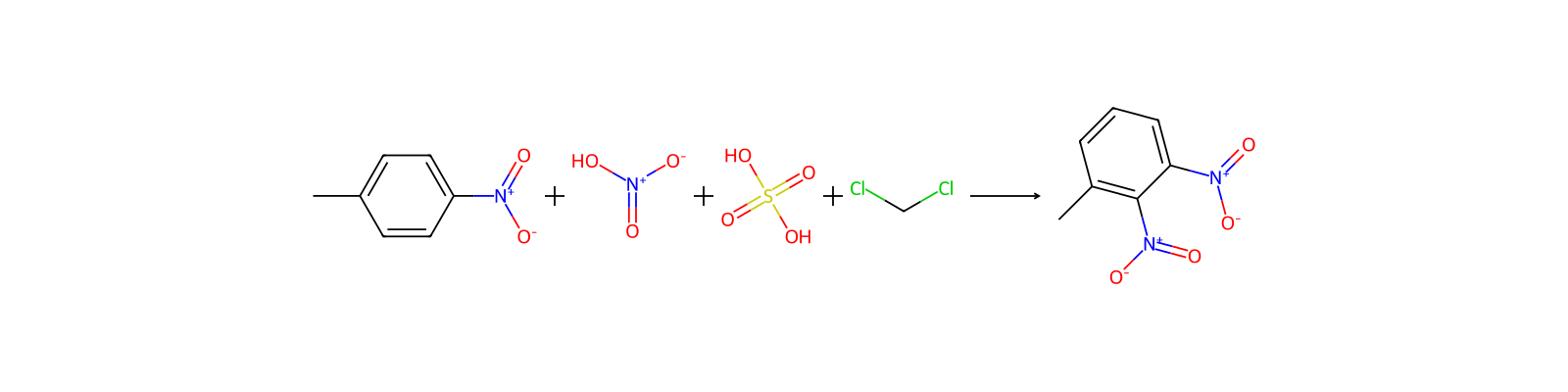
... 2,3-DNT and 3,4-DNT, are derived from nitration of m-nitrotoluene.
General Manufacturing Information
All Other Basic Organic Chemical Manufacturing
All Other Basic Organic Chemical Manufacturing
Benzene, 1-methyl-2,3-dinitro-: ACTIVE
Benzene, methyldinitro-: ACTIVE
Analysis of technical grade dinitrotoluene yielded the following results: 76.49% 2,4-DNT, 18.83% 2,6-DNT, 0.65% 2,5-DNT, 2.43% 3,4-DNT, 1.54% 2,3-DNT, 0.040% 3,5-DNT, 0.050% Trinitrotoluene, 0.005% cresols, 0.003% mononitrobenzene, and 0.003%, 0.0005%, and 0.006%, for ortho-, meta-, and para-, mononitrotoluenes, respectively.
Dinitrification of toluene typically yields 1% 2,3-dinitrotoluene by weight.
Anwendungen
VerwendenIn the production of toluene diisocyanate, which is, in turn, used to produce polyurethane foams; explosives; dyes
Vor- und nachgelagerte Produkte
Nachgelagerte Produkte
Anbieter15 Anbieter
上海莉凯化工技术有限公司16628776521 · [email protected]
苏州市森菲达化工有限公司18796480002 18796480002 · [email protected]
陕西缔都化学有限公司029-029-81123119 17391733320 · [email protected]
陕西缔都医药化工有限公司+86-29-81139210 +86-17392587031 · [email protected]
金锦乐(湖南)化学有限公司18001959627(微信同号) 18001959627 · [email protected]
上海万千化工有限公司18796480002 18796480002 · [email protected]
河南天孚化工有限公司+86-0371-55170693 +86-19937530512 · [email protected]
career henan chemical co+86-0371-86658258 · [email protected]
Aromsyn Co., Ltd.+86-0571-85585865 +86-13336024896 · [email protected]
XIAMEN AMITY INDUSTRY AND TRADE CO., LTD.+8618950047208 · [email protected]
SUZHOU SENFEIDA CHEMICAL CO.,LTD+86-0512-83500002 +86-15195660023 · [email protected]
重庆卡兰医药有限公司[email protected]
DAYANG CHEM (HANGZHOU) CO.,LTD+86-88938639 +86-17705817739 · [email protected]
邹平铭远进出口贸易有限公司86-13605431940 13605431940 · [email protected]
Hefei TNJ Chemical Industry Co.,Ltd.+86-0551-65418671 +86-189 4982 3763 · [email protected]
Zugehörige Reaktionen
31




Verknüpfte Notizen
Wird geladen…