
2-Methylresorcin
2-Methylresorcinol
Daten werden ergänzt – lade die Seite später neu, um den aktuellen Stand zu sehen

Grundinformationen
- CAS
608-25-3- Standard-SMILES
Cc1c(O)cccc1O- InChIKey
ZTMADXFOCUXMJE-UHFFFAOYSA-N- Summenformel
- C7H8O2
- Durchschnittliche Molmasse
- 124,14 g/mol
- Monoisotopische Masse
- 124,05242949
Namen und Bezeichner
- Bevorzugter Name
- 2-Methylresorcinol
- IUPAC
- 2-methylbenzene-1,3-diol
- Lokaler Name
- 2-Methylresorcin
- Englischer Name
- 2-Methylresorcinol
- Summenformel
- C7H8O2
- Molmasse
- 124.14
Namen und Synonyme
2-Methylresorcinol608-25-32-methylbenzene-1,3-diol2,6-Dihydroxytoluene1,3-Benzenediol, 2-methyl-2-Methyl-1,3-benzenediol2-Methyl-1,3-dihydroxybenzeneDTXSID0025571ORISTAR MRRODOL MRSNSC-6652432W7044A3T
Weitere Namen anzeigen
2-MR2-Methylresocinol2-methyl-3-benzenediolRodol MRP2,6-Dihydr
DTXCID005571RefChem:88387210-155-82-MethylresorcinResorcinol, 2-methyl-Toluene-2,6-diolMFCD000022711,3-DIHYDROXY-2-METHYLBENZENE
Datenbank-Bezeichner
- CAS
608-25-3- PubChem CID
- 11843
- DTXSID
DTXSID0025571- ChEMBL
CHEMBL2332773- UNII
- 32W7044A3T
- EC Number
- 210-155-8
- Nikkaji
- J71.615D
Eigenschaften
Berechnete StruktureigenschaftenWird ergänzt
- XLogP
- 1,6
- Polarare Oberfläche (TPSA)
- 40,5 Ų
- H-Brücken-Donoren
- 2
- H-Brücken-Akzeptoren
- 2
- Frei drehbare Bindungen
- 0
- Schwere Atome
- 9
- Formalladung
- 0
- Komplexität
- 82,9
Experimentelle und physikochemische Eigenschaften
Chemical ClassesOther Classes -> Phenols
Cosmetics
Cosmetic ingredients (2-Methylresorcinol) -> CIR (Cosmetic Ingredient Review)
Hair dyeing
SpringerMaterials PropertiesBoiling point
Endocrine DisruptorsPotential endocrine disrupting compound
Physical DescriptionColorless to light brown solid; [EC: SCCP]
Collision Cross Section123.6 Ų [M-H]- [CCS Type: DT; Buffer gas: N2; Ionization: ESI-; Dataset: TOXCAST; Source Identifier: DTXSID0025571]
Physikochemische Eigenschaften
- Schmelzpunkt
- 114 · 114-120 °C(lit.)
- Siedepunkt
- 264 °C · 264 °C(lit.)
- Dichte
- 1.1006 · 1.1006 (rough estimate)
Sicherheit und Regulatorisches
Sicherheitsangaben dienen nur zur Orientierung und ersetzen weder das Sicherheitsdatenblatt (SDB) des Lieferanten noch geltende Vorschriften oder eine fachliche Bewertung.
GHS-Klassifizierung
GHS Classification
This chemical does not meet GHS hazard criteria for 0.5% (1 of 192) of reports.
Danger
H301 (94.8%): Toxic if swallowed [Danger Acute toxicity, oral]
P261, P264, P264+P265, P270, P271, P272, P273, P280, P301+P316, P302+P352, P304+P340, P305+P351+P338, P305+P354+P338, P317, P319, P321, P330, P332+P317, P333+P317, P337+P317, P362+P364, P391, P403+P233, P405, and P501 (click each P-code to see the statement)
Aggregated GHS information provided per 192 reports by companies from 23 notifications to the ECHA C&L Inventory. Each notification may be associated with multiple companies.
Danger
Gefahrenhinweise
Regulatory Information
Chemical: 1,3-Benzenediol, 2-methyl-
REACH registered substance: 2-methylresorcinol (EC: 210-155-8)
1,3-Benzenediol, 2-methyl-: Does not have an individual approval but may be used as a component in a product covered by a group standard. It is not approved for use as a chemical in its own right.
Other Safety InformationIMAP assessments - 1,3-Benzenediol, 2-methyl-: Human health tier II assessment
Hazards Summary
Irritating to skin and corrosive to eyes in rabbits; Considered a moderate skin sensitizer based on results from a mouse local lymph node assay; No evidence of teratogenicity or developmental toxicity; [EC: SCCP] Causes weight loss in 13-week oral studies of rats; [RTECS] A skin and strong eye irritant; Toxic by ingestion; [Aldrich MSDS] See Resorcinol.
Hazard Classes and Categories
Acute Tox. 3 (94.8%)
Acute toxicity - category 4
Chemie und Industrie
Verwendung und Herstellung
Uses
CIR ingredient: 2-Methylresorcinol
Used in oxidative and non-oxidative hair dye formulations; [EC: SCCP]
Dressing Hair [Category: Other]
Household ProductsInformation on 187 consumer products that contain 2-Methylresorcinol in the following categories is provided:
Use ClassificationCosmetics -> Hair dyeing
General Manufacturing Information1,3-Benzenediol, 2-methyl-: ACTIVE
Anwendungen
Verwenden2-Methylresorcinol is used in the preparation of aromatic benziporphyrins, tripyrrane analogs and C-5-bromo-2-hydroxyphenylcalix[4]-2-methylresorcinarene. Further, it is employed in oxidative and non-oxidative hair dye formulations.
Darstellung
synthetischeSynthesis of 2-methylresorcinol: The synthetic routes to an alkylresorcinol that is partially alkylated at a position other than the 4th position on the aromatic ring are multistep and give low overall yields. For example, a 50% yield of a 2-methylresorcinol is obtained by hydrogenation of resorcinol and methylation of the resulting dihydroresorcinol to 2-methylcyclohexane-1,3-dione which on treatment with bromine is converted into 4,6-dibromo-2-methylresorcinol and finally hydrogenolysis of the dibromo derivative to produce the 2-methylresorcinol. Another example is that 5-methylresorcinol can be prepared by a five-step synthesis starting with p-toluidine or a four-step synthesis starting from ethyl crotonate. The five-step synthesis involves acetylation, two-step nitration, reductive hydrogenation, and hydrolysis.Literature source US04086281
Vor- und nachgelagerte Produkte
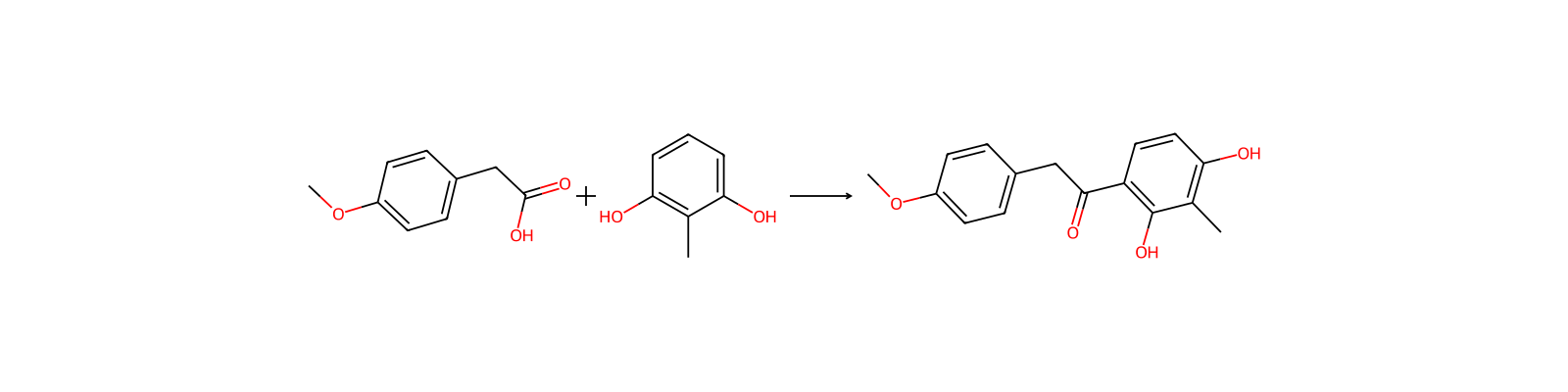
Zugehörige Reaktionen
88






Notizen zur Verbindung
Wird geladen…