

Grundinformationen
- Standard-SMILES
Clc1ccccc1CBr- InChIKey
PURSZYWBIQIANP-UHFFFAOYSA-N- Summenformel
- C7H6BrCl
- Durchschnittliche Molmasse
- 205,48 g/mol
- Monoisotopische Masse
- 203,93414
Namen und Bezeichner
- Bevorzugter Name
- alpha-Bromo-o-chlorotoluene
- IUPAC
- 1-(bromomethyl)-2-chlorobenzene
- Lokaler Name
- 1-(Brommethyl)-2-chlorbenzol
- Englischer Name
- 2-Chlorobenzyl bromide
- Summenformel
- C7H6BrCl
- Molmasse
- 205.48
Namen und Synonyme
2-Chlorobenzyl bromide1-(Bromomethyl)-2-chlorobenzeneo-Chlorobenzyl bromideALPHA-BROMO-O-CHLOROTOLUENE2chlorobenzyl bromideUNII-CEV23H8UV4HSDB 2678EINECS 210-257-2PURSZYWBIQIANP-UHFFFAOYSA-DTXSID40209974.ALPHA.-BROMO-O-CHLOROTOLUENE [HSDB]oChlorobenzyl bromide
Weitere Namen anzeigen
2-ChlorbenzylbroMide2-Chlorobenzyl bromi-Bromo-2-chlorotoluenebenzylbromide,2-chloroα-Bromo-o-chlorotolueneà-bromo-2-chlorotolueneA-BROMO-2-CHLOROTOLUENE
Benzyl bromide, 2chloroRefChem:111107Toluene, alphabromoochloroBenzyl bromide, 2-chloro1(Bromomethyl)2chlorobenzeneBenzene, 1(bromomethyl)2chloroDTXCID90132465InChI=1/C7H6BrCl/c8-5-6-3-1-2-4-7(6)9/h1-4H,5H2
Datenbank-Bezeichner
- CAS
611-17-6- PubChem CID
- 11905
- DTXSID
DTXSID40209974- UNII
- CEV23H8UV4
- EC Number
- 210-257-2
- Nikkaji
- J236.150G
Eigenschaften
Berechnete Struktureigenschaften
- XLogP
- 3,1
- Polarare Oberfläche (TPSA)
- 0 Ų
- H-Brücken-Donoren
- 0
- H-Brücken-Akzeptoren
- 0
- Frei drehbare Bindungen
- 1
- Schwere Atome
- 9
- Formalladung
- 0
- Komplexität
- 85
Experimentelle und physikochemische Eigenschaften
Density1.583 g/mL at 25 °C
Color/FormAmber color, clear liquid
SolubilitySoluble in chloroform; benzene
Flash Point109 °C (228 °F) - closed cup
Boiling PointBP: 120 °C at 10 mm Hg
Refractive IndexIndex of refraction = 1.5920
Physical DescriptionColorless liquid; [MSDSonline]
Kovats Retention Index1237;1237
Other Experimental Properties
Conditions to Avoid: light, moisture, excess heat, strong oxidants, exposure to moist air or water; Incompatibilities with Other Materials: Moisture, alcohols, amines, bases, steel.
Decomposes in hot water
Physikochemische Eigenschaften
- Schmelzpunkt
- 83 · 83-84 °C
- Siedepunkt
- 103 · 103-104 °C/10 mmHg (lit.)
- Dichte
- 1.583 g/mL · 1.583 g/mL at 25 °C (lit.)
- Brechungsindex
- 1.591 · 1.591-1.593
- Flammpunkt
- 108 °C · 108 °C
- storage temp.
- 2 · 2-8°C, sealed storage, away from moisture
- Aggregatzustand
- Liquid
- Wichte
- 1.583 · 1.583
- Farbe
- Clear yellow
- BRN
- 386264 · 386264
- Henry's Law Constant
- 1.9 · 1.9×10-2 mol/(m3Pa) at 25℃, HSDB (2015)
- InChI
- InChI=1S/C7H6BrCl/c8-5-6-3-1-2-4-7(6)9/h1-4H,5H2
- InChIKey
- PURSZYWBIQIANP-UHFFFAOYSA-N
- SMILES
- C1(CBr)=CC=CC=C1Cl
- CAS Datenbank
- 611 · 611-17-6(CAS DataBase Reference)
- NIST chemische Informationen
- 1 · Benzene, 1-(bromomethyl)-2-chloro-(611-17-6)
Sicherheit und Regulatorisches
GHS-Klassifizierung
GHS Classification
Danger
H314 (100%): Causes severe skin burns and eye damage [Danger Skin corrosion/irritation];H335 (83.3%): May cause respiratory irritation [Warning Specific target organ toxicity, single exposure; Respiratory tract irritation]
P260, P261, P264, P271, P280, P301+P330+P331, P302+P361+P354, P304+P340, P305+P354+P338, P316, P319, P321, P363, P403+P233, P405, and P501 (click each P-code to see the statement)
Aggregated GHS information provided per 48 reports by companies from 6 notifications to the ECHA C&L Inventory. Each notification may be associated with multiple companies.;Information may vary between notifications depending on impurities, additives, and other factors. The percentage value in parenthesis indicates the notified classification ratio from companies that provide hazard codes. Only hazard codes with percentage values above 10% are shown. For more detailed information, please visit ECHA C&L website.
Gefahrenhinweise
Regulatory Information2-Chlorobenzyl bromide: Does not have an individual approval but may be used under an appropriate group standard
Hazards Summary
No evidence of mutagenicity; A strong irritant; [HSDB] A corrosive substance that can cause injury to the skin, eyes, and respiratory tract; Inhalation may cause chemical pneumonitis; [MSDSonline]
The major hazards encountered in the use and handling of alpha-bromo-o-chlorotoluene stem from its toxicologic properties. This substance is considered to be hazardous to health with the ability to act as a strong irritant. Adequate ventilation should be used and prolonged breathing of vapor should be avoided. To enter a comtaminated area (eg, to handle a broken container of alpha-bromo-o-chlorotoluene), wear full face mask self-contained breathing apparatus, boots, and protective gloves. Any of this substance which contacts the body must be washed away with copious amounts of water. This substance is normally stable, even under fire exposure conditions; requiring moderate heating before ignition will occur. Normal fire fighting procedures may be employed; including the use of "alcohol" foam, CO2, or dry chemical extinguishing agents. Water also may be used in flooding quantities as a fog or spray to extinguish the fire or cool containers (solid streams may be ineffective). The latter should be done from as far a distance as possible. Runoff from fire control water should be diked to prevent it from entering water sources or sewers. Alpha-bromo-o-chlorotoluene should be stored away from sparks, flames, and other sources of ignition. The location also should be cool and dry because this substance decomposes in hot water. Before transporting alpha-bromo-o-chlorotoluene, the regulatory requirements of the DOT must be consulted. Prior to implementing land disposal of waste residue (including waste sludge), consult with environmental regulatory agencies for guidance.
Toxic Combustion ProductsHazardous decomposition products formed under fire conditions: Carbon oxides, Hydrogen chloride gas, Hydrogen bromide gas.
Hazard Classes and CategoriesSkin Corr. 1B (100%);STOT SE 3 (83.3%)
Skin, Eye, and Respiratory Irritations... strong irritant /4-Chlorotoluene/
Sicherheit und Schutzausrüstung
Fire Fighting Procedures
Suitable extinguishing media: Use water spray, alcohol-resistant foam, dry chemical or carbon dioxide. Special protective equipment for firefighters: Wear self contained breathing apparatus for fire fighting if necessary.
If material on fire or involved in fire: Do not extinguish fire unless flow can be stopped. Use water in flooding quantities as fog. Solid streams of water may spread fire. Cool all affected containers with flooding quantities of water. Apply water from as far a distance as possible. Use foam, dry chemical, or carbon dioxide. /Chlorotoluenes/
Storage ConditionsConditions for safe storage: Keep container tightly closed in a dry and well-ventilated place. Containers which are opened must be carefully resealed and kept upright to prevent leakage.
Cleanup Methods
Environmental considerations - Air spill: Apply water spray or mist to knock down vapors. /Chlorotoluenes/
Environmental considerations - Water spill: use natural barriers or oil spill control booms to limit spill travel. remove trapped material with suction hoses. /Chlorotoluenes/
Environmental considerations - Land spill: Dig a pit, pond, lagoon, holding area to contain liquid or solid material. /SRP: If time permits, pits, ponds, lagoons, soak holes, or holding areas should be sealed with an impermeable flexible membrane liner./ Dike surface flow using soil, sand bags, foamed polyurethane, or foamed concrete. Absorb bulk liquid with fly ash, cement powder, or commercial sorbents. /Chlorotoluenes/
Personal precautions Use personal protective equipment. Avoid breathing vapours, mist or gas. Ensure adequate ventilation. Evacuate personnel to safe areas. Methods and materials for containment and cleaning up: Soak up with inert absorbent material and dispose of as hazardous waste. Keep in suitable, closed containers for disposal.
Disposal Methods
SRP: The most favorable course of action is to use an alternative chemical product with less inherent propensity for occupational harm/injury/toxicity or environmental contamination. Recycle any unused portion of the material for its approved use or return it to the manufacturer or supplier. Ultimate disposal of the chemical must consider: the material's impact on air quality; potential migration in soil or water; effects on animal and plant life; and conformance with environmental and public health regulations.
Preventive Measures
Precautions for safe handling: Avoid contact with skin and eyes. Avoid inhalation of vapor or mist. Normal measures for preventive fire protection.
If material not on fire and not involved in fire: Keep sparks, flames, and other sources of ignition away. Keep material out of water sources and sewers. Build dikes to contain flow as necessary. Use water spray to knock-down vapors. /Chlorotoluenes/
Personnel protection: Avoid breathing vapors. Keep upwind. ... Do not handle broken packages unless wearing appropriate personal protective equipment. Wash away any material which may have contacted the body with copious amounts of water or soap and water. /Chlorotoluenes/
Hygiene measures: Handle in accordance with good industrial hygiene and safety practice. Wash hands before breaks and at the end of workday.
Personal Protective Equipment (PPE)
Personal protective equipment: Respiratory protection: Where risk assessment shows air-purifying respirators are appropriate use a full-face respirator with multi-purpose combination (US) or type ABEK (EN 14387) respirator cartridges as a backup to engineering controls. If the respirator is the sole means of protection, use a full-face supplied air respirator. Use respirators and components tested and approved under appropriate government standards such as NIOSH (US) or CEN (EU). Hand protection: Handle with gloves. Gloves must be inspected prior to use. Use proper glove removal technique (without touching glove's outer surface) to avoid skin contact with this product. Dispose of contaminated gloves after use in accordance with applicable laws and good laboratory practices. Wash and dry hands. Eye protection: Tightly fitting safety goggles. Faceshield (8-inch minimum). Use equipment for eye protection tested and approved under appropriate government standards such as NIOSH (US) or EN 166(EU). Skin and body protection: Complete suit protecting against chemicals, The type of protective equipment must be selected according to the concentration and amount of the dangerous substance at the specific workplace.
Toxikologische Informationen
Environmental Fate
TERRESTRIAL FATE: Based on a classification scheme(1), an estimated Koc value of 730(SRC), determined from a structure estimation method(2), indicates that alpha-bromo-o-chlorotoluene is expected to have low mobility in soil(SRC). Volatilization of alpha-bromo-o-chlorotoluene from moist soil surfaces is expected to be an important fate process(SRC) given an estimated Henry's Law constant of 5.1X10⁻⁴ atm-cu m/mole(SRC), using a fragment constant estimation method(2). By analogy to the UV absorption spectrum of benzyl bromide(3), alpha-bromo-o-chlorotoluene may be susceptible to direct photolysis on soil surfaces exposed to sunlight(SRC). Also by analogy to reported aqueous hydrolysis rates of benzyl bromide, half-life of 1.32 hours at 25 °C(4), hydrolysis of alpha-bromo-o-chlorotoluene in moist soil is expected to be an important fate process(SRC).
AQUATIC FATE: Based on a classification scheme(1), an estimated Koc value of 730(SRC), determined from a structure estimation method(2), indicates that alpha-bromo-o-chlorotoluene is expected to adsorb to suspended solids and sediment(SRC). Volatilization from water surfaces is expected(3) based upon an estimated Henry's Law constant of 5.1X10⁻⁴ atm-cu m/mole(SRC), developed using a fragment constant estimation method(2). Using this Henry's Law constant and an estimation method(3), volatilization half-lives for a model river and model lake are 7 hours and 6.4 days, respectively(SRC). According to a classification scheme(4), an estimated BCF of 99(SRC), from an estimated log Kow of 3.53(2) and a regression-derived equation(2), suggests the potential for bioconcentration in aquatic organisms is moderate(SRC). Based on observed hydrolysis data, the structurally similar benzyl bromide has an aqueous hydrolysis half-life of 1.32 hours at 25 °C and pH 7(4); similar hydrolysis rates are likely for alpha-bromo-o-chlorotoluene(SRC).
ATMOSPHERIC FATE: According to a model of gas/particle partitioning of semivolatile organic compounds in the atmosphere(1), alpha-bromo-o-chlorotoluene, which has an estimated vapor pressure of 0.092 mm Hg at 25 °C(SRC), determined from a fragment constant method(2), is expected to exist solely as a vapor in the ambient atmosphere. Vapor-phase alpha-bromo-o-chlorotoluene is degraded in the atmosphere by reaction with photochemically-produced hydroxyl radicals(SRC); the half-life for this reaction in air is estimated to be 14 days(SRC), calculated from its rate constant of 1.2X10⁻¹² cu cm/molecule-sec at 25 °C(SRC) that was derived using a structure estimation method(2). By analogy to the UV absorption spectrum of benzyl bromide(3), alpha-bromo-o-chlorotoluene may be susceptible to direct photolysis by sunlight(SRC).
Adverse EffectsDermatotoxin - Skin burns.;Toxic Pneumonitis - Inflammation of the lungs induced by inhalation of metal fumes or toxic gases and vapors.
Soil Adsorption/Mobility
Using a structure estimation method based on molecular connectivity indices(1), the Koc of alpha-bromo-o-chlorotoluene can be estimated to be 730(SRC). According to a classification scheme(2), this estimated Koc value suggests that alpha-bromo-o-chlorotoluene is expected to have low mobility in soil.
Artificial Pollution Sourcesalpha-Bromo-o-chlorotoluene's production and use as an intermediate in chemical synthesis(1) may result in its release to the environment through various waste streams(SRC).
Environmental Biodegradation
Biodegradation in soil or water is not expected to be an important environmental fate process due to probable rapid hydrolysis as suggested by structurally similar benzyl bromide, which has an aqueous hydrolysis half-life of 1.32 hours at 25 °C and pH 7(1).
Environmental Bioconcentration
An estimated BCF of 99 was calculated in fish for alpha-bromo-o-chlorotoluene(SRC), using an estimated log Kow of 3.53(1) and a regression-derived equation(1). According to a classification scheme(2), this BCF suggests the potential for bioconcentration in aquatic organisms is moderate(SRC).
Volatilization from Water/Soil
The Henry's Law constant for alpha-bromo-o-chlorotoluene is estimated as 5.1X10⁻⁴ atm-cu m/mole(SRC) using a fragment constant estimation method(1). This Henry's Law constant indicates that alpha-bromo-o-chlorotoluene is expected to volatilize from water surfaces(2). Based on this Henry's Law constant, the volatilization half-life from a model river (1 m deep, flowing 1 m/sec, wind velocity of 3 m/sec)(2) is estimated as 7 hours(SRC). The volatilization half-life from a model lake (1 m deep, flowing 0.05 m/sec, wind velocity of 0.5 m/sec)(2) is estimated as 6.4 days(SRC). alpha-Bromo-o-chlorotoluene's Henry's Law constant indicates that volatilization from moist soil surfaces may occur(SRC).
Non-Human Toxicity Excerpts/GENOTOXICITY/ Mutagenic and toxic effects were measured with Salmonella typhimurium strain TA100 as the indicator organism. No mutagenic effects were /observed with exposure to alpha-bromo-o-chlorotoluene/.
Environmental Abiotic Degradation
The rate constant for the vapor-phase reaction of alpha-bromo-o-chlorotoluene with photochemically-produced hydroxyl radicals has been estimated as 1.2X10⁻¹² cu cm/molecule-sec at 25 °C(SRC) using a structure estimation method(1). This corresponds to an atmospheric half-life of about 14 days at an atmospheric concentration of 5X10+5 hydroxyl radicals per cu cm(1). alpha-Bromo-o-chlorotoluene (also known as 2-chlorobenzyl bromide) is reported to decompose in hot water(2). Based on observed hydrolysis data, the structurally similar benzyl bromide has an aqueous hydrolysis half-life of 1.32 hours at 25 °C and pH 7(3); similar hydrolysis rates are likely for alpha-bromo-o-chlorotoluene(SRC). In low concentrations in methanol solution, benzyl bromide exhibits minor absorption at UV wavelengths >290 nm, but fairly strong absorption at higher concentrations(4); by analogy, alpha-bromo-o-chlorotoluene is expected to absorb UV at wavelengths >290 nm and may be susceptible to direct photolysis by sunlight(SRC).
Probable Routes of Human ExposureOccupational exposure to alpha-bromo-o-chlorotoluene may occur through inhalation and dermal contact with this compound at workplaces where alpha-bromo-o-chlorotoluene is produced or used. (SRC)
Environmental Fate/Exposure Summary
alpha-Bromo-o-chlorotoluene's production and use as an intermediate in chemical synthesis may result in its release to the environment through various waste streams. If released to air, an estimated vapor pressure of 0.092 mm Hg at 25 °C indicates alpha-bromo-o-chlorotoluene will exist solely as a vapor in the atmosphere. Vapor-phase alpha-bromo-o-chlorotoluene will be degraded in the atmosphere by reaction with photochemically-produced hydroxyl radicals; the half-life for this reaction in air is estimated to be 14 days. By analogy to the UV absorption spectrum of benzyl bromide, alpha-bromo-o-chlorotoluene may be susceptible to direct photolysis by sunlight. If released to soil, alpha-bromo-o-chlorotoluene is expected to have low mobility based upon an estimated Koc of 730. Volatilization from moist soil surfaces is expected to be an important fate process based upon an estimated Henry's Law constant of 5.1X10⁻⁴ atm-cu m/mole. Based on analogy to benzyl bromide, hydrolysis in moist soils and photodegradation on soil surfaces exposed to sunlight may be important fate processes. If released into water, alpha-bromo-o-chlorotoluene is expected to adsorb to suspended solids and sediment based upon the estimated Koc. Volatilization from water surfaces is expected to be an important fate process based upon this compound's estimated Henry's Law constant. Estimated volatilization half-lives for a model river and model lake are 7 hours and 6.4 days, respectively. An estimated BCF of 99 suggests the potential for bioconcentration in aquatic organisms is moderate. Hydrolysis in water is expected to be an important fate process based on reported hydrolysis rates of the chemically similar compound benzyl bromide (half-life of 1.32 hours at 25 °C). Relevant biodegradation data were not available. Occupational exposure to alpha-bromo-o-chlorotoluene may occur through inhalation and dermal contact with this compound at workplaces where alpha-bromo-o-chlorotoluene is produced or use
Antidote and Emergency Treatment
/SRP:/ Immediate first aid: Ensure that adequate decontamination has been carried out. If patient is not breathing, start artificial respiration, preferably with a demand-valve resuscitator, bag-valve-mask device, or pocket mask, as trained. Perform CPR as necessary. Immediately flush contaminated eyes with gently flowing water. Do not induce vomiting. If vomiting occurs, lean patient forward or place on left side (head-down position, if possible) to maintain an open airway and prevent aspiration. Keep patient quiet and maintain normal body temperature. Obtain medical attention. /Aromatic hydrocarbons and related compounds/
/SRP:/ Basic treatment: Establish a patent airway (oropharyngeal or nasopharyngeal airway, if needed). Suction if necessary. Watch for signs of respiratory insufficiency and assist ventilations if necessary. Administer oxygen by nonrebreather mask at 10 to 15 L/min. Monitor for pulmonary edema and treat if necessary ... . Monitor for shock and treat if necessary ... . Anticipate seizures and treat if necessary ... . For eye contamination, flush eyes immediately with water. Irrigate each eye continuously with 0.9% saline (NS) during transport ... . Do not use emetics. For ingestion, rinse mouth and administer 5 mL/kg up to 200 mL of water for dilution if the patient can swallow, has a strong gag reflex, and does not drool. Administer activated charcoal ... . /Aromatic hydrocarbons and related compounds/
/SRP:/ Advanced treatment: Consider orotracheal or nasotracheal intubation for airway control in the patient who is unconscious, has severe pulmonary edema, or is in severe respiratory distress. Consider drug therapy for pulmonary edema ... . Positive-pressure ventilation techniques with a bag valve mask device may be beneficial. Consider drug therapy for pulmonary edema ... . Consider administering a beta agonist such as albuterol for severe bronchospasm ... . Monitor cardiac rhythm and treat arrhythmias if necessary ... Start IV administration of D5W /SRP: "To keep open", minimal flow rate/. Use 0.9% saline (NS) or lactated Ringer's (LR) if signs of hypovolemia are present. For hypotension with signs of hypovolemia, administer fluid cautiously. Watch for signs of fluid overload ... .Treat seizures with diazepam or lorazepam ... . Use proparacaine hydrochloride to assist eye irrigation ... . /Aromatic hydrocarbons and related compounds/
Regulatorische Informationen
Regulatory Information2-Chlorobenzyl bromide: Does not have an individual approval but may be used under an appropriate group standard
Sicherheitsdaten
- wgk
- 3
- ridadr
- 1760
- hs_code
- 29039990
- risk_code
- 34-36/37
- hazard_code
- C
- hazard_note
- Corrosive/Lachrymatory
- safety_code
- 45-36/37/39-26-28-27
- hazard_class
- 6.1
- packing_group
- III
- Speicherklasse
- 8A - Combustible corrosive hazardous materials
- Giftige Stoffe Daten
- 611-17-6(Hazardous Substances Data)
- Hazard Classifications
- Eye Dam. 1Skin Corr. 1BSTOT SE 3
Chemie und Industrie
Verwendung und Herstellung
Uses
Not commercially produced in the US; [HSDB]
Used in chemical synthesis
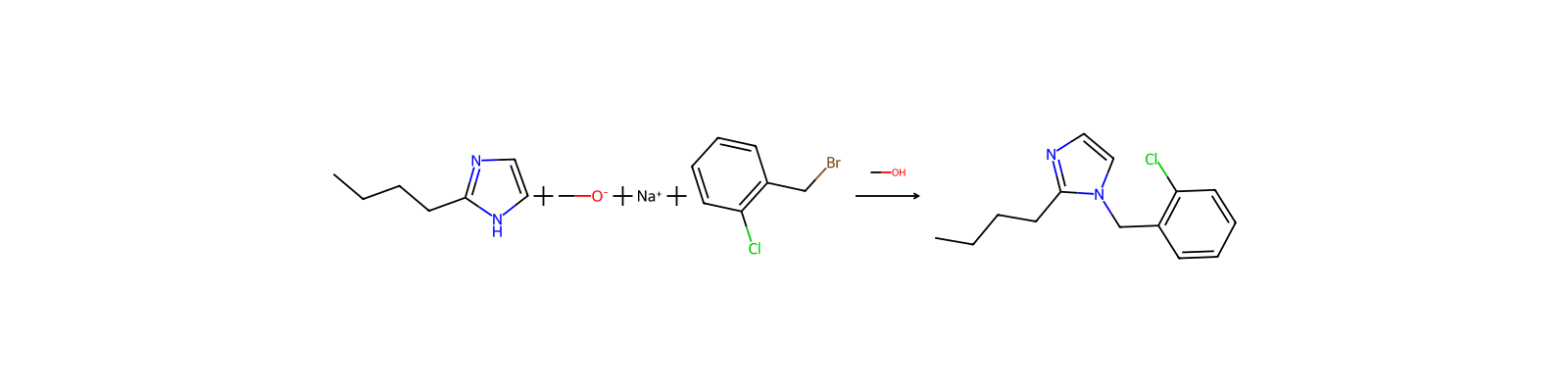
Uses of o-Chlorobenzyl bromide: It can be used in organic synthesis. For example: It reacts with pyridine to get 1-(2-chloro-benzyl)-pyridinium; bromide. This reaction needs reagent tetrahydrothiophene 1,1-dioxide at ambient temperature. The reaction time is 3 days. The yield is 60%.
U.S. ProductionNOT PRODUCED COMMERCIALLY IN THE USA
Vor- und nachgelagerte Produkte
Vorgelagerte Rohstoffe
Nachgelagerte Produkte
Anbieter50 Anbieter
国药集团化学试剂有限公司86-21-63210123 · [email protected]
梯希爱(上海)化成工业发展有限公司021-67121386 · [email protected]
苏州道澜生物医药科技有限公司15952404857 · [email protected]
上海阿拉丁生化科技股份有限公司400-6206333 13167063860 · [email protected]
合肥曼奇诺生物医药技术有限公司19719236623 · [email protected]
上海麦克林生化科技股份有限公司021-50706066 15221275939 · [email protected]
温州共赢化学有限公司+86-0086-577-64498589 +86-15355981851 · [email protected]
宁波季诺化学品有限公司0574-87314919 057487319282 · [email protected]
爱斯特(成都)生物制药股份有限公司+86-28-85122536 85324413 · [email protected]
Baoji Guokang Healthchem co.,ltd+8615604608665 15604608665 · [email protected]
Dayang Chem (Hangzhou) Co.,Ltd.+86-0571-88938639 17705817739 · [email protected]
韶远科技(上海)有限公司021-50795510 4000665055 · [email protected]
毕佳索(上海毕得医药科技股份有限公司)400-6005915 · [email protected]
Syntechem Co.,Ltd[email protected]
阿法埃莎(中国)化学有限公司400-6106006 · [email protected]
安耐吉化学&3A(安徽泽升科技股份有限公司)400-0056266 · [email protected]
武汉凯威斯科技有限公司86-027-67849912 · [email protected]
黄石精驰医药有限公司17771967576; 17771967576 · [email protected]
上海瀚鸿科技股份有限公司021-54306202 13764082696 · [email protected]
南京圣亿来化工有限公司19951936396 · [email protected]
广东方信生物科技有限公司0751-2838688 13376594225 · [email protected]
上海相辉医药科技有限公司13761987713 · [email protected]
南京诺利斯医药科技有限公司13901585132 · [email protected]
嘉兴市艾森化工有限公司0573-85285100 18627885956 · [email protected]
石家庄欧特佳化工有限公司0311-87795622 · [email protected]
上海隆盛化工有限公司58099637 13585536065 · [email protected]
菏泽博纳医药科技有限公司15865805009 · [email protected]
山东西亚化学有限公司13355009207 13355009207 · [email protected]
玛雅试剂+86 (573) 82222445 (0)18006601000 452520369 · [email protected]
上海耐士化工科技有限公司400-188-0725 +86 21 34310725 13611771617
上海珂华生物科技有限公司021-60455363 18019463053 · [email protected]
赛默飞世尔科技(中国)有限公司800-810-5118 · [email protected]
北京伊诺凯科技有限公司400-810-7969 010-59572699 · [email protected]
TCI AMERICA800-4238616 · [email protected]
TOKYO CHEMICAL INDUSTRY CO., LTD.03-36680489 · [email protected]
TCI Europe320-37350700 · [email protected]
卡迪亚医药科技有限公司0371-86615086 18203638366 0371-86159066 13526786601
越林试剂021-62960152 · [email protected]
Clearsynth Labs Limited+91-22-26355700 · [email protected]
无锡中坤生化科技有限公司+86 0510-85629785
上海毕得医药科技股份有限公司400-164-7117 18317119277 · [email protected]
成都零六生物科技有限公司400-1166-196 13458535857 · [email protected]
雷丁试剂0510-85629785 18013409632 · [email protected]
上海鑫圭生物科技有限公司15121041756 · [email protected]
天津安浩生物科技有限公司[email protected]
杭州杰恒化工有限公司0571-87396432 · [email protected]
上海永叶生物科技有限公司86-021-61559134 15921386130 · [email protected]
南京恰风和医药科技有限公司025-57018978 18251899859 · [email protected]
江苏艾康生物医药研发有限公司025-66028182 17714375163 · [email protected]
Sigma-Aldrich西格玛奥德里奇(上海)贸易有限公司021-61415566 800-8193336 · [email protected]
Zugehörige Reaktionen
237


Verknüpfte Notizen
Wird geladen…