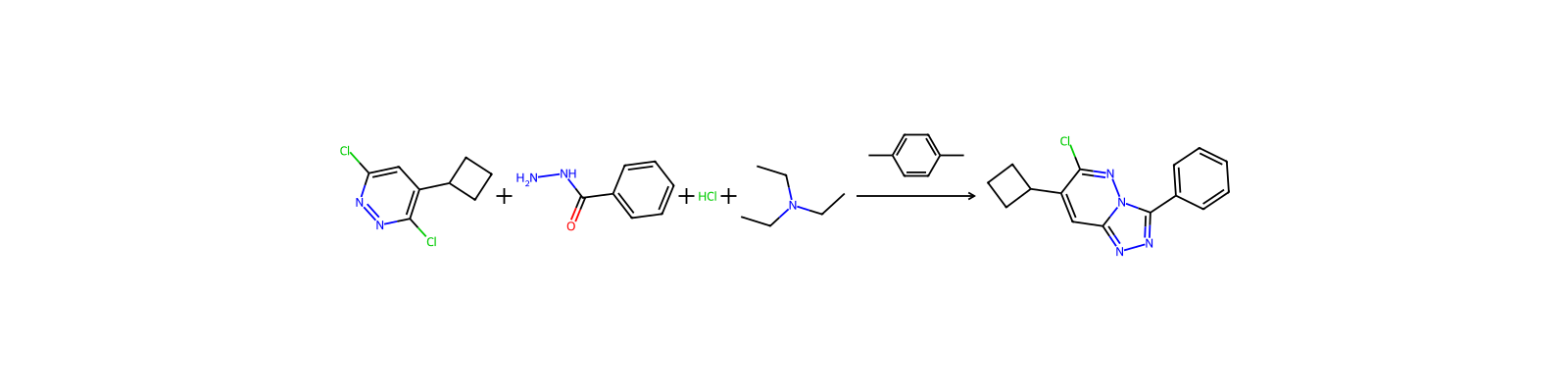

Grundinformationen
- Standard-SMILES
NNC(=O)c1ccccc1- InChIKey
WARCRYXKINZHGQ-UHFFFAOYSA-N- Summenformel
- C7H8N2O
- Durchschnittliche Molmasse
- 136,15 g/mol
- Monoisotopische Masse
- 136,06366288
Namen und Bezeichner
- Bevorzugter Name
- Benzoylhydrazine
- IUPAC
- benzohydrazide
- Lokaler Name
- Benzohydrazid
- Englischer Name
- Benzoyl hydrazine
- Summenformel
- C7H8N2O
- Molmasse
- 136.15
Namen und Synonyme
Benzohydrazide613-94-5BenzoylhydrazineBENZHYDRAZIDEBenzoic hydrazideBenzoic acid hydrazideBenzoic acid, hydrazideBenzoyl hydrazideBenzohydrazineHydrazid kyseliny benzooveLLW11ZWZ20CHEBI:38454
Weitere Namen anzeigen
BENZOIC HYDRAZINEINHd 14
NSC-644RefChem:565091210-363-9Benzoyl hydrazinebenzoylhydrazideHydrazine, benzoyl-NSC 644DTXSID6020149
Datenbank-Bezeichner
- CAS
613-94-5- PubChem CID
- 11955
- DTXSID
DTXSID6020149- ChEMBL
CHEMBL125369- ChEBI
CHEBI:38454- UNII
- LLW11ZWZ20
- EC Number
- 210-363-9
- Nikkaji
- J30.698C
Eigenschaften
Berechnete Struktureigenschaften
- XLogP
- 0,2
- Polarare Oberfläche (TPSA)
- 55,1 Ų
- H-Brücken-Donoren
- 2
- H-Brücken-Akzeptoren
- 2
- Frei drehbare Bindungen
- 1
- Schwere Atome
- 10
- Formalladung
- 0
- Komplexität
- 119
Experimentelle und physikochemische Eigenschaften
LogPlog Kow = 0.19
Color/FormPlates from water
SolubilitySol in water and alc; slightly sol in ether, acetone, chloroform
Boiling Point267 °C (decomposes)
DecompositionWhen heated to decomposition it emits toxic fumes of /nitrogen oxides/.
Melting Point115 °C
Vapor Pressure
0.0000778 [mmHg]
7.8X10⁻⁵ mm Hg at 25 °C /Estimated/
Henry's Law ConstantHenry's Law constant = 9.5X10⁻¹² atm-cu m/mol at 25 °C /Estimated/
Physical DescriptionSolid; Soluble in water; [HSDB] White crystalline powder; [MSDSonline]
Dissociation ConstantspKa = 3.03 at 20 °C (conjugate acid)
Kovats Retention Index1205
Other Experimental Properties
Violent reaction with benzeneselenic acid. When heated to decomposition emits toxic fumes of NOx
Hydroxyl radical reaction rate constant = 7.3X10⁻¹² cu cm/molec-sec at 25 °C /Estimated/
Physikochemische Eigenschaften
- Schmelzpunkt
- 112 · 112-114 °C (lit.)
- Siedepunkt
- 250.42 °C · 250.42°C (rough estimate)
- Dichte
- 1.1778 · 1.1778 (rough estimate)
- Brechungsindex
- 1.546 · 1.5460 (estimate)
- storage temp.
- Keep in dark place,Inert atmosphere,Room temperature
- Löslichkeit
- DMSO (Slightly), Methanol (Slightly)
- Aggregatzustand
- Needle-Like Crystals or Powder
- pka
- 1 · pK1: 3.03(+2);pK2: 12.45(+1) (25°C)
- Farbe
- White to beige
- BRN
- 471797 · 471797
- InChI
- InChI=1S/C7H8N2O/c8-9-7(10)6-4-2-1-3-5-6/h1-5H,8H2,(H,9,10)
- InChIKey
- WARCRYXKINZHGQ-UHFFFAOYSA-N
- SMILES
- C(NN)(=O)C1=CC=CC=C1
- CAS Datenbank
- 613 · 613-94-5(CAS DataBase Reference)
- NIST chemische Informationen
- Benzoic acid, hydrazide(613-94-5)
- EPA chemische Informationen
- Benzoic acid, hydrazide (613-94-5)
Sicherheit und Regulatorisches
GHS-Klassifizierung
GHS Classification
Danger
H301 (82.7%): Toxic if swallowed [Danger Acute toxicity, oral];H315 (92.3%): Causes skin irritation [Warning Skin corrosion/irritation];H319 (90.4%): Causes serious eye irritation [Warning Serious eye damage/eye irritation];H335 (86.5%): May cause respiratory irritation [Warning Specific target organ toxicity, single exposure; Respiratory tract irritation];H351 (15.4%): Suspected of causing cancer [Warning Carcinogenicity]
P203, P261, P264, P264+P265, P270, P271, P280, P301+P316, P302+P352, P304+P340, P305+P351+P338, P318, P319, P321, P330, P332+P317, P337+P317, P362+P364, P403+P233, P405, and P501 (click each P-code to see the statement)
Aggregated GHS information provided per 52 reports by companies from 12 notifications to the ECHA C&L Inventory. Each notification may be associated with multiple companies.;Information may vary between notifications depending on impurities, additives, and other factors. The percentage value in parenthesis indicates the notified classification ratio from companies that provide hazard codes. Only hazard codes with percentage values above 10% are shown. For more detailed information, please visit ECHA C&L website.
Gefahrenhinweise
Regulatory InformationBenzoic acid, hydrazide: Does not have an individual approval but may be used under an appropriate group standard
Hazards SummaryIn animal experiments, causes somnolence and seizures after acute exposure and tumors after chronic exposure; [RTECS] May cause liver injury; [HSDB] An irritant; [MSDSonline] See Hydrazine.
Hazard Classes and CategoriesAcute Tox. 3 (82.7%);Skin Irrit. 2 (92.3%);Eye Irrit. 2 (90.4%);STOT SE 3 (86.5%);Carc. 2 (15.4%)
Hazardous Reactivities and IncompatibilitiesViolent reaction with benzeneseleninic acid.
Sicherheit und Schutzausrüstung
Disposal Methods
SRP: The most favorable course of action is to use an alternative chemical product with less inherent propensity for occupational exposure or environmental contamination. Recycle any unused portion of the material for its approved use or return it to the manufacturer or supplier. Ultimate disposal of the chemical must consider: the material's impact on air quality; potential migration in soil or water; effects on animal, aquatic, and plant life; and conformance with environmental and public health regulations.
Personal Protective Equipment (PPE)
... Vinyl coated hand protection, natural or reclaimed rubber protection, rubber aprons, and plastic eye and face protection ... used when working with small quantities. Where possibility of gross splashing exists, full protective clothing made of rubber, neoprene or vinyl-coated materials should be worn. For respiratory protection in situations where recommended tolerance limits ... exceeded, respiratory protective equipment... must be used. /Hydrazine and derivatives/
Toxikologische Informationen
Interactions
Binary mixtures of the osteolathyrogens benzoic hydrazide and beta-aminopropionitrile were tested to determine the joint action for these chemicals, by evaluating induction of malformation and osteolathyrism in developing frog embryos. Exposures, starting with late-blastula stage embryos, were for 96-hr with solution renewal every 24-hr. Five treatments were examined, each chemical alone (i.e., 1:0 and 0:1 solutions) and three mixtures (i.e., 3:1, 1:1, and 1:3). Following exposure, embryos were evaluated grossly and the incidences of all types of malformations and osteolathyrogenic lesions were determined. Toxic unit analysis and isobole diagrams indicated these chemicals were concentration additive in inducing malformations and osteolathyrism. Therefore, benzoic hydrazide and beta-aminopropionitrile induce osteolathyrism, in Xenopus embryos, in a similar manner.
Adverse EffectsNeurotoxin - Other CNS neurotoxin;Occupational hepatotoxin - Secondary hepatotoxins: the potential for toxic effect in the occupational setting is based on cases of poisoning by human ingestion or animal experimentation.
Ecotoxicity Excerpts
/AQUATIC SPECIES/ Binary mixtures of the osteolathyrogens benzoic hydrazide and beta-aminopropionitrile were tested to determine the joint action for these chemicals, by evaluating induction of malformation and osteolathyrism in developing frog embryos. Exposures, starting with late-blastula stage embryos, were for 96-hr with solution renewal every 24-hr. Five treatments were examined, each chemical alone (i.e., 1:0 and 0:1 solutions) and three mixtures (i.e., 3:1, 1:1, and 1:3). Following exposure, embryos were evaluated grossly and the incidences of all types of malformations and osteolathyrogenic lesions were determined. Toxic unit analysis and isobole diagrams indicated these chemicals were concentration additive in inducing malformations and osteolathyrism. Therefore, benzoic hydrazide and beta-aminopropionitrile induce osteolathyrism, in Xenopus embryos, in a similar manner.
Non-Human Toxicity Excerpts
/HUMAN EXPOSURE STUDIES/ Large number of ... hydrazine derivatives are convulsants including ... benzhydrazide...
/HUMAN EXPOSURE STUDIES/ .../Benzhydrazide is among/ hydrazine deriv /which/ have been observed to cause alterations in liver function, fatty infiltration, or cellular damage. ... Characteristic liver pathology seen after effective doses of hepatotoxic hydrazines is fatty degeneration ... most marked in center of liver lobules.
/HUMAN EXPOSURE STUDIES/ There may also be damage to other organs, particularly kidney /after effective doses of hepatotoxic hydrazines incl benzhydrazide./ ... Other pathological changes, such as extramedullary hepatopoiesis, pigment (hemosiderin) deposition in cells, and vascular thrombosis, are secondary to blood cell destruction.
Populations at Special Risk
Biological half-lives were significantly different among the three acetylation phenotypes (analysis of variance, P < 0.05): 3.94+/-1.70 hours for slow acetylators, 2.25+/-0.37 hours for intermediate acetylators, and 1.86+/-0.67 hours for rapid acetylators. /Hydrazine/
Antidote and Emergency Treatment
Basic treatment: Establish a patent airway. Suction if necessary. Watch for signs of respiratory insufficiency and assist ventilations if necessary. Administer oxygen by nonrebreather mask at 10 to 15 L/min. Monitor for pulmonary edema and treat if necessary ... . Anticipate seizures and treat if necessary ... . For eye contamination, flush eyes immediately with water. Irrigate each eye continuously with normal saline during transport ... . Do not use emetics. For ingestion, rinse mouth and administer 5 ml/kg up to 200 ml of water for dilution if the patient can swallow, has a strong gag reflex, and does not drool. Administer activated charcoal ... . Cover skin burns with dry, sterile dressings after decontamination ... . /Hydrazine and Related Compounds/
Advanced treatment: Consider orotracheal or nasotracheal intubation for airway control in the patient who is unconscious, has severe pulmonary edema, or is in respiratory arrest. Positive pressure ventilation techniques with a bag valve mask device may be beneficial. Monitor cardiac rhythm and treat arrhythmias if necessary ... . Start an IV with D5W /SRP: "To keep open", minimal flow rate/. Use lactated Ringer's if signs of hypovolemia are present. Consider drug therapy for pulmonary edema ... . For hypotension with signs of hypovolemia, administer fluid cautiously. Consider vasopressors for hypotension with a normal fluid volume. Watch for signs of fluid overload ... . Treat seizures with diazepam ... . Monitor for signs of hypoglycemia (decreased level of consciousness, tachycardia, pallor, dilated pupils, diaphoresis, and/or a dextrose strip or glucometer reading less than 50 mg/dl) and administer 50% dextrose if necessary. Draw blood sample before administration ... . Administer 1% solution methylene blue if patient is symptomatic with severe hypoxia, cyanosis, and cardiac compromise not responding to oxygen. ... . Use proparacaine hydrochloride to assist eye irrigation ... . /Hydrazine and Related Compounds/
Specific treatment for exposure consists of thorough washing of all exposed skin areas with soap and water, copious irrigation of the eyes, and prompt removal of the patient from the source of exposure. /Hydrazines/
After inhalation, observation for progressive respiratory distress is necessary. Chest X-ray and arterial blood gases should be monitored. Administration of oxygen, intubation, and assisted ventilation may become necessary. Pneumonia and bronchitis need to be excluded. /Hydrazines/
For more Antidote and Emergency Treatment (Complete) data for BENZHYDRAZIDE (6 total), please visit the HSDB record page.
Non-Human Toxicity ValuesLD50 Mouse sc 122 mg/kg
Regulatorische Informationen
Regulatory InformationBenzoic acid, hydrazide: Does not have an individual approval but may be used under an appropriate group standard
Sicherheitsdaten
- wgk
- 3
- tsca
- TSCA listed
- ridadr
- UN 2811 6.1/PG 3
- hs_code
- 29280090
- RTECS-Nr.
- DH1575000
- risk_code
- 25-36/37/38
- Toxizität
- LD50 scu-mus: 122 mg/kg JPETAB 122,110,58
- hazard_code
- T
- safety_code
- 26-45
- hazard_class
- IRRITANT
- packing_group
- Ⅲ
- Speicherklasse
- 13 - Non Combustible Solids
- Giftige Stoffe Daten
- 613-94-5(Hazardous Substances Data)
- Hazard Classifications
- Acute Tox. 4 OralCarc. 2Skin Irrit. 2
Chemie und Industrie
Pharmakologische Informationen
Metabolism/Metabolites
Benzohydrazide yields benzoic acid in rabbit: El Masri, AM, Smith, JN, & Williams, RT, Biochem J, 68, 587 (1958). /from table/
... Benzohydrazide ... /is/ metabolized by rabbits to yield hippuric acid & hydrazine.
Verwendung und Herstellung
Uses
Used as a chemical intermediate for hydrazine-based products; [HSDB]
Chemical intermediate ... hydrazine-based products
General Manufacturing InformationBenzoic acid, hydrazide: ACTIVE
Anwendungen
BeschreibungDas Benzoesäurehydrazid bildet farblose, mäßig wasserlösliche Kristalle. Die Substanz besitzt nur wissenschaftliches Interesse.
VerwendenBenzoyl Hydrazine is an acyl hydrazide as potent antioxidant.
Vor- und nachgelagerte Produkte
Nachgelagerte Produkte
Anbieter50 Anbieter
国药集团化学试剂有限公司86-21-63210123 · [email protected]
梯希爱(上海)化成工业发展有限公司021-67121386 · [email protected]
上海阿拉丁生化科技股份有限公司400-6206333 13167063860 · [email protected]
T&W GROUP021-61551611 13296011611 · [email protected]
爱斯特(成都)生物制药股份有限公司+86-28-85122536 85324413 · [email protected]
上海如吉生物科技发展有限公司+86-21-65211385-8001 36031160 · [email protected]
韶远科技(上海)有限公司021-50795510 4000665055 · [email protected]
科瑞迪化学400-821-5857 021-64326257 · [email protected]
Ark Pharm, Inc.847-367-3680 · [email protected]
上海迈瑞尔生化科技有限公司4006356688 18621169109 · [email protected]
武汉易泰科技有限公司上海分公司18930552037 · [email protected]
阿法埃莎(中国)化学有限公司400-6106006 · [email protected]
安耐吉化学&3A(安徽泽升科技股份有限公司)400-0056266 · [email protected]
石家庄斯迪亚诺精细化工有限公司0311-89250318 13582355795 · [email protected]
上海瀚鸿科技股份有限公司021-54306202 13764082696 · [email protected]
上海柯维化学技术有限公司021-64609169 18901607656 · [email protected]
嘉兴市艾森化工有限公司0573-85285100 18627885956 · [email protected]
上海泰坦科技股份有限公司400-6009262 15618770481 · [email protected]
孝感深远化工有限公司15527621225; 15527621225 · [email protected]
山东西亚化学有限公司13355009207 13355009207 · [email protected]
玛雅试剂+86 (573) 82222445 (0)18006601000 452520369 · [email protected]
四川库利南科技有限公司400-1166-196 18981987031 · [email protected]
上海耐士化工科技有限公司400-188-0725 +86 21 34310725 13611771617
天津希恩思生化科技有限公司400 638 7771 · [email protected]
艾科试剂4008-755-333 18080918076 · [email protected]
上海思域化工科技有限公司86-21-34053660 · [email protected]
赛默飞世尔科技(中国)有限公司800-810-5118 · [email protected]
北京伊诺凯科技有限公司400-810-7969 010-59572699 · [email protected]
江苏艾康生物医药研发有限公司025-66113011 13913916777 · [email protected]
上海健超生物科技有限公司150-2103-5486 18017383231 · [email protected]
TCI AMERICA800-4238616 · [email protected]
TOKYO CHEMICAL INDUSTRY CO., LTD.03-36680489 · [email protected]
TCI Europe320-37350700 · [email protected]
深圳振强药物研发有限公司0755-66853366 13670046396 · [email protected]
上海睿升化工科技有限公司+86-021-50935922
上海倍卓生物科技有限公司021-61119791,13386096464 · [email protected]
上海洪创医药科技有限公司18151128828 · [email protected]
上海湄水化工科技有限公司021-60549325 18616193163
上海将来实业股份有限公司400-0066400 13621662912 · [email protected]
上海将来实业股份有限公司021-61552785 · [email protected]
安徽科迪达化工有限公司0554-2106669 · [email protected]
HBCChem, Inc.+1-510-219-6317 · [email protected]
上海笛柏生物科技有限公司400-008-9730,021-54359730 400-008-9730 · [email protected]
美岚实业(上海)有限公司021-58958189 · [email protected]
上海爱蝶实业有限公司021-58957966 18930537195 · [email protected]
成都零六生物科技有限公司400-1166-196 13458535857 · [email protected]
北京福源坊科技有限公司010-57903446 15869909019 · [email protected]
上海创赛科技有限公司400-6087598 15021221957 · [email protected]
济南鲁欣化工科技有限公司0531-0531-82929600 18615510361 · [email protected]
杭州杰恒化工有限公司0571-87396432 · [email protected]
Zugehörige Reaktionen
288


Verknüpfte Notizen
Wird geladen…