
3,5-Dichlornitrobenzol
Benzene, 1,3-dichloro-5-nitro-

Grundinformationen
- CAS
618-62-2- Standard-SMILES
O=[N+]([O-])c1cc(Cl)cc(Cl)c1- InChIKey
RNABGKOKSBUFHW-UHFFFAOYSA-N- Summenformel
- Cl2C6H3NO2
- Durchschnittliche Molmasse
- 192 g/mol
- Monoisotopische Masse
- 190,9540837
Namen und Bezeichner
- Bevorzugter Name
- Benzene, 1,3-dichloro-5-nitro-
- IUPAC
- 1,3-dichloro-5-nitrobenzene
- Lokaler Name
- 3,5-Dichlornitrobenzol
- Englischer Name
- 3,5-Dichloronitrobenzene
- Summenformel
- C6H3Cl2NO2
- Molmasse
- 192
Namen und Synonyme
3,5-Dichloronitrobenzene1,3-Dichloro-5-nitrobenzene618-62-2Benzene, 1,3-dichloro-5-nitro-meta-Dichloronitrobenzenem-Dichloronitrobenzene3,5-DICHLORO-1-NITROBENZENE4VSD7Q7FUHNSC 53841EINECS 210-557-3NSC 60642NSC-53841
Weitere Namen anzeigen
Enalapril Impurity 155-nitro-m-dichlorobenzene1,3-dichloro-5-nitro-benzen3,5-Dichloronitrobenzene,98%3,5-Dichloronitrobenzene >
NSC-60642DTXSID1060683EC 210-557-3RefChem:562290DTXCID5043134210-557-3MFCD00007211Benzene,3-dichloro-5-nitro-
Datenbank-Bezeichner
- CAS
618-62-2- PubChem CID
- 12064
- DTXSID
DTXSID1060683- UNII
- 4VSD7Q7FUH
- EC Number
- 210-557-3
- Nikkaji
- J2.085K
Eigenschaften
Berechnete Struktureigenschaften
- XLogP
- 3,1
- Polarare Oberfläche (TPSA)
- 45,8 Ų
- H-Brücken-Donoren
- 0
- H-Brücken-Akzeptoren
- 2
- Frei drehbare Bindungen
- 0
- Schwere Atome
- 11
- Formalladung
- 0
- Komplexität
- 149
Experimentelle und physikochemische Eigenschaften
SpringerMaterials PropertiesDensity
LogP
3.1 (calculated)
3.13
DensityRelative density (water = 1): 1.7
SolubilitySolubility in water: none
Flash Point140 °C
Melting Point64.5 °C
Vapor DensityRelative vapor density (air = 1): 6.6
Physical DescriptionORANGE-TO-BROWN CRYSTALS.
Physikochemische Eigenschaften
- Schmelzpunkt
- 64 · 64-65 °C(lit.)
- Siedepunkt
- 259.71 °C · 259.71°C (rough estimate)
Sicherheit und Regulatorisches
Sicherheitsangaben dienen nur zur Orientierung und ersetzen weder das Sicherheitsdatenblatt (SDB) des Lieferanten noch geltende Vorschriften oder eine fachliche Bewertung.
GHS-Klassifizierung
GHS Classification
Warning
H302 (52.3%): Harmful if swallowed [Warning Acute toxicity, oral]
P261, P264, P264+P265, P270, P271, P273, P280, P301+P317, P302+P352, P304+P340, P305+P351+P338, P319, P321, P330, P332+P317, P337+P317, P362+P364, P391, P403+P233, P405, and P501 (click each P-code to see the statement)
Aggregated GHS information provided per 86 reports by companies from 7 notifications to the ECHA C&L Inventory. Each notification may be associated with multiple companies.
Gefahrenhinweise
Regulatory InformationREACH registered substance: 3,5-dichloronitrobenzene (EC: 210-557-3)
Fire HazardsCombustible.
Chemical DangersDecomposes on heating. This produces toxic and corrosive fumes including nitrogen oxides and hydrogen chloride. Reacts with strong bases and strong oxidants.
Hazard Classes and CategoriesAcute Tox. 4 (52.3%)
Sicherheit und Schutzausrüstung
Fire FightingUse powder, alcohol-resistant foam, water spray, carbon dioxide.
First Aid Measures
Fresh air, rest.
Rinse and then wash skin with water and soap.
Rinse with plenty of water (remove contact lenses if easily possible).
Rinse mouth.
Safe StorageSeparated from strong oxidants and strong bases.
Chemie und Industrie
Verwendung und Herstellung
General Manufacturing InformationBenzene, 1,3-dichloro-5-nitro-: INACTIVE
Anwendungen
Verwenden1,3-Dichloro-5-nitrobenzene was used as an internal standard in the 1H nuclear magnetic resonance spectroscopic method for the assay of phenylbutazone and oxyphenbutazone.
Vor- und nachgelagerte Produkte
Nachgelagerte Produkte
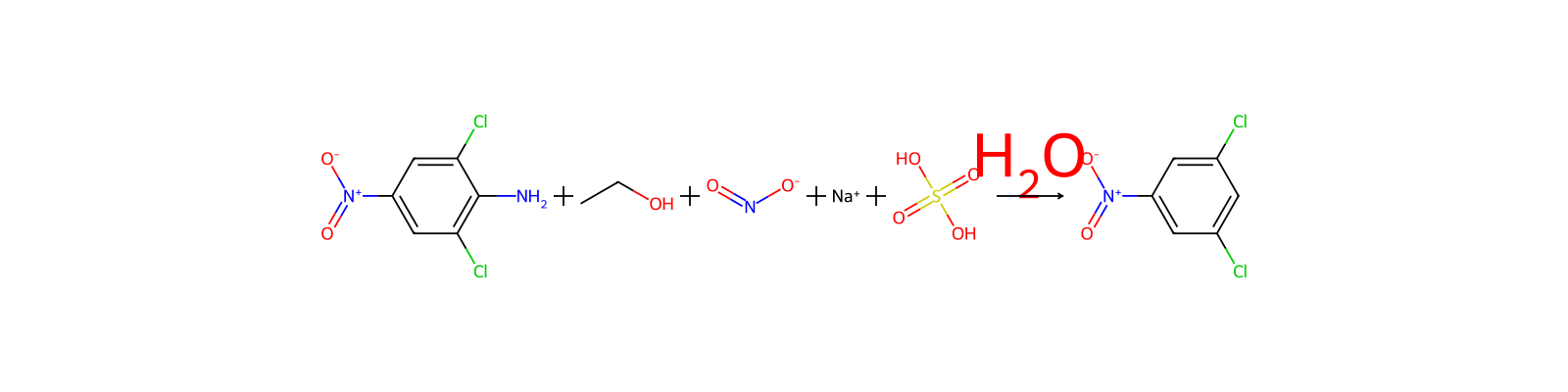
Zugehörige Reaktionen
23


Notizen zur Verbindung
Wird geladen…