

Grundinformationen
- Standard-SMILES
Nc1cc([N+](=O)[O-])ccc1C(=O)O- InChIKey
UEALKTCRMBVTFN-UHFFFAOYSA-N- Summenformel
- C7H6N2O4
- Durchschnittliche Molmasse
- 182,13 g/mol
- Monoisotopische Masse
- 182,03275667
Überblick
4-nitroanthranilic acid appears as orange prisms or orange powder. Sweet taste. (NTP, 1992)
Namen und Bezeichner
- Bevorzugter Name
- 4-Nitroanthranilic acid
- IUPAC
- 2-amino-4-nitrobenzoic acid
- Lokaler Name
- 2-Amino-4-nitrobenzoesäure
- Englischer Name
- 2-Amino-4-nitrobenzoic acid
- Summenformel
- C7H6N2O4
- Molmasse
- 182.13
Namen und Synonyme
2-Amino-4-nitrobenzoic acid619-17-04-NITROANTHRANILIC ACIDBenzoic acid, 2-amino-4-nitro-Anthranilic acid, 4-nitro-NCI-C019454-nitro-2-aminobenzoic acidHSDB 4114CCRIS 441DTXSID8020963NSC 7789EINECS 210-583-5
Weitere Namen anzeigen
4-NitroAnthranillicAcid4-Nitroanthranilic acid, >=99%4-Nitroanthranilic acid, 2-Carboxy-5-nitroanilineNCI C-019454-nitro-anthranilicaci4-Nitroanthralinic acidP-NITROANTHRANILIC ACID
BRN 0785071NSC-7789D7402082SS4-14-00-01087 (Beilstein Handbook Reference)4-NITROANTHRANILIC ACID [HSDB]DTXCID00963CHEBI:753352-CARBOXY-5-NITROANILINE
Datenbank-Bezeichner
- CAS
619-17-0- PubChem CID
- 12076
- DTXSID
DTXSID8020963- ChEMBL
CHEMBL1603870- ChEBI
CHEBI:75335- UNII
- D7402082SS
- EC Number
- 210-583-5
- Nikkaji
- J1.669A
Eigenschaften
Berechnete Struktureigenschaften
- XLogP
- 1,9
- Polarare Oberfläche (TPSA)
- 109 Ų
- H-Brücken-Donoren
- 2
- H-Brücken-Akzeptoren
- 5
- Frei drehbare Bindungen
- 1
- Schwere Atome
- 13
- Formalladung
- 0
- Komplexität
- 225
Experimentelle und physikochemische Eigenschaften
Chemical ClassesNitrogen Compounds -> Nitrobenzoic Acids
LogP1.91
Color/FormORANGE PRISMS (DIL ALCOHOL)
Solubility
less than 0.1 mg/mL at 72 °F (NTP, 1992)
INSOL IN WATER; SLIGHTLY SOL IN HOT WATER; VERY SOL IN ALCOHOL, ETHER & ACETONE; SOL IN XYLENE
Melting Point
514 to 518 °F (decomposes) (NTP, 1992)
269 °C
Vapor Pressure0.00000293 [mmHg]
Physical Description
4-nitroanthranilic acid appears as orange prisms or orange powder. Sweet taste. (NTP, 1992)
Orange solid; [HSDB]
Collision Cross Section133.5 Ų [M-H]- [CCS Type: DT; Buffer gas: N2; Ionization: ESI-; Dataset: TOXCAST; Source Identifier: DTXSID8020963]
Other Experimental PropertiesUV: 10976 (Sadtler Research Laboratories Spectral Collection) /5-Nitroanthranilic acid/
Physikochemische Eigenschaften
- Schmelzpunkt
- 257 °C · 257 °C (dec.)(lit.)
- Siedepunkt
- 315.51 °C · 315.51°C (rough estimate)
- Dichte
- 1.5181 · 1.5181 (rough estimate)
- Brechungsindex
- 1.588 · 1.5880 (estimate)
- storage temp.
- Sealed in dry,Room Temperature
- Aggregatzustand
- Crystalline Powder
- pka
- 3.92 · 3.92±0.13(Predicted)
- Farbe
- Orange
- Wasserlöslichkeit
- 0.01 g/100 · <0.01 g/100 mL at 22 ºC
- Major Application
- peptide synthesis
- InChI
- InChI=1S/C7H6N2O4/c8-6-3-4(9(12)13)1-2-5(6)7(10)11/h1-3H,8H2,(H,10,11)
- InChIKey
- UEALKTCRMBVTFN-UHFFFAOYSA-N
- SMILES
- C(O)(=O)C1=CC=C([N+]([O-])=O)C=C1N
- CAS Datenbank
- 619 · 619-17-0(CAS DataBase Reference)
- EPA chemische Informationen
- 4 · 4-Nitroanthranilic acid (619-17-0)
Sicherheit und Regulatorisches
GHS-Klassifizierung
GHS Classification
Warning
H315 (97.9%): Causes skin irritation [Warning Skin corrosion/irritation]
P261, P264, P264+P265, P271, P280, P302+P352, P304+P340, P305+P351+P338, P319, P321, P332+P317, P337+P317, P362+P364, P403+P233, P405, and P501 (click each P-code to see the statement)
Aggregated GHS information provided per 47 reports by companies from 9 notifications to the ECHA C&L Inventory. Each notification may be associated with multiple companies.
Gefahrenhinweise
Fire HazardsFlash point data for this chemical are not available; however, it is probably combustible. (NTP, 1992)
Health HazardsSYMPTOMS: Symptoms of exposure to this compound include irritation.
Hazards SummaryNo significant increase in tumors in animal feeding studies; [NTP] An irritant; [MSDSonline]
Reactive GroupAcids, Carboxylic
Special ReportsBioassay of 4-Nitroanthranilic Acid for Possible Carcinogenicity (1978) Technical Rpt Series No. 109 DHEW Pub No. (NIH) 78-1364, U.S. Department of Health Education and Welfare, National Cancer Institute, Bethesda, MD 20014
Reactivity Profile4-NITROANTHRANILIC ACID is incompatible with acids, acid chlorides, acid anhydrides, chloroformates and strong oxidizing agents. (NTP, 1992)
Air and Water ReactionsInsoluble in water.
Hazard Classes and CategoriesSkin Irrit. 2 (97.9%)
Sicherheit und Schutzausrüstung
Fire FightingFires involving this compound can be controlled with a dry chemical, carbon dioxide or Halon extinguisher. (NTP, 1992)
First Aid
EYES: First check the victim for contact lenses and remove if present. Flush victim's eyes with water or normal saline solution for 20 to 30 minutes while simultaneously calling a hospital or poison control center. Do not put any ointments, oils, or medication in the victim's eyes without specific instructions from a physician. IMMEDIATELY transport the victim after flushing eyes to a hospital even if no symptoms (such as redness or irritation) develop.
Nonfire Spill Response
SMALL SPILLS AND LEAKAGE: Should a spill occur while you are handling this chemical, FIRST REMOVE ALL SOURCES OF IGNITION, then you should dampen the solid spill material with 60-70% ethanol and transfer the dampened material to a suitable container. Use absorbent paper dampened with 60-70% ethanol to pick up any remaining material. Seal the absorbent paper, and any of your clothes, which may be contaminated, in a vapor-tight plastic bag for eventual disposal. Solvent wash all contaminated surfaces with 60-70% ethanol followed by washing with a soap and water solution. Do not reenter the contaminated area until the Safety Officer (or other responsible person) has verified that the area has been properly cleaned.
Personal Protective Equipment (PPE)
RECOMMENDED RESPIRATOR: Where the neat test chemical is weighed and diluted, wear a NIOSH-approved half face respirator equipped with an organic vapor/acid gas cartridge (specific for organic vapors, HCl, acid gas and SO2) with a dust/mist filter. (NTP, 1992)
Toxikologische Informationen
Ongoing Test Status
The following link will take the user to the National Toxicology Program (NTP) Test Agent Search Results page, which tabulates all of the "Standard Toxicology & Carcinogenesis Studies", "Developmental Studies", and "Genetic Toxicity Studies" performed with this chemical. Clicking on the "Testing Status" link will take the user to the status (i.e., in review, in progress, in preparation, on test, completed, etc.) and results of all the studies that the NTP has done on this chemical. [http://ntp-apps.niehs.nih.gov/ntp_tox/index.cfm?fuseaction=ntpsearch.searchresults&searchterm=619-17-0]
Carcinogen Classification
4-Nitroanthranilic acid
TR-109: Bioassay of 4-Nitroanthranilic Acid for Possible Carcinogenicity (CASRN 619-17-0) (1978 )
06/29/78
No Evidence
No Evidence
No Evidence
Non-Human Toxicity Excerpts
4-NITROANTHRANILIC ACID ADMIN IN DIET OF FISCHER 344 RATS (1.5 & 0.46, TIME-WEIGHTED AVG CONCN) & B6C3F1 MICE (1.0 & 0.46) FOR 78 WK. NO STATISTICALLY SIGNIFICANT INCR IN TUMOR INCIDENCE OBSERVED.
4-Nitroanthranilic acid was evaluated mutagenicity in the Salmonella/microsome preincubation assay using the standard protocol approved by the National Toxicology Program. 4-Nitroanthranilic acid was tested at doses of 0.0033, 0.010, 0.033, 0.10, 0.333, 1.0, 2.2, 3.3, and 3.333 mg/plate in as many as 5 Salmonella typhimurium strains (TA1535, TA1537, TA97, TA98, and TA100) in the presence and absence of rat or hamster liver S-9. 4-Nitroanthranilic was positive with and without activation in strains TA1535 and TA100. The lowest positive dose tested was 0.010 mg/plate in strain TA1535.
4-Nitroanthranilic acid (4NAA) was evaluated for the induction of sex-linked recessive lethal mutations in Drosophila melanogaster by the National Toxicology Program. Canton-S wild-type males were treated with concentrations of the test chemical that result in approximately 30% mortality. Following treatment, males were mated individually to 3 harems of Basc virgin females to produce 3 broods for analysis. The concentrations of 4NAA tested by injection (150 ppm) or feeding (2000 ppm) were negative in this assay.
National Toxicology Program Studies
A bioassay of 4-nitroanthranilic acid for possible carcinogenicity was conducted using Fischer 344 rats and B6C3F1 mice. /The cmpd/ was administered in the feed, at either of two concentrations, to groups of 50 male and 50 female animals of each species. The high and low time weighted avg concentrations used were, respectively, 1.5 and 0.46% for rats and 1.0 and 0.46 for mice. After a 78 wk period of chemical administration, the rats were observed for an additional period of up to 32 wk and the mice for an additional period of up to 17 wk. For rats 50 animals of each sex were placed on test as low dose controls and 25 animals of each sex were placed on test as high dose controls. For mice 50 animals of each sex were placed on test as controls for each dosed group. ... Under the conditions of this bioassay evidence was not provided for the carcinogenicity of 4-nitroanthranilic acid in Fischer 344 rats or B6C3F1 mice. Levels of Evidence of Carcinogenicity: Male Rats: Negative; Female Rats: Negative; Male Mice: Negative; Female Mice: Negative.
Sicherheitsdaten
- wgk
- 3
- tsca
- TSCA listed
- hs_code
- 29224999
- RTECS-Nr.
- CB3675000
- risk_code
- 36/37/38
- hazard_code
- Xi
- safety_code
- 26-37/39
- hazard_class
- IRRITANT
- Speicherklasse
- 11 - Combustible Solids
- Giftige Stoffe Daten
- 619-17-0(Hazardous Substances Data)
- Hazard Classifications
- Eye Irrit. 2Skin Irrit. 2STOT SE 3
Chemie und Industrie
Verwendung und Herstellung
Uses
Used as a research chemical; Not commercially produced in the US; [HSDB] Formerly used as a dye intermediate; [NTP]
RESEARCH CHEMICAL
U.S. Exports
(1977) No Data
(1979) No Data
U.S. Imports
(1977) No Data
(1979) No Data
U.S. Production
(1977) NOT PRODUCED COMMERCIALLY IN US
(1979) NOT PRODUCED COMMERCIALLY IN US
General Manufacturing InformationBenzoic acid, 2-amino-4-nitro-: ACTIVE
Vor- und nachgelagerte Produkte
Vorgelagerte Rohstoffe
Nachgelagerte Produkte
Anbieter50 Anbieter
梯希爱(上海)化成工业发展有限公司021-67121386 · [email protected]
上海阿拉丁生化科技股份有限公司400-6206333 13167063860 · [email protected]
武汉欣扬瑞和化学科技有限公司13720274133 · [email protected]
合肥翰刚医药科技有限公司+8618062405514 · [email protected]
苏州启航生物科技有限公司18151111370 · [email protected]
温州共赢化学有限公司+86-0086-577-64498589 +86-15355981851 · [email protected]
河北创海生物科技有限公司+86-86-13131129325 · [email protected]
爱斯特(成都)生物制药股份有限公司+86-28-85122536 85324413 · [email protected]
Baoji Guokang Healthchem co.,ltd+8615604608665 15604608665 · [email protected]
武汉科美沃化工有限公司+86-2785736489 +8618171418573 · [email protected]
Dayang Chem (Hangzhou) Co.,Ltd.+86-0571-88938639 17705817739 · [email protected]
韶远科技(上海)有限公司021-50795510 4000665055 · [email protected]
科瑞迪化学400-821-5857 021-64326257 · [email protected]
河北秒变生物科技有限公司17733850068
上海迈瑞尔生化科技有限公司4006356688 18621169109 · [email protected]
阿法埃莎(中国)化学有限公司400-6106006 · [email protected]
太原市瑞和丰科贸有限公司+86 351 7031519 · [email protected]
上海德默医药科技有限公司400-021-7337 2355568890 · [email protected]
安耐吉化学&3A(安徽泽升科技股份有限公司)400-0056266 · [email protected]
武汉凯威斯科技有限公司86-027-67849912 · [email protected]
常州安轩化工有限公司13912302692 · [email protected]
重庆张邦医药科技有限责任公司028-84252981 18583719936 · [email protected]
上海瀚鸿科技股份有限公司021-54306202 13764082696 · [email protected]
上海相辉医药科技有限公司13761987713 · [email protected]
上海景颜化工科技有限公司13817811078 · [email protected]
嘉兴市艾森化工有限公司0573-85285100 18627885956 · [email protected]
Pure Chemistry Scientific Inc.001-857-928-2050 or 1-888-588-9418 · [email protected]
上海隆盛化工有限公司58099637 13585536065 · [email protected]
孝感深远化工有限公司15527621225; 15527621225 · [email protected]
苏州施亚生物科技有限公司86(512)5235 8471 17715136450 · [email protected]
HONG KONG IPURE BIOLOGY CO.,LIMITED86 18062405514 18062405514 · [email protected]
四川库利南科技有限公司400-1166-196 18981987031 · [email protected]
上海耐士化工科技有限公司400-188-0725 +86 21 34310725 13611771617
天津希恩思生化科技有限公司400 638 7771 · [email protected]
武汉爱瑞克科技有限公司027- 51832457 94518350
上海思域化工科技有限公司86-21-34053660 · [email protected]
赛默飞世尔科技(中国)有限公司800-810-5118 · [email protected]
南京诺利斯医药科技有限公司13901585132 · [email protected]
上海健超生物科技有限公司150-2103-5486 18017383231 · [email protected]
TCI AMERICA800-4238616 · [email protected]
TOKYO CHEMICAL INDUSTRY CO., LTD.03-36680489 · [email protected]
TCI Europe320-37350700 · [email protected]
卡迪亚医药科技有限公司0371-86615086 18203638366 0371-86159066 13526786601
上海贤鼎生物科技有限公司4009209199 · [email protected]
Clearsynth Labs Limited+91-22-26355700 · [email protected]
苏州爱玛特生物科技有限公司0512-56316828 4008675858 · [email protected]
北京环宇世纪化学科技有限公司hysj_bj.com
上海毕得医药科技股份有限公司400-164-7117 18317119277 · [email protected]
上海御略医药科技有限公司021-60345187 13671753212 · [email protected]
杭州杰恒化工有限公司0571-87396432 · [email protected]
Ergänzende Hinweise
DefinitionChEBI: 4-nitroanthranilic acid is an aminobenzoic acid that is anthranilic acid with a nitro substituent at position 4. It has a role as a mutagen. It is an aminobenzoic acid and a nitrobenzoic acid. It is functionally related to an anthranilic acid.
Zugehörige Reaktionen
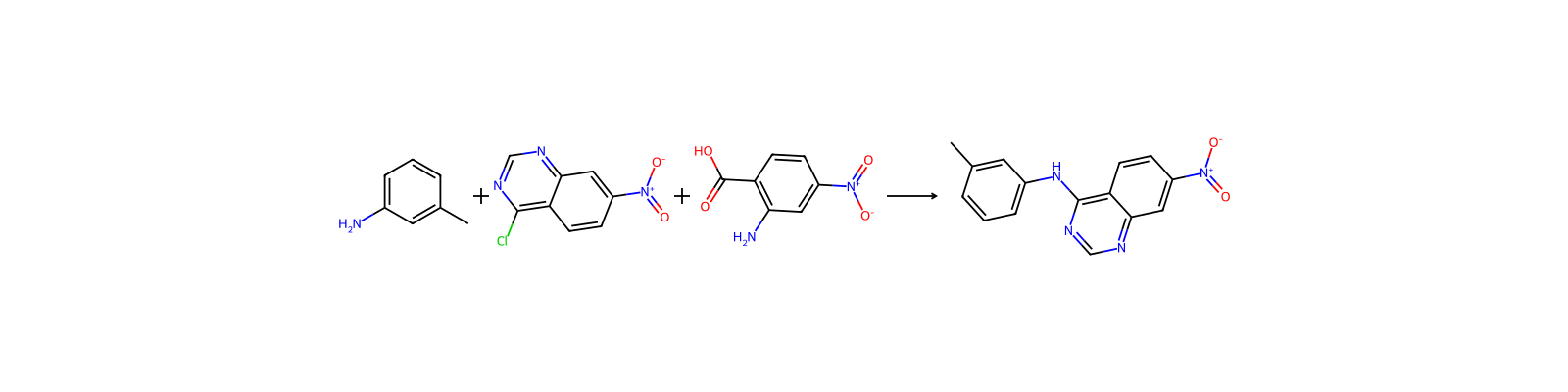
69




Verknüpfte Notizen
Wird geladen…