

Grundinformationen
- Standard-SMILES
CCOc1cccc(N)c1- InChIKey
WEZAHYDFZNTGKE-UHFFFAOYSA-N- Summenformel
- C8H11NO
- Durchschnittliche Molmasse
- 137,18 g/mol
- Monoisotopische Masse
- 137,08406397
Überblick
M-phenetidine is a dark red liquid. (NTP, 1992)
Namen und Bezeichner
- Bevorzugter Name
- 3-Ethoxyaniline
- IUPAC
- 3-ethoxyaniline
- Lokaler Name
- m-Phenetidin
- Englischer Name
- 3-Ethoxyaniline
- Summenformel
- C8H11NO
- Molmasse
- 137.18
Namen und Synonyme
3-ETHOXYANILINEm-Phenetidine621-33-03-EthoxybenzenamineBenzenamine, 3-ethoxy-m-Ethoxyaniline(3-ethoxyphenyl)amineCCRIS 4696DTXSID00258623-PhenetidineNSC 9817EINECS 210-680-2
Weitere Namen anzeigen
AKOS BBB/405N-phenetidineMETA-PHENETIDINE3'-AMINOPHENETOLm-Aminophenetole
XE9KKL972RBRN 0971028AI3-15397PHENETIDINE, M-NSC-9817M-ETHOXYPHENYLAMINEDTXCID7058623-AMINOPHENYL ETHYL ETHER
Datenbank-Bezeichner
- CAS
621-33-0- PubChem CID
- 12120
- DTXSID
DTXSID0025862- ChEMBL
CHEMBL1466168- UNII
- XE9KKL972R
- EC Number
- 210-680-2
- Nikkaji
- J101.236C
Eigenschaften
Berechnete Struktureigenschaften
- XLogP
- 1,3
- Polarare Oberfläche (TPSA)
- 35,3 Ų
- H-Brücken-Donoren
- 1
- H-Brücken-Akzeptoren
- 2
- Frei drehbare Bindungen
- 2
- Schwere Atome
- 10
- Formalladung
- 0
- Komplexität
- 95,3
Experimentelle und physikochemische Eigenschaften
Chemical ClassesNitrogen Compounds -> Amines, Aromatic
SpringerMaterials PropertiesDiamagnetic susceptibility
Density1.032 (NTP, 1992) - Denser than water; will sink
Solubility1 to 5 mg/mL at 68 °F (NTP, 1992)
Flash Pointgreater than 235 °F (NTP, 1992)
Boiling Point478 °F at 760 mmHg (NTP, 1992)
Vapor Pressure1 mmHg at 153 °F ; 5 mmHg at 202.5 °F; 760 mmHg at 442 °F (NTP, 1992)
Physical Description
M-phenetidine is a dark red liquid. (NTP, 1992)
Dark red liquid; [CAMEO] Clear light brown viscous liquid; [Sigma-Aldrich MSDS]
Physikochemische Eigenschaften
- Schmelzpunkt
- 204 °C · 204 °C
- Siedepunkt
- 248 °C · 248 °C(lit.)
- Dichte
- 1.032 g/mL · 1.032 g/mL at 25 °C(lit.)
- Brechungsindex
- 20 · n20/D 1.566(lit.)
- Flammpunkt
- 230 °F · >230 °F
- storage temp.
- 30 °C · Store below +30°C.
- Löslichkeit
- Chloroform, Methanol (Slightly)
- Aggregatzustand
- Liquid
- pka
- 4.18 · 4.18(at 25℃)
- Farbe
- Clear brown
- Wasserlöslichkeit
- 0.1 · 0.1-0.5 g/100 mL at 20 ºC
- BRN
- 971028 · 971028
- Stabilität
- Stable. Combustible. Incompatible with strong oxidizing agents, acids, acid chlorides, acid anhydrides. Sensitive to prolonged exposure to light and air.
- InChI
- 1S/C8H11NO/c1-2-10-8-5-3-4-7(9)6-8/h3-6H,2,9H2,1H3
- InChIKey
- WEZAHYDFZNTGKE-UHFFFAOYSA-N
- SMILES
- CCOc1cccc(N)c1
- CAS Datenbank
- 621 · 621-33-0(CAS DataBase Reference)
- NIST chemische Informationen
- 3 · 3-Ethoxyaniline(621-33-0)
- EPA chemische Informationen
- m-Ethoxyaniline (621-33-0)
Sicherheit und Regulatorisches
GHS-Klassifizierung
GHS Classification
This chemical does not meet GHS hazard criteria for 48.7% (37 of 76) of reports.
Danger
H301 (51.3%): Toxic if swallowed [Danger Acute toxicity, oral]
P260, P261, P262, P264, P270, P271, P280, P301+P316, P302+P352, P304+P340, P316, P319, P321, P330, P361+P364, P403+P233, P405, and P501 (click each P-code to see the statement)
Aggregated GHS information provided per 76 reports by companies from 3 notifications to the ECHA C&L Inventory. Each notification may be associated with multiple companies.
Gefahrenhinweise
Regulatory Information3-Phenetidine: Does not have an individual approval but may be used under an appropriate group standard
DOT LabelPoison
Fire HazardsThis chemical is probably combustible. (NTP, 1992)
Health HazardsSYMPTOMS: Symptoms of exposure to this compound may include cyanosis, hypothermia, headache, drowsiness, vomiting, nephritis and irritation of the alimentary tract.
Hazards SummaryMay cause cyanosis, hypothermia, drowsiness, and nephritis; [NTP] May cause irritation; May induce methemoglobinemia; Toxic by ingestion, inhalation, and skin absorption; [Sigma-Aldrich MSDS] See p-Phenetidine.
Reactive GroupAmines, Aromatic
Reactivity Profile
M-PHENETIDINE neutralizes acids in exothermic reactions to form salts plus water. May be incompatible with isocyanates, halogenated organics, peroxides, phenols (acidic), epoxides, anhydrides, and acid halides. Flammable gaseous hydrogen may be generated in combination with strong reducing agents, such as hydrides.
Air and Water ReactionsSlightly soluble in water.
Hazard Classes and CategoriesAcute Tox. 3 (51.3%)
Sicherheit und Schutzausrüstung
Fire FightingFires involving this material can be controlled with a dry chemical, carbon dioxide or Halon extinguisher. (NTP, 1992)
First Aid
EYES: First check the victim for contact lenses and remove if present. Flush victim's eyes with water or normal saline solution for 20 to 30 minutes while simultaneously calling a hospital or poison control center. Do not put any ointments, oils, or medication in the victim's eyes without specific instructions from a physician. IMMEDIATELY transport the victim after flushing eyes to a hospital even if no symptoms (such as redness or irritation) develop.
Nonfire Spill Response
SMALL SPILLS AND LEAKAGE: If you spill this chemical, FIRST REMOVE ALL SOURCES OF IGNITION. Then, use absorbent paper to pick up all liquid spill material. Your contaminated clothing and absorbent paper should be sealed in a vapor-tight plastic bag for eventual disposal. Solvent wash all contaminated surfaces with ethanol followed by washing with a soap and water solution. Do not reenter the contaminated area until the Safety Officer (or other responsible person) has verified that the area has been properly cleaned.
Isolation and EvacuationExcerpt from ERG Guide 153 [Substances - Toxic and/or Corrosive (Combustible)]:
Personal Protective Equipment (PPE)
RECOMMENDED RESPIRATOR: Where the neat test chemical is weighed and diluted, wear a NIOSH-approved half face respirator equipped with an organic vapor/acid gas cartridge (specific for organic vapors, HCl, acid gas and SO2) with a dust/mist filter. (NTP, 1992)
Toxikologische Informationen
Adverse EffectsMethemoglobinemia - The presence of increased methemoglobin in the blood; the compound is classified as secondary toxic effect
Sicherheitsdaten
- F
- 8-10-23
- wgk
- 3
- tsca
- TSCA listed
- ridadr
- UN 2311 6.1/PG 3
- hs_code
- 29222200
- RTECS-Nr.
- SI5400000
- risk_code
- 23/24/25-33
- Toxizität
- mma-sat 1 mg/plate EMMUEG 11(Suppl12),1,88
- hazard_code
- T
- safety_code
- 28-36/37/39-45-36/37-28A
- hazard_class
- 6.1(b)
- packing_group
- III
- Speicherklasse
- 6.1C - Combustible acute toxic Cat.3toxic compounds or compounds which causing chronic effects
- Hazard Classifications
- Acute Tox. 3 DermalAcute Tox. 3 InhalationAcute Tox. 3 OralSTOT RE 2
Chemie und Industrie
Verwendung und Herstellung
General Manufacturing InformationBenzenamine, 3-ethoxy-: INACTIVE
Anwendungen
Verwenden3-Ethoxyaniline was used as starting reagent in the synthesis of 1,2,3,4-tetrahydroacridinylhydrazides.
Vor- und nachgelagerte Produkte
Vorgelagerte Rohstoffe
Anbieter50 Anbieter
上海阿拉丁生化科技股份有限公司400-6206333 13167063860 · [email protected]
南京凯美西化工有限公司02558748998 18951874644 · [email protected]
Hebei Chuanghai Biotechnology Co., Ltd+86-17732866630 · [email protected]
上海策嵘生物科技有限公司[email protected]
温州共赢化学有限公司+86-0086-577-64498589 +86-15355981851 · [email protected]
T&W GROUP021-61551611 13296011611 · [email protected]
Nanjing Fred Technology Co., Ltd+86-25-84696168 +86-15380713688 · [email protected]
Dayang Chem (Hangzhou) Co.,Ltd.+86-0571-88938639 17705817739 · [email protected]
Syntechem Co.,Ltd[email protected]
上海迈瑞尔生化科技有限公司4006356688 18621169109 · [email protected]
上海辅欣医药科技有限公司+86-021-021-50872116 · [email protected]
武汉市聚舜化工有限公司027-02783261126 18971318572 · [email protected]
北京大田丰拓化学技术有限公司13651141086 · [email protected]
安耐吉化学&3A(安徽泽升科技股份有限公司)400-0056266 · [email protected]
广东云星生物技术有限公司0751-18902340975/189023400307 18902340307 · [email protected]
上海瀚鸿科技股份有限公司021-54306202 13764082696 · [email protected]
上海隆盛化工有限公司58099637 13585536065 · [email protected]
山东西亚化学有限公司13355009207 13355009207 · [email protected]
玛雅试剂+86 (573) 82222445 (0)18006601000 452520369 · [email protected]
艾科试剂4008-755-333 18080918076 · [email protected]
赛默飞世尔科技(中国)有限公司800-810-5118 · [email protected]
北京伊诺凯科技有限公司400-810-7969 010-59572699 · [email protected]
北京京土恒盛化工科技有限公司00-13911456598 13911456598 · [email protected]
无锡中坤生化科技有限公司+86 0510-85629785
PT CHEM GROUP LIMITED+86-85511178; +86-85511178 · [email protected]
湖北鑫源顺医药化工有限公司13971561712, 13995564702, 027-50664929 · [email protected]
上海将来实业股份有限公司400-0066400 13621662912 · [email protected]
成都零六生物科技有限公司400-1166-196 13458535857 · [email protected]
雷丁试剂0510-85629785 18013409632 · [email protected]
上海御略医药科技有限公司021-60345187 13671753212 · [email protected]
上海纳谦化学科技有限公司13598610367 13598610367 · [email protected]
陕西缔都医药化工有限公司029-81024372 17792795018 · [email protected]
Sigma-Aldrich西格玛奥德里奇(上海)贸易有限公司021-61415566 800-8193336 · [email protected]
深圳振强药物研发有限公司+86-0755-66853366 +86-13670046396 · [email protected]
九鼎化学(上海)科技有限公司4009209199 · [email protected]
郑州九亿时光新材料有限公司+86-15225627621 +86-13213167925 · [email protected]
HANGZHOU LEAP CHEM CO., LTD.+86-571-87711850 +86-15355479329 · [email protected]
嘉兴市德亿化工有限公司0573-85866609 13325730825 · [email protected]
艾吉析科技(上海)有限公司17721401538;17717235263 17721401538 · [email protected]
sgtlifesciences pvt ltd+91-8790379245 · [email protected]
启源(广东)医药化工有限公司18026564465 · [email protected]
成都润泽本土化工有限公司028-88469284 18000562381 · [email protected]
南京熙朗化工产品有限公司18936048580 · [email protected]
上海西陇生化科技有限公司021-52907766-8042
上海前衍生物科技有限公司02781293128 · [email protected]
上海源叶生物科技有限公司13636370518 · [email protected]
山东西亚化学有限公司4009903999 13395398332 · [email protected]
安泰精细化工技术有限公司18503026267 · [email protected]
上海策嵘生物科技有限公司(定制合成实验室)13062833949 · [email protected]
上海贤鼎生物科技有限公司021-021-52271985 17721149837 · [email protected]
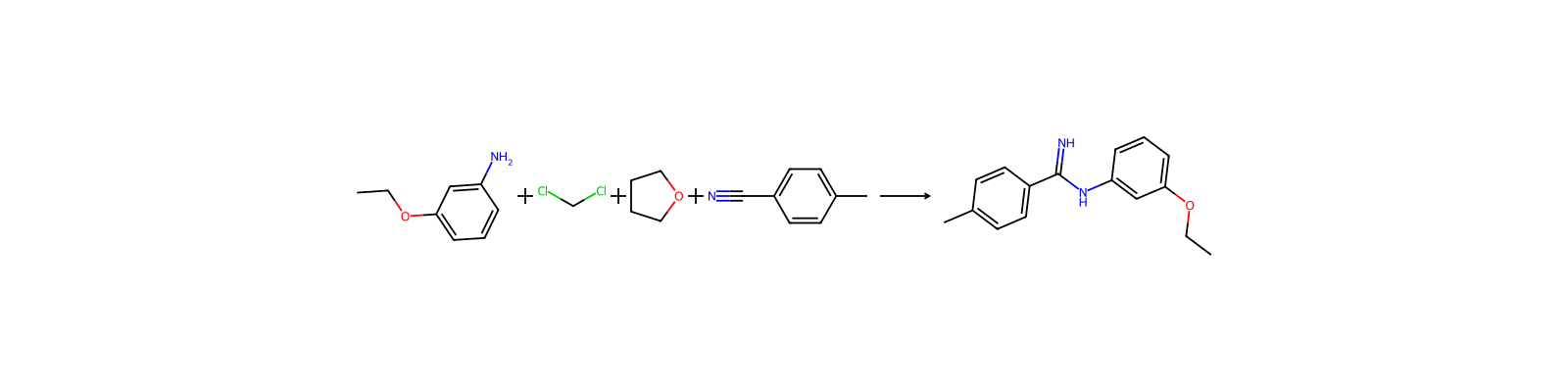
Zugehörige Reaktionen
52



Verknüpfte Notizen
Wird geladen…