
Benzylcarbamat
Benzyl carbamate
Daten werden ergänzt – lade die Seite später neu, um den aktuellen Stand zu sehen

Grundinformationen
- CAS
621-84-1- Standard-SMILES
NC(=O)OCc1ccccc1- InChIKey
PUJDIJCNWFYVJX-UHFFFAOYSA-N- Summenformel
- C8H9NO2
- Durchschnittliche Molmasse
- 151,16 g/mol
- Monoisotopische Masse
- 151,06332853
Namen und Bezeichner
- Bevorzugter Name
- Benzyl carbamate
- IUPAC
- benzyl carbamate
- Lokaler Name
- Benzylcarbamat
- Englischer Name
- Benzyl carbamate
- Summenformel
- C8H9NO2
- Molmasse
- 151.16
Namen und Synonyme
BENZYL CARBAMATE621-84-1Carbamic acid, phenylmethyl esterCarbamic acid benzyl esterBenzylcarbamateCCRIS 5070AI3-52524EINECS 210-710-4NSC 25317DTXSID00211159UNII-7890Q001S7NSC-25317
Weitere Namen anzeigen
Z-NH2CARBAMO-BenzylcarbamateBenzyl aminoformateN-CARBOBENZOXY-AMIDEZ-AMIDEBenzyl urethane
PHENYLMETHYL CARBAMATE7890Q001S7RefChem:118862DTXCID50133650210-710-4InChI=1/C8H9NO2/c9-8(10)11-6-7-4-2-1-3-5-7/h1-5H,6H2,(H2,9,10PUJDIJCNWFYVJX-UHFFFAOYSA-NCarbamyl Benzyl Ester
Datenbank-Bezeichner
- CAS
621-84-1- PubChem CID
- 12136
- DTXSID
DTXSID00211159- ChEMBL
CHEMBL2259788- UNII
- 7890Q001S7
- EC Number
- 210-710-4
- Nikkaji
- J95.774G
Eigenschaften
Berechnete StruktureigenschaftenWird ergänzt
- XLogP
- 1,2
- Polarare Oberfläche (TPSA)
- 52,3 Ų
- H-Brücken-Donoren
- 1
- H-Brücken-Akzeptoren
- 2
- Frei drehbare Bindungen
- 3
- Schwere Atome
- 11
- Formalladung
- 0
- Komplexität
- 130
Physikochemische Eigenschaften
- Schmelzpunkt
- 86 · 86-89 °C (lit.)
- Siedepunkt
- 273.17 °C · 273.17°C (rough estimate)
- Dichte
- 1.2023 · 1.2023 (rough estimate)
- Brechungsindex
- 1.581 · 1.5810 (estimate)
- storage temp.
- Keep in dark place,Sealed in dry,Room Temperature
- Löslichkeit
- Chloroform (Slightly), Methanol (Slightly)
- Aggregatzustand
- Powder or Flakes
- pka
- 13.42 · 13.42±0.50(Predicted)
- Farbe
- Off-white to light beige
- Wasserlöslichkeit
- 68.02 g/L · 68.02g/L(37 ºC)
- BRN
- 1865635 · 1865635
- InChI
- InChI=1S/C8H9NO2/c9-8(10)11-6-7-4-2-1-3-5-7/h1-5H,6H2,(H2,9,10)
- InChIKey
- PUJDIJCNWFYVJX-UHFFFAOYSA-N
- SMILES
- C(OCC1=CC=CC=C1)(=O)N
- CAS Datenbank
- 621 · 621-84-1(CAS DataBase Reference)
- NIST chemische Informationen
- Carbamic acid, benzyl ester(621-84-1)
Sicherheit und Regulatorisches
Sicherheitsangaben dienen nur zur Orientierung und ersetzen weder das Sicherheitsdatenblatt (SDB) des Lieferanten noch geltende Vorschriften oder eine fachliche Bewertung.
GHS-Klassifizierung
GHS Classification
Warning
H302 (50%): Harmful if swallowed [Warning Acute toxicity, oral]
P261, P264, P264+P265, P270, P271, P273, P280, P301+P317, P302+P352, P304+P340, P305+P351+P338, P317, P319, P321, P330, P332+P317, P337+P317, P362+P364, P403+P233, P405, and P501 (click each P-code to see the statement)
Aggregated GHS information provided per 2 reports by companies from 2 notifications to the ECHA C&L Inventory. Each notification may be associated with multiple companies.
Gefahrenhinweise
Hazard Classes and CategoriesAcute Tox. 4 (50%)
Sicherheitsdaten
- wgk
- 3
- hs_code
- 29242995
- risk_code
- 20/21/22-36/37/38
- hazard_code
- Xn
- safety_code
- 22-24/25-36-26
- Speicherklasse
- 11 - Combustible Solids
Chemie und Industrie
Anwendungen
VerwendenBenzyl carbamate is a reagent used for the nucleophilic introduction of an amino-protected group, Benzyl carbamates can be considered as a benzyloxycarbonyl (otherwise known as carbobenzyloxy, Cbz or Z) protecting group for amino groups. It was introduced as a versatile alternative to the ethoxy carbamate group in peptide synthesis.
Darstellung
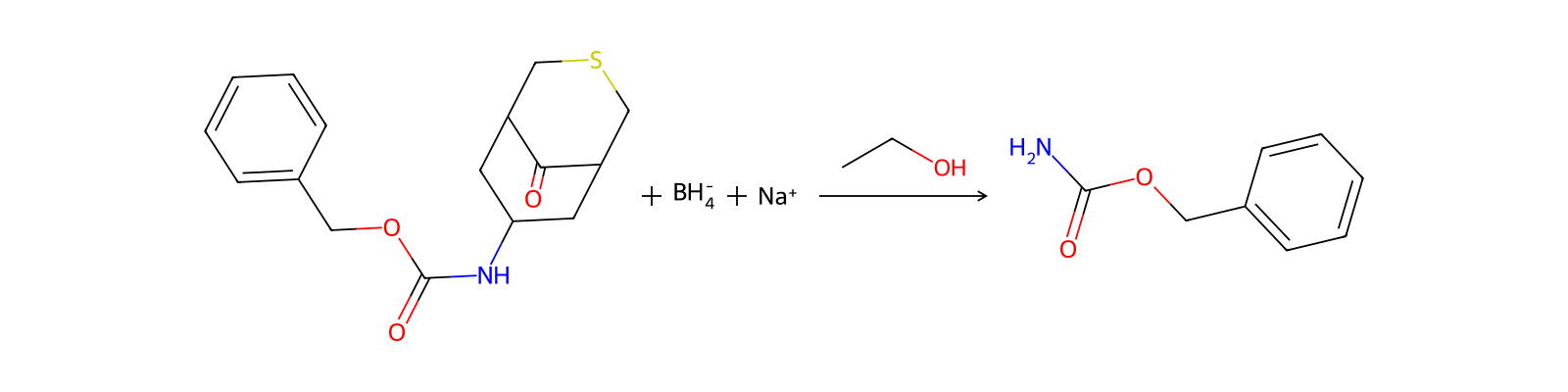
synthetischeBenzyl carbamate is prepared by reacting benzyl chloroformate with ammonia. Benzyl chloroformate was slowly added to 5 times the volume of cold ammonia water (relative density 0.90) under vigorous stirring, the reaction mixture was placed at room temperature for 30 minutes, the precipitate was filtered out, washed with water and dried to obtain the finished product of benzyl carbamate.
Vor- und nachgelagerte Produkte
Vorgelagerte Rohstoffe
Nachgelagerte Produkte
Zugehörige Reaktionen
401



Notizen zur Verbindung
Wird geladen…