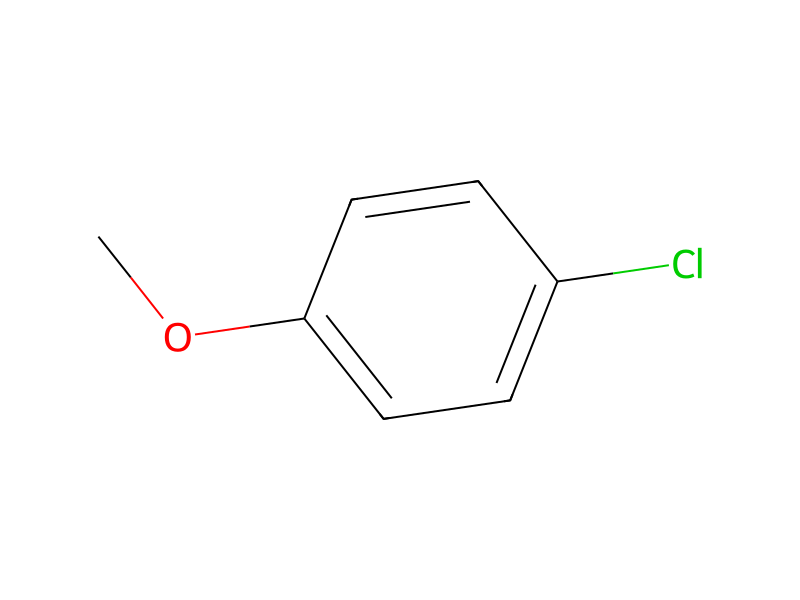
4-Chloranisol
4-Chloroanisole
Daten werden ergänzt – lade die Seite später neu, um den aktuellen Stand zu sehen
Grundinformationen
- CAS
623-12-1- Standard-SMILES
COc1ccc(Cl)cc1- InChIKey
YRGAYAGBVIXNAQ-UHFFFAOYSA-N- Summenformel
- C7H7ClO
- Durchschnittliche Molmasse
- 142,58 g/mol
- Monoisotopische Masse
- 142,0185425
Überblick
structure in first source
Namen und Bezeichner
- Bevorzugter Name
- 4-Chloroanisole
- IUPAC
- 1-chloro-4-methoxybenzene
- Lokaler Name
- 4-Chloranisol
- Englischer Name
- 4-Chloroanisole
- Summenformel
- C7H7ClO
- Molmasse
- 142.58
Namen und Synonyme
4-Chloroanisole1-Chloro-4-methoxybenzene623-12-1P-CHLOROANISOLEBenzene, 1-chloro-4-methoxy-p-Chlorophenyl methyl etherAnisole, p-chloro-Anisyl chloridep-Chloromethoxybenzene4-Chlorophenol methyl ether0F18BLY08QNSC-4129
Weitere Namen anzeigen
para-Chloroanisolep-chloroanisol4-ChloroanisolChloro anisole3 4-Chloroanisole
DTXSID1060764RefChem:98541DTXCID7043295210-772-21-methoxy-4-chlorobenzene1-chloro-4-methoxy-benzene4-methoxyphenyl chlorideMFCD00000616
Datenbank-Bezeichner
- CAS
623-12-1- PubChem CID
- 12167
- DTXSID
DTXSID1060764- UNII
- 0F18BLY08Q
- EC Number
- 210-772-2
- Nikkaji
- J96.203A
Eigenschaften
Berechnete StruktureigenschaftenWird ergänzt
- XLogP
- 2,8
- Polarare Oberfläche (TPSA)
- 9,2 Ų
- H-Brücken-Donoren
- 0
- H-Brücken-Akzeptoren
- 1
- Frei drehbare Bindungen
- 1
- Schwere Atome
- 9
- Formalladung
- 0
- Komplexität
- 77
Experimentelle und physikochemische Eigenschaften
Chemical ClassesOther Classes -> Halogenated Anisoles
SpringerMaterials Properties13C nuclear magnetic resonance spectrum
LogP2.78
Vapor Pressure0.81 [mmHg]
Physical DescriptionColorless liquid; [Alfa Aesar MSDS]
Physikochemische Eigenschaften
- Schmelzpunkt
- -18 °C · -18 °C (lit.)
- Siedepunkt
- 198 · 198-202 °C (lit.)
- Dichte
- 1.164 g/mL · 1.164 g/mL at 25 °C (lit.)
- Dampfdruck
- 1.08 hPa · 1.08hPa at 25℃
- Brechungsindex
- 20 · n20/D 1.535(lit.)
- Flammpunkt
- 173 °F · 173 °F
- storage temp.
- Sealed in dry,Room Temperature
Sicherheit und Regulatorisches
Sicherheitsangaben dienen nur zur Orientierung und ersetzen weder das Sicherheitsdatenblatt (SDB) des Lieferanten noch geltende Vorschriften oder eine fachliche Bewertung.
GHS-Klassifizierung
GHS Classification
This chemical does not meet GHS hazard criteria for 44.4% (4 of 9) of reports.
Warning
H302 (44.4%): Harmful if swallowed [Warning Acute toxicity, oral]
P261, P264, P264+P265, P270, P271, P280, P301+P317, P302+P352, P304+P340, P305+P351+P338, P317, P319, P321, P330, P332+P317, P337+P317, P362+P364, P403+P233, P405, and P501 (click each P-code to see the statement)
Aggregated GHS information provided per 9 reports by companies from 4 notifications to the ECHA C&L Inventory. Each notification may be associated with multiple companies.
Gefahrenhinweise
Regulatory Information
Chemical: Benzene, 1-chloro-4-methoxy-
REACH registered substance: 4-chloroanisole (EC: 210-772-2)
Benzene, 1-chloro-4-methoxy-: Does not have an individual approval but may be used under an appropriate group standard
Hazards SummaryMay cause irritation; [Alfa Aesar MSDS]
Peroxide Forming Chemical
p-Chloroanisole
D*: Other compounds that may form peroxides
No amount of peroxides were found in new commerically available containers
Removal of Peroxides from Ethers with Cerous Hydroxide
Hazard Classes and CategoriesAcute Tox. 4 (44.4%)
Sicherheitsdaten
- wgk
- 3
- tsca
- TSCA listed
- ridadr
- UN 2810
- hs_code
Chemie und Industrie
Verwendung und Herstellung
General Manufacturing InformationBenzene, 1-chloro-4-methoxy-: INACTIVE
Anwendungen
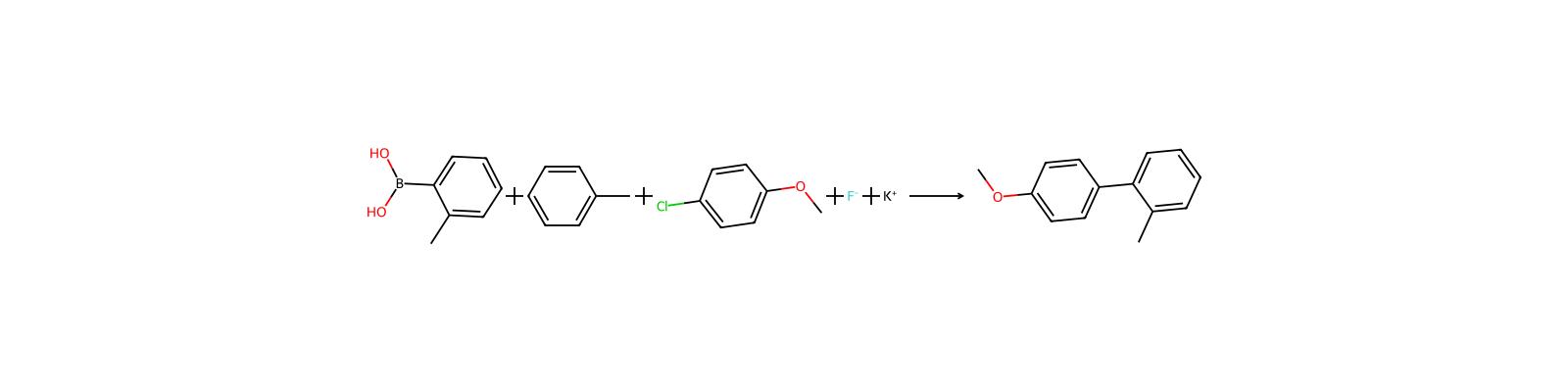
Verwenden4-Chloroanisole was found to react with Cu (II)-smectite forming a blue clay-organic complex. 4-Chloroanisole was chosen as the main test substrate for the optimisation studies as it is electronically deactivated and thus resistant to oxidative addition and consequently very reluctant to enter a catalytic manifold.
Vor- und nachgelagerte Produkte
Vorgelagerte Rohstoffe
Nachgelagerte Produkte
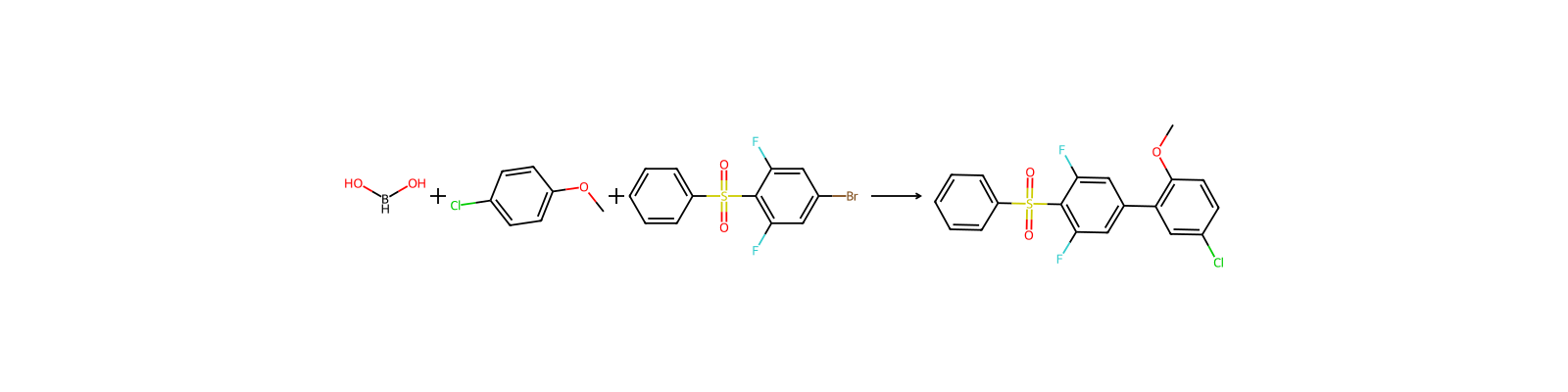
Zugehörige Reaktionen
759




Notizen zur Verbindung
Wird geladen…