StartseiteMCPWorkbenchSkills
StartseiteWorkbenchBenachrichtigungenMein Bereich
llms.txt · MCP-AnleitungDatenschutz · Nutzungsbedingungen · Supportv1.8.0
  1. Startseite
  2. /Verbindung

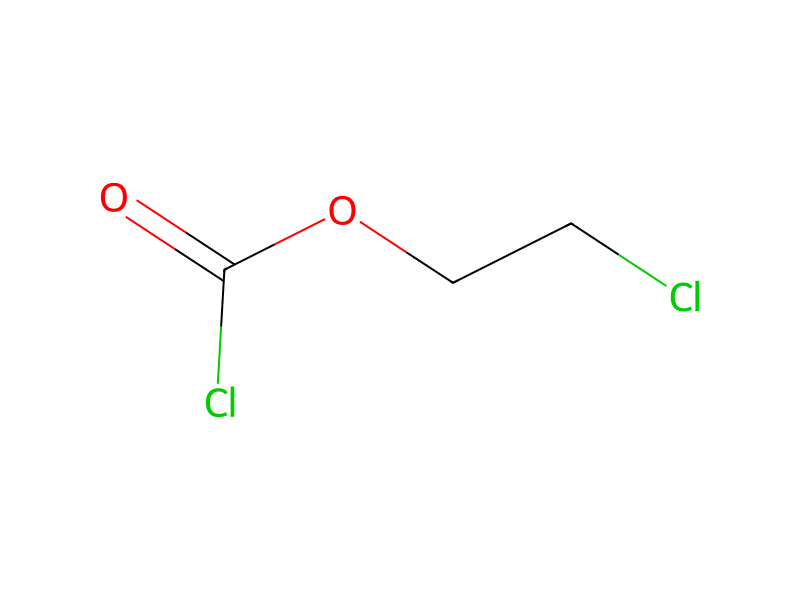
2-Chlorethylchlorformiat

2-Chloroethyl chloroformate

HCID 12305
Neue NotizNeue ReaktionAnfrage stellen
Druckvorschau

Daten werden ergänzt – lade die Seite später neu, um den aktuellen Stand zu sehen
GrundinformationenÜberblickNamen und BezeichnerEigenschaftenSicherheit und RegulatorischesChemie und IndustrieZugehörige ReaktionenNotizen zur Verbindung
TeilstruktursucheÄhnliche Strukturen suchen

Grundinformationen

CAS
627-11-2
Standard-SMILES
O=C(Cl)OCCCl
InChIKey
SVDDJQGVOFZBNX-UHFFFAOYSA-N
Summenformel
C3H4Cl2O2
Durchschnittliche Molmasse
142,97 g/mol
Monoisotopische Masse
141,95883473

Überblick

Chloroethyl chloroformate is a liquid. (EPA, 1998)

Namen und Bezeichner

Bevorzugter Name
2-Chloroethyl chloroformate
IUPAC
2-chloroethyl carbonochloridate
Lokaler Name
2-Chlorethylchlorformiat
Englischer Name
2-Chloroethyl chloroformate
Summenformel
C3H4Cl2O2
Molmasse
142.97

Namen und Synonyme

2-Chloroethyl chloroformate627-11-22-chloroethyl carbonochloridateCHLOROETHYL CHLOROFORMATECarbonochloridic acid, 2-chloroethyl esterChloroformic acid 2-chloroethyl esterFormic acid, chloro-, 2-chloroethyl esterTL 207chloroethylchloroformateMFCD000006462-Chlorethylester kyseliny chlormravenci2-Chloroethyl chlorocarbonate
Weitere Namen anzeigen
CHLORO ETHYL CHLOROFORMATEtl207Chlorethyl chloromethyl2-chloroethyl choroformateb-Chloroethyl chloroformateChloroforMate-2-chloroethyl
.beta.-Chloroethyl chloroformate(2-Chloroethoxy)carbonyl chloride4D32H07Z9I2-chloroethylchloroformate2-Chloroethyl carbonochloridate; 2-Chloroethyl chlorocarbonate; 2-Chloroethyl chloroformatebeta-Chloroethyl chlorocarbonateChloroformic acid, beta-chloroethyl esterHSDB 6402

Datenbank-Bezeichner

CAS
627-11-2
PubChem CID
12305
DTXSID
DTXSID2060832
UNII
4D32H07Z9I
EC Number
210-982-4
Nikkaji
J1.696I

Eigenschaften

Berechnete StruktureigenschaftenWird ergänzt

XLogP
1,8
Polarare Oberfläche (TPSA)
26,3 Ų
H-Brücken-Donoren
0
H-Brücken-Akzeptoren
2
Frei drehbare Bindungen
3
Schwere Atome
7
Formalladung
0
Komplexität
64

Experimentelle und physikochemische Eigenschaften

Chemical ClassesToxic Gases & Vapors -> Acid Halides
SpringerMaterials PropertiesNuclear quadrupole resonance spectroscopy
Density · 3 Einträge

1.3847 (EPA, 1998) - Denser than water; will sink

1.3847 @ 20 °C/4 °C

1.3847 @ 20°C

Color/FormColorless liquid
Solubility · 2 Einträge

Insol in cold water

Sol in alcohol, ether, acetone, benzene

Boiling Point · 3 Einträge

312.3 °F at 760 mmHg (EPA, 1998)

155 °C

155.7 °C @760 [mm Hg]

Vapor Pressure · 2 Einträge

13 mm Hg at 48-49 °C

13 [mm Hg]

Refractive IndexIndex of refraction: 1.4483 @ 20 °C
Physical Description

Sicherheit und Regulatorisches

Sicherheitsangaben dienen nur zur Orientierung und ersetzen weder das Sicherheitsdatenblatt (SDB) des Lieferanten noch geltende Vorschriften oder eine fachliche Bewertung.

GHS-Klassifizierung

GHS Classification · 4 Einträge

Danger

H301 (13.2%): Toxic if swallowed [Danger Acute toxicity, oral]

P260, P261, P264, P264+P265, P270, P271, P280, P301+P316, P301+P330+P331, P302+P352, P302+P361+P354, P304+P340, P305+P351+P338, P305+P354+P338, P316, P319, P321, P330, P332+P317, P337+P317, P362+P364, P363, P403+P233, P405, and P501 (click each P-code to see the statement)

Aggregated GHS information provided per 53 reports by companies from 9 notifications to the ECHA C&L Inventory. Each notification may be associated with multiple companies.

Gefahrenhinweise

Regulatory Information · 2 Einträge

Chemical: Carbonochloridic acid, 2-chloroethyl ester

Status: Active Update: 27-03-2023 https://echa.europa.eu/registration-dossier/-/registered-dossier/31392

Other Safety InformationEvaluation - Chemicals that are unlikely to require further regulation to manage risks to human health
DOT LabelPoison Corrosive
Fire HazardsExcerpt from ERG Guide 154 [Substances - Toxic and/or Corrosive (Non-Combustible)]:
Health Hazards(Non-Specific -- Ethyl Chloroformate) Poisonous; may be fatal if inhaled, swallowed or absorbed through skin. Contact may cause burns to skin and eyes. (EPA, 1998)
Hazards Summary · 1 Eintrag

A strong skin and eye irritant; [HSDB] Slowly decomposed by water forming ethanol, hydrogen chloride, and carbon dioxide; Evolves hydrogen chloride in moist air; May cause burns; [CAMEO] A corrosive substance that can cause injury to the skin, eyes, and respiratory tract; Inhalation may cause pulmonary edema and chemical pneumonitis; A lachrymator; [MSDSonline] See CHLOROFORMATES.

Chemie und Industrie

Verwendung und Herstellung

Uses · 2 Einträge

Used as intermediate; [HSDB]

Intermediate for synthesis of pesticides, perfumes, drugs, polymers, dyes, and other chemicals /chloroformates/

ImpuritiesCarbon dioxide, hydrogen chloride, phosgene, and alkyl chlorides; main impurities are corresponding carbonates /chloroformic esters/
U.S. ProductionND (1992)
Methods of ManufacturingBy bubbling gaseous phosgene into ethylene chlorohydrin at 0 °C.
Formulations/Preparations · 3 Einträge

Typical specifications of commercial chloroformates: purity, 98%; phosgene, <0.1%, iron, <10 ppm; acidity as HCl, <0.1%; alcohol or phenol, <2% /chloroformic esters/

Commercial products have concentrations of 97-99 wt% /chloroformic esters/

97%

General Manufacturing Information · 3 Einträge

Carbonochloridic acid, 2-chloroethyl ester: ACTIVE

Most chloroformate production is used captively and production figures are not available /chloroformic esters/

Can be prepared by reacting phosgene with ethylene oxide

Vor- und nachgelagerte Produkte

Vorgelagerte Rohstoffe

2-ChlorethanolFlow CellHydrogenchlorid

Nachgelagerte Produkte

Vinylchlorformiat2-[(2-Nitrophenyl)amino]ethanol

Zugehörige Reaktionen

170
Reaktionsaufzeichnung erstellen
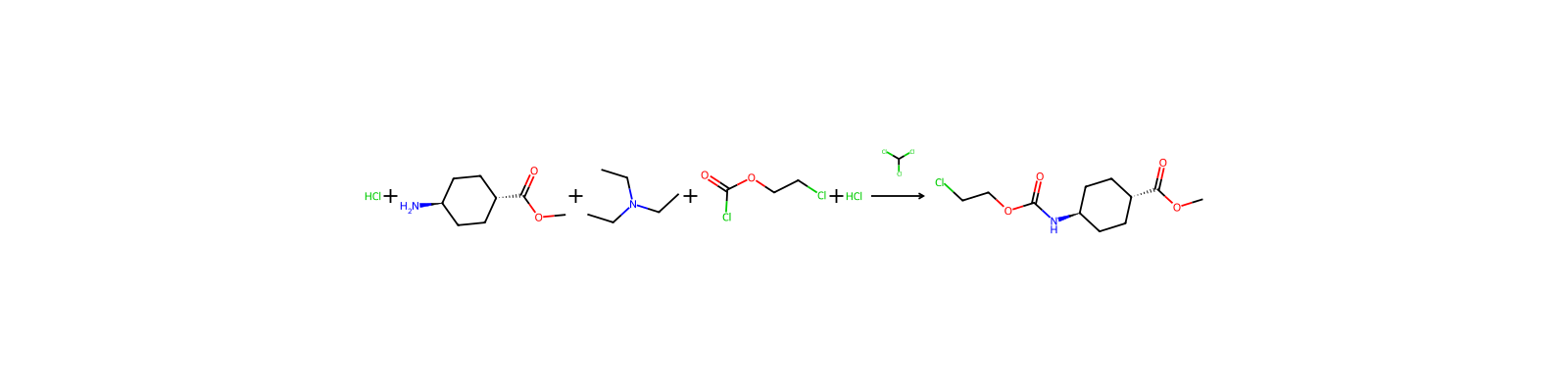
Reaktionsgleichung von HRID 4431
HRID 4431als Eduktuspto-grants-1988_02
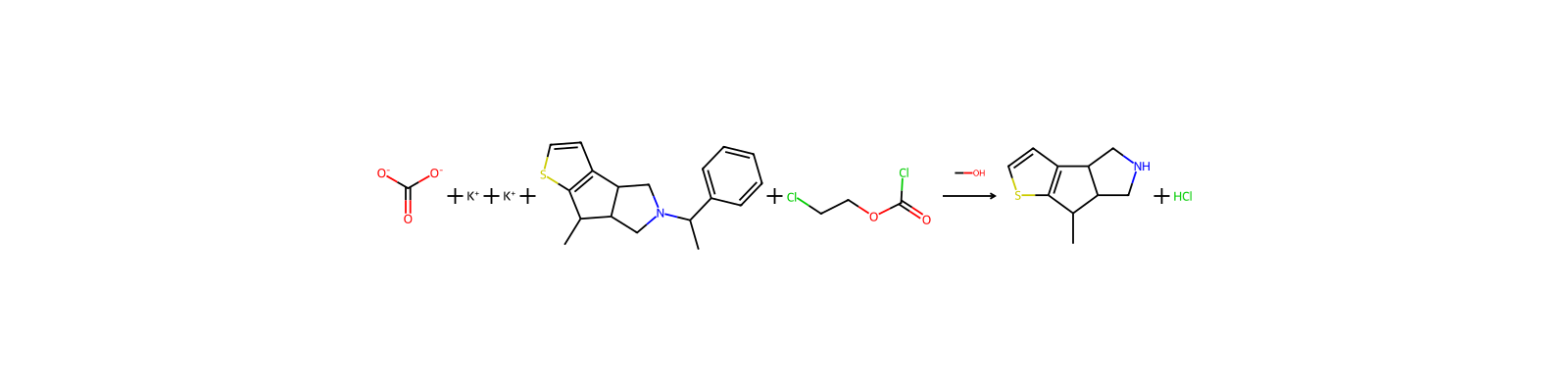
Reaktionsgleichung von HRID 16695
HRID 16695als Eduktuspto-grants-2010_06
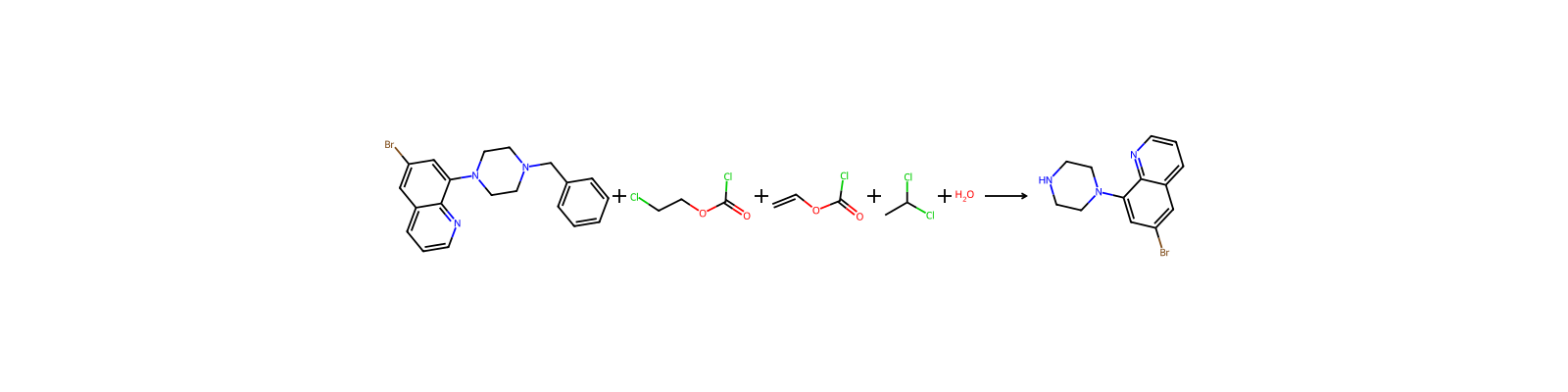
Reaktionsgleichung von HRID 30288
HRID 30288als Eduktuspto-grants-2008_09
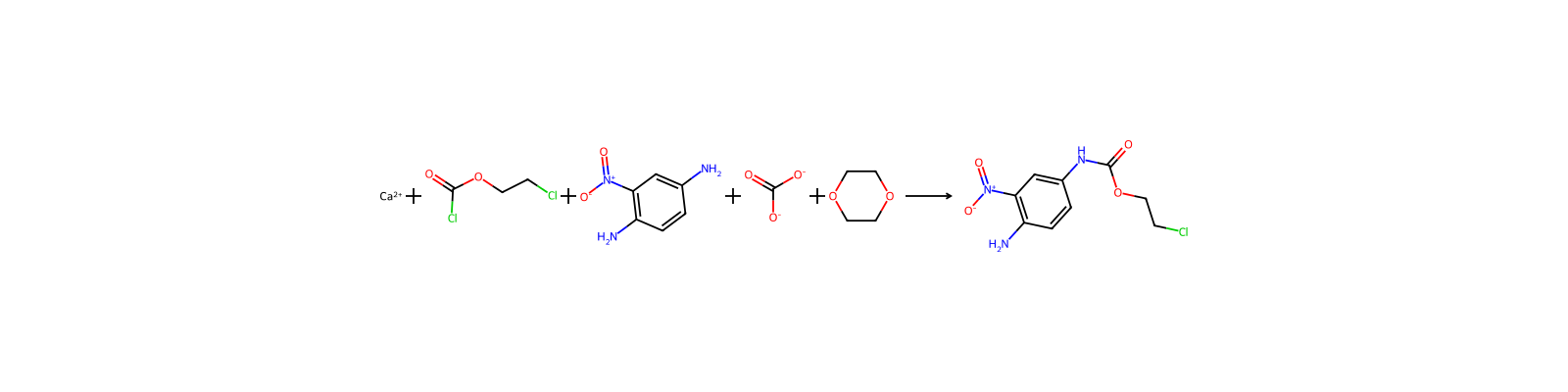
Reaktionsgleichung von HRID 67908
HRID 67908als Eduktuspto-grants-1982_08
Reaktionsgleichung von HRID 90658
HRID 90658als EduktTraining data from https://doi.org/10.1039/C8SC04228D (2/10)
Reaktionsgleichung von HRID 101864
HRID 101864als EduktTraining data from https://doi.org/10.1039/C8SC04228D (2/10)
Reaktionsgleichung von HRID 115065
HRID 115065als EduktTraining data from https://doi.org/10.1039/C8SC04228D (2/10)
Reaktionsgleichung von HRID 120911
HRID 120911als EduktTraining data from https://doi.org/10.1039/C8SC04228D (2/10)
Seite 1 von 22

Notizen zur Verbindung

Wird geladen…

Auf dieser SeiteGrundinformationenÜberblickNamen und BezeichnerEigenschaftenSicherheit und RegulatorischesChemie und IndustrieZugehörige ReaktionenNotizen zur Verbindung
Weitere Aktionen
Neue NotizNeue ReaktionAnfrage stellen
· 2 Einträge

Chloroethyl chloroformate is a liquid. (EPA, 1998)

Colorless liquid; [HSDB] Clear colorless liquid; [MSDSonline]

Other Experimental Properties · 5 Einträge

Decomp in alkaline soln and hot water

Chloroformates are reactive intermediates that combine acid chloride, and ester functions. They undergo many reactions of acid chlorides, however, the rates are usually slower. Reactions of chloroformates, like other acid chlorides, proceed faster with better yields when alkali hydroxides or tertiary amines are present to react with the HCl as it forms. /Chloroformates/

Hydrolyze in water /chloroformates/

Conversion factor: 5.84 mg/cu m = 1 ppm

Flash point: 158 °F (70 °C)

Physikochemische Eigenschaften

Schmelzpunkt
25 °C · <25 °C
Siedepunkt
155 °C · 155 °C (311 °F; 428 K)
Dichte
1.3847 g/cm3 · 1.3847 g/cm3
Dampfdruck
0.23 psi · 0.23 psi ( 20 °C)
Brechungsindex
1.4483 · 1.4483
Flammpunkt
70 °C · 70 °C (158 °F; 343 K)
storage temp.
2 · Inert atmosphere,2-8°C
Löslichkeit
soluble in Ether,Benzene,Acetone
Aggregatzustand
liquid
Farbe
colourless
Geruch (Odor)
Pungent odor
BRN
506639 · 506639
Henry's Law Constant
9 · 9.0×10-3 mol/(m3Pa) at 25℃, HSDB (2015)
InChIKey
SVDDJQGVOFZBNX-UHFFFAOYSA-N
CAS Datenbank
627 · 627-11-2(CAS DataBase Reference)
NIST chemische Informationen
2 · Carbonochloridic acid, 2-chloroethyl ester(627-11-2)
EPA chemische Informationen
2 · 2-Chloroethyl chloroformate (627-11-2)
Reactive GroupHalogenated Organic Compounds
Reactivity AlertsWater-Reactive
Reactivity Profile · 1 Eintrag

CHLOROETHYL CHLOROFORMATE is an acid halide. Acid halides are water reactive; some are violently reactive. They are incompatible with strong oxidizing agents, alcohols, amines, alkali. May react vigorously or explosively if mixed with diisopropyl ether or other ethers in the presence of trace amounts of metal salts [J. Haz. Mat., 1981, 4, 291].

Air and Water ReactionsDecomposed slowly by water forming ethanol, HCl, and CO2; on contact with moist air, it gives off HCl fumes; attacks many metals especially in humid atmosphere. REF [Handling Chemicals Safely, 1980. p. 476].
CERCLA Reportable Quantities · 1 Eintrag

Releases of CERCLA hazardous substances are subject to the release reporting requirement of CERCLA section 103, codified at 40 CFR part 302, in addition to the requirements of 40 CFR part 355. Chloroethyl chloroformate is an extremely hazardous substance (EHS) subject to reporting requirements when stored in amounts in excess of its threshold planning quantity (TPQ) of 1,000 lbs.

Hazard Classes and CategoriesAcute Tox. 3 (13.2%)

Sicherheit und Schutzausrüstung

Fire FightingExcerpt from ERG Guide 154 [Substances - Toxic and/or Corrosive (Non-Combustible)]:
First AidWarning: Respiratory effects may be delayed up to 72 hrs after exposure. Caution is advised.
Nonfire Spill Response · 1 Eintrag

(Non-Specific -- Ethyl Chloroformate) Keep unnecessary people away; isolate hazard area and deny entry. Stay upwind; keep out of low areas. Isolate for 1/2 mile in all directions if tank car or truck is involved in fire. Shut off ignition sources; no flares, smoking or flames in hazard area. Do not touch spilled material; stop leak if you can do so without risk. Use water spray to reduce vapors.

Disposal Methods · 1 Eintrag

SRP: At the time of review, criteria for land treatment or burial (sanitary landfill) disposal practices are subject to significant revision. Prior to implementing land disposal of waste residue (including waste sludge), consult with environmental regulatory agencies for guidance on acceptable disposal practices.

Preventive Measures · 1 Eintrag

SRP: The scientific literature for the use of contact lenses in industry is conflicting. The benefit or detrimental effects of wearing contact lenses depend not only upon the substance, but also on factors including the form of the substance, characteristics and duration of the exposure, the uses of other eye protection equipment, and the hygiene of the lenses. However, there may be individual substances whose irritating or corrosive properties are such that the wearing of contact lenses would be harmful to the eye. In those specific cases, contact lenses should not be worn. In any event, the usual eye protectionequipment should be worn even when contact lenses are in place.

Isolation and EvacuationExcerpt from ERG Guide 154 [Substances - Toxic and/or Corrosive (Non-Combustible)]:
Protective Action Criteria (PAC) · 3 Einträge

1.8 [mg/m3]

20 [mg/m3]

120 [mg/m3]

Personal Protective Equipment (PPE) · 1 Eintrag

For emergency situations, wear a positive pressure, pressure-demand, full facepiece self-contained breathing apparatus (SCBA) or pressure- demand supplied air respirator with escape SCBA and a fully-encapsulating, chemical resistant suit. (EPA, 1998)

Toxikologische Informationen

Environmental Fate · 3 Einträge

TERRESTRIAL FATE: Chloroformates hydrolyze readily in water(1); therefore, aqueous hydrolysis will be the dominant fate process in moist soils(SRC). The low-boiling chloroformic esters, such as chloroethyl chloroformate, are highly volatile(2); therefore, evaporation from dry surfaces to the atmosphere will occur(SRC). Results of a single biodegradation study (using the Japanese MITI protocol) have classified ethyl chloroformate (a compound similar in structure to chloroethyl chloroformate) as biodegradable(3) but ethyl chloroformate hydrolyzes so fast the the biodegradation rates are probably for the hydrolysis products.

AQUATIC FATE: Chloroformates hydrolyze readily in water(1); ethyl chloroformate has an hydrolysis half-life of 31.5 min at 25 °C(1) and chloroethyl chloroformate is predicted to hydrolyze at a faster rate(2) forming the chloroethyl carbonate which can further hydrolyze to 2-chloroethanol and formic acid; therefore, aqueous hydrolysis will be the dominant fate process in the aquatic environment(SRC). Aqueous volatilization, bioconcentration, biodegradation, and adsorption to sediment are not expected to be important fate processes due to rapid hydrolysis(SRC).

ATMOSPHERIC FATE: Based upon a vapor pressure of 13 mm Hg at 48-49 °C(1), chloroethyl chloroformate is expected to exist primarily in the vapor-phase in the ambient atmosphere(2,SRC). It will degrade in the ambient atmosphere by reaction with photochemically produced hydroxyl radicals with an estimated half-life of about 14 days(3,SRC). Since chloroformates hydrolyzes readily in water(4), atmospheric degradation may occur through dissolution into clouds or through contact with rain or other atmospheric water(SRC).

Adverse EffectsDermatotoxin - Skin burns.
Soil Adsorption/Mobility · 1 Eintrag

Using a structure estimation method based on molecular connectivity indexes, the Koc for chloroethyl chloroformate can be estimated to be approximately 15(1,SRC). According to a suggested classification scheme(2), this estimated Koc value suggests that chloroethyl chloroformate has high mobility in soil(SRC). However, chloroformates hydrolyzes readily in water(3); therefore, leaching in soil is not expected to be an important fate process(SRC).

Artificial Pollution SourcesChloroethyl chloroformate's use as a chemical intermediate in the synthesis of other chemicals(1) could release the compound to the environment through various waste streams generated at sites of production and use(SRC).
Environmental Biodegradation · 1 Eintrag

Using the Japanese MITI protocol (4 week incubation period with activated sludge inoculum), ethyl chloroformate (a compound similar in structure to chloroethyl chloroformate) was classified as biodegradable with a theoretical BOD of 81-86%(1) but this probably refers to the hydrolysis product(SRC).

Environmental BioconcentrationChloroformates hydrolyze readily in water(1); therefore, bioconcentration in aquatic organisms will not be an important process(SRC).
Volatilization from Water/Soil · 1 Eintrag

The Henry's Law Constant for chloroethyl chloroformate can be estimated to be 1.1X10⁻³ atm-cu m/mole using a structure estimation method(1,SRC); this value of Henry's Law Constant indicates that volatilization from water is potentially an important fate process(2). However, chloroformates hydrolyze readily in water(3); therefore, volatilization from water is not expected to be important(SRC). The low- boiling chloroformic esters, such as chloroethyl chloroformate, are highly volatile(4); therefore, evaporation from dry surfaces will occur(SRC).

Environmental Abiotic Degradation · 1 Eintrag

The rate constant for the vapor-phase reaction of chloroethyl chloroformate with photochemically produced hydroxyl radicals has been estimated to be 1.13X10⁻¹² cu cm/molecule-sec at 25 °C which corresponds to an atmospheric half-life of about 14 days at an atmospheric concn of 5X10+5 hydroxyl radicals per cu cm(1,SRC). Chloroformates hydrolyze readily in pure water(2); although the hydrolysis rate specific to chloroethyl chloroformate was not found, the rate constant for the aqueous hydrolysis of ethyl chloroformate in water at 25 °C has been experimentally determined to be 3.67X10⁻⁴/sec which corresponds to a half life of 31.5 min(2); an hydrolysis rate estimation program(3) predicts that chloroethyl chloroformate will hydrolyze as much as three times faster than ethyl chloroformate(SRC).

Probable Routes of Human Exposure · 2 Einträge

... by ingestion and inhalation.

The low-boiling chloroformic esters (such as chloroethyl chloroformate) are highly volatile(1); therefore, occupational exposure can occur through inhalation(SRC).

Environmental Water ConcentrationsChloroethyl chloroformate was tentatively identified in water sample collected from the Philadelphia, PA Torresdale water treatment plant in Mar 1975(1).
Environmental Fate/Exposure Summary · 1 Eintrag

Chloroethyl chloroformate's use as a chemical intermediate could release the compound to the environment through various waste streams generated at sites of production and use. If released to the atmosphere, it will degrade in the vapor phase by reaction with photochemically produced hydroxyl radicals (estimated half-life of about 14 days). Since chloroformates hydrolyze readily in water, atmospheric degradation may occur through dissolution into clouds or through contact with rain or other atmospheric water. If released to water or moist soil, hydrolysis will be the dominate degradation process. If released to dry surfaces, chloroethyl chloroformate will evaporate into the atmosphere. Occupational exposure is most likely to occur through inhalation. (SRC)

Toxicity DataLCLo (mice) = 200 mg/m3/10min

Regulatorische Informationen

CERCLA Reportable Quantities · 1 Eintrag

Releases of CERCLA hazardous substances are subject to the release reporting requirement of CERCLA section 103, codified at 40 CFR part 302, in addition to the requirements of 40 CFR part 355. Chloroethyl chloroformate is an extremely hazardous substance (EHS) subject to reporting requirements when stored in amounts in excess of its threshold planning quantity (TPQ) of 1,000 lbs.

Sicherheitsdaten

wgk
3
tsca
TSCA listed
ridadr
3277
hs_code
2915900090
RTECS-Nr.
LQ5950000
risk_code
23-34
hazard_code
T
safety_code
26-36/37/39-45
hazard_class
6.1(a)
packing_group
II
Giftige Stoffe Daten
627-11-2(Hazardous Substances Data)
1,1-Dichlorethan
2-chloroethyl N-(3-chlorophenyl)carbamate