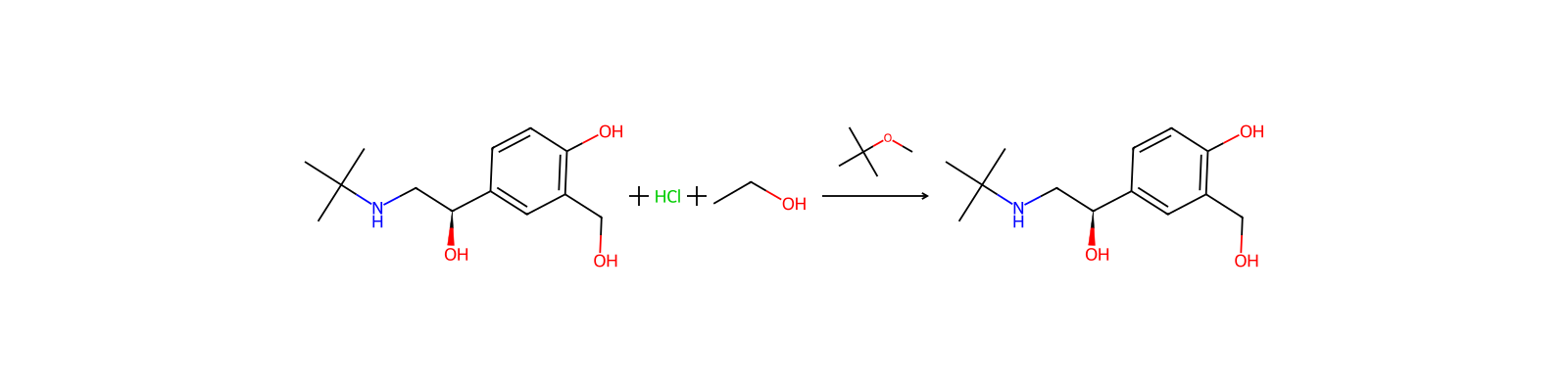
(-)-Salbutamol
HCID 123600

Grundinformationen
- CAS
34391-04-3- Standard-SMILES
CC(C)(C)NC[C@H](O)c1ccc(O)c(CO)c1- InChIKey
NDAUXUAQIAJITI-LBPRGKRZSA-N- Summenformel
- C13H21NO3
- Durchschnittliche Molmasse
- 239,31 g/mol
- Monoisotopische Masse
- 239,15214353
Überblick
(R)-salbutamol is an albuterol.
Namen und Bezeichner
- Bevorzugter Name
- (-)-Salbutamol
- IUPAC
- 4-[(1R)-2-(tert-butylamino)-1-hydroxyethyl]-2-(hydroxymethyl)phenol
- Englischer Name
- Levalbuterol
- Summenformel
- C13H21NO3
- Molmasse
- 239.31
Namen und Synonyme
LevalbuterolLevosalbutamol(-)-Salbutamol34391-04-3(R)-salbutamol(-)-AlbuterolR-Salbutamol4-[(1R)-2-(tert-butylamino)-1-hydroxyethyl]-2-(hydroxymethyl)phenolEDN2NBH5SSASF-1096CHEBI:8746DTXSID80187964
Weitere Namen anzeigen
LEVALBUTEROL HCLSalbutamolr-albuterolLevalbutreol(L)-ALBUTEROLR-SALBUTAMOL HCLLEVOSALBUTEROLHCL
levosalbutamolum4-((1R)-2-(tert-butylamino)-1-hydroxyethyl)-2-(hydroxymethyl)phenolAlbuterol (r)-Levalbuterol InhalationRefChem:56698Hydrochloride, LevalbuterolHydrochloride, LevosalbutamolDTXCID40110455
Datenbank-Bezeichner
- CAS
34391-04-3- PubChem CID
- 123600
- DTXSID
DTXSID80187964- ChEMBL
CHEMBL1002- ChEBI
CHEBI:8746- UNII
- EDN2NBH5SS
Eigenschaften
Berechnete Struktureigenschaften
- XLogP
- 0,3
- Polarare Oberfläche (TPSA)
- 72,7 Ų
- H-Brücken-Donoren
- 4
- H-Brücken-Akzeptoren
- 4
- Frei drehbare Bindungen
- 5
- Schwere Atome
- 17
- Formalladung
- 0
- Komplexität
- 227
Experimentelle und physikochemische Eigenschaften
DrugsPharmaceuticals -> Listed in ZINC15
Human DrugsBreast Feeding; Lactation; Milk, Human; Anti-Asthmatic Agents; Bronchodilator Agents; Beta Adrenergic Agonists
Collision Cross Section153.47 Ų [M+H-H2O]+ [CCS Type: TW; Method: calibrated with polyalanine and drug standards]
Physikochemische Eigenschaften
- Siedepunkt
- 433.5 · 433.5±40.0 °C(Predicted)
- Dichte
- 1.152 · 1.152±0.06 g/cm3(Predicted)
- pka
- 9.99 · 9.99±0.31(Predicted)
- InChI
- InChI=1/C13H21NO3/c1-13(2,3)14-7-12(17)9-4-5-11(16)10(6-9)8-15/h4-6,12,14-17H,7-8H2,1-3H3/t12-/s3
- InChIKey
- NDAUXUAQIAJITI-PLAQIDKDNA-N
- SMILES
- C1(=CC=C(O)C(CO)=C1)[C@@H](O)CNC(C)(C)C |&1:9,r|
- CAS Datenbank
- 34391 · 34391-04-3(CAS DataBase Reference)
Sicherheit und Regulatorisches
Sicherheitsangaben dienen nur zur Orientierung und ersetzen weder das Sicherheitsdatenblatt (SDB) des Lieferanten noch geltende Vorschriften oder eine fachliche Bewertung.
Toxikologische Informationen
Exposure RoutesSystemic absorption is rapid following aerosol administration.
Toxicity Summary
Salbutamol is a beta(2)-adrenergic agonist and thus it stimulates beta(2)-adrenergic receptors. Binding of albuterol to beta(2)-receptors in the lungs results in relaxation of bronchial smooth muscles. It is believed that salbutamol increases cAMP production by activating adenylate cyclase, and the actions of salbutamol are mediated by cAMP. Increased intracellular cyclic AMP increases the activity of cAMP-dependent protein kinase A, which inhibits the phosphorylation of myosin and lowers intracellular calcium concentrations. A lowered intracellular calcium concentration leads to a smooth muscle relaxation and bronchodilation. In addition to bronchodilation, salbutamol inhibits the release of bronchoconstricting agents from mast cells, inhibits microvascular leakage, and enhances mucociliary clearance.
Carcinogen ClassificationNo indication of carcinogenicity to humans (not listed by IARC).
Effects During Pregnancy and Lactation◉ Summary of Use during Lactation
Toxicity DataLD<sub>50</sub>=1100 mg/kg (orally in mice)
Sicherheitsdaten
- hs_code
- 2922509090
- risk_code
- 22
- hazard_code
- Xn
- safety_code
- 36
Chemie und Industrie
Pharmakologische Informationen
Protein Bindingplasma protein binding is relatively low.
PharmacodynamicsIt acts by relaxing smooth muscle in the bronchial tubes to increase air flow and relieve acute shortness of breath.
Mechanism of Action
β2 adrenergic receptors on airway smooth muscle are Gs coupled and their activation by levosalbutamol leads to activation of adenylate cyclase and to an increase in the intracellular concentration of 3',5'-cyclic adenosine monophosphate (cyclic AMP). Increased cyclic AMP activates protein kinase A which itself inhibits the phosphorylation of myosin produces lower intracellular ionic calcium concentrations, inducing muscle relaxation. Increased cyclic AMP concentrations are also associated with the inhibition of the release of mediators from mast cells in the airways, potentially contributing to its benefit in asthma attacks.
Biological Half-Life3.3 - 4 hours
Metabolism/Metabolites
Pure (R)-salbutamol formulation known as levosalbutamol is metabolised up to 12 times faster than (S)-salbutamol by intestine.
Hydrolyzed by esterases in tissue and blood to the active compound colterol. The drug is also conjugatively metabolized to salbutamol 4'-O-sulfate. Route of Elimination: Approximately 72% of the inhaled dose is excreted in the urine within 24 hours, 28% as unchanged drug and 44% as metabolite. Half Life: 1.6 hours
FDA Pharmacological Classification
EDN2NBH5SS
LEVALBUTEROL
Mechanisms of Action [MoA] - Adrenergic beta2-Agonists
Established Pharmacologic Class [EPC] - beta2-Adrenergic Agonist
Levalbuterol is a beta2-Adrenergic Agonist. The mechanism of action of levalbuterol is as an Adrenergic beta2-Agonist.
LEVALBUTEROL
Absorption, Distribution and Excretion
Inhalation delivers the medication directly into the airways and lungs, thereby minimizing side effects because of reduced systemic absorption of the inhaled medications.
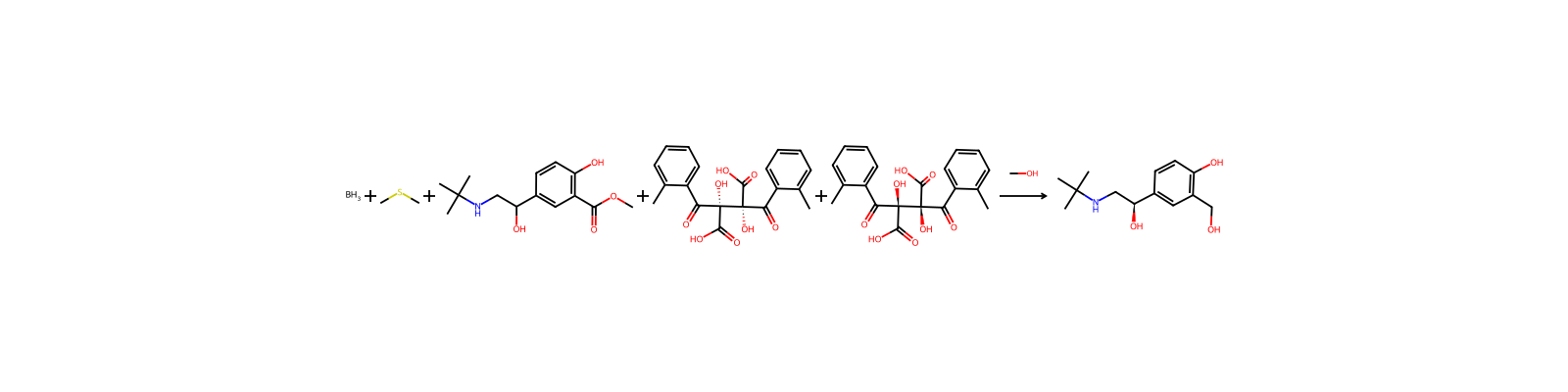
Zugehörige Reaktionen
3