Grundinformationen
- Standard-SMILES
COc1cc(CCC(=O)CC(=O)CCc2ccc(O)c(OC)c2)ccc1O- InChIKey
LBTVHXHERHESKG-UHFFFAOYSA-N- Summenformel
- C21H24O6
- Durchschnittliche Molmasse
- 372,4 g/mol
- Monoisotopische Masse
- 372,15728849
Überblick
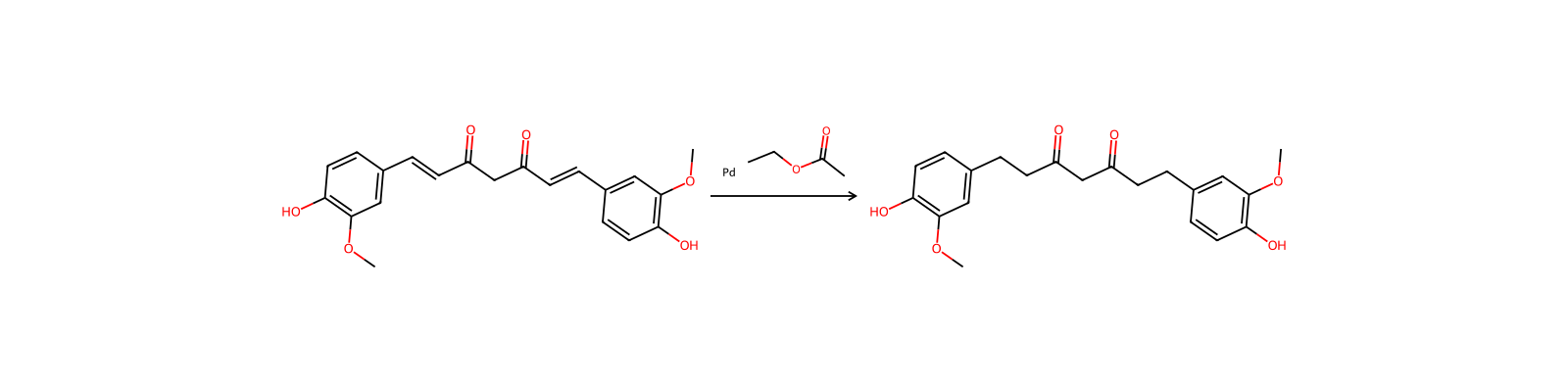
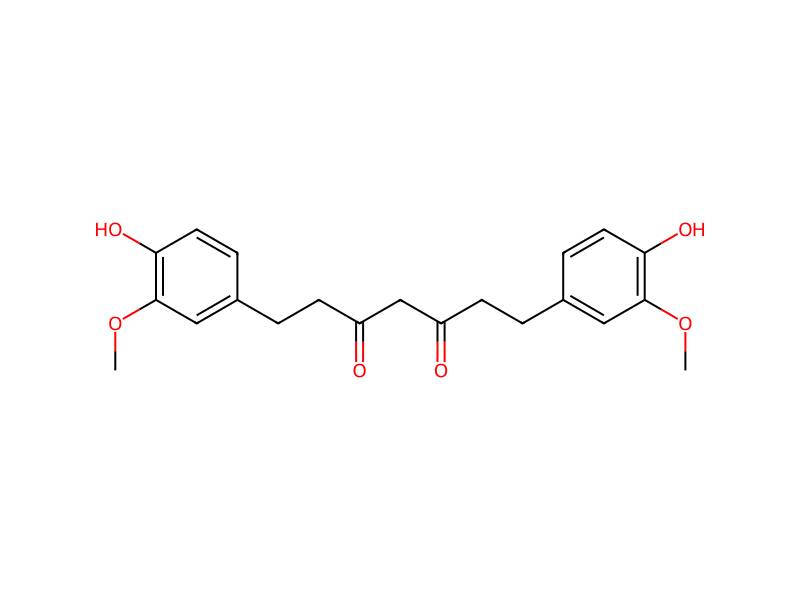
Tetrahydrocurcumin is a beta-diketone that is curcumin in which both of the double bonds have been reduced to single bonds. It has a role as a metabolite. It is a polyphenol, a beta-diketone and a diarylheptanoid. It is functionally related to a curcumin.
Namen und Bezeichner
- Bevorzugter Name
- Tetrahydrocurcumin
- IUPAC
- 1,7-bis(4-hydroxy-3-methoxyphenyl)heptane-3,5-dione
- Englischer Name
- Tetrahydrocurcumin
- Summenformel
- C21H24O6
- Molmasse
- 372.41
Namen und Synonyme
Tetrahydrocurcumin36062-04-11,7-bis(4-hydroxy-3-methoxyphenyl)heptane-3,5-dioneSabiwhiteTetrahydrodiferuloylmethane3,5-Heptanedione, 1,7-bis(4-hydroxy-3-methoxyphenyl)-NSC-687845DTXSID3086580100U0645U03CHEBI:67263RefChem:188657DTXCID40814168
Weitere Namen anzeigen
tetrahydrocurcuminoidsSabiWhite-LGB-TCHAids110028Aids-110028BioaActive THC
609-201-3Tetrahydro Curcumin1,7-Bis(4-hydroxy-3-methoxyphenyl)-3,5-heptanedioneNSC 687845TetrahydrocucuminHZIV 81-2MFCD04152347NSC687845
Datenbank-Bezeichner
- CAS
36062-04-1- PubChem CID
- 124072
- DTXSID
DTXSID30865801- ChEMBL
CHEMBL318743- ChEBI
CHEBI:67263- UNII
- 00U0645U03
- EC Number
- 609-201-3
- Nikkaji
- J478.221F
Eigenschaften
Berechnete Struktureigenschaften
- XLogP
- 2,8
- Polarare Oberfläche (TPSA)
- 93,1 Ų
- H-Brücken-Donoren
- 2
- H-Brücken-Akzeptoren
- 6
- Frei drehbare Bindungen
- 10
- Schwere Atome
- 27
- Formalladung
- 0
- Komplexität
- 437
Experimentelle und physikochemische Eigenschaften
CosmeticsAntioxidant
Endocrine DisruptorsPotential endocrine disrupting compound
Melting Point95 - 97 °C
Physical DescriptionSolid
Collision Cross Section181.2 Ų [M+Na]+ [CCS Type: DT; Buffer gas: N2; Ionization: ESI+; Dataset: TOXCAST; Source Identifier: DTXSID30865801]
Physikochemische Eigenschaften
- Schmelzpunkt
- 95 · 95-97 ºC
- Siedepunkt
- 564.1 · 564.1±45.0 °C(Predicted)
- Dichte
- 1.222 · 1.222
- Flammpunkt
- 196 ℃ · 196℃
- storage temp.
- Inert atmosphere,Room Temperature
- Löslichkeit
- DMSO (Slightly), Methanol (Slightly, Heated)
- pka
- 9.12 · 9.12±0.10(Predicted)
- Aggregatzustand
- powder
- Farbe
- Light Yellow to Yellow
- BRN
- 3485469 · 3485469
- Stabilität
- Light Sensitive
- Major Application
- food and beverages
- Kosmetik-Inhaltsstoffe Funktionen
- ANTIOXIDANT
- InChI
- InChI=1S/C21H24O6/c1-26-20-11-14(5-9-18(20)24)3-7-16(22)13-17(23)8-4-15-6-10-19(25)21(12-15)27-2/h5-6,9-12,24-25H,3-4,7-8,13H2,1-2H3
- InChIKey
- LBTVHXHERHESKG-UHFFFAOYSA-N
- SMILES
- C(C1=CC=C(O)C(OC)=C1)CC(=O)CC(=O)CCC1=CC=C(O)C(OC)=C1
- LogP
- 2.728 · 2.728 (est)
Sicherheit und Regulatorisches
GHS-Klassifizierung
GHS Classification
This chemical does not meet GHS hazard criteria for 100% (2 of 2) of all reports.
Not Classified
Aggregated GHS information provided per 2 reports by companies from 1 notifications to the ECHA C&L Inventory.
Gefahrenhinweise
Regulatory Information
Chemical: 3,5-Heptanedione, 1,7-bis(4-hydroxy-3-methoxyphenyl)-
Status: Active Update: 18-06-2014 https://echa.europa.eu/registration-dossier/-/registered-dossier/7283
3,5-Heptanedione, 1,7-bis(4-hydroxy-3-methoxyphenyl)-: Does not have an individual approval but may be used as a component in a product covered by a group standard. It is not approved for use as a chemical in its own right.
Hazard Classes and CategoriesNot Classified
Sicherheitsdaten
- wgk
- 3
- Speicherklasse
- 11 - Combustible Solids
Chemie und Industrie
Pharmakologische Informationen
Cellular LocationsMembrane
Verwendung und Herstellung
Use ClassificationCosmetics -> Antioxidant
Anwendungen
BeschreibungTetrahydrocurcumin (THC), the active metabolite of curcumin, is gaining popularity amongst scientist due to its wide spectrum of pharmacological activities, better stability and colourless nature. Tetrahydrocurcumin has a similar structure to that of curcumin. THC lacks the α, β-unsaturated carbonyl moiety in its chemical structure. It is naturally sourced from the roots of Curcuma zedoaria, Zingiber mioga, and Zingiber officinale and has potent antioxidant activity and depigmentation of the skin. THC is being studied for the treatment of cancer and dementia. THC is also known to epigenetically ameliorate mitochondrial dysfunction in brain vasculature during Ischemic Stroke. Tetrahydrocurcumin (THC) has been used as a neuroprotective agent to study its therapeutic potential in improving mitochondrial dysfunction in the ischemic stroke mice model.
VerwendenTetrahydrocurcumin is an antioxidant and skin-whitening ingredient. It is a major curcuminoid metabolite of curcumin that has been shown to have protective effects against diabetes and vascular dysfunction via alleviation of oxidative stress.The interest in tetrahydrocurcumin research is increasing because it is superior to curcumin in its solubility in water, chemical stability, bioavailability, and anti-oxidative activity. Curcumin metabolizes into tetrahydrocurcumin by bacterial enzyme NADPH-dependent curcumin reductase in the intestine.
Darstellung
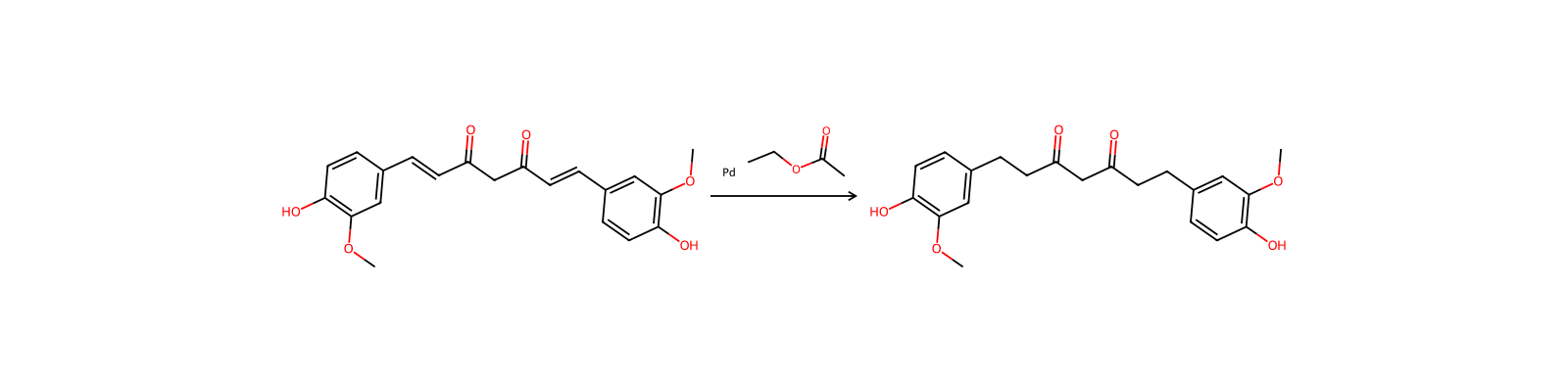
synthetischeTetrahydrocurcumin can also be chemically synthesized from curcumin by catalytic hydrogenation using PtO2 or palladium as a catalyst.One gram (1.0 g) of curcumin was dissolved in 20 ml of acetone and placed in a 100-ml glass reactor for reduction, to which was then added 500 mg of activated Raney-nickel catalyst. Subsequently, the atmosphere of the reactor was replaced for hydrogen gas by the routine method. A rubber-made balloon filled with hydrogen gas was arranged on the upper portion of the reactor in order to keep hydrogen gas pressure constant in the reactor by supplying hydrogen gas to make up for the consumed amount of hydrogen gas. The reactor was stirred while maintained at a given temperature in a constant-temperature water bath kept at 30° C. for 2-hour reduction.After completion of the reaction, the Raney-nickel catalyst was removed from the solution by filtering, which was then evaporated and dried by concentration under reduced pressure and was dissolved again in a small amount of acetone.Subsequently, the eluate was concentrated and dried under reduced pressure to obtain 674 mg of tetrahydrocurcumin.Method for making tetrahydrocurcumin and a substance containing the antioxidative substance tetrahydrocurcumin
Vor- und nachgelagerte Produkte
Vorgelagerte Rohstoffe
Anbieter50 Anbieter
西安江林生物科技有限公司18292036798; 18292036798
西安久启生物科技有限公司18729366352 13186100227
T&W GROUP021-61551611 13296011611 · [email protected]
韶远科技(上海)有限公司021-50795510 4000665055 · [email protected]
南京凯天化工有限公司+86 (25) 5860-8846 · [email protected]
大连美仑生物技术有限公司0411-62910999 13889544652 · [email protected]
安耐吉化学&3A(安徽泽升科技股份有限公司)400-0056266 · [email protected]
北京亿思研科技开发中心010-56645598 13366904824 · [email protected]
上海柯维化学技术有限公司021-64609169 18901607656 · [email protected]
上海诗丹德标准技术服务有限公司021-021-57127007-6622-6622 17621252073 · [email protected]
成都普思生物科技股份有限公司028-85370565-229 18080489829 · [email protected]
上海相辉医药科技有限公司13761987713 · [email protected]
上海融禾医药科技发展有限公司17301719108 13341702378 · [email protected]
上海泰坦科技股份有限公司400-6009262 15618770481 · [email protected]
MedChemexpress LLC021-58955995 · [email protected]
云南西力生物技术股份有限公司0871-65217109 · [email protected]
山东西亚化学有限公司13355009207 13355009207 · [email protected]
上海克琴科技有限公司+86-21-67299971;+86-21-67290723 18117322963
上海源叶生物科技有限公司13636370518 · [email protected]
上海遐瑞医药科技有限公司+86 21 61551611
成都瑞芬思德丹生物科技有限公司2355253622; 18981954830 · [email protected]
湖北威德利化学试剂有限公司186-02735115 18602735115 · [email protected]
Cato Research Chemicals Inc.020-81960175 · [email protected]
湖北省圣宝莱生物科技有限公司027-59105235 13007105135 · [email protected]
上海笛柏生物科技有限公司400-008-9730,021-54359730 400-008-9730 · [email protected]
四川省维克奇生物科技有限公司028-81700200 18116577057 · [email protected]
成都零六生物科技有限公司400-1166-196 13458535857 · [email protected]
雷丁试剂0510-85629785 18013409632 · [email protected]
湖南华腾制药有限公司400-8592883 · [email protected]
上海麦克林生化科技股份有限公司15221275939 15221275939 · [email protected]
杭州杰恒化工有限公司0571-87396432 · [email protected]
上海永叶生物科技有限公司86-021-61559134 15921386130 · [email protected]
上海洽凡生化科技有限公司+86-021-61654350 · [email protected]
凯试(上海)科技有限公司021-50135380 · [email protected]
池州凯隆进出口贸易有限公司[email protected]
Sigma-Aldrich西格玛奥德里奇(上海)贸易有限公司021-61415566 800-8193336 · [email protected]
ALB Technology Limited702-983-3769 · [email protected]
西安康诺化工有限公司029-86107037 15829389671 · [email protected]
TargetMol中国(陶术生物)021-021-33632979 15002134094 · [email protected]
武汉天植生物技术有限公司18607101326 15172504745 · [email protected]
上海昕凯医药科技有限公司21-619849051-1 18521059765 · [email protected]
上海皓之翔生物科技有限公司(原上海拓青化工有限公司)526763801 13301653310 · [email protected]
EMMX Biotechnology LLC888-539-0666 · [email protected]
无锡景耀生物科技有限公司88770633 13961738808 · [email protected]
上海前衍生物科技有限公司02781293128 · [email protected]
西安天广源生物科技有限公司17791861264 · [email protected]
山东西亚化学有限公司4009903999 13395398332 · [email protected]
沧州恩科医药科技有限公司0317-5296180 15533709196 · [email protected]
上海澄绍生物科技有限公司021-61847300 13341622919 · [email protected]
上海煜柯化学品有限公司13391486464 · [email protected]
Ergänzende Hinweise
DefinitionChEBI: Tetrahydrocurcumin is a beta-diketone that is curcumin in which both of the double bonds have been reduced to single bonds. It has a role as a metabolite. It is a beta-diketone, a polyphenol and a diarylheptanoid. It derives from a curcumin.
Zugehörige Reaktionen
2
Verknüpfte Notizen
Wird geladen…