

Grundinformationen
- Standard-SMILES
O=C1OC(=O)C2=C1CCCC2- InChIKey
HMMBJOWWRLZEMI-UHFFFAOYSA-N- Summenformel
- C8H8O3
- Durchschnittliche Molmasse
- 152,15 g/mol
- Monoisotopische Masse
- 152,04734412
Überblick
RN given refers to cpd with locants as specified
Namen und Bezeichner
- Bevorzugter Name
- 3,4,5,6-Tetrahydrophthalic anhydride
- IUPAC
- 4,5,6,7-tetrahydro-2-benzofuran-1,3-dione
- Lokaler Name
- 3,4,5,6-Tetrahydrophthalsaeureanhydrid
- Englischer Name
- 3,4,5,6-Tetrahydrophthalic anhydride
- Summenformel
- C8H8O3
- Molmasse
- 152.15
Namen und Synonyme
3,4,5,6-Tetrahydrophthalic anhydride2426-02-01,3-Isobenzofurandione, 4,5,6,7-tetrahydro-3,4,5,6-Tetrahydrophthalic acid anhydride01D3M89A2WNSC-11211NSC-61333DTXSID9075298RefChem:485678DTXCID8037043219-374-34,5,6,7-tetrahydroisobenzofuran-1,3-dione
Weitere Namen anzeigen
TMMA1-CYCLOHEXENE-1,2-DICARBOXYLIC ANHYDRIDE3,4,5,6-TETRAHYDROPHTHALIC ANHYDRIDE, 95 %3,4,5,6-THPATIMTEC-BB SBB0076963,4,5,6-Tetrahydroph3,4,5,6-TetrahydrophthaLTetrahydrophthalic acid anhydride4,5,6-Tetrahydrophthalic anhydride1-CYCLOHEXENEDICARBOXYLIC ANHYDRIDE
4,5,6,7-Tetrahydro-2-benzofuran-1,3-dioneCyclohexene-1,2-dicarboxylic anhydrideMFCD000059171,3,4,5,6,7-hexahydro-2-benzofuran-1,3-dione4,5,6,7-Tetrahydro-isobenzofuran-1,3-dione1, 4,5,6,7-tetrahydro-UNII-01D3M89A2Wdelta-TPA
Datenbank-Bezeichner
- CAS
2426-02-0- PubChem CID
- 12475
- DTXSID
DTXSID9075298- UNII
- 01D3M89A2W
- EC Number
- 219-374-3
- Nikkaji
- J76.414K
Eigenschaften
Berechnete Struktureigenschaften
- XLogP
- 1,3
- Polarare Oberfläche (TPSA)
- 43,4 Ų
- H-Brücken-Donoren
- 0
- H-Brücken-Akzeptoren
- 3
- Frei drehbare Bindungen
- 0
- Schwere Atome
- 11
- Formalladung
- 0
- Komplexität
- 237
Experimentelle und physikochemische Eigenschaften
SpringerMaterials PropertiesChemical shift
PesticidesEnvironmental transformation -> Pesticide transformation products (metabolite, successor)
Physikochemische Eigenschaften
- Schmelzpunkt
- 69 · 69-73 °C(lit.)
- Siedepunkt
- 234.6 °C · 234.6°C (rough estimate)
- Dichte
- 1.2 · 1.2000
- Brechungsindex
- 1.4447 · 1.4447 (estimate)
- storage temp.
- 2 · 2-8°C
- Löslichkeit
- Chloroform (Sparingly, Sonicated), DMSO (Sparingly)
- Aggregatzustand
- Crystalline Powder
- Farbe
- White to cream
- Wasserlöslichkeit
- REACTS
- BRN
- 136335 · 136335
- Stabilität
- Moisture Sensitive
- InChI
- 1S/C8H8O3/c9-7-5-3-1-2-4-6(5)8(10)11-7/h1-4H2
- InChIKey
- HMMBJOWWRLZEMI-UHFFFAOYSA-N
- SMILES
- O=C1OC(=O)C2=C1CCCC2
- CAS Datenbank
- 2426 · 2426-02-0(CAS DataBase Reference)
- NIST chemische Informationen
- 1 · 1-Cyclohexene-1,2-dicarboxylic anhydride(2426-02-0)
- EPA chemische Informationen
- 1 · 1,3-Isobenzofurandione, 4,5,6,7-tetrahydro- (2426-02-0)
Sicherheit und Regulatorisches
GHS-Klassifizierung
GHS Classification
Danger
H317: May cause an allergic skin reaction [Warning Sensitization, Skin]
P233, P260, P261, P264+P265, P271, P272, P273, P280, P284, P302+P352, P304+P340, P305+P354+P338, P317, P321, P333+P317, P342+P316, P362+P364, P403, and P501 (click each P-code to see the statement)
Danger
H317 (100%): May cause an allergic skin reaction [Warning Sensitization, Skin]
P233, P260, P261, P264+P265, P271, P272, P273, P280, P284, P302+P352, P304+P340, P305+P354+P338, P317, P321, P333+P317, P342+P316, P362+P364, P403, and P501 (click each P-code to see the statement)
Gefahrenhinweise
Regulatory Information
Hazard Traits - Respiratory Toxicity
PMN - indicates a commenced PMN (Pre-Manufacture Notices) substance.
Tetrahydrophthalic anhydride: Does not have an individual approval but may be used as a component in a product covered by a group standard. It is not approved for use as a chemical in its own right.
Hazard Classes and Categories
Skin Sens. 1 (100%)
Eye damage - category 1
Eye Dam. 1
Sicherheitsdaten
- F
- 10-21
- wgk
- 3
- tsca
- TSCA listed
- ridadr
- 2698
- hs_code
- 29173990
- risk_code
- 36/37/38-52/53-42/43-41
- hazard_code
- Xi,Xn
- safety_code
- 26-36-61-37/39-24-22
- hazard_class
- 8
- packing_group
- III
- Speicherklasse
- 11 - Combustible Solids
- Hazard Classifications
- Aquatic Chronic 3Eye Dam. 1Resp. Sens. 1Skin Sens. 1
Chemie und Industrie
Verwendung und Herstellung
Use ClassificationEnvironmental transformation -> Pesticide transformation products (metabolite, successor)
General Manufacturing Information1,3-Isobenzofurandione, 4,5,6,7-tetrahydro-: ACTIVE
Anwendungen
Verwenden3,4,5,6-Tetrahydrophthalic Anhydride is useful in the synthesis and biological evaluation of 6-hydroxypyridazinone benzisoxazoles as an atypical antipsychotics.
Vor- und nachgelagerte Produkte
Vorgelagerte Rohstoffe
Nachgelagerte Produkte
Anbieter50 Anbieter
国药集团化学试剂有限公司86-21-63210123 · [email protected]
梯希爱(上海)化成工业发展有限公司021-67121386 · [email protected]
南京世洲生物科技有限公司025-85560043 15850508050 · [email protected]
阿诺西(上海)生物技术有限公司400-1107768 15058188853 · [email protected]
上海阿拉丁生化科技股份有限公司400-6206333 13167063860 · [email protected]
Hebei Chuanghai Biotechnology Co., Ltd+86-17732866630 · [email protected]
武汉欣扬瑞和化学科技有限公司153-07155313 15307155313 · [email protected]
杭州品高化工有限公司0571-87658025 · [email protected]
上海遐瑞医药科技有限公司+86-021-61551413 · [email protected]
湖南嘉航医药科技有限公司85521272 15200744171 · [email protected]
Dayang Chem (Hangzhou) Co.,Ltd.+86-0571-88938639 17705817739 · [email protected]
科瑞迪化学400-821-5857 021-64326257 · [email protected]
Syntechem Co.,Ltd[email protected]
上海迈瑞尔生化科技有限公司4006356688 18621169109 · [email protected]
武汉市聚舜化工有限公司027-02783261126 18971318572 · [email protected]
阿法埃莎(中国)化学有限公司400-6106006 · [email protected]
太原市瑞和丰科贸有限公司+86 351 7031519 · [email protected]
安耐吉化学&3A(安徽泽升科技股份有限公司)400-0056266 · [email protected]
梯希爱(上海)化工贸易有限公司021-61109150 · [email protected]
上海瀚鸿科技股份有限公司021-54306202 13764082696 · [email protected]
上海钰康生物科技有限公司+86-18930848214 +86-021-56762820 · [email protected]
上海隆盛化工有限公司58099637 13585536065 · [email protected]
山东西亚化学有限公司13355009207 13355009207 · [email protected]
玛雅试剂+86 (573) 82222445 (0)18006601000 452520369 · [email protected]
四川库利南科技有限公司400-1166-196 18981987031 · [email protected]
天津希恩思生化科技有限公司400 638 7771 · [email protected]
艾科试剂4008-755-333 18080918076 · [email protected]
上海思域化工科技有限公司86-21-34053660 · [email protected]
赛默飞世尔科技(中国)有限公司800-810-5118 · [email protected]
北京伊诺凯科技有限公司400-810-7969 010-59572699 · [email protected]
上海遐瑞医药科技有限公司+86 21 61551611
TCI AMERICA800-4238616 · [email protected]
TOKYO CHEMICAL INDUSTRY CO., LTD.03-36680489 · [email protected]
TCI Europe320-37350700 · [email protected]
深圳康特腾科技有限公司86-0755-86635001 · [email protected]
PT CHEM GROUP LIMITED+86-85511178; +86-85511178 · [email protected]
安徽科迪达化工有限公司0554-2106669 · [email protected]
福斯曼科技(北京)有限公司64646565 18210196513 · [email protected]
日照力德士化工有限公司010-51268198 · [email protected]
美岚实业(上海)有限公司021-58958189 · [email protected]
上海爱蝶实业有限公司021-58957966 18930537195 · [email protected]
成都零六生物科技有限公司400-1166-196 13458535857 · [email protected]
广拓化学(上海)有限公司021-60899189-8001 18918189673 · [email protected]
上海麦克林生化科技股份有限公司15221275939 15221275939 · [email protected]
陕西缔都医药化工有限公司029-81024372 17792795018 · [email protected]
Sigma-Aldrich西格玛奥德里奇(上海)贸易有限公司021-61415566 800-8193336 · [email protected]
上海堃睿化工科技有限公司+86-021-50935922
九鼎化学(上海)科技有限公司4009209199 · [email protected]
武汉峰耀同辉化学制品有限公司027-87466205 15377579727 · [email protected]
厦门志信化学有限公司+86-5922680277 +86-13806087780 · [email protected]
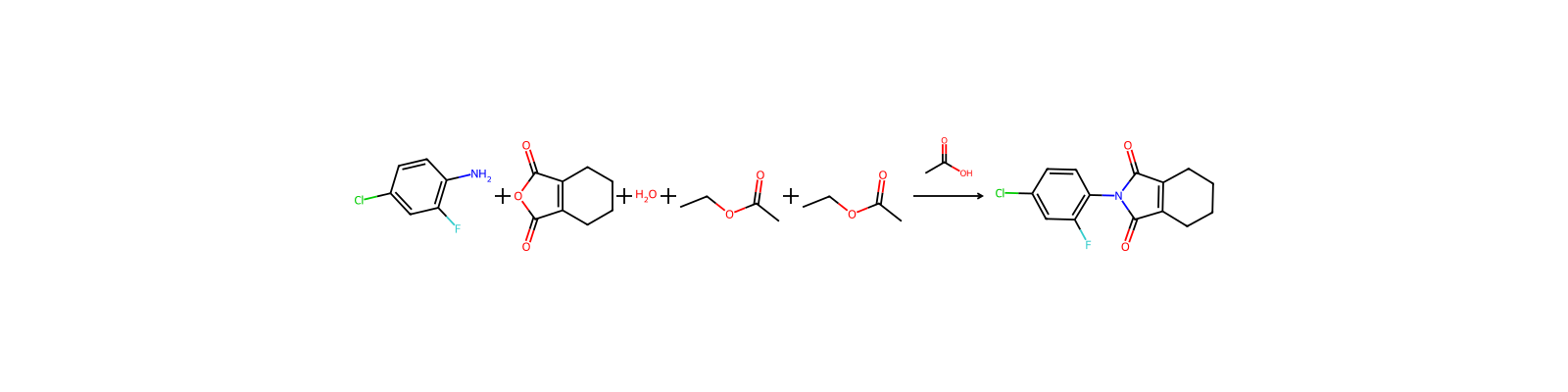
Zugehörige Reaktionen
227


Verknüpfte Notizen
Wird geladen…