
Dodecandisure
Dodecanedioic Acid

Grundinformationen
- CAS
693-23-2- Standard-SMILES
O=C(O)CCCCCCCCCCC(=O)O- InChIKey
TVIDDXQYHWJXFK-UHFFFAOYSA-N- Summenformel
- C12H22O4
- Durchschnittliche Molmasse
- 230,3 g/mol
- Monoisotopische Masse
- 230,15180918
Überblick
Dodecanedioic acid is an alpha,-dicarboxylic acid that is dodecane in which the methyl groups have been oxidised to the corresponding carboxylic acids. It has a role as an EC 1.1.1.1 (alcohol dehydrogenase) inhibitor and a human metabolite. It is a dicarboxylic fatty acid and an alpha,omega-dicarboxylic acid. It is a conjugate acid of a dodecanedioate(2-). It derives from a hydride of a dodecane.
Namen und Bezeichner
- Bevorzugter Name
- Dodecanedioic Acid
- IUPAC
- dodecanedioic acid
- Lokaler Name
- Dodecandisure
- Englischer Name
- Dodecanedioic acid
- Summenformel
- C12H22O4
- Molmasse
- 230.3
Namen und Synonyme
DODECANEDIOIC ACID693-23-21,10-Decanedicarboxylic acid1,12-Dodecanedioic acidDecamethylenedicarboxylic acid1,10-Dicarboxydecanedodecandioic acidDTXSID3027297978YU42Q6INSC-400242CHEBI:4676DTXCID607297
Weitere Namen anzeigen
DODECANEDDADDDADODECANEDIOICNylon powderDC12SL-AH
RefChem:7336211-746-3n-Dodecanedioic acidn-DodecanedioateTwelve alkyl acidMFCD000027351.10-DecanedicDecane-1,10-dicarboxylic acid
Datenbank-Bezeichner
- CAS
693-23-2- PubChem CID
- 12736
- DTXSID
DTXSID3027297- ChEMBL
CHEMBL3182356- ChEBI
CHEBI:4676- UNII
- 978YU42Q6I
- EC Number
- 211-746-3
Eigenschaften
Berechnete Struktureigenschaften
- XLogP
- 3,2
- Polarare Oberfläche (TPSA)
- 74,6 Ų
- H-Brücken-Donoren
- 2
- H-Brücken-Akzeptoren
- 4
- Frei drehbare Bindungen
- 11
- Schwere Atome
- 16
- Formalladung
- 0
- Komplexität
- 179
Experimentelle und physikochemische Eigenschaften
Chemical ClassesOther Classes -> Organic Acids
LipidsFatty Acyls [FA] -> Fatty Acids and Conjugates [FA01] -> Dicarboxylic acids [FA0117]
CosmeticsCosmetic ingredients (Dodecanedioic Acid) -> CIR (Cosmetic Ingredient Review)
SpringerMaterials PropertiesBoiling point
Solubility
SOL IN HOT TOLUENE, ALC, HOT ACETIC ACID; SLIGHTLY SOL IN HOT WATER
0.04 mg/mL
Melting Point
130-132 °C
127 - 129 °C
Food Contact Substances
FCS -> FDA Cumulative Estimated Daily Intake (CEDI)
FCS -> FDA Inventory of Food Contact Substances Listed in 21 CFR
Physical Description
Liquid; Other Solid; Dry Powder; CBI
White solid; [Hawley]
Solid
Sicherheit und Regulatorisches
Sicherheitsangaben dienen nur zur Orientierung und ersetzen weder das Sicherheitsdatenblatt (SDB) des Lieferanten noch geltende Vorschriften oder eine fachliche Bewertung.
GHS-Klassifizierung
GHS Classification
This chemical does not meet GHS hazard criteria for 2.7% (13 of 481) of reports.
Warning
H315 (10.2%): Causes skin irritation [Warning Skin corrosion/irritation]
P264, P264+P265, P280, P302+P352, P305+P351+P338, P321, P332+P317, P337+P317, and P362+P364 (click each P-code to see the statement)
Aggregated GHS information provided per 481 reports by companies from 15 notifications to the ECHA C&L Inventory. Each notification may be associated with multiple companies.
Gefahrenhinweise
Regulatory Information
Chemical: Dodecanedioic acid
Dodecanedioic acid is listed on the EPA's Chemical Data Reporting (CDR) system. Manufacturers and importers of Dodecanedioic acid are required to report information about their production and use of this chemical to the EPA under the Toxic Substances Control Act (TSCA). (40 eCFR Part 711)
REACH registered substance: Dodecanedioic acid (EC: 211-746-3)
Dodecanedioic acid: Does not have an individual approval but may be used under an appropriate group standard
Other Safety InformationIMAP assessments - Dodecanedioic acid: Human health tier I assessment
Hazards SummaryAn eye irritant; [eChemPortal: SIDSUNEP] An irritant; [MSDSonline]
Hazard Classes and CategoriesSkin Irrit. 2 (10.2%)
Toxikologische Informationen
Interactions
AT 1.0 MMOL, DICARBOXYLIC ACIDS DECR THE NEUROMUSCULAR INHIBITION PRODUCED BY 10-6 MOL D-TUBOCURARINE IN ISOLATED PHRENIC NERVE HEMIDIAPHRAGM PREPN FROM RATS.
Chemie und Industrie
Pharmakologische Informationen
Cellular LocationsMembrane
Verwendung und Herstellung
Uses
CIR ingredient: Dodecanedioic Acid
Used as intermediate for plasticizers, lubricants, adhesives, polyesters, and others; [Hawley]
INTERMEDIATE
U.S. Production2023: 5,500,000 - <7,000,000 lb
Consumer UsesAnti-freeze agent
Industry UsesIntermediate
General Manufacturing Information
Fabricated Metal Product Manufacturing
Dodecanedioic acid: ACTIVE
DIBASIC ACID ESTERS ARE BETTER COSMETIC MATERIALS THAN CONVENTIONALLY USED LANOLIN OR PETROLATUM IN TERMS OF ODOR, COLOR, STABILITY, AND HOMOGENEITY.
Anwendungen
BeschreibungThis acid is used in the production of nylon (nylon - 6,12), polyamides, coatings, adhesives, greases, polyesters, dyestuffs, detergents, flame retardants, and fragrances. It is now produced by fermentation of long-chain alkanes with a specific strain of Candida tropicalis. Its monounsaturated analogue (traumatic acid) is described below.
VerwendenInduced mutation of dodecanedioic acid producing Candida tropicalis.
Darstellung
synthetischeDodecanedioic acid is prepared from cyc1ododecene (obtained from butadiene) by methods which are entirely analogous to those used to prepare adipic acid from benzene. The cyclododecene is reduced to cyclododecane, which is oxidized firstly to a mixture of cyc1ododecanol and cyclododecanone and then to dodecanedioic acid. Dodecanedioic acid is a colourless crystalline solid, m.p. 129°C.
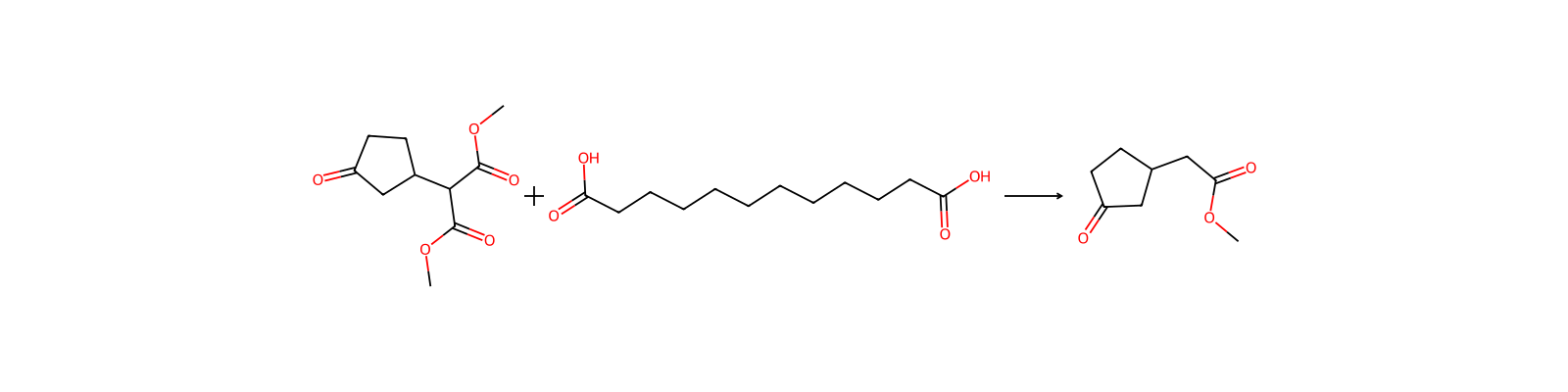
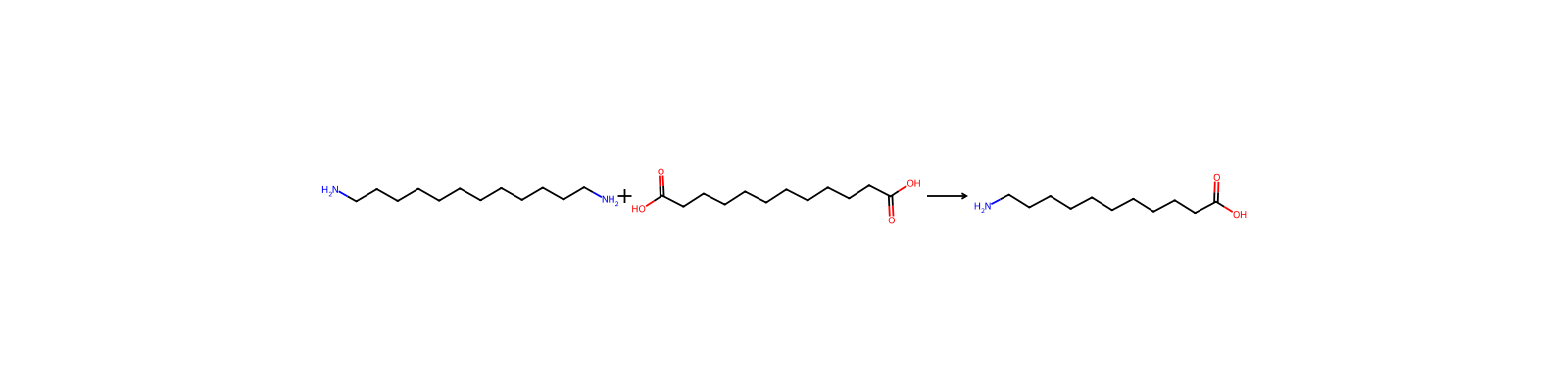
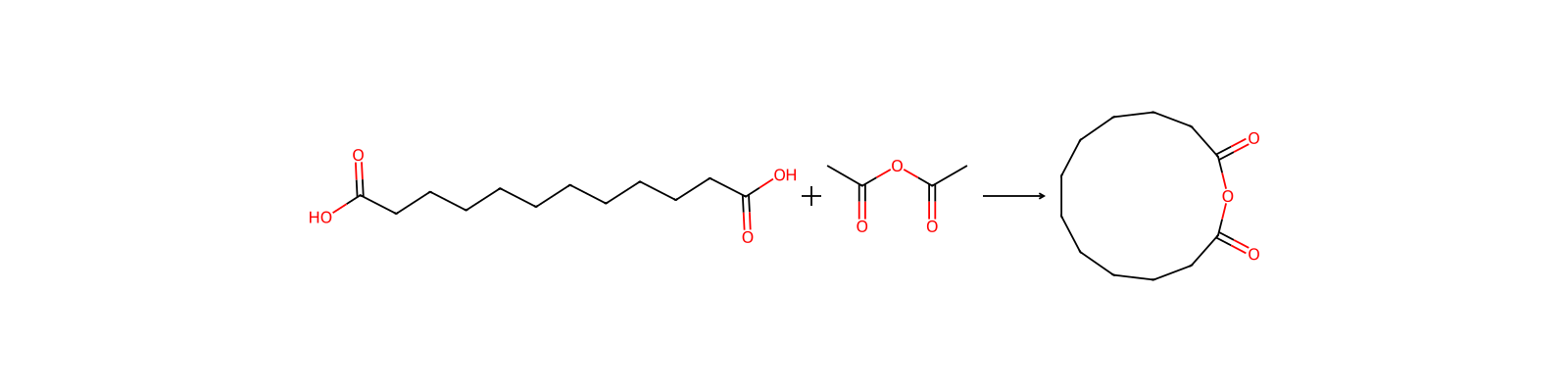
Zugehörige Reaktionen
28



Notizen zur Verbindung
Wird geladen…