Sicherheitsangaben dienen nur zur Orientierung und ersetzen weder das Sicherheitsdatenblatt (SDB) des Lieferanten noch geltende Vorschriften oder eine fachliche Bewertung.
P261, P264, P264+P265, P271, P280, P302+P352, P304+P340, P305+P351+P338, P319, P321, P332+P317, P337+P317, P362+P364, P403+P233, P405, and P501 (click each P-code to see the statement)
Aggregated GHS information provided per 47 reports by companies from 5 notifications to the ECHA C&L Inventory. Each notification may be associated with multiple companies.
Gefahrenhinweise
Hazards SummaryAn irritant; Effects in high-dose animal studies include ulceration of the nasal septum and hemorrhage; [MSDSonline] See Quinone.
Hazard Classes and CategoriesSkin Irrit. 2 (100%)
Sicherheit und Schutzausrüstung
Disposal Methods · 1 Eintrag
SRP: At the time of review, criteria for land treatment or burial (sanitary landfill) disposal practices are subject to significant revision. Prior to implementing land disposal of waste residue (including waste sludge), consult with environmental regulatory agencies for guidance on acceptable disposal practices.
Toxikologische Informationen
Environmental Fate · 3 Einträge
TERRESTRIAL FATE: Based on a recommended classification scheme(3), an estimated Koc value of 6000(SRC), determined from a measured log Kow(2) and a recommended regression-derived equation(1), indicates that suggests that 2,6-di-t-butyl-p-benzoquinone will be essentially immobile in soil(3). In an unconfined aquifer, however, 2,6-di-t-butyl-p-benzoquinone was transported an estimated 2710 meters over a 43 year period(2,4). 2,6-Di-t-butyl-p-benzoquinone is not expected to volatilize from moist soil surfaces based on an estimated Henry's Law constant of 1.6X10⁻⁸ atm-cu m/mole(5,SRC). It may, however, volatilize from the surface of dry soils given an estimated vapor pressure of 4.1X10⁻⁴ mm Hg(6,SRC). Incomplete information is available regarding the biodegradation potential of 2,6-di-t-butyl-p-benzoquinone; Rhine River water which was subjected to bank filtration had lower concentrations of 2,6-di-t-butyl-p-benzoquinone than the original water(7). Adsorption to soil however, was not measured(7,SRC)).
Chemie und Industrie
Pharmakologische Informationen
Metabolism/Metabolites · 2 Einträge
THE URINARY & FECAL EXCRETION OF 3 NEW METABOLITES OF BUTYLATED HYDROXYTOLUENE (BHT, 3,5-DI-TERT-BUTYL-4-HYDROXYTOLUENE) WERE REVEALED BY GAS CHROMATOGRAPHY AFTER IP ADMIN TO MALE WISTAR RATS. THE STRUCTURES OF THESE METABOLITES, 2,6-DI-TERT-BUTYL-P-BENZOQUINONE, 2,6-DI-TERT-BUTYLHYDROQUINONE, & 2,6-DI-TERT-BUTYL-4-((METHYLTHIO)METHYL)PHENOL WERE IDENTIFIED BY COMPARISON OF GAS CHROMATOGRAPHIC & MASS SPECTRAL DATA WITH THOSE OF AUTHENTIC SAMPLES.
Quinones (ie, 6,12-dione) have been shown to undergo oxidation-reduction cycles involving quinone, hydroquinone, and molecular oxygen, resulting in the formation of oxygen radicals and semiquinone radicals. /Quinones/
Cellular LocationsMembrane
Verwendung und Herstellung
Uses · 2 Einträge
Used as an oxidant and polymerization catalyst; [HSDB]
Oxidant, polymerization catalyst
General Manufacturing Information2,5-Cyclohexadiene-1,4-dione, 2,6-bis(1,1-dimethylethyl)-: ACTIVE
Anwendungen
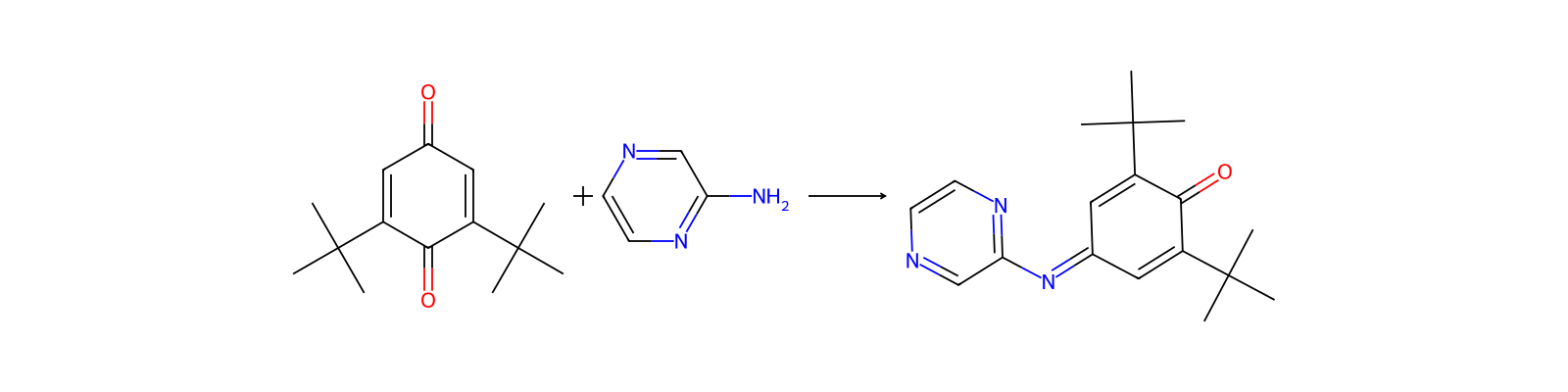
Verwenden2.6-Di-tert-butyl-p-benzoquinone was used as a treatment agent to improve germination, plant health and yield.
AQUATIC FATE: 2,6-Di-t-butyl-p-benzoquinone should adsorb to suspended solids and organic matter in the water column based on an estimated Koc of 6100(1,SRC) from an experimental log Kow(2) and a suggested classification scheme(3). 2,6-Di-t-butyl-p-benzoquinone (at 0.3 ug/L) had a half-life in Rhine River water of 3.4 days; measurements were made at Lobith and 24.5 hours later at Gorinchem(4). Loss of this compound during this stretch of river may have been due to adsorption to particulates or to biodegradation(4,SRC). An estimated BCF value of 1400(1,SRC), from an experimental log Kow(2), suggests that 2,6-di-t-butyl-p-benzoquinone will bioconcentrate in aquatic organisms. This compound has been detected in fish from the Great Lakes(5). 2,6-Di-t-butyl-p-benzoquinone is not expected to volatilize from water surfaces based on an estimated Henry's Law constant of 1.6X10⁻⁸ atm-cu m/mole(SRC) using a fragment constant estimation method(6).
ATMOSPHERIC FATE: Based on an estimated vapor pressure of 4.1X10⁻⁴ mm Hg at 25 °C(1,SRC), 2,6-di-t-butyl-p-benzoquinone should exist in both the vapor phase and particulate phase in the ambient atmosphere(2,SRC). 2,6-Di-t-butyl-p-benzoquinone should degrade in the vapor phase by reaction with photochemically produced hydroxyl radicals with an estimated half-life of about 17 hours(3,SRC). Particulate-phase 2,6-di-t-butyl-p-benzoquinone may be physically removed from the air by wet and dry deposition(SRC).
Effluent Concentrations1 of 21 samples of wastewater from the photographic industry contained unreported concentrations of 2,6-di-t-butyl-p-benzoquinone(1). 1 of 10 POTW plants sampled contained 2,6-di-t-butyl-p-benzoquinone in the final effluent(2).
Soil Adsorption/Mobility · 1 Eintrag
Based on an experimental log Kow of 4.42(1), the Koc of 2,6-di-t-butyl-p-benzoquinone is estimated as approximately 6100 using a regression-derived equation(2,SRC). According to a suggested classification scheme(3), this estimated Koc value suggests that 2,6-di-t-butyl-p-benzoquinone will be immobile in soil(SRC). Sewage which had been through secondary treatment was subjected to rapid infiltration; the concentration of 2,6-di-t-butyl-p-benzoquinone in the initial sewage was from 0.022-0.037 ug/L and ranged from barely detected to 0.005 ug/L in the groundwater below the rapid infiltration beds(4). It was believed that the loss of this compound was due to adsorption as the sewage had already been through secondary treatment(4). In an unconfined aquifer, however, 2,6-di-t-butyl-p-benzoquinone was shown to have been transported for a considerable distance(between 1940-1983, estimated 2710 m)(1,5).
Atmospheric ConcentrationsURBAN/SUBURBAN: 2,6-Di-t-butyl-p-benzoquinone was detected in the personal air (1 of 8 samples total) of 12 people located either in New Jersey or North Carolina(1).
Human Toxicity ExcerptsChronic neurotoxic effects include vision disturbances. /From table/ /Quinones/
Fish/Seafood ConcentrationsComposite fish samples (lake trout, walleye) were found to contain 2,6-di-t-butyl-p-benzoquinone in 3 of 8 locations in the Great Lakes (two sites in Lake Erie, one site in Lake Michigan)(1).
Artificial Pollution Sources · 2 Einträge
VOLATILE POLLUTANTS, INCLUDING 2,6-DI-T-BUTYL-P-BENZOQUINONE, WERE PRODUCED FROM SEVERAL RUBBER GOODS MANUFACTURING PROCESSES & ANALYZED BY GAS CHROMATOGRAPHY/MASS SPECTROMETRY. THEIR CUMULATIVE CONCN RANGED FROM 25-27,000 UG/CU M.
2,6-Di-t-butyl-p-benzoquinone's production and subsequent use as an oxidant and polymerization catalyst(1), may result in its release to the environment through various waste streams(SRC). 2,6-Di-t-butyl-p-benzoquinone is also an environmental product of the oxidation of 2,6-di-t-butyl phenol, a common antioxidant additive(2,3).
Environmental Biodegradation · 1 Eintrag
2,6-Di-t-butyl-p-benzoquinone (at 0.3 ug/l) had a half-life in Rhine River water of 3.4 days; measurements were made at Lobith and 24.5 hours later at Gorinchem(1). Degradation of this compound was believed due to aerobic and anaerobic biodegradation(1); however, adsorption to suspended solids and organic matter in the water column was not measured(1,SRC). 2,6-di-t-butyl-p-benzoquinone (at 2 ug/L) initially present in Rhine River water was not detected once the water was passed through a bank filtration process(2). It was not specified whether the loss of this compound was due to biodegradation or adsorption(2,SRC).
Sediment/Soil Concentrations · 1 Eintrag
2,6-Di-t-butyl-p-benzoquinone was present in Pawtuxet River sediment located downstream of a plant which produced antioxidants (at concentrations of 1 ppm to 80 ppm(1). 2,6-Di-t-butyl-p-benzoquinone was present in sediment (0.1-40 ppm) located downstream from a specialty chemicals manufacturing plant(2).
Environmental Bioconcentration · 1 Eintrag
An estimated BCF value of 1400 was calculated for 2,6-di-t-butyl-p-benzoquinone, using a measured log Kow of 4.42(1) and a recommended regression-derived equation(2,SRC). This BCF value suggests that 2,6-di-t-butyl-p-benzoquinone will bioconcentrate in aquatic organisms(2,SRC).This compound was detected in fish in the Great Lakes(3) suggesting that bioconcentration may occur(SRC).
Volatilization from Water/Soil · 1 Eintrag
The Henry's Law constant for 2,6-di-t-butyl-p-benzoquinone is estimated as 1.6X10⁻⁸ atm-cu m/mole(SRC) using a fragment constant estimation method(1). This indicates that 2,6-di-t-butyl-p-benzoquinone will essentially not volatilize from water surfaces(2,SRC).
Non-Human Toxicity ExcerptsAcute neurotoxic effects reported in animals include convulsions; medullary paralysis. /From table/ /Quinones/