
Triphenylphosphinoxid
Triphenylphosphine Oxide

Grundinformationen
- CAS
791-28-6- Standard-SMILES
O=P(c1ccccc1)(c1ccccc1)c1ccccc1- InChIKey
FIQMHBFVRAXMOP-UHFFFAOYSA-N- Summenformel
- C18H15OP
- Durchschnittliche Molmasse
- 278,3 g/mol
- Monoisotopische Masse
- 278,0860521
Überblick
Triphenylphosphane oxide is a phosphine oxide in which the substituents on phosphorus are three phenyl groups.
Namen und Bezeichner
- Bevorzugter Name
- Triphenylphosphine Oxide
- IUPAC
- diphenylphosphorylbenzene
- Lokaler Name
- Triphenylphosphinoxid
- Englischer Name
- Triphenylphosphine oxide
- Summenformel
- C18H15OP
- Molmasse
- 278.28
Namen und Synonyme
TRIPHENYLPHOSPHINE OXIDE791-28-6Phosphine oxide, triphenyl-Triphenyl phosphorus oxideTriphenyl phosphine oxideDTXSID2022121TRIPHENYLPHOSPHINE MONOXIDEZ69161FKI3phosphorane, triphenyl-, oxideDTXCID402121NSC-398RefChem:191910
Weitere Namen anzeigen
TPOTTPO(C6H5)3P=OOrlistat Related CoMpound CTriphenylphosphinoxidTrisphenylphosphine oxide
212-338-8diphenylphosphorylbenzenetriphenylphosphane oxideTriphenylphosphineoxide(diphenylphosphoroso)benzeneTriphenylphosphanoxidTPPOPH3PO
Datenbank-Bezeichner
- CAS
791-28-6- PubChem CID
- 13097
- DTXSID
DTXSID2022121- ChEMBL
CHEMBL482091- ChEBI
CHEBI:36601- UNII
- Z69161FKI3
- EC Number
- 212-338-8
- Nikkaji
- J541J
Eigenschaften
Berechnete Struktureigenschaften
- XLogP
- 2,8
- Polarare Oberfläche (TPSA)
- 17,1 Ų
- H-Brücken-Donoren
- 0
- H-Brücken-Akzeptoren
- 1
- Frei drehbare Bindungen
- 3
- Schwere Atome
- 20
- Formalladung
- 0
- Komplexität
- 281
Experimentelle und physikochemische Eigenschaften
Chemical Classes
Other Classes -> Phosphorus Compounds
Industrial compound
SpringerMaterials Properties13C nuclear magnetic resonance spectrum
LogP2.85
Physical DescriptionSolid; [IUCLID] Beige crystalline solid; [Aldrich MSDS]
Collision Cross Section162.9 Ų [M+H]+ [CCS Type: DT; Buffer gas: N2; Ionization: ESI+; Dataset: TOXCAST; Source Identifier: DTXSID2022121]
Physikochemische Eigenschaften
- Schmelzpunkt
- 150 · 150-157 °C(lit.)
- Siedepunkt
- 360 °C · 360 °C
- Dichte
- 1 · 1,212 g/cm3
- Dampfdruck
- 1 hPa · <1 hPa (50 °C)
- Flammpunkt
- 180 °C · 180 °C
- storage temp.
- 30 °C · Store below +30°C.
- Löslichkeit
- 25 mg/mL, · methanol: 25 mg/mL, clear
- Aggregatzustand
- Crystalline Powder or Flakes
- Wichte
- 1.212 · 1.212
- Farbe
- White to pink-brown
- Wasserlöslichkeit
- slightly soluble
- BRN
- 745854 · 745854
- Henry's Law Constant
- 1.9 · 1.9×104 mol/(m3Pa) at 25℃, Zhang et al. (2010)
- Major Application
- pharmaceutical
- InChI
- 1S/C18H15OP/c19-20(16-10-4-1-5-11-16,17-12-6-2-7-13-17)18-14-8-3-9-15-18/h1-15H
- InChIKey
- FIQMHBFVRAXMOP-UHFFFAOYSA-N
- SMILES
- O=P(c1ccccc1)(c2ccccc2)c3ccccc3
- LogP
- 2.8 · 2.8
- CAS Datenbank
- 791 · 791-28-6(CAS DataBase Reference)
- NIST chemische Informationen
- (C6H5)3PO(791-28-6)
- EPA chemische Informationen
- Triphenylphosphine oxide (791-28-6)
Sicherheit und Regulatorisches
Sicherheitsangaben dienen nur zur Orientierung und ersetzen weder das Sicherheitsdatenblatt (SDB) des Lieferanten noch geltende Vorschriften oder eine fachliche Bewertung.
GHS-Klassifizierung
GHS Classification
This chemical does not meet GHS hazard criteria for 2% (5 of 245) of reports.
Warning
H302 (98%): Harmful if swallowed [Warning Acute toxicity, oral]
P261, P264, P264+P265, P270, P271, P273, P280, P301+P317, P302+P352, P304+P340, P305+P351+P338, P319, P321, P330, P332+P317, P337+P317, P362+P364, P403+P233, P405, and P501 (click each P-code to see the statement)
Aggregated GHS information provided per 245 reports by companies from 12 notifications to the ECHA C&L Inventory. Each notification may be associated with multiple companies.
Warning
Gefahrenhinweise
Regulatory Information
Chemical: Phosphine oxide, triphenyl-
Regulation (EC) No 1831/2003 (amended)
REACH registered substance: Triphenylphosphine oxide (EC: 212-338-8)
Triphenylphosphine oxide: Does not have an individual approval but may be used under an appropriate group standard
Hazards Summary
Causes convulsions, aggression, and dyspnea in oral lethal-dose studies of dogs (LD50 = 500 mg/kg); [RTECS] Causes liver injury in 3-month feeding study of dogs at 2,000 ppm; [IUCLID] An irritant; Harmful by ingestion; Targets nerves; [Aldrich MSDS] See Triphenylphosphine.
Hazard Classes and Categories
Acute Tox. 4 (98%)
Acute toxicity (Oral) - Category 4
Toxikologische Informationen
Adverse EffectsNeurotoxin - Other CNS neurotoxin
RAIS Toxicity Values
0.02
PPRTV Current
0.02
PPRTV Current
EPA Provisional Peer-Reviewed Toxicity Values
Triphenylphosphine Oxide
2 x 10^-2 mg/kg-day
2 x 10^-2 mg/kg-day
PDF Document
Inadequate information to assess carcinogenic potential
2007
Hazard Quotient Level 0.1 or Cancer Risk Level 1E-06
1.30e+03
1.60e+04
3.60e+02
5.00e+01
1.50e+00
2.00e-02
Hazard Quotient Level 3 or Cancer Risk Level 1E-04
3.80e+03
4.90e+04
1.10e+03
5.00e+01
2.00e-02
Volatile
Sicherheitsdaten
- wgk
- 2
- tsca
- TSCA listed
- ridadr
- 3077
- hs_code
- 29310095
- RTECS-Nr.
- SZ1676000
- risk_code
- 22-36/37/38-52/53
- Toxizität
- LD50 orally in Rabbit: 685 mg/kg
- hazard_code
- Xn,Xi
- safety_code
- 26-61-36
- hazard_class
- 9
- packing_group
- III
- Speicherklasse
- 11 - Combustible Solids
- Hazard Classifications
- Acute Tox. 4 OralAquatic Chronic 3
- Selbstentzündungstemperatur
- 590 °C
Chemie und Industrie
Verwendung und Herstellung
UsesUsed for processing (extraction, separation, and spectrophotometric determination) environmental samples of cadmium and mercury; [ChemIDplus]
General Manufacturing InformationPhosphine oxide, triphenyl-: ACTIVE
Anwendungen
BeschreibungTriphenylphosphine oxide (TPPO) is a coordinating solvent used to activate crystallization of chemical compounds. It has been used in flame retardant applications, as an epoxy cure catalyst, and more recently, to produce nanostructures.
VerwendenTriphenylphosphine oxide is a phosphine ligand used for coupling reactions, epoxidations, and Michael reactions
Vor- und nachgelagerte Produkte
Vorgelagerte Rohstoffe
Nachgelagerte Produkte
Ergänzende Hinweise
DefinitionChEBI: A phosphine oxide in which the substituents on phosphorus are three phenyl groups.
Zugehörige Reaktionen
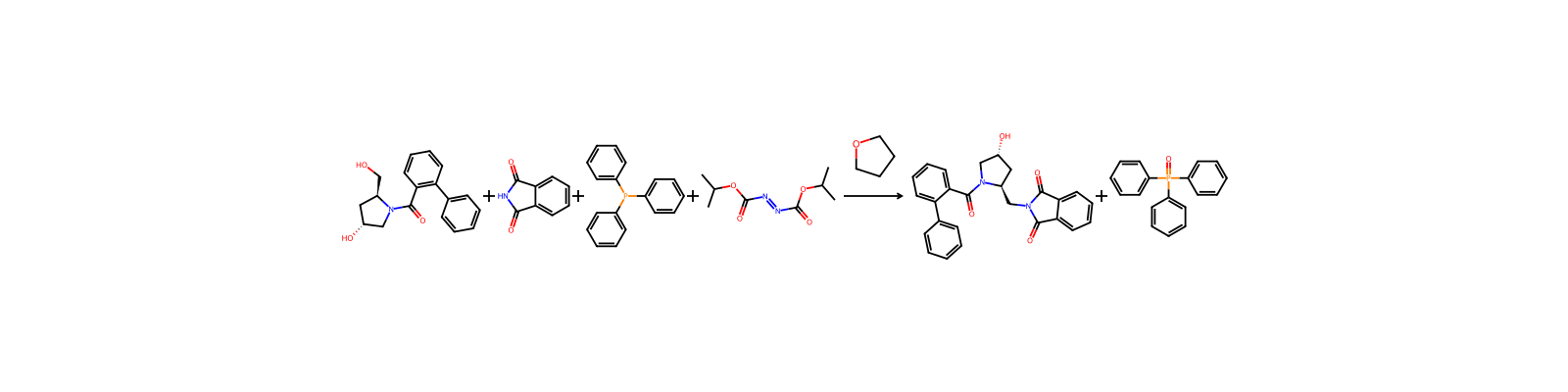
457




Notizen zur Verbindung
Wird geladen…