StartseiteMCPWorkbenchSkills
StartseiteWorkbenchBenachrichtigungenMein Bereich
llms.txt · MCP-AnleitungDatenschutz · Nutzungsbedingungen · Supportv1.8.0
  1. Startseite
  2. /Verbindung

Diethylchlorphosphat

Diethyl chlorophosphate

HCID 13139
Neue NotizNeue ReaktionAnfrage stellen
Druckvorschau

Daten werden ergänzt – lade die Seite später neu, um den aktuellen Stand zu sehen

GrundinformationenÜberblickNamen und BezeichnerEigenschaftenSicherheit und RegulatorischesChemie und IndustrieZugehörige ReaktionenNotizen zur Verbindung
TeilstruktursucheÄhnliche Strukturen suchen

Grundinformationen

CAS
814-49-3
Standard-SMILES
CCOP(=O)(Cl)OCC
InChIKey
LGTLXDJOAJDFLR-UHFFFAOYSA-N
Summenformel
C4H10ClO3P
Durchschnittliche Molmasse
172,55 g/mol
Monoisotopische Masse
172,0056089

Überblick

Diethyl chlorophosphate is a clear liquid. This material is used as an intermediate in organic synthesis. (EPA, 1998)

Namen und Bezeichner

Bevorzugter Name
Diethyl chlorophosphate
IUPAC
1-[chloro(ethoxy)phosphoryl]oxyethane
Lokaler Name
Diethylchlorphosphat
Englischer Name
Diethyl chlorophosphate
Summenformel
C4H10ClO3P
Molmasse
172.55

Namen und Synonyme

DIETHYL CHLOROPHOSPHATE814-49-3Diethyl phosphorochloridateDiethyl chlorophosphonateDiethoxyphosphoryl chlorideDiethyl phosphorochlorideO,O-Diethyl chlorophosphateDiethoxyphosphorus oxychlorideO,O-Diethyl chloridophosphateDiethylchlorfosfatO,O-Diethyl chlorophosphonatePhosphorochloridic acid, diethyl ester
Weitere Namen anzeigen
ChlorodiethylphosphateCHLOROPHOSPHORIC ACID DIETHYL ESTERai3-18557[qr]AURORA KA-1634Diethyl chlorophosphe
DIETHYLCHLOROPHOSPHATEDiethylphosphoric acid chlorideO,O-Diethylphosphoryl chlorideO,O-Diethyl phosphorochloridate1-[chloro(ethoxy)phosphoryl]oxyethaneChlorophosphoric acid, diethyl esterEthyl phosphorochloridate (EtO)2ClPOEthyl phosphorochloridate (Cl(EtO)2PO)

Datenbank-Bezeichner

CAS
814-49-3
PubChem CID
13139

Eigenschaften

Berechnete StruktureigenschaftenWird ergänzt

XLogP
1
Polarare Oberfläche (TPSA)
35,5 Ų
H-Brücken-Donoren
0
H-Brücken-Akzeptoren
3
Frei drehbare Bindungen
4
Schwere Atome
9
Formalladung
0
Komplexität
106

Experimentelle und physikochemische Eigenschaften

Chemical ClassesOther Classes -> Organophosphates, Other
SpringerMaterials PropertiesNuclear quadrupole resonance spectroscopy
Density · 3 Einträge

1.1915 at 77 °F (EPA, 1998) - Denser than water; will sink

1.1915 @ 25 °C

1.21 @ 20°C

Color/FormWater-white liquid
SolubilitySol in alcohols
Boiling Point · 2 Einträge

140 °F at 2 mmHg (EPA, 1998)

60 °C @ 2 mm Hg

DecompositionWhen heated to decomposition it emits ... very toxic fumes of /hydrogen chloride and phosphorous oxides/.
Vapor Density · 2 Einträge

5.94 (EPA, 1998) - Heavier than air; will sink (Relative to Air)

5.94

Refractive Index

Sicherheit und Regulatorisches

Sicherheitsangaben dienen nur zur Orientierung und ersetzen weder das Sicherheitsdatenblatt (SDB) des Lieferanten noch geltende Vorschriften oder eine fachliche Bewertung.

GHS-Klassifizierung

GHS Classification · 4 Einträge

Danger

H300+H310+H330 (74.5%): Fatal if swallowed, in contact with skin or if inhaled [Danger Acute toxicity, oral; acute toxicity, dermal; acute toxicity, inhalation]

P260, P261, P262, P264, P270, P271, P280, P284, P301+P316, P302+P352, P304+P340, P316, P320, P321, P330, P361+P364, P403+P233, P405, and P501 (click each P-code to see the statement)

Aggregated GHS information provided per 51 reports by companies from 5 notifications to the ECHA C&L Inventory. Each notification may be associated with multiple companies.

Gefahrenhinweise

Regulatory Information · 3 Einträge

REACH registered substance: Diethyl phosphorochloridate (EC: 212-396-4)

Phosphorochloridic acid, diethyl ester: Does not have an individual approval but may be used under an appropriate group standard

The New Jersey Worker and Community Right to Know Act requires public and private employers to provide information about hazardous substances at their workplaces. (N.J.S.A. 34:5A-1 et. seq.)

DOT LabelPoison
Fire HazardsEmits very toxic fumes of chloride and phosphorus oxides when heated to decomposition. (EPA, 1998)
Fire PotentialCombustible
Health HazardsThis material is a cholinesterase inhibitor. It has high oral and very high dermal toxicity. It is a skin irritant. It is also toxic by inhalation. (EPA, 1998)
Hazards Summary · 1 Eintrag

A cholinesterase inhibitor; [Hawley] A cholinesterase inhibitor and skin irritant; Highly toxic by ingestion and skin absorption; [CAMEO] A mild skin irritant; Somnolence and convulsions observed in lethal-dose feeding studies of mice; [RTECS]

Chemie und Industrie

Pharmakologische Informationen

Mechanism of ActionCholinesterase inhibitor
Absorption, Distribution and ExcretionSkin absorption.

Verwendung und Herstellung

Uses · 2 Einträge

Used as intermediate in organic synthesis; [Hawley]

Intermediate in organic synthesis

Impurities95% minimum purity grade
Formulations/PreparationsGrade: Technical
General Manufacturing Information · 2 Einträge

Phosphorochloridic acid, diethyl ester: ACTIVE

Available in 55 gallon drums

Anwendungen

VerwendenA phosphorous halide used for biochemical research. Also used as an intermediate in organic synthesis.

Vor- und nachgelagerte Produkte

Vorgelagerte Rohstoffe

industrial alcoholTetrachlormethanPhosphorige Säure-trichloridDiethylphosphonat

Nachgelagerte Produkte

Diethyl-1,3-diethan-2-ylidenphos-phoramidat

Zugehörige Reaktionen

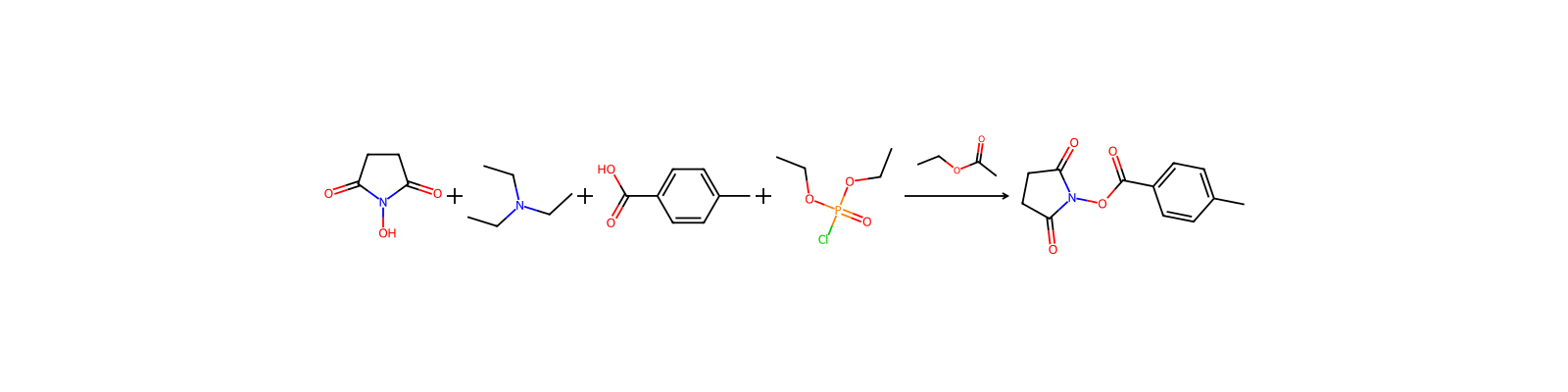
531
Reaktionsaufzeichnung erstellen
Reaktionsgleichung von HRID 3671
HRID 3671als Eduktuspto-grants-1998_03
Reaktionsgleichung von HRID 5984
HRID 5984als Eduktuspto-grants-1993_09
Reaktionsgleichung von HRID 6535
HRID 6535als Eduktuspto-grants-1993_09
Reaktionsgleichung von HRID 6545
HRID 6545als Eduktuspto-grants-1993_09
Reaktionsgleichung von HRID 6549
HRID 6549als Eduktuspto-grants-1993_09
Reaktionsgleichung von HRID 6552
HRID 6552als Eduktuspto-grants-1993_09
Reaktionsgleichung von HRID 40845
HRID 40845als Eduktuspto-grants-2013_09
Reaktionsgleichung von HRID 48353
HRID 48353als Eduktuspto-grants-2004_03
Seite 1 von 67

Notizen zur Verbindung

Wird geladen…

Auf dieser SeiteGrundinformationenÜberblickNamen und BezeichnerEigenschaftenSicherheit und RegulatorischesChemie und IndustrieZugehörige ReaktionenNotizen zur Verbindung
Weitere Aktionen
Neue NotizNeue ReaktionAnfrage stellen
DTXSID
DTXSID4052556
ChEMBL
CHEMBL4083009
UNII
F1NZC04LRU
EC Number
212-396-4
Nikkaji
J50.408D
Index of refraction: 1.4153 @ 25 °C
Physical Description · 2 Einträge

Diethyl chlorophosphate is a clear liquid. This material is used as an intermediate in organic synthesis. (EPA, 1998)

Water-white liquid; [Hawley] Clear slightly brown liquid; [MSDSonline]

Physikochemische Eigenschaften

Schmelzpunkt
95 · 95-96 °C
Siedepunkt
60 °C2 · 60 °C2 mm Hg(lit.)
Dichte
1.194 g/mL · 1.194 g/mL at 25 °C(lit.)
Dampfdichte
5.94 · 5.94 (vs air)
Dampfdruck
0.1 mm · 0.1 mm Hg ( 25 °C)
Brechungsindex
20 · n20/D 1.416(lit.)
Flammpunkt
142 °F · 142 °F
storage temp.
2 · 2-8°C
Löslichkeit
Chloroform (Sparingly)
Aggregatzustand
Liquid
Farbe
Clear colorless to light yellow
Wasserlöslichkeit
Soluble in alcohol and chloroform. Slightly soluble in water.
BRN
471433 · 471433
Stabilität
Hygroscopic, Moisture Sensitive
InChI
1S/C4H10ClO3P/c1-3-7-9(5,6)8-4-2/h3-4H2,1-2H3
InChIKey
LGTLXDJOAJDFLR-UHFFFAOYSA-N
SMILES
CCOP(Cl)(=O)OCC
LogP
0.61 · 0.61
CAS Datenbank
814 · 814-49-3(CAS DataBase Reference)
NIST chemische Informationen
Phosphorochloridic acid, diethyl ester(814-49-3)
EPA chemische Informationen
Diethyl chlorophosphate (814-49-3)
Reactive GroupEsters, Sulfate Esters, Phosphate Esters, Thiophosphate Esters, and Borate Esters
Reactivity Profile · 1 Eintrag

Organophosphates, such as DIETHYL CHLOROPHOSPHATE, are susceptible to formation of highly toxic and flammable phosphine gas in the presence of strong reducing agents such as hydrides. Partial oxidation by oxidizing agents may result in the release of toxic phosphorus oxides.

Air and Water ReactionsNo rapid reaction with air. No rapid reaction with water.
CERCLA Reportable Quantities · 1 Eintrag

Releases of CERCLA hazardous substances are subject to the release reporting requirement of CERCLA section 103, codified at 40 CFR part 302, in addition to the requirements of 40 CFR part 355. Diethyl chlorophosphate is an extremely hazardous substance (EHS) subject to reporting requirements when stored in amounts in excess of its threshold planning quantity (TPQ) of 500 lbs.

Hazard Classes and CategoriesAcute Tox. 2 (100%)

Sicherheit und Schutzausrüstung

Fire Fighting · 1 Eintrag

Use the following procedures for combustible liquids. Move container from fire area if you can do it without risk. Cool containers that are exposed to flames with water from the side until well after fire is out. For massive fire in cargo area, use unmanned hose holder or monitor nozzles; if this is impossible, withdraw from area and let fire burn. Withdraw immediately in case of rising sound from venting safety device or any discoloration of tank due to fire. Keep unnecessary people away; isolate hazard area and deny entry. Stay upwind; keep out of low areas. Wear self-contained (positive pressure if available) breathing apparatus and full protective clothing. Isolate for 1/2 mile in all directions if tank car or truck is involved in fire.

First AidNote: Diethyl chlorophosphate is a cholinesterase inhibitor.
Nonfire Spill ResponseCaution : Avoid sources of extreme heat including fire. Diethyl chlorophosphate will liberate toxic phosphorus oxide fumes and hydrogen chloride gas when heated to decomposition.
Disposal Methods · 1 Eintrag

SRP: At the time of review, criteria for land treatment or burial (sanitary landfill) disposal practices are subject to significant revision. Prior to implementing land disposal of waste residue (including waste sludge), consult with environmental regulatory agencies for guidance on acceptable disposal practices.

Isolation and EvacuationExcerpt from ERG Guide 151 [Substances - Toxic (Non-Combustible)]:
Protective Action Criteria (PAC) · 3 Einträge

0.73 [mg/m3]

8.0 [mg/m3]

11 [mg/m3]

Personal Protective Equipment (PPE) · 1 Eintrag

For emergency situations, wear a positive pressure, pressure-demand, full facepiece self-contained breathing apparatus (SCBA) or pressure- demand supplied air respirator with escape SCBA and a fully-encapsulating, chemical resistant suit. (EPA, 1998)

Toxikologische Informationen

Adverse EffectsOther Poison - Organophosphate

Regulatorische Informationen

CERCLA Reportable Quantities · 1 Eintrag

Releases of CERCLA hazardous substances are subject to the release reporting requirement of CERCLA section 103, codified at 40 CFR part 302, in addition to the requirements of 40 CFR part 355. Diethyl chlorophosphate is an extremely hazardous substance (EHS) subject to reporting requirements when stored in amounts in excess of its threshold planning quantity (TPQ) of 500 lbs.

Sicherheitsdaten

F
10-19-21
wgk
3
tsca
TSCA listed
ridadr
UN 2927 6.1/PG 1
hs_code
29199000
RTECS-Nr.
TD1400000
risk_code
23-27/28-33-26/27/28-34
hazard_code
T+
safety_code
26-36/37/39-45-38-28A-7/9-28
hazard_class
6.1(a)
packing_group
II
Speicherklasse
6.1A - Combustible acute toxic Cat. 1 and 2very toxic hazardous materials
Giftige Stoffe Daten
814-49-3(Hazardous Substances Data)
Hazard Classifications
Acute Tox. 1 DermalAcute Tox. 2 OralAcute Tox. 3 Inhalation
TEPP (ISO)
PHORATE-OXON
DEPBT
1,1,3,3-TETRAMETHYL-1,3-DISILACYCLOBUTANE
Diethyl-(iodomethyl)phosphonat
Diethyl (trichloromethyl)phosphonate
Ethylthiocyanat
Diethyl allylphosphonate
10-ethyl-10H-phenothiazine