

Grundinformationen
- Standard-SMILES
C=C(C)C(C)=O- InChIKey
ZGHFDIIVVIFNPS-UHFFFAOYSA-N- Summenformel
- C5H8O
- Durchschnittliche Molmasse
- 84,12 g/mol
- Monoisotopische Masse
- 84,05751488
Überblick
Methyl isopropenyl ketone, stabilized appears as a clear colorless liquid. Flash point of 52 °F. Denser than water and insoluble in water. Hence sinks in water. Vapors heavier than air.
Namen und Bezeichner
- Bevorzugter Name
- Methyl isopropenyl ketone
- IUPAC
- 3-methylbut-3-en-2-one
- Lokaler Name
- Isopropenylmethylketon
- Englischer Name
- 3-Methyl-3-buten-2-one
- Summenformel
- C5H8O
- Molmasse
- 84.12
Namen und Synonyme
3-Methyl-3-buten-2-one814-78-83-Methylbut-3-en-2-oneIsopropenyl methyl ketone3-Buten-2-one, 3-methyl-METHYL ISOPROPENYL KETONEMethyl butenone2-Methyl-1-buten-3-oneKetone, methyl isopropenylPropen-2-yl methyl ketone3-Methyl-3-butene-2-one3-Methyl-3-buten-2-on
Weitere Namen anzeigen
3-Methyl-3-buten-2-one (stabilized with HQ)Stabilizedwithhqmethylbutenone[qr]CH2=C(CH3)C(=O)CH3Methylisopropenylketon3-Methylene-2-butanone
2-Methyl-1-butene-3-one3-Butene-2-one, 3-methylCCRIS 5317HSDB 11643-Methyl-3-buten-2-on [German]EINECS 212-405-1NSC 24150UN1246
Datenbank-Bezeichner
- CAS
54789-11-6、814-78-8- PubChem CID
- 13143
- DTXSID
DTXSID9052557- ChEBI
CHEBI:88437- UNII
- F64867GQVB
- EC Number
- 212-405-1
- Nikkaji
- J35.118K
Eigenschaften
Berechnete Struktureigenschaften
- XLogP
- 0,9
- Polarare Oberfläche (TPSA)
- 17,1 Ų
- H-Brücken-Donoren
- 0
- H-Brücken-Akzeptoren
- 1
- Frei drehbare Bindungen
- 1
- Schwere Atome
- 6
- Formalladung
- 0
- Komplexität
- 81,9
Experimentelle und physikochemische Eigenschaften
Chemical ClassesFlammable agents - 3rd degree
PolymersPlastics & Rubber -> Other Monomers
SpringerMaterials PropertiesBoiling point
Odor
PLEASANT
PUNGENT
TasteSWEET
Food AdditivesFLAVORING AGENT OR ADJUVANT -> FDA Substance added to food
Density
0.85 at 68 °F (USCG, 1999) - Less dense than water; will float
0.8527 AT 20 °C/4 °C
Color/FormCLEAR, COLORLESS LIQUID
SolubilitySOL IN ALCOHOL
Flash Point
less than 73 °F (USCG, 1999)
9 °C
49 °F CC; 9 °C CC
Boiling Point
208 °F at 760 mmHg (USCG, 1999)
98 °C
97.00 to 99.00 °C. @ 760.00 mm Hg
Melting Point
-65 °F (USCG, 1999)
-54 °C
-54 °C
Physikochemische Eigenschaften
- Schmelzpunkt
- -54 °C · -54°C
- Siedepunkt
- 98 °C · 98°C
- Dichte
- 0 · 0,86 g/cm3
- Brechungsindex
- 1.421 to · 1.4210 to 1.4250
- Flammpunkt
- 9 °C · 9°C
- storage temp.
- Freezer
- Wasserlöslichkeit
- Slightly soluble in water
- Löslichkeit
- Chloroform (Sparingly), Ethyl Acetate (Slightly), Methanol (Slightly)
- Aggregatzustand
- clear liquid
- Farbe
- Colorless to Light yellow
- Geruch (Odor)
- Very pungent; pleasant; sweet.
- Henry's Law Constant
- 9.8 · 9.8×10-2 mol/(m3Pa) at 25℃, Yaws (2003)
- InChI
- 1S/C5H8O/c1-4(2)5(3)6/h1H2,2-3H3
- InChIKey
- ZGHFDIIVVIFNPS-UHFFFAOYSA-N
- SMILES
- CC(=C)C(C)=O
- LogP
- 0.561 · 0.561 (est)
- CAS Datenbank
- 814 · 814-78-8
- NIST chemische Informationen
- 3 · 3-Buten-2-one, 3-methyl-(814-78-8)
- EPA chemische Informationen
- 3 · 3-Buten-2-one, 3-methyl- (814-78-8)
Sicherheit und Regulatorisches
GHS-Klassifizierung
GHS Classification
Danger
H225 (100%): Highly Flammable liquid and vapor [Danger Flammable liquids]
P210, P233, P240, P241, P242, P243, P260, P261, P262, P264, P264+P265, P270, P271, P280, P284, P301+P316, P302+P352, P303+P361+P353, P304+P340, P305+P351+P338, P316, P319, P320, P321, P330, P332+P317, P337+P317, P361+P364, P362+P364, P370+P378, P403+P233, P403+P235, P405, and P501 (click each P-code to see the statement)
Aggregated GHS information provided per 130 reports by companies from 8 notifications to the ECHA C&L Inventory. Each notification may be associated with multiple companies.
Danger
H225: Highly Flammable liquid and vapor [Danger Flammable liquids]
Gefahrenhinweise
Regulatory Information
Chemical: 3-Buten-2-one, 3-methyl-
3-Buten-2-one, 3-methyl-: Does not have an individual approval but may be used under an appropriate group standard
The New Jersey Worker and Community Right to Know Act requires public and private employers to provide information about hazardous substances at their workplaces. (N.J.S.A. 34:5A-1 et. seq.)
DOT LabelFlammable Liquid
Fire Hazards
Behavior in Fire: May polymerize and explode. (USCG, 1999)
· HIGHLY FLAMMABLE: Will be easily ignited by heat, sparks or flames.
Fire PotentialFlammable, dangerous fire risk
Health Hazards
Inhalation causes irritation of nose and throat. Liquid may cause severe damage to eyes, resulting possibly in some permanent impairment of vision; vapor produces tears. If not removed promptly from skin, liquid may cause delayed pain and blistering. Ingestion causes irritation of mouth and stomach. (USCG, 1999)
· Inhalation or contact with material may irritate or burn skin and eyes.
Hazards Summary
Highly toxic by inhalation, skin absorption, and ingestion; A skin, eye, and respiratory tract irritant; Strong lachrymator; [HSDB] Readily polymerizes; Explosive in air at 1.8-9.0%; [Hawley] Methyl isopropenyl ketone, stabilized (UN1246) has warning of explosive polymerization; [ERG 2016]
DOT ID and Guide1246 127P
Reactive GroupKetones
Reactivity AlertsHighly Flammable
Reactivity Profile
METHYL ISOPROPENYL KETONE tends to polymerize; this reaction is mostly suppressed by the inhibitor. Can polymerize if heated or contaminated. If confined in a container when polymerization is initiated, the container may violently rupture (USCG, 1999).
Flammable Limits(PERCENT PER VOL): LOWER: 1.8; UPPER 9.0
DOT Emergency Guidelines
/GUIDE 127P: FLAMMABLE LIQUIDS (POLAR/WATER-MISCIBLE)/ Fire or Explosion: HIGHLY FLAMMABLE: Will be easily ignited by heat, sparks or flames. Vapors may form explosive mixtures with air. Vapors may travel to source of ignition and flash back. Most vapors are heavier than air. They will spread along ground and collect in low or confined areas (sewers, basements, tanks). Vapor explosion hazard indoors, outdoors or in sewers. Those substances designated with a "P" may polymerize explosively when heated or involved in a fire. Runoff to sewer may create fire or explosion hazard. Containers may explode when heated. Many liquids are lighter than water. /Methyl isopropenyl ketone, inhibited; Methyl isopropenyl ketone, stabilized/
/GUIDE 127P: FLAMMABLE LIQUIDS (POLAR/WATER-MISCIBLE)/ Health: Inhalation or contact with material may irritate or burn skin and eyes. Fire may produce irritating, corrosive and/or toxic gases. Vapors may cause dizziness or suffocation. Runoff from fire control may cause pollution. /Methyl isopropenyl ketone, inhibited; Methyl isopropenyl ketone, stabilized/
/GUIDE 127P: FLAMMABLE LIQUIDS (POLAR/WATER-MISCIBLE)/ Public Safety: CALL Emergency Response Telephone Number ... . As an immediate precautionary measure, isolate spill or leak area for at least 50 meters (150 feet) in all directions. Keep unauthorized personnel away. Stay upwind. Keep out of low areas. Ventilate closed spaces before entering. /Methyl isopropenyl ketone, inhibited; Methyl isopropenyl ketone, stabilized/
/GUIDE 127P: FLAMMABLE LIQUIDS (POLAR/WATER-MISCIBLE)/ Protective Clothing: Wear positive pressure self-contained breathing apparatus (SCBA). Structural firefighters' protective clothing will only provide limited protection. /Methyl isopropenyl ketone, inhibited; Methyl isopropenyl ketone, stabilized/
For more DOT Emergency Guidelines (Complete) data for METHYL ISOPROPENYL KETONE (8 total), please visit the HSDB record page.
Sicherheit und Schutzausrüstung
Fire FightingExcerpt from ERG Guide 127 [Flammable Liquids (Water-Miscible); polymerization hazard]:
Accidental Release Measures
· CALL 911. Then call emergency response telephone number on shipping paper. If shipping paper not available or no answer, refer to appropriate telephone number listed on the inside back cover.
· ELIMINATE all ignition sources (no smoking, flares, sparks or flames) from immediate area.
First Aid
INHALATION: remove victim from exposure; give artificial respiration if needed; call physician.
General First Aid:
Exposure Control and Personal Protection· Wear positive pressure self-contained breathing apparatus (SCBA).
Fire Fighting ProceduresDry chemical, foam, carbon dioxide. Water may be ineffective. /inhibited/
Storage Conditions
...MATERIALS WHICH ARE TOXIC AS STORED OR WHICH CAN DECOMPOSE INTO TOXIC COMPONENTS...SHOULD BE STORED IN A COOL, WELL VENTILATED PLACE, OUT OF THE DIRECT RAYS OF THE SUN, AWAY FROM AREAS OF HIGH FIRE HAZARD, AND SHOULD BE PERIODICALLY INSPECTED. INCOMPATIBLE MATERIALS SHOULD BE ISOLATED...
/Store/...at subzero temp to prevent polymerization.
Nonfire Spill ResponseExcerpt from ERG Guide 127 [Flammable Liquids (Water-Miscible); polymerization hazard]:
Preventive MeasuresA MAXIMUM CONCN OF 0.3 PPM FOR REPEATED EXPOSURES SHOULD BE LOW ENOUGH TO PREVENT LOCAL & SYSTEMIC TOXICITY. ENGINEERING FEATURES...SHOULD INCLUDE GOOD VENTILATION.
Isolation and Evacuation
Excerpt from ERG Guide 127 [Flammable Liquids (Water-Miscible); polymerization hazard]:
Immediate precautionary measure
Personal Protective Equipment (PPE)
Goggles or face shield; rubber gloves. (USCG, 1999)
PROTECTIVE EQUIPMENT, INCLUDING OCCLUSIVE EYE PROTECTION TO PREVENT EYE DAMAGE BY VAPORS SHOULD BE...USED.
...rubber gloves /inhibited/
Emergency Response Planning GuidelinesCAUTION: The majority of these products have a very low flash point. Use of water spray when fighting fire may be inefficient.
Toxikologische Informationen
Adverse EffectsLacrimator (Lachrymator) - A substance that irritates the eyes and induces the flow of tears.
Human Toxicity Excerpts
...A DEFINITE SKIN IRRITANT. ...DEVELOPMENT OF BLISTERING & PAIN MAY NOT OCCUR IMMEDIATELY UPON CONTACT. SEVERAL MINUTES MAY ELAPSE BEFORE SUCH MANIFESTATIONS ARISE.
...MODERATE TO HIGH DEGREE OF TOXICITY BY SINGLE ORAL EXPOSURE. EYE CONTACT...MAY RESULT IN SEVERE DAMAGE RESULTING...IN...PERMANENT IMPAIRMENT OF VISION... VAPORS ARE ALSO HIGHLY TOXIC AS WELL AS IRRITATING TO THE RESPIRATORY PASSAGES.
METHYL ISOPROPENYL KETONE IS HIGHLY TOXIC BY THE ORAL, PERCUTANEOUS, & RESPIRATORY ROUTES. TOPICAL EXPOSURE TO THE SKIN MAY BE MODERATELY IRRITATING WHILE TOPICAL OR VAPOR EXPOSURE TO THE EYE MAY BE SEVERELY IRRITATING.
Non-Human Toxicity Excerpts
When tested by application to rabbit eyes, methyl isopropenyl ketone was found to cause severe irritation & damage. ...moderate irritant to rabbit skin particularly when applied under a wrap. ... Rats survived a 90-min exposure to nominal vapor concn of 524 ppm, but exhibited...irritation of ocular & nasal tissues. At a nominal vapor of 1455 ppm for 30 min.../irritation/ & deaths occurred in minutes. Animals dying during these exposures were cyanotic & died in convulsions.
7-hr exposures of rats, guinea pigs, & rabbits for 20 exposures in 28 days at...30 ppm resulted in...ocular & nasal irritation in all species, death & weight loss in rats, & decreased growth in guinea pigs. In rats, the lungs were severely affected &...changes were found in the kidneys & spleen. Leukocytosis was also observed. Organs of other species were not significantly affected. One hundred 7-hr exposures of 15 ppm...to rats, guinea pigs, & rabbits over 140-day period produced ocular & nasal irritation in all animals. Also, mortality, leukocytosis, & slight renal damage characterized by increased kidney weight & slight tubular damage occurred in the rats.
Probable Routes of Human Exposure
Short-term exposures...ranging from 0.291 to 14.5 ppm have been reported. There was a questionable odor but no irritation at 0.291 ppm. At 0.77 ppm, there was an immediate definite odor & the vapors were evident to the eyes after a few min. At 1.45 & 2.91 ppm, eye irritation was apparent. At 14.5 ppm, there was an immediate strong odor with eye irritation...after 2 min. Ocular irritation rapidly increased in severity with time. ... Industrial exposures are likely to be by inhalation, skin & eye contact. Its strong irritating & lacrimatory properties may not prevent toxicity because these effects are often not immediately sensed.
Toxicity DataLCLo (rat) = 125 ppm/4h
Sicherheitsdaten
- wgk
- WGK 3
- tsca
- TSCA listed
- ridadr
- UN 1246 (METHYL ISOPROPENYL KETONE, STABILIZED)
- hs_code
- 29141900
- RTECS-Nr.
- EN0175000
- risk_code
- 11-23/24/25-36/37/38-27-25
- hazard_code
- F,T+
- safety_code
- 16-29-33-36/37/39-45-28-26
- hazard_class
- 3
- packing_group
- II
- Speicherklasse
- 3 - Flammable liquids
- Giftige Stoffe Daten
- 814-78-8(Hazardous Substances Data)
- Hazard Classifications
- Acute Tox. 1 DermalAcute Tox. 3 OralEye Irrit. 2Flam. Liq. 2Skin Irrit. 2STOT SE 3
Chemie und Industrie
Pharmakologische Informationen
Cellular LocationsCytoplasm
Verwendung und Herstellung
Uses
Used to make plastics; [HSDB]
MFR OF PLASTICS
AS MONOMER IN COMMERCIAL COPOLYMERS; SOLVENT
U.S. Exports(1986) No Data
U.S. Imports(1986) No Data
U.S. Production(1986) No Data
Methods of Manufacturing
...MADE COMMERCIALLY EITHER BY CATALYTIC HYDRATION OF ISOPROPYL ACETYLENE OR BY CONDENSATION OF ACETYLENE WITH ACETONE TO FORM DIMETHYL ETHYNYL CARBINOL, WHICH IS THEN REACTED WITH ACETIC ACID TO FORM DIMETHYL ACETYL CARBINOL ACETATE. THIS IS THEN PYROLYZED TO METHYL ISOPROPENYL KETONE. IT CAN ALSO BE MADE BY REACTING BUTANONE WITH FORMALDEHYDE IN PRESENCE OF CAUSTIC TO YIELD 2-METHYL-3-KETO-BUTANOL, WHICH IS IN TURN CRACKED TO...2-METHYL-1-BUTENE-3-ONE.
CONDENSATION OF METHYL ETHYL KETONE WITH FORMALDEHYDE IN PRESENCE OF NaOH
General Manufacturing Information
3-Buten-2-one, 3-methyl-: ACTIVE
Inhibitor of polymerization: up to 1% hydroquinone. /inhibited/
Anwendungen
VerwendenPlastics.
Vor- und nachgelagerte Produkte
Vorgelagerte Rohstoffe
Nachgelagerte Produkte
Zugehörige Reaktionen
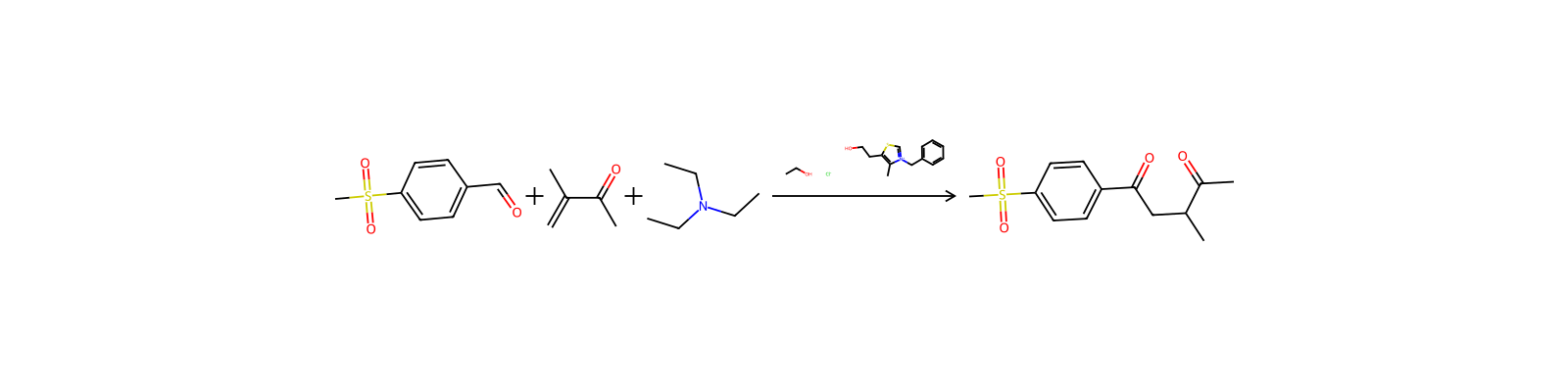
9


Verknüpfte Notizen
Wird geladen…