

Grundinformationen
- Standard-SMILES
Cc1ccc2cccc(O)c2n1- InChIKey
NBYLBWHHTUWMER-UHFFFAOYSA-N- Summenformel
- C10.H9.N.O.
- Durchschnittliche Molmasse
- 159,18 g/mol
- Monoisotopische Masse
- 159,06841391
Überblick
2-Methylquinolin-8-ol is a hydroxyquinoline.
Namen und Bezeichner
- Bevorzugter Name
- 2-Methyl-8-hydroxyquinoline
- IUPAC
- 2-methylquinolin-8-ol
- Lokaler Name
- 2-Methylchinolin-8-ol
- Englischer Name
- 8-Hydroxyquinaldine
- Summenformel
- C10H9NO
- Molmasse
- 159.18
Namen und Synonyme
8-Hydroxyquinaldine826-81-32-Methyl-8-quinolinol2-Methyl-8-hydroxyquinoline8-HYDROXY-2-METHYLQUINOLINE2-Methyloxine8-Quinolinol, 2-methyl-HydroxyquinaldineNSC-585537W631H5302DTXSID3061184NSC-403349
Weitere Namen anzeigen
2-methyl-8-quinolino8-HydroxyquinaL2-Methyl-8-hydroxy
RefChem:5481318-H-2-MQ cpdDTXCID3048312212-562-62-Methylquinolin-8-ol8-Hydroxyqinaldine2-Methyl-quinolin-8-ol2-Methyl-oxine
Datenbank-Bezeichner
- CAS
826-81-3- PubChem CID
- 13224
- DTXSID
DTXSID3061184- ChEMBL
CHEMBL316892- ChEBI
CHEBI:180510- UNII
- 7W631H5302
- EC Number
- 212-562-6
- Nikkaji
- J3.333B
Eigenschaften
Berechnete Struktureigenschaften
- XLogP
- 2,3
- Polarare Oberfläche (TPSA)
- 33,1 Ų
- H-Brücken-Donoren
- 1
- H-Brücken-Akzeptoren
- 2
- Frei drehbare Bindungen
- 0
- Schwere Atome
- 12
- Formalladung
- 0
- Komplexität
- 160
Experimentelle und physikochemische Eigenschaften
Chemical ClassesNitrogen Compounds -> Quinolines
SpringerMaterials PropertiesAngular frequency
Boiling Point267 °C @760 [mm Hg]
Vapor Pressure0.000105 [mmHg]
Physical DescriptionCream-colored crystalline powder; [Alfa Aesar MSDS]
Physikochemische Eigenschaften
- Schmelzpunkt
- 71 · 71-73 °C(lit.)
- Siedepunkt
- 267 °C · 267 °C(lit.)
- Dichte
- 1.1202 · 1.1202 (rough estimate)
- Brechungsindex
- 1.607 · 1.6070 (estimate)
- Flammpunkt
- 139 °C · 139°C
- storage temp.
- 30 °C · Store below +30°C.
- Löslichkeit
- 0.4 g/l · 0.4g/l
- Aggregatzustand
- Crystalline Powder
- pka
- 1 · pK1:5.55(+1);pK2:10.31(0) (25°C)
- Farbe
- Beige to brown
- PH
- 7 · 7-8 (100g/l, H2O, 20℃)(slurry)
- Wasserlöslichkeit
- insoluble
- BRN
- 119194 · 119194
- InChI
- 1S/C10H9NO/c1-7-5-6-8-3-2-4-9(12)10(8)11-7/h2-6,12H,1H3
- InChIKey
- NBYLBWHHTUWMER-UHFFFAOYSA-N
- SMILES
- Cc1ccc2cccc(O)c2n1
- CAS Datenbank
- 826 · 826-81-3(CAS DataBase Reference)
- NIST chemische Informationen
- 8 · 8-Quinolinol, 2-methyl-(826-81-3)
- EPA chemische Informationen
- 8 · 8-Quinolinol, 2-methyl- (826-81-3)
Sicherheit und Regulatorisches
GHS-Klassifizierung
GHS Classification
Warning
H317 (56.2%): May cause an allergic skin reaction [Warning Sensitization, Skin]
P261, P272, P273, P280, P302+P352, P321, P333+P317, P362+P364, P391, and P501 (click each P-code to see the statement)
Aggregated GHS information provided per 185 reports by companies from 11 notifications to the ECHA C&L Inventory. Each notification may be associated with multiple companies.
Gefahrenhinweise
Regulatory Information
Status: Active Update: 07-10-2020 https://echa.europa.eu/registration-dossier/-/registered-dossier/26370
2-Methyl-8-quinolinol: Does not have an individual approval but may be used under an appropriate group standard
Hazards SummaryOral LD50 (rat) = 2,125-2,250mg/kg; An irritant; [Alfa Aesar MSDS] See Quinoline.
Hazard Classes and CategoriesSkin Sens. 1 (56.2%)
Sicherheit und Schutzausrüstung
Protective Action Criteria (PAC)
0.99 [mg/m3]
11 [mg/m3]
66 [mg/m3]
Sicherheitsdaten
- wgk
- 2
- tsca
- TSCA listed
- ridadr
- UN 3077 9/PG 3
- hs_code
- 29334990
- RTECS-Nr.
- VC7920000
- risk_code
- 50/53-36/37/38
- hazard_code
- N,Xi
- hazard_note
- Irritant
- safety_code
- 60-61-24/25-36-26
- hazard_class
- 9
- packing_group
- III
- Speicherklasse
- 11 - Combustible Solids
- Hazard Classifications
- Aquatic Acute 1Aquatic Chronic 1
Chemie und Industrie
Verwendung und Herstellung
UsesUsed in high performance adhesives for the electronics industry; Formulated products are pre-packaged and used in automated equipment; [ExPub: EPA TSCATS]
General Manufacturing Information8-Quinolinol, 2-methyl-: ACTIVE
Anwendungen
Verwenden8-Hydroxyquinaldine is mainly used as metal ion extractant and metal ion determination, also used in the synthesis of dyes and pigments and the preparation of pharmaceutical intermediates.
Darstellung
synthetische8-hydroxyquinaldine is obtained from the reaction of 2-aminophenol with crotonaldehyde. Mix 2-aminophenol and 2-Nitrophenol homogeneously and add hydrochloric acid. Add crotonaldehyde under stirring. Heat for 6h and leave overnight. Distill the reacted o-nitrophenol by water distillation, and add sodium hydroxide solution to the residual solution to make it weakly basic. Then add powdered carbonyls for saturation, and distill 8-Hydroxyquinaldine by water distillation, and then distill the crude product under reduced pressure and recrystallize it with ethanol to obtain 8-hydroxyquinaldine.
Vor- und nachgelagerte Produkte
Vorgelagerte Rohstoffe
Nachgelagerte Produkte
Anbieter50 Anbieter
国药集团化学试剂有限公司86-21-63210123 · [email protected]
梯希爱(上海)化成工业发展有限公司021-67121386 · [email protected]
上海阿拉丁生化科技股份有限公司400-6206333 13167063860 · [email protected]
上海如吉生物科技发展有限公司+86-21-65211385-8001 36031160 · [email protected]
上海迈瑞尔生化科技有限公司4006356688 18621169109 · [email protected]
北京华威锐科化工有限公司0757-86329057 18934348241 · [email protected]
阿法埃莎(中国)化学有限公司400-6106006 · [email protected]
安耐吉化学&3A(安徽泽升科技股份有限公司)400-0056266 · [email protected]
上海恩诺生物科技有限公司+86 (21) 6435-5022
上海瀚鸿科技股份有限公司021-54306202 13764082696 · [email protected]
嘉兴市艾森化工有限公司0573-85285100 18627885956 · [email protected]
山东西亚化学有限公司13355009207 13355009207 · [email protected]
玛雅试剂+86 (573) 82222445 (0)18006601000 452520369 · [email protected]
四川库利南科技有限公司400-1166-196 18981987031 · [email protected]
常州创视电子科技有限公司+86 (519) 8829-2061 · [email protected]
河南多贝化工有限公司0370-2785118 17550508557 · [email protected]
艾科试剂4008-755-333 18080918076 · [email protected]
上海思域化工科技有限公司86-21-34053660 · [email protected]
赛默飞世尔科技(中国)有限公司800-810-5118 · [email protected]
天津雅奥博远科技有限公司022-18902014291 18902014291
北京伊诺凯科技有限公司400-810-7969 010-59572699 · [email protected]
上海遐瑞医药科技有限公司+86 21 61551611
TCI AMERICA800-4238616 · [email protected]
TOKYO CHEMICAL INDUSTRY CO., LTD.03-36680489 · [email protected]
TCI Europe320-37350700 · [email protected]
上海仁曲医药科技有限公司18171398856 2968382473 · [email protected]
上海将来实业股份有限公司021-61552785 · [email protected]
安徽科迪达化工有限公司0554-2106669 · [email protected]
HBCChem, Inc.+1-510-219-6317 · [email protected]
美岚实业(上海)有限公司021-58958189 · [email protected]
上海石洋化工有限公司021-56795766 · [email protected]
上海爱蝶实业有限公司021-58957966 18930537195 · [email protected]
成都零六生物科技有限公司400-1166-196 13458535857 · [email protected]
广拓化学(上海)有限公司021-60899189-8001 18918189673 · [email protected]
杭州杰恒化工有限公司0571-87396432 · [email protected]
上海嵩爰化工科技有限公司010-1234567 18521000990 · [email protected]
上海有朋化工有限公司021-69005955 13701776567 · [email protected]
北京海力扬化学科技有限公司13718199399 · [email protected]
北京欣赛维化学科技有限公司010-56218822 13717722232 · [email protected]
四川海诺威科技有限公司13708085536 13708085536 · [email protected]
上海拓目化工有限公司13391076197 · [email protected]
上海凯赛化工有限公司021-33516722 13701817765 · [email protected]
上海彤源化工有限公司021-021-69182866 13701855675 · [email protected]
成都润泽本土化工有限公司13096311329 028-88469284 616445927 · [email protected]
北京华扬致成科技有限公司13716033033 · [email protected]
上海蓝润化学有限公司021-69515658 ; 69515628 13701998368 · [email protected]
上海容立化学科技有限公司021-69992220 13701886816 · [email protected]
上海康拓化工有限公司021-69185552 13701777608 · [email protected]
湖北巨胜科技有限公司027-59599241 18871490274 · [email protected]
池州凯隆进出口贸易有限公司[email protected]
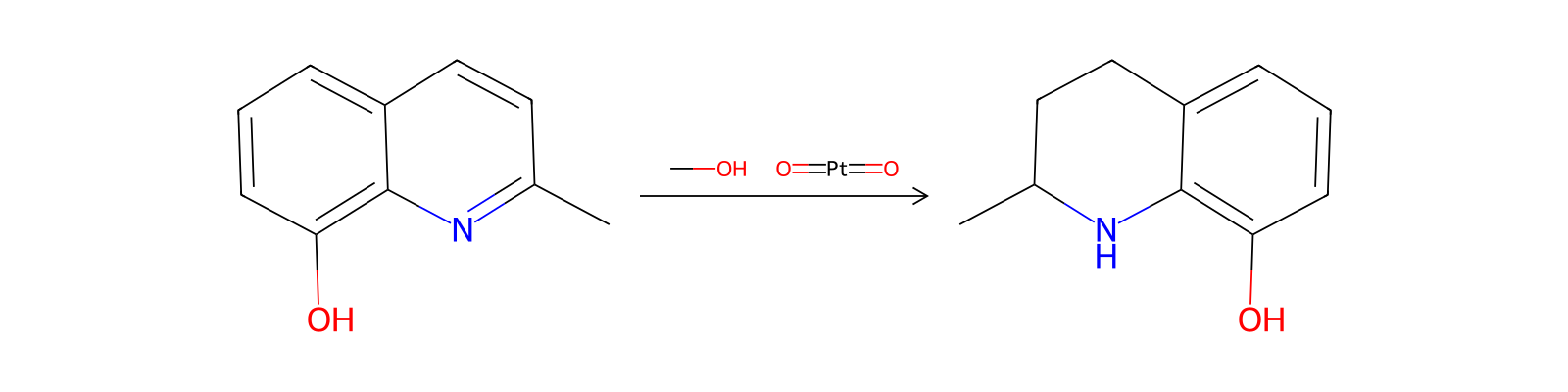
Zugehörige Reaktionen
96


Verknüpfte Notizen
Wird geladen…