
HRID 3621als Edukt
Ametryn
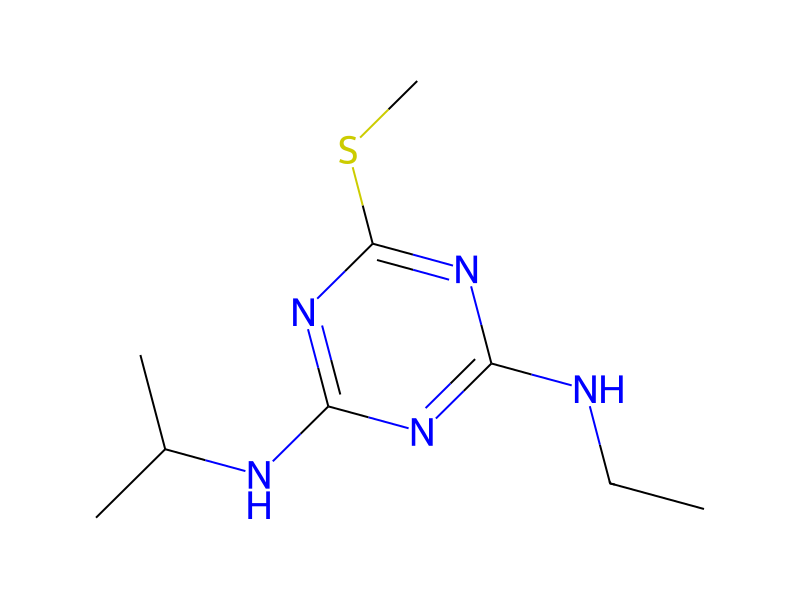
834-12-8CCNc1nc(NC(C)C)nc(SC)n1RQVYBGPQFYCBGX-UHFFFAOYSA-NCrystals. Melting point 190-192 °F (88-89 °C). Used as a herbicide.
834-12-8DTXSID1023869CHEMBL1235774CHEBI:22472Pesticide -> EPA IRIS
Agrochemicals -> Pesticide active substances
Active substance -> EU Pesticides database: Not approved
Pesticides -> Herbicides, Triazine
Pesticides -> Herbicides
Pesticide (Ametryn) -> USDA PDB
log Kow = 2.98
2.98
White powder
Colorless crystals
In water, 209 mg/L at 25 °C
Solubilities in organic solvents at 25 °C.[Table#3496]
0.00000274 [mmHg]
VP: 8.4X10⁻⁷ mm Hg at 20 °C
2.74X10⁻⁶ mm Hg at 25 °C
Sicherheitsangaben dienen nur zur Orientierung und ersetzen weder das Sicherheitsdatenblatt (SDB) des Lieferanten noch geltende Vorschriften oder eine fachliche Bewertung.
Warning
H302: Harmful if swallowed [Warning Acute toxicity, oral]
P264, P270, P273, P301+P317, P330, P391, and P501 (click each P-code to see the statement)
Danger
H302 (100%): Harmful if swallowed [Warning Acute toxicity, oral]
P261, P264, P270, P271, P273, P301+P317, P304+P340, P316, P321, P330, P391, P403+P233, P405, and P501 (click each P-code to see the statement)
2002/2076
REACH registered substance: Ametryn (EC: 212-634-7)
1,3,5-Triazine-2,4-diamine, N-ethyl-N'-(1-methylethyl)-6-(methylthio)-: Does not have an individual approval but may be used under an appropriate group standard
The New Jersey Worker and Community Right to Know Act requires public and private employers to provide information about hazardous substances at their workplaces. (N.J.S.A. 34:5A-1 et. seq.)
An eye irritant; Slightly irritating to skin and eyes of rabbits; Effects in sub-chronic and chronic rat feeding studies include fatty liver degeneration; [HSDB] May cause irritation; [MSDSonline] Effects in high dose animal studies include changes in leukocyte count and multiple effects to liver; [RTECS]
The major hazards encountered in the use and handling of ametryne stem from its toxicologic properties. Toxic by inhalation and ingestion, exposure to this colorless to white, crystalline substance may occur from its manufacture, formulation, and use as a herbicide. Effects from exposure may include shortness of breath, muscle spasms, ataxia, and anorexia. In activities and situations where over exposure may occur, wear a self-contained breathing apparatus and personal protective clothing. If contact should occur, immediately flush affected skin or eyes with running water for at least 15 minutes. Remove contaminated clothing and shoes at the site. While ametryne does not ignite easily, it may burn with the production of irritating and poisonous gases. For fires involving this substance, extinguish with dry chemical, CO2, Halon, water spray, fog, or standard foam. Ametryne may be shipped via air, rail, road, and water, in containers bearing the label "Poison". Small dry spills of ametryne may be placed into a clean, dry, covered container for later disposal (liquid solutions are first absorbed in sand or other noncombustible absorbent). Large liquid spills should be diked far ahead to prevent ametryne from entering water sources and sewers. Before implementing land disposal of ametryne, consult with regulatory agencies for guidance.
USEPA/Office of Prevention, Pesticides and Toxic Substances; Reregistration Eligibility Decision Document - Ametryn EPA 738-R-05-006 (September 2005). The RED summarizes the risk assessment conclusions and outlines any risk reduction measures necessary for the pesticide to continue to be registered in the USA.[Available from, as of January 31, 2017: http://www.epa.gov/pesticides/reregistration/status.htm]
USEPA; Health Advisories for 50 Pesticides (1988) PB88-245931
Tolerances are established for residues of the desiccant and herbicide (2-ethylamino)-4-(isopropylamino)-6-(methylthio)-s-triazine in or on the following raw agricultural commodities:[Table#3492]
The Agency has completed its assessment of the dietary, occupational, residential, and ecological risk associated with the use of pesticide products containing the active ingredient ametryn. Based on a review of these data and on public comments on the Agency's assessments for the active ingredient ametryn, the Agency has sufficient information on the human health and ecological effects of ametryn to make decisions as part of the tolerance reassessment process under FFDCA and reregistration process under FIFRA, as amended by FQPA. The Agency has determined that ametryn containing products are eligible for reregistration provided that: (i) current data gaps and confirmatory data needs are addressed; (ii) the risk mitigation measures outlined in this document are adopted; and (iii) label amendments are made to reflect these measures. ... Based on its evaluation of ametryn, the Agency has determined that ametryn products, unless labeled and used as specified in this document, would present risks inconsistent with FIFRA. Accordingly, should a registrant fail to implement any of the risk mitigation measures identified in this document, the Agency may take regulatory action to address the risk concerns from the use of ametryn. If all changes outlined in this document are incorporated into the product labels, then all current risks for ametryn will be adequately mitigated for the purposes of this determination.
As the federal pesticide law FIFRA directs, EPA is conducting a comprehensive review of older pesticides to consider their health and environmental effects and make decisions about their continued use. Under this pesticide reregistration program, EPA examines newer health and safety data for pesticide active ingredients initially registered before November 1, 1984, and determines whether the use of the pesticide does not pose unreasonable risk in accordance to newer safety standards, such as those described in the Food Quality Protection Act of 1996. Pesticides for which EPA had not issued Registration Standards prior to the effective date of FIFRA '88 were divided into three lists based upon their potential for human exposure and other factors, with List B containing pesticides of greater concern than those on List C, and with List C containing pesticides of greater concern than those on List D. Ametryn is found on List B. Case No: 2010; Pesticide type: herbicide; Case Status: OPP is reviewing data from the pesticide's producers regarding its human health and/or environmental effects, or OPP is determining the pesticide's eligibility for reregistration and developing the Reregistration Eligibility Decision (RED) document.; Active ingredient (AI): 2-(Ethylamino)-4-(isopropylamino)-6-(methylthio)-s-triazine; Data Call-in (DCI) Date(s): 07/10/91, 06/14/94, 09/30/94, 06/28/95; AI Status: The producers of the pesticide has made commitments to conduct the studies and pay the fees required for reregistration, and are meeting those commitments in a timely manner.
An amine, organosulfide. Organosulfides are incompatible with acids, diazo and azo compounds, halocarbons, isocyanates, aldehydes, alkali metals, nitrides, hydrides, and other strong reducing agents. Reactions with these materials generate heat and in many cases hydrogen gas. Many of these compounds may liberate hydrogen sulfide upon decomposition or reaction with an acid. Amines are chemical bases. They neutralize acids to form salts plus water. These acid-base reactions are exothermic. The amount of heat that is evolved per mole of amine in a neutralization is largely independent of the strength of the amine as a base. Amines may be incompatible with isocyanates, halogenated organics, peroxides, phenols (acidic), epoxides, anhydrides, and acid halides. Flammable gaseous hydrogen is generated by amines in combination with strong reducing agents, such as hydrides.
/GUIDE 131 FLAMMABLE LIQUIDS - TOXIC/ Fire or Explosion: HIGHLY FLAMMABLE: Will be easily ignited by heat, sparks or flames. Vapors may form explosive mixtures with air. Vapors may travel to source of ignition and flash back. Most vapors are heavier than air. They will spread along ground and collect in low or confined areas (sewers, basements, tanks). Vapor explosion and poison hazard indoors, outdoors or in sewers. Those substances designated with a (P) may polymerize explosively when heated or involved in a fire. Runoff to sewer may create fire or explosion hazard. Containers may explode when heated. Many liquids are lighter than water. /Triazine pesticide, liquid, flammable, poisonous; Triazine pesticide, liquid, flammable, toxic; Triazine pesticide, liquid, poisonous, flammable; Triazine pesticide, liquid, toxic, flammable/
/GUIDE 131 FLAMMABLE LIQUIDS - TOXIC/ Health: TOXIC; may be fatal if inhaled, ingested or absorbed through skin. Inhalation or contact with some of these materials will irritate or burn skin and eyes. Fire will produce irritating, corrosive and/or toxic gases. Vapors may cause dizziness or suffocation. Runoff from fire control or dilution water may cause pollution. /Triazine pesticide, liquid, flammable, poisonous; Triazine pesticide, liquid, flammable, toxic; Triazine pesticide, liquid, poisonous, flammable; Triazine pesticide, liquid, toxic, flammable/
/GUIDE 131 FLAMMABLE LIQUIDS - TOXIC/ Public Safety: CALL Emergency Response Telephone Number on Shipping Paper first. If Shipping Paper not available or no answer, refer to appropriate telephone number listed on the inside back cover. As an immediate precautionary measure, isolate spill or leak area for at least 50 meters (150 feet) in all directions. Keep unauthorized personnel away. Stay upwind, uphill and/or upstream. Ventilate closed spaces before entering. /Triazine pesticide, liquid, flammable, poisonous; Triazine pesticide, liquid, flammable, toxic; Triazine pesticide, liquid, poisonous, flammable; Triazine pesticide, liquid, toxic, flammable/
/GUIDE 131 FLAMMABLE LIQUIDS - TOXIC/ Protective Clothing: Wear positive pressure self-contained breathing apparatus (SCBA). Wear chemical protective clothing that is specifically recommended by the manufacturer. It may provide little or no thermal protection. Structural firefighters' protective clothing provides limited protection in fire situations ONLY; it is not effective in spill situations where direct contact with the substance is possible. /Triazine pesticide, liquid, flammable, poisonous; Triazine pesticide, liquid, flammable, toxic; Triazine pesticide, liquid, poisonous, flammable; Triazine pesticide, liquid, toxic, flammable/
For more DOT Emergency Guidelines (Complete) data for Ametryne (16 total), please visit the HSDB record page.
Suitable extinguishing media: Use water spray, alcohol-resistant foam, dry chemical or carbon dioxide.
Advice for firefighters: Wear self-contained breathing apparatus for firefighting if necessary.
If material on fire or involved in fire: Do not extinguish fire unless flow can be stopped or safely confined. Use water in flooding quantities as fog. Solid streams of water may be ineffective. Cool all affected containers with flooding quantities of water. Apply water from as far a distance as possible. Use "alcohol" foam, carbon dioxide or dry chemical. /Triazine pesticides, liquid, NOS/
If material on fire or involved in fire: Extinguish fire using agent suitable for type of surrounding fire. (Material itself does not burn or burns with difficulty.) Use water in flooding quantities as fog. Use "alcohol" foam, carbon dioxide or dry chemical. /Triazine pesticides, solid, NOS/
Keep container tightly closed in a dry and well-ventilated place. Keep in a dry place.
Store in cool, dry place.
Store product in original container only.
ACCIDENTAL RELEASE MEASURES: Personal precautions, protective equipment and emergency procedures: Use personal protective equipment. Avoid dust formation. Avoid breathing vapors, mist or gas. Ensure adequate ventilation. Avoid breathing dust. Environmental precautions: Prevent further leakage or spillage if safe to do so. Do not let product enter drains. Discharge into the environment must be avoided. Methods and materials for containment and cleaning up: Pick up and arrange disposal without creating dust. Sweep up and shovel. Keep in suitable, closed containers for disposal.
For minor spills, follow all precautions indicated on this label and clean up immediately. Take special care to avoid contamination of equipment and facilities during cleanup procedures and disposal of wastes. ... /Ametryn Technical/
This pesticide is to toxic aquatic organisms. Do not apply directly to water, or to areas where surface water is present, or to inter-tidal areas below the mean high water mark. Do not contaminate water when cleaning equipment ...
Environmental considerations- land spill: Dig a pit, pond, lagoon, holding area to contain liquid or solid material. /SRP: If time permits, pits, ponds, lagoons, soak holes, or holding areas should be sealed with an impermeable flexible membrane liner. / Dike surface flow using soil, sand bags, foamed polyurethane, or foamed concrete. Absorb bulk liquid with fly ash, cement powder, or commercial sorbents. /Triazine pesticides, liquid, NOS/
For more Cleanup Methods (Complete) data for Ametryne (8 total), please visit the HSDB record page.
SRP: Recycle any unused portion of the material for its approved use or return it to the manufacturer or supplier. Ultimate disposal of the chemical must consider: the material's impact on air quality; potential migration in air, soil or water; effects on animal, aquatic and plant life; and conformance with environmental and public health regulations. If it is possible or reasonable use an alternative chemical product with less inherent propensity for occupational harm/injury/toxicity or environmental contamination.
SRP: Wastewater from contaminant suppression, cleaning of protective clothing/equipment, or contaminated sites should be contained and evaluated for subject chemical or decomposition product concentrations. Concentrations shall be lower than applicable environmental discharge or disposal criteria. Alternatively, pretreatment and/or discharge to a permitted wastewater treatment facility is acceptable only after review by the governing authority and assurance that "pass through" violations will not occur. Due consideration shall be given to remediation worker exposure (inhalation, dermal and ingestion) as well as fate during treatment, transfer and disposal. If it is not practicable to manage the chemical in this fashion, it must be evaluated in accordance with EPA 40 CFR Part 261, specifically Subpart B, in order to determine the appropriate local, state and federal requirements for disposal.
Product: Offer surplus and non-recyclable solutions to a licensed disposal company. Contaminated packaging: Dispose of as unused product.
Pesticide Disposal: Pesticide wastes may be toxic. Improper disposal of unused pesticide or rinsate is a violation of federal law. If these wastes cannot be used according to label instructions, contact your State Pesticide or Environmental Control Agency, or the Hazardous Waste representative at the nearest EPA Regional Office for guidance in proper disposal methods. Container Disposal: Completely empty bag into equipment. This is a reusable bag. If the container is to be refilled, do not rinse with any material or introduce any pesticide other than Ametryn Technical. Reseal and return the container to an authorized Syngenta refilling facility. If the container is not to be refilled, triple rinse (or equivalent) and offer for recycling or reconditioning, or puncture and dispose of empty bag in a sanitary landfill, or by incineration, or, if allowed by state and local authorities, by burning. If burned, stay out of smoke. /Ametryn Technical/
Do not discharge effluent containing this product into lakes, streams, ponds, estuaries, oceans, or other waters unless in accordance with the requirements of a National Pollution Discharge Elimination System (NPDES) permit and the permitting authority has been notified in writing prior to discharge. Do not discharge effluent containing this product to sewer systems without previously notifying the local sewage treatment plant authority. For guidance contact your State Water Board or Regional Office of the EPA.
ACCIDENTAL RELEASE MEASURES: Personal precautions, protective equipment and emergency procedures: Use personal protective equipment. Avoid dust formation. Avoid breathing vapors, mist or gas. Ensure adequate ventilation. Avoid breathing dust. Environmental precautions: Prevent further leakage or spillage if safe to do so. Do not let product enter drains. Discharge into the environment must be avoided.
Precautions for safe handling: Avoid contact with skin and eyes. Avoid formation of dust and aerosols. Further processing of solid materials may result in the formation of combustible dusts. The potential for combustible dust formation should be taken into consideration before additional processing occurs. Provide appropriate exhaust ventilation at places where dust is formed.
Appropriate engineering controls: Handle in accordance with good industrial hygiene and safety practice. Wash hands before breaks and at the end of workday.
Gloves must be inspected prior to use. Use proper glove removal technique (without touching glove's outer surface) to avoid skin contact with this product. Dispose of contaminated gloves after use in accordance with applicable laws and good laboratory practices. Wash and dry hands.
For more Preventive Measures (Complete) data for Ametryne (15 total), please visit the HSDB record page.
Excerpt from ERG Guide 151 [Substances - Toxic (Non-Combustible)]:
Eye/face protection: Safety glasses with side-shields conforming to EN166. Use equipment for eye protection tested and approved under appropriate government standards such as NIOSH (US) or EN 166(EU).
Skin protection: Handle with gloves.
Body Protection: Complete suit protecting against chemicals. The type of protective equipment must be selected according to the concentration and amount of the dangerous substance at the specific workplace.
Respiratory protection: For nuisance exposures use type P95 (US) or type P1 (EU EN 143) particle respirator. For higher level protection use type OV/AG/P99 (US) or type ABEK-P2 (EU EN 143) respirator cartridges. Use respirators and components tested and approved under appropriate government standards such as NIOSH (US) or CEN (EU).
For more Personal Protective Equipment (PPE) (Complete) data for Ametryne (9 total), please visit the HSDB record page.
LC50; Species: Anas platyrhynchos (Mallard duck) oral 23000 ppm in 8 day diet
LC50; Species: Anas platyrhynchos (Mallard duck) age 9 days; food >5620 ppm for 8 days /99% purity/
LC50; Species: Colinus virginianus (Bobwhite quail) oral 30000 ppm in 8 day diet
LC50; Species: Colinus virginianus (Northern bobwhite) age 14 days; food >5620 ppm for 8 days /99% purity/
For more Ecotoxicity Values (Complete) data for Ametryne (40 total), please visit the HSDB record page.
TERRESTRIAL FATE: Based on a classification scheme(1), Koc values ranging from 69(2) to 530(3) indicate that ametryne is expected to have high to low mobility in soil(SRC). The pKa of ametryne is 4.10(4), indicating that this compound will exist partially in the cation form in the environment and cations generally adsorb more strongly to soils containing organic carbon and clay than their neutral counterparts(5). Volatilization of ametryne from moist soil surfaces is not expected to be an important fate process(SRC) given an estimated Henry's Law constant of 3.9X10⁻⁹ atm-cu m/mole(SRC) derived from its vapor pressure, 2.76X10⁻⁶ mm Hg(4), and water solubility, 2.09X10+2 mg/L(6). Ametryne is not expected to volatilize from dry soil surfaces(SRC) based upon its vapor pressure(4). Ametryne has a median half-life in soil of 62 days resulting from microbial degradation(4), indicating that biodegradation, albeit slow, may be an important environmental fate process under certain conditions(SRC).
AQUATIC FATE: Based on a classification scheme(1), Koc values ranging from 69(2) to 530(3) indicate that ametryne may adsorb to suspended solids and sediment(SRC). Volatilization from water surfaces is not expected(4) based upon an estimated Henry's Law constant of 3.9X10⁻⁹ atm-cu m/mole(SRC) derived from its vapor pressure, 2.76X10⁻⁶ mm Hg(5), and water solubility, 2.09X10+2 mg/L(6). According to a classification scheme(7), a BCF of 8.3(8) suggests the potential for bioconcentration in aquatic organisms is low(SRC). Utilizing the Japanese MITI test, 0% of the Theoretical BOD was reached in 4 weeks(8) indicating that biodegradation is not an important environmental fate process in water(SRC).
ATMOSPHERIC FATE: According to a model of gas/particle partitioning of semivolatile organic compounds in the atmosphere(1), ametryne, which has a vapor pressure of 2.74X10⁻⁶ mm Hg at 25 °C(2), is expected to exist in both the vapor and particulate phases in the ambient atmosphere. Vapor-phase ametryne is degraded in the atmosphere by reaction with photochemically-produced hydroxyl radicals(SRC); the half-life for this reaction in air is estimated to be 4.5 days(SRC), calculated from its rate constant of 2.9X10⁻¹¹ cu cm/molecule-sec at 25 °C(SRC) that was derived using a structure estimation method(3). Particulate-phase ametryne may be removed from the air by wet and dry deposition(SRC). 1,3,5-Triazines, such as ametryne, have a UV absorption band whose tail extends beyond 290 nm(4) and therefore may be susceptible to direct photolysis(SRC). 1,3,5-Triazines, such as ametryne, have a UV absorption band whose tail extends beyond 290 nm and, therefore, may be susceptible to direct photolysis. Using a photoreactor, maintained at pH 6.5 and 15 °C, ametryne exhibited a half-life of 10.2 hrs(5).
In FDA total diet studies analyzing foods for human consumption as part of the pesticide monitoring program during the fiscal years 2009, 2012 through 2013, ametryne was listed for inclusion in the study and noted as being detected although concentrations were not reported; during the fiscal years 2010 and 2011 ametryne was listed as a pesticide in the monitoring program although it was not detected in the foods studied(1).
IDENTIFICATION AND USE: Ametryne is a white powder. It is used as pre-emergence and post-emergence herbicide for field corn, popcorn, sugarcane, and pineapple. HUMAN EXPOSURE AND TOXICITY: Relatively few incidents of illness have been reported due to ametryne. Four exposures to ametryne products were reported to Poison Control Centers from 1993 through 2001. Two of the four cases, all adults, involved minor symptoms. One of the cases was seen in a health care facility and was not hospitalized and another case reported diarrhea and drowsiness/lethargy. There were no other reports of incidences in the other poisoning databases. ANIMAL STUDIES: No deaths were recorded or untoward effects noted among a group of rats exposed to ametryne aerosol at >27 mg/L during 4 hr exposure period. Undiluted ametryne was mildly irritating to eye of rabbit. Slight irritant to skin of rabbits. Ataxia, dyspnea, muscular weakness, salivation, and loss of reflexes occurred in poisoned rats. Body weight gain effects in rats fed 500 ppm or greater for 2 years were the only signs produced, and no effects were seen at 50 ppm. Rats and mice survived 2-year feeding of as much as 2000 ppm. In dogs, body weight effects were seen at 2000 ppm or greater in a 1-year feeding study, but no effects occurred at 200 ppm. Ametryne produced no reproductive impairment when fed to two generations of rats at concentrations of 20, 200, or 2000 ppm. Both parental and progeny weights were reduced at the two higher feeding levels. No teratogenic effects were seen in rats treated with up to 250 mg/kg. In another rat study, deformities of the skeleton were increased in pups derived from ametryne-treated rats (30.6 mg/kg orally, days 5 through 15 of gestation). Postimplantation deaths increased, and fetal weights decreased. Ametryne was inactive genetically both in Salmonella and in Saccharomyces cerevisiae. No clastogenic effects were seen when ametryne was tested in Chinese hamster ovary cell cultures, and it was negative in the DNA-repair test in cultured hepatocytes. Ametryne suppressed humoral immune response if administered orally at near lethal doses in mice during an ongoing immune response. It was also observed to have a suppressive effect on humoral immune competence if orally administered in a sufficiently large quantity at the time or prior to immunization. ECOTOXICITY STUDIES: Ametryne is slightly toxic to mammals on an acute oral exposure basis, following chronic exposure, reduced growth was observed. Ametryne is slightly to moderately toxic to freshwater fish and invertebrates, and moderately toxic to estuarine/marine fish and invertebrates on an acute exposure basis. Following chronic exposure, freshwater fish exhibited reduced, while freshwater invertebrates exhibited reduced reproduction. Consistent with its chemical use as an herbicide, ametryne is toxic to terrestrial plants.
/BIRDS and MAMMALS/ Ametryn is slightly toxic to mammals on an acute oral exposure basis (LD50=1162 mg/kg body weight); following chronic exposure, reduced growth (NOEC=13 mg/kg) was observed. ... No mortality was observed in subacute dietary toxicity studies with mallard ducks and bobwhite quail (LC50 >5620 ppm). Both surrogate species responded similarly (NOEC=300 mg/kg diet) with reduced growth and reproduction following chronic exposure.
/AQUATIC SPECIES/ The effect of fluometuron, prometryne, ametryne, and diuron on growth of floating hydrophytes, Lemna major L. (Spirodela polyrrhiza) and Lemna perpusilla Torr. were studied. Concentrations of the herbicides used ranged from 2 X 10⁻⁵ M to 1 X 10⁻⁸ M. Fluometuron was the least toxic herbicide to both L. major L. and persilla Torr. Diuron was the most toxic to L. major at a concentration of 1 X 10⁻⁶ M. The other two herbicides were about equally toxic to L. perpusilla. Concentrations required to cause 50% growth inhibition of L. major were: fluometuron, 2.6 N 10-6 M; prometryne 3.5 X 10⁻⁷ M; ametryne, 2.3 X 10⁻⁷ M; and diuron, 1. 75 X 10 SUP- 7M. Concentrations which inhibitied 50% growth of L. perpusilla were: fluometuron, 2.05 X 10⁻⁶ M; diuron, 6.4 X 10⁻⁸ M; prometryne, 5.4 X 10⁻⁸ M; and amytryne, 4.6 X 10⁻⁸ M. ...
/AQUATIC SPECIES/ ... In the present study, /the authors/ investigated the short-term effect on the short-circuit current (I(sc)), a quantitative measure of the ion transport operated by frog (Rana esculenta) skin. Treatment with 5 uM atrazine (1.08 mg/L) does not affect the transepithelial outfluxes of carbon-14-mannitol or carbon-14-urea; therefore, atrazine does not damage the barrier properties of frog skin. Atrazine causes a dose-dependent increase in the short-circuit current, with a minimum of 4.64 +/- 0.76 uA/sq cm (11.05% +/- 1.22%) and a maximum of 12.7 +/- 0.7 uA/sq cm (35% +/- 2.4%) measured at 10 nM and 5 uM, respectively. An increase in Isc also is caused by 5 uM ametryne, prometryn, simazine, terbuthylazine, or terbutryn (other atrazine derivatives). ...
/AQUATIC SPECIES/ Ametryn is slightly to moderately toxic to freshwater fish and invertebrates, and moderately toxic to estuarine/marine fish and invertebrates on an acute exposure basis. Following chronic exposure, freshwater fish exhibited reduced growth (NOEC=0.7 mg/L) while freshwater invertebrates exhibited reduced reproduction (Daphnia NOEC=0.24 mg/L). ... A chronic toxicity value for sheepshead minnow is estimated from the results of the acute toxicity study, assuming that the acute/chronic toxicity ratio (ACR) is the same as that seen in the freshwater fathead minnow study (16 mg/L - 0.7 mg/L = 22.9). Based on this ACR, the estimated chronic toxicity to sheepshead minnow is 0.25 mg/L. Similarly, the ACR from the freshwater invertebrate study is used to estimate a chronic toxicity for estuarine/marine invertebrates. Using the ACR from the Daphnia studies (28 mg/L - 0.24 mg/L = 116.7), a chronic toxicity value of 0.02 mg/L is estimated for mysid shrimp.
EPA has released the Interactive Chemical Safety for Sustainability (iCSS) Dashboard. The iCSS Dashboard provides an interactive tool to explore rapid, automated (or in vitro high-throughput) chemical screening data generated by the Toxicity Forecaster (ToxCast) project and the federal Toxicity Testing in the 21st century (Tox21) collaboration. /The title compound was tested by ToxCast and/or Tox21 assays/[USEPA; ICSS Dashboard Application; Available from, as of December 8, 2016: http://actor.epa.gov/dashboard/]
Ametryne was detected in 2 of 32 packing plant effluent samples taken from 1993-1997 in the Suerte River basin of Costa Rica(1). Following ametryne application to Costa Rican banana plantations at a rate of 0.3 L/ha every 28 days, the compound was detected at a concentration range of 0.45-2.15 ug/L in samples taken from locations on the Madre de Dios River (8 km downstream from the treatment site) after rain events(2).
Ametryn
Hepatic
9 x 10 ^-3 mg/kg-day
Preliminary medical exam to detect chronic diseases of CNS, liver, heart, kidneys, lung & skin, as well as endocrinological or immunological disturbances, should ... /protect/ susceptible individuals. ... Periodical medical exams of internal organs, skin & eyes are important to avoid chronic occupational intoxications. They should include lab tests & patch tests if necessary. /Herbicides/
Tolerances are established for residues of the desiccant and herbicide (2-ethylamino)-4-(isopropylamino)-6-(methylthio)-s-triazine in or on the following raw agricultural commodities:[Table#3492]
The Agency has completed its assessment of the dietary, occupational, residential, and ecological risk associated with the use of pesticide products containing the active ingredient ametryn. Based on a review of these data and on public comments on the Agency's assessments for the active ingredient ametryn, the Agency has sufficient information on the human health and ecological effects of ametryn to make decisions as part of the tolerance reassessment process under FFDCA and reregistration process under FIFRA, as amended by FQPA. The Agency has determined that ametryn containing products are eligible for reregistration provided that: (i) current data gaps and confirmatory data needs are addressed; (ii) the risk mitigation measures outlined in this document are adopted; and (iii) label amendments are made to reflect these measures. ... Based on its evaluation of ametryn, the Agency has determined that ametryn products, unless labeled and used as specified in this document, would present risks inconsistent with FIFRA. Accordingly, should a registrant fail to implement any of the risk mitigation measures identified in this document, the Agency may take regulatory action to address the risk concerns from the use of ametryn. If all changes outlined in this document are incorporated into the product labels, then all current risks for ametryn will be adequately mitigated for the purposes of this determination.
As the federal pesticide law FIFRA directs, EPA is conducting a comprehensive review of older pesticides to consider their health and environmental effects and make decisions about their continued use. Under this pesticide reregistration program, EPA examines newer health and safety data for pesticide active ingredients initially registered before November 1, 1984, and determines whether the use of the pesticide does not pose unreasonable risk in accordance to newer safety standards, such as those described in the Food Quality Protection Act of 1996. Pesticides for which EPA had not issued Registration Standards prior to the effective date of FIFRA '88 were divided into three lists based upon their potential for human exposure and other factors, with List B containing pesticides of greater concern than those on List C, and with List C containing pesticides of greater concern than those on List D. Ametryn is found on List B. Case No: 2010; Pesticide type: herbicide; Case Status: OPP is reviewing data from the pesticide's producers regarding its human health and/or environmental effects, or OPP is determining the pesticide's eligibility for reregistration and developing the Reregistration Eligibility Decision (RED) document.; Active ingredient (AI): 2-(Ethylamino)-4-(isopropylamino)-6-(methylthio)-s-triazine; Data Call-in (DCI) Date(s): 07/10/91, 06/14/94, 09/30/94, 06/28/95; AI Status: The producers of the pesticide has made commitments to conduct the studies and pay the fees required for reregistration, and are meeting those commitments in a timely manner.
(FL) FLORIDA 60 ug/L
(ME) MAINE 60 ug/L
Mode of Herbicidal Action: Like other triazines, ametryn inhibits photosynthesis and other enzymatic processes. It is a selective systemic herbicide, absorbed by the leaves and roots, with translocation acropetally in the xylem, and accumulation in the apical meristems.
... Their chief mode of action appears to involve carbohydrate metabolism. The chlorinated s-triazines inhibit starch accumulation by blocking the production of sugars. Similar behavior has been shown for the methoxy & methylthio-s-triazines. It has been reported that the s-triazines affect the tricarboxylic acid cycle with activation of phospho-phenyl pyruvate-carboxylase causing the disappearance of sucrose & glyceric acid with the formation of aspartic & malic acids. /s-Triazines/
Since chlorosis is the first sign of the effect of triazines on plants, interference with carbon dioxide assimilation and sugar formation can be expected. Studies showing that hill reaction is inhibited confirmed this. /Triazines/
Inhibition of photosynthesis by disruption of light reactions and blockade of electron transport is the mechanism of action of the 1,3,5-triazine herbicides. /1,3,5-Triazines, from table/
V79 Chinese hamster cell lines were genetically engineered for the stable expression of human NADPH-cytochrome P450 oxidoreductase (CYPOR) alone or for the combined expression of NADPH-cytochrome P450 oxidoreductase and human cytochrome P450 1A2 (CYP1A2). As determined by immunoblotting, the expression level of cytochrome P450 1A2 in the latter cell line was found to be the same as in a previously constructed V79 cell line expressing cytochrome P450 1A2 only. The heterologous expression of NADPH-cytochrome P450 oxidoreductase in V79 cells resulted in increased sensitivity to quinone-type cytotoxins, eg. duroquinone and menadione, that exert their toxicity primarily through the production of reactive oxygen species during redox cycling. The metabolic properties of the cell line expressing both NADPH-cytochrome P450 oxidoreductase and cytochrome P450 1A2 were characterized regarding dealkylation and deethylation of 7-alkoxyresorufins and sulfoxidation of the triazine derivatives ametryne and terbutryne, in comparison with the cell line expressing only cytochrome P450 1A2. Increased NADPH-cytochrome P450 oxidoreductase activity impaired the cytochrome P450 1A2-dependent fluorometric resorufin assay, presumably by conversion of the 8-alkoxyresorufins and resorufin to their one-electron-reduced semiquinoneimine forms. The cytochrome P450 1A2-dependent metabolism of the triazine derivatives ametryne and terbutryne was moderately enhanced by increased NADPH-cytochrome P450 oxidoreductase activity. Interestingly, with NADPH-cytochrome P450 oxidoreductase overexpression sulfoxidation was increased 2-3-fold, compared with N-deethylation, with a 1.3-1.9-fold increase. Thus, the level of NADPH-cytochrome P450 oxidoreductase not only had an influence on cytochrome P450 1A2 activity rates but also affected the relative proportions of metabolites in cytochrome P450 1A2-specific metabolite profiles.
Usually metabolized by tolerant plants, & to lesser extent by sensitive plants to nontoxic substances such as hydroxyl or dealkylated derivatives. It appears likely that hydroxy-atrazine is the first metabolite, & that degradation within plants is the major protective mechanism.
(14)C-labeled ametryn was administered orally to groups of six male and six female Sprague Dawley rats. When the label was in the isopropyl side chain, 41.9% of the label appeared as CO2. When the label was in the ethyl side chain, 18.1% of the label appeared as CO2. This indicated that the side chains were extensively metabolized. When the ring was uniformly labeled with carbon-14 and the compound fed orally to rats, 58% was excreted in the urine but it was not determined whether excretion of the original compound or metabolites had occurred.
... The participation of P450 and flavin-containing monooxygenase in the sulfoxidation of four sulfur containing pesticides, ametryne; terbutryne, prometryne and methiocarb was investigated using human liver microsomes. All four reactions were demonstrated to be catalyzed predominantly by cytochrome P450.
For more Metabolism/Metabolites (Complete) data for Ametryne (8 total), please visit the HSDB record page.
Ametryn has known human metabolites that include Deisopropylametryne and Desethylametryne.
Absorption, biotransformation, and excretion of (14)C-ametryne was rapid after oral dose to rat. In 24 hr, 52% of (14)C from ring labelled ametryne was excreted in urine and 18% in feces, and within 72 hr elimination was almost complete when further 6% had been excreted in urine, 14% in feces, and <2% remained in carcass. After 6 hr, levels of (14)C-ametryne were maximal in organs of absorption, biotransformation, and excretion by the stomach, liver, and kidneys, and also in spleen and lung, but these levels decreased with time although blood levels remained constant for 72 hr.
The excretion of ametryn utilizing uniformly labeled compound with (14)C-ametryn in the ring or in the ethyl or isopropyl side chains. Forty eight hours after oral dosing of six male and six female Sprague Dawley rats, 57.6% of the ring labeled activity had been excreted in the urine and 32.1% in the feces (total 89.7% of dose). When the fed compound was labeled in the side chains, however, much of the (14)C was excreted in expired air as carbon dioxide. When the fed compound was labeled in the isopropyl side chain, rats excreted 41.9% of the label in expired air, 20% in the urine, 2% in the feces, and 7% remained in the carcass (total 70.9%) at 48 hours. When the ethyl side chain contained the label, 18.1% of the label was excreted as carbon dioxide, 45% in the urine, 5% in the feces and 9% remained in the carcass (total 77.1% of dose). After 72 hours, total recovery was approximately 88% for both of the side chain labeled compounds.
Ring labeled ametryn /was administered/ orally to male and female Sprague Dawley rats and measured distribution of label in tissues at 6, 48 and 72 hours after dosing. Tissue distribution at 6 hours was greatest in kidney, followed by liver, spleen, blood, lung, fat, carcass, brain, and muscle. Blood levels remained relatively constant for 72 hours after dosing, while all other tissue levels dropped rapidly to <0.1% of dose per gram of tissue.
... Most of the radioactive dose was excreted rapidly by lactating goats in urine (70%) and feces (20%) or predominantly in excreta (90%) by hens.
They are efficiently absorbed from intestine, and presumably there is some absorption across the skin and lung. /Urea-, uracil- and triazine-based herbicides/
Used as systemic herbicide for pre- and post-emergence control of most annual grasses and broad-leaved weeds in field and popcorn, sugarcane, and pineapple; Also used in Egypt for snail control in water canals; [HSDB]
Farming (Pesticides) [Category: Industry]
For ametryne (USEPA/OPP Pesticide Code: 080801) ACTIVE products with label matches. /SRP: Registered for use in the U.S. but approved pesticide uses may change periodically and so federal, state and local authorities must be consulted for currently approved uses./
A selective, contact herbicide with some soil residual activity. Postemergence treatments must be directed on most crops. Absorbed through foliage and roots; penetrates foliage rapidly, minimizing its removal by rain.
Pre-emergence and post-emergence herbicides.
This is a man-made compound that is used as a pesticide.
(1975) 9.08X10+8 G (CONSUMPTION)
(1976) PROBABLY GREATER THAN 2.27X10+6 G
EPA estimates up to 380,000 lbs of ametryn active ingredient are used per year. In terms of pounds active ingredient (ai) applied annually in the U.S., ametryn usage is allocated to corn (60%), sugarcane (20%), and pineapple (20%). However, in terms of percent crop treated, nearly 100% of the pineapple crop is treated, 30% of sugarcane, and less than 1% of corn is treated. Uses are concentrated in, but not limited to, the following regions: GA, SC, & NC (corn); FL, HI, LA, & TX (sugarcane); and HI (pineapple).
In 1989 and 1982, approx. 1.86X10+5 and 9.6X10+4 lbs. AI/yr, respectively, were used in U.S. agriculture.
National use of ametryne by crop in 1989, lbs. AI/yr: citrus, 44,088; corn, 71,091; and sugarcane, 70,907.
Ametryn is produced by reaction of atrazine with methyl mercaptan in the presence of sodium hydroxide.
Ametryn is ... synthesized ... by reacting 2-mercapto-4-ethylamino-6-isopropylamino-1,3,5-triazine with a methylating agent in the presence of NaOH.
Preparation: Gysin, Knuesli, Switzerland patent 337019; Rufener et al., United States of America patent 3558622 (1959, 1971 both Geigy).
Ametryn Technical (Syngenta Corp Protection, LLC): Active ingredient: Ametryn 97.0%.
Evik DF (Syngenta Corp Protection, LLC): Active ingredient: Ametryn 78.9%.
Ametryn is formulated as a 80% water dispersible granule (WDG), which is also referred to as dry flowable (DF).
Premix Partners: Acetochlor; Atrazine; 2,4-D; Diuron; Simazine; Terbutryn; Trifloxystrobin; Trifloxysulfuron-sodium.
For more Formulations/Preparations (Complete) data for Ametryne (6 total), please visit the HSDB record page.
Pesticides -> Herbicides
HERBICIDES
The WHO Recommended Classification of Pesticides by Hazard identifies Ametryne (technical grade) as Class II: moderately hazardous; Main Use: herbicide.
Compatible with most other pesticides & fertilizers when used at normal rates.
Crop rotation restrictions or precautions usually are not required because of the shorter residual life & also because of the much greater safety margin which many sensitive plants have to methylthiotriazines compared to chloro or methoxytriazines.
Ametryn is absorbed through both foliage and roots and appears to penetrate foliage rapidly, minimizing removal from foliage by rain. It translocates acropetally through xylem from roots and foliage, accumulating in the apical meristems, and is usually metabolized by tolerant plants.
VerwendenAmetryn is a methylthiotriazine based herbicide which inhibits photosynthesis and other enzymatic processes. Ametryn is used to control broadleaf weeds and annual grasses in pineapple, sugarcane and b ananas.
DefinitionChEBI: A methylthio-1,3,5-triazine that is 2-(methylsulfanyl)-1,3,5-triazine substituted by an ethylamino and an isopropylamino group at positions 4 and 6 respectively.


For more Ecotoxicity Excerpts (Complete) data for Ametryne (8 total), please visit the HSDB record page.