StartseiteMCPWorkbenchSkills
StartseiteWorkbenchBenachrichtigungenMein Bereich
llms.txt · MCP-AnleitungDatenschutz · Nutzungsbedingungen · Supportv1.8.3
  1. Startseite
  2. /Verbindung

Tetrafluorstannan

Tin Tetrafluoride

HCID 134654
Neue Reaktion
Drucken
GrundinformationenÜberblickNamen und BezeichnerEigenschaftenSicherheit und RegulatorischesChemie und IndustrieZugehörige ReaktionenNotizen zur Verbindung
TeilstruktursucheÄhnliche Strukturen suchen

Grundinformationen

CAS
7783-62-2
Standard-SMILES
[F-].[F-].[F-].[F-].[Sn+4]
InChIKey
YUOWTJMRMWQJDA-UHFFFAOYSA-J
Summenformel
F4Sn
Durchschnittliche Molmasse
194,7 g/mol
Monoisotopische Masse
195,895815

Überblick

Tin(IV) fluoride is a fluoride of tin. It is used in toothpaste to prevent dental decay. Tin is a chemical element with the symbol Sn and atomic number 50. It is a natural component of the earth's crust and is obtained chiefly from the mineral cassiterite, where it occurs as tin dioxide. (L307, L309, L322)

Namen und Bezeichner

Bevorzugter Name
Tin Tetrafluoride
IUPAC
tin(4+) tetrafluoride
Lokaler Name
Tetrafluorstannan
Englischer Name
Tin(iv) Fluoride
Summenformel
F4Sn
Molmasse
194.7

Namen und Synonyme

TetrafluorostannaneStannic fluoridetin tetrafluorideHNZ2XMR1ZFDTXSID801026956Stannic FluoridesFluoride, StannicTin TetrafluoridesFluorides, StannicTetrafluoride, TinTetrafluorides, TinRefChem:185357
Weitere Namen anzeigen
TIN FLUORIDETin(IV) fluoride, 99% (metals basis)SKL1124Tin(Ⅳ)FluorideTIN(IV) FLUORIDETin(IV)fluoride98%Tin(IV) fluoride 98%
DTXCID001511149232-016-07783-62-2tin(4+);tetrafluorideCav-Xstannic;tetrafluorideF4SnUNII-HNZ2XMR1ZF

Datenbank-Bezeichner

CAS
7783-62-2
PubChem CID
134654
DTXSID
DTXSID801026956
UNII
HNZ2XMR1ZF
EC Number
232-016-0
Nikkaji
J134.259B

Eigenschaften

Berechnete Struktureigenschaften

Polarare Oberfläche (TPSA)
0 Ų
H-Brücken-Donoren
0
H-Brücken-Akzeptoren
4
Frei drehbare Bindungen
0
Schwere Atome
5
Formalladung
0
Komplexität
0

Experimentelle und physikochemische Eigenschaften

Chemical ClassesMetals -> Metals, Inorganic Compounds
Physical DescriptionWhite solid; Highly hygroscopic; [Merck Index] White crystalline solid; [Alfa Aesar MSDS]

Physikochemische Eigenschaften

Schmelzpunkt
705 °C · 705°C (subl.)
Siedepunkt
705 °C · 705°C
Dichte
4 · 4,78 g/cm3
Löslichkeit
2 O · reacts with H2O
Aggregatzustand
Powder
Wichte
4.78 · 4.78
Farbe
white
Wasserlöslichkeit
2 O · hydrolyzes in H2O [MER06]
Merck
14 · 14,8776
InChI
1S/4FH.Sn/h4*1H;/q;;;;+4/p-4
InChIKey
YUOWTJMRMWQJDA-UHFFFAOYSA-J
SMILES
F[Sn](F)(F)F

Sicherheit und Regulatorisches

Sicherheitsangaben dienen nur zur Orientierung und ersetzen weder das Sicherheitsdatenblatt (SDB) des Lieferanten noch geltende Vorschriften oder eine fachliche Bewertung.

GHS-Klassifizierung

GHS Classification · 4 Einträge

Danger

H302 (88.6%): Harmful if swallowed [Warning Acute toxicity, oral]

P260, P261, P264, P270, P271, P280, P301+P317, P301+P330+P331, P302+P352, P302+P361+P354, P304+P340, P305+P354+P338, P316, P317, P321, P330, P362+P364, P363, P405, and P501 (click each P-code to see the statement)

Aggregated GHS information provided per 44 reports by companies from 4 notifications to the ECHA C&L Inventory. Each notification may be associated with multiple companies.

Gefahrenhinweise

Hazards SummaryCauses severe irritation or burns; Harmful by ingestion, inhalation, and skin absorption; [Aldrich MSDS] See FLUORIDES.
Hazard Classes and CategoriesAcute Tox. 4 (88.6%)

Sicherheit und Schutzausrüstung

Exposure Control and Personal Protection · 2 Einträge

Biological Exposure Indices (BEI) [ACGIH] - Fluorides in urine = 2 mg/L prior to shift or 3 mg/L at end of shift; (Repeated measurements recommended.)

1.0 [mg/m3], inhalable fraction, as F[German Research Foundation (DFG)]

Threshold Limit Values (TLV)2.5 [mg/m3], as F, (2 mg/m3, as Sn)
Permissible Exposure Limit (PEL)2.5 [mg/m3], as F (2 mg/m3, as Sn)

Toxikologische Informationen

Chemie und Industrie

Pharmakologische Informationen

Metabolism/Metabolites · 1 Eintrag

Though tin metal is very poorly absorbed, tin compounds may be absorbed via oral, inhalation, or dermal routes, with organotin compounds being much more readily absorbed than inorganic tin compounds. Tin may enter the bloodstream and bind to hemoglobin, where it is distributed and accumulates mainly in the kidney, liver, lung, and bone. Tin and its metabolites are excreted mainly in the urine and feces. (L308)

MeSH Pharmacological ClassificationSubstances that inhibit or arrest DENTAL CARIES formation. (Boucher's Clinical Dental Terminology, 4th ed)

Verwendung und Herstellung

Uses · 2 Einträge

Used as a catalyst; [Merck Index]

Tin(IV) fluoride is used in toothpaste to prevent dental decay. (L322)

Anwendungen

VerwendenFriedel-Crafts catalyst.

Darstellung

synthetischeStannic fluoride can be prepared from the reaction of fluorine, chlorine trifluoride, or bromine trifluoride with tin(II) or tin(IV) compounds. It acts as a Lewis acid to form many complexes. It is used in the manufacture of glasses.
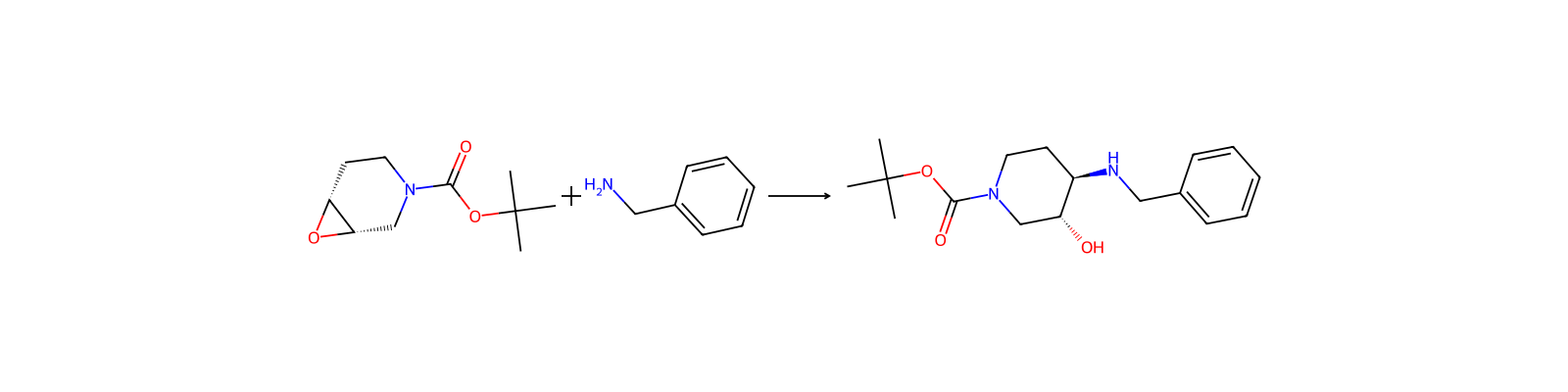
Zugehörige Reaktionen

26
Reaktionsaufzeichnung erstellen
Reaktionsgleichung von HRID 2000230
HRID 2000230als Reagenz
Reaktionsgleichung von HRID 2000243
HRID 2000243als Reagenz
Reaktionsgleichung von HRID 2000275
HRID 2000275als Reagenz
Reaktionsgleichung von HRID 2000292
HRID 2000292als Reagenz
Reaktionsgleichung von HRID 2031193
HRID 2031193als Reagenz
Reaktionsgleichung von HRID 2031207
HRID 2031207als Reagenz
Reaktionsgleichung von HRID 2031307
HRID 2031307als Reagenz
Reaktionsgleichung von HRID 2031391
HRID 2031391als Reagenz
ZurückSeite 1 von 4

Notizen zur Verbindung

Auf dieser SeiteGrundinformationenÜberblickNamen und BezeichnerEigenschaftenSicherheit und RegulatorischesChemie und IndustrieZugehörige ReaktionenNotizen zur Verbindung
CAS Datenbank
7783 · 7783-62-2(CAS DataBase Reference)
Treatment · 1 Eintrag

EYES: irrigate opened eyes for several minutes under running water. INGESTION: do not induce vomiting. Rinse mouth with water (never give anything by mouth to an unconscious person). Seek immediate medical advice. SKIN: should be treated immediately by rinsing the affected parts in cold running water for at least 15 minutes, followed by thorough washing with soap and water. If necessary, the person should shower and change contaminated clothing and shoes, and then must seek medical attention. INHALATION: supply fresh air. If required provide artificial respiration.

Health EffectsIngestion of large amounts of inorganic tin compounds can cause stomachache, anemia, and liver and kidney problems. (L307, L308)
Adverse EffectsDermatotoxin - Skin burns.
Exposure RoutesOral (L308) ; inhalation (L308) ; dermal (L308)
Toxicity SummaryInorganic and organic tin compounds are weak inhibitors of alcohol dehydrogenase. (A183)
Signs and SymptomsInorganic or organic tin compounds placed on the skin or in the eyes can produce skin and eye irritation. (L308)
Carcinogen ClassificationNo indication of carcinogenicity to humans (not listed by IARC).

Sicherheitsdaten

wgk
3
ridadr
UN2923
hs_code
2826199090
risk_code
20/21/22
hazard_code
Xn,C
hazard_note
Corrosive
safety_code
26-27-36-36/39
hazard_class
8
packing_group
II
Speicherklasse
11 - Combustible Solids
Hazard Classifications
Acute Tox. 4 DermalAcute Tox. 4 InhalationAcute Tox. 4 Oral