StartseiteMCPWorkbenchSkills
StartseiteWorkbenchBenachrichtigungenMein Bereich
llms.txt · MCP-AnleitungDatenschutz · Nutzungsbedingungen · Supportv1.8.0
  1. Startseite
  2. /Verbindung

4-Hydroxybenzoesure

4-Hydroxybenzoic Acid

HCID 135
Neue NotizNeue ReaktionAnfrage stellen
Druckvorschau

Daten werden ergänzt – lade die Seite später neu, um den aktuellen Stand zu sehen
GrundinformationenÜberblickNamen und BezeichnerEigenschaftenSicherheit und RegulatorischesChemie und IndustrieZugehörige ReaktionenNotizen zur Verbindung
TeilstruktursucheÄhnliche Strukturen suchen

Grundinformationen

CAS
99-96-7
Standard-SMILES
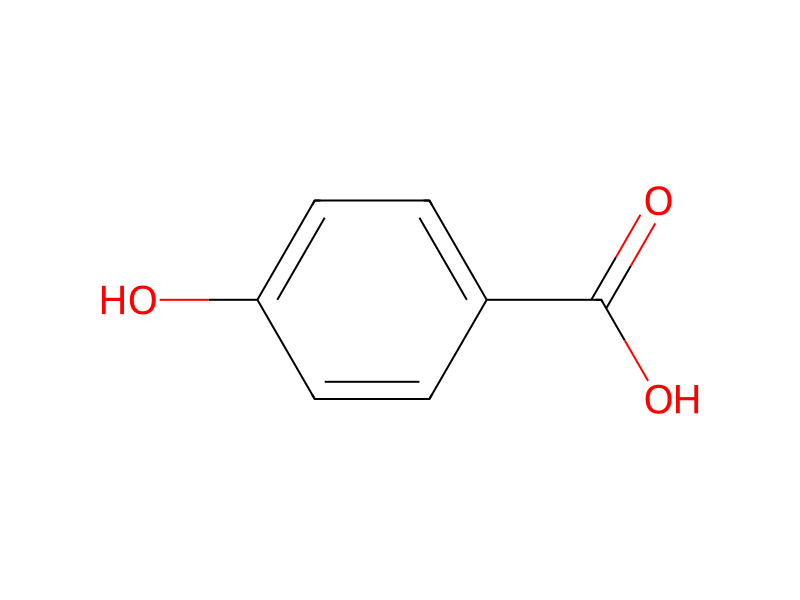
O=C(O)c1ccc(O)cc1
InChIKey
FJKROLUGYXJWQN-UHFFFAOYSA-N
Summenformel
C7H6O3
Durchschnittliche Molmasse
138,12 g/mol
Monoisotopische Masse
138,03169405

Überblick

4-hydroxybenzoic acid is a monohydroxybenzoic acid that is benzoic acid carrying a hydroxy substituent at C-4 of the benzene ring. It has a role as a plant metabolite and an algal metabolite. It is a conjugate acid of a 4-hydroxybenzoate.

Namen und Bezeichner

Bevorzugter Name
4-Hydroxybenzoic Acid
IUPAC
4-hydroxybenzoic acid
Lokaler Name
4-Hydroxybenzoesure
Englischer Name
4-Hydroxybenzoic acid
Summenformel
C7H6O3
Molmasse
138.12

Namen und Synonyme

4-HYDROXYBENZOIC ACID99-96-7p-Hydroxybenzoic acidp-Salicylic acid4-CarboxyphenolBenzoic acid, 4-hydroxy-Benzoic acid, p-hydroxy-para-Hydroxybenzoic acidp-OxybenzoesaureDTXSID3026647JG8Z55Y12HNSC-4961
Weitere Namen anzeigen
PARA HYDROXY BENZOIC ACIDPHBA4-hydroxyp-hydroxybenzoic4-hydroxy-benzoicaciP-OXYBENZOIC ACID
DTXCID806647FEMA NO. 3986CHEBI:30763CHEBI:17879RefChem:25955202-804-94-Hydroxybenzoatep-carboxyphenol

Datenbank-Bezeichner

CAS
99-96-7
PubChem CID
135
DTXSID
DTXSID3026647
ChEMBL
CHEMBL441343
ChEBI
CHEBI:30763
UNII
JG8Z55Y12H
EC Number
202-804-9
Nikkaji
J43.201F

Eigenschaften

Berechnete StruktureigenschaftenWird ergänzt

XLogP
1,6
Polarare Oberfläche (TPSA)
57,5 Ų
H-Brücken-Donoren
2
H-Brücken-Akzeptoren
3
Frei drehbare Bindungen
1
Schwere Atome
10
Formalladung
0
Komplexität
125

Experimentelle und physikochemische Eigenschaften

Chemical Classes · 2 Einträge

Other Classes -> Benzoic Acid Derivatives

Industrial compound

DrugsPharmaceuticals -> Listed in ZINC15
Cosmetics · 2 Einträge

Cosmetic ingredients (4-Hydroxybenzoic Acid) -> CIR (Cosmetic Ingredient Review)

Preservative

Pesticides · 2 Einträge

Agrochemicals -> Pesticide active substances

Active substance -> EU Pesticides database: Not approved

LogP · 2 Einträge

log Kow=1.58

1.58

Food AdditivesFLAVORING AGENT OR ADJUVANT -> FDA Substance added to food
Density · 2 Einträge

1.46 g/cu cm @ 25 °C

1.46 @25 °C

Flavoring AgentsEU Flavoring substances
Color/Form

Sicherheit und Regulatorisches

Sicherheitsangaben dienen nur zur Orientierung und ersetzen weder das Sicherheitsdatenblatt (SDB) des Lieferanten noch geltende Vorschriften oder eine fachliche Bewertung.

GHS-Klassifizierung

GHS Classification · 5 Einträge

This chemical does not meet GHS hazard criteria for 0.5% (2 of 425) of reports.

Danger

H315 (12.2%): Causes skin irritation [Warning Skin corrosion/irritation]

P261, P264, P264+P265, P271, P280, P302+P352, P304+P340, P305+P351+P338, P305+P354+P338, P317, P319, P321, P332+P317, P337+P317, P362+P364, P403+P233, P405, and P501 (click each P-code to see the statement)

Aggregated GHS information provided per 425 reports by companies from 25 notifications to the ECHA C&L Inventory. Each notification may be associated with multiple companies.

Gefahrenhinweise

Regulatory Information · 6 Einträge

Chemical: Benzoic acid, 4-hydroxy-

Commission Regulation (EC) No 1565/2000 (Repealed by Com. Implementing Reg. (EU) No 872/2012)

Benzoic acid, 4-hydroxy- is listed on the EPA's Chemical Data Reporting (CDR) system. Manufacturers and importers of Benzoic acid, 4-hydroxy- are required to report information about their production and use of this chemical to the EPA under the Toxic Substances Control Act (TSCA). (40 eCFR Part 711)

2007/442

Status: Active Update: 23-06-2022 https://echa.europa.eu/registration-dossier/-/registered-dossier/15944

4-Hydroxybenzoic acid: Does not have an individual approval but may be used under an appropriate group standard

Other Safety InformationIMAP assessments - Benzoic acid, 4-hydroxy-: Human health tier I assessment
Hazards Summary · 1 Eintrag

A mild skin irritant and sensitizer; A moderate eye irritant; [eChemPortal: SIDSUNEP] In animal experiments, causes somnolence, ataxia and changes to liver and kidneys; [RTECS] Oral LD50 (mouse) = 2200 mg/kg; [Sax] Safe when used as a flavoring agent; [JECFA] An irritant; Effects in high-dose animal studies include acute tubular necrosis); [MSDSonline]

Chemie und Industrie

Pharmakologische Informationen

Metabolism/Metabolites · 2 Einträge

In rabbits, 96% of a single oral dose of 400 mg/kg bw 4-hydroxybenzaldehyde was excreted in the urine within 24 hr as 4-hydroxybenzoic acid and its glycine, glucuronic acid, and sulfate conjugates.

...Metabolism in the rat of p-hydroxybenzoic acid and its methyl, ethyl and propyl esters resulted in the appearance in the urine first of free p-hydroxybenzoic acid, followed by the glucuronide and p-hydroxyhippuric acid, the concentration of which increased as that of the free p-hydroxybenzoic acid /decreased/.

Absorption, Distribution and Excretion · 1 Eintrag

...Groups of 4-8 rabbits were given 4-hydroxybenzoic acid at a dose of 100, 250, 500, 1000, or 1500 mg/kg bw by gavage every 3-7 days. Urine was collected continuously and analysed for metabolites. The total urinary recovery of the test material ranged from 84% to 104%. Glucuronic acid and sulfate conjugates were also detected in the urine, at 10-35% and 4-7%, respectively. The concentrations of all the metabolites returned to background values within 24 hr after dosing.

Cellular LocationsCytoplasm
Metabolite PathwaysUbiquinone Biosynthesis

Verwendung und Herstellung

Uses · 6 Einträge

CIR ingredient: 4-Hydroxybenzoic Acid

Used as an intermediate for dyes, fungicides, cosmetics, and drugs; as a food preservative, corrosion inhibitor, anti-oxidant, and emulsifier; as a component in the manufacture of polyester; and as a constituent of liquid crystal polymers; [HSDB] Used as an intermediate for pesticides, antiseptics, and pharmaceuticals; [eChemPortal: SIDSUNEP]

Intermediate, synthetic drugs, food preservative. Its methyl, propyl and butyl esters are used for cosmetics and pharmaceuticals.

Intermediate for dyes, fungicides.

Corrosion inhibitor, anti-oxidant and emulsifier.

... Used in polymers as a component in the manufacture of polyester and as a constituent of liquid crystal polymers.

Zugehörige Reaktionen

521
Reaktionsaufzeichnung erstellen
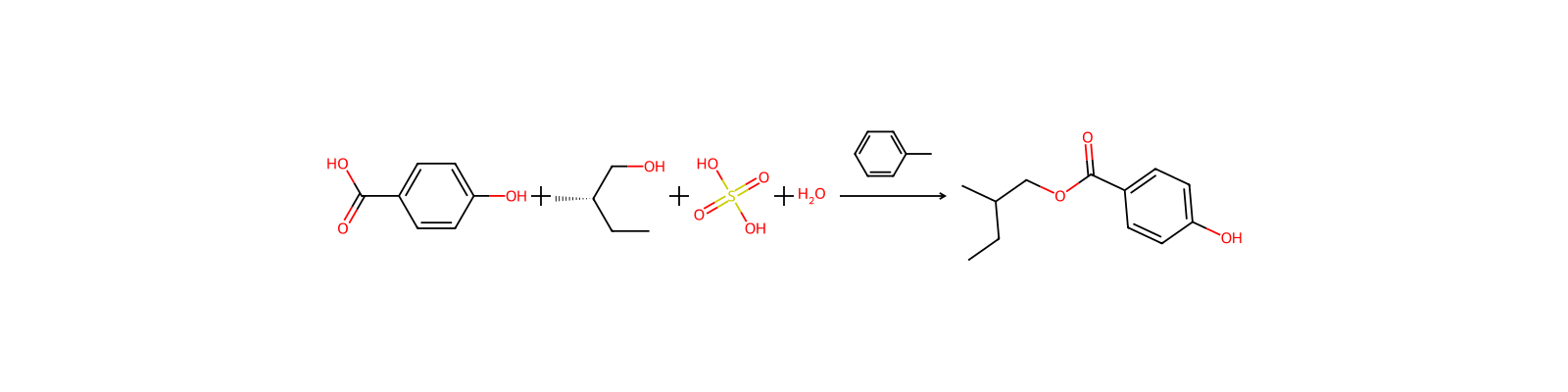
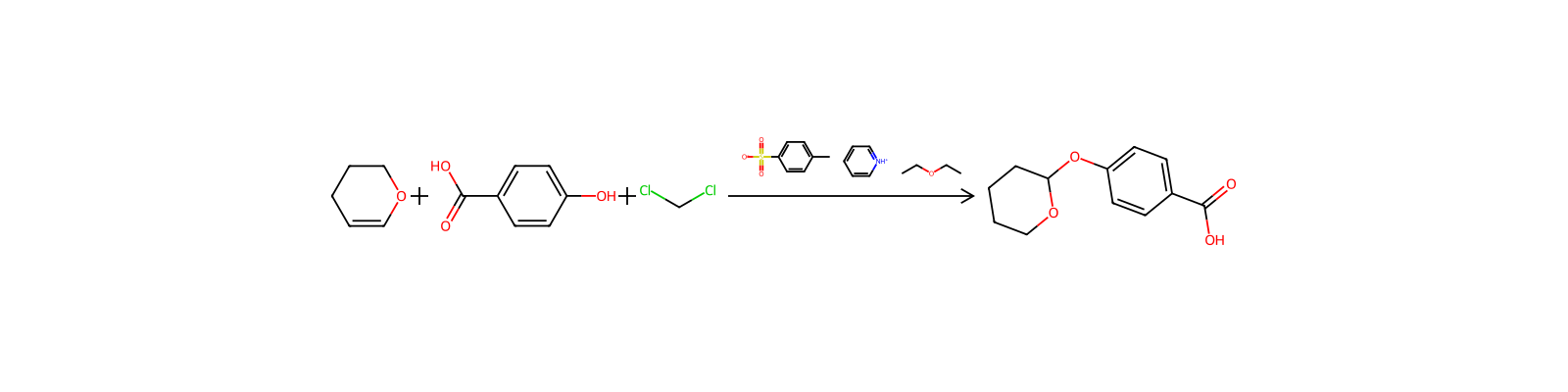
Reaktionsgleichung von HRID 752
HRID 752als Eduktuspto-grants-1998_03
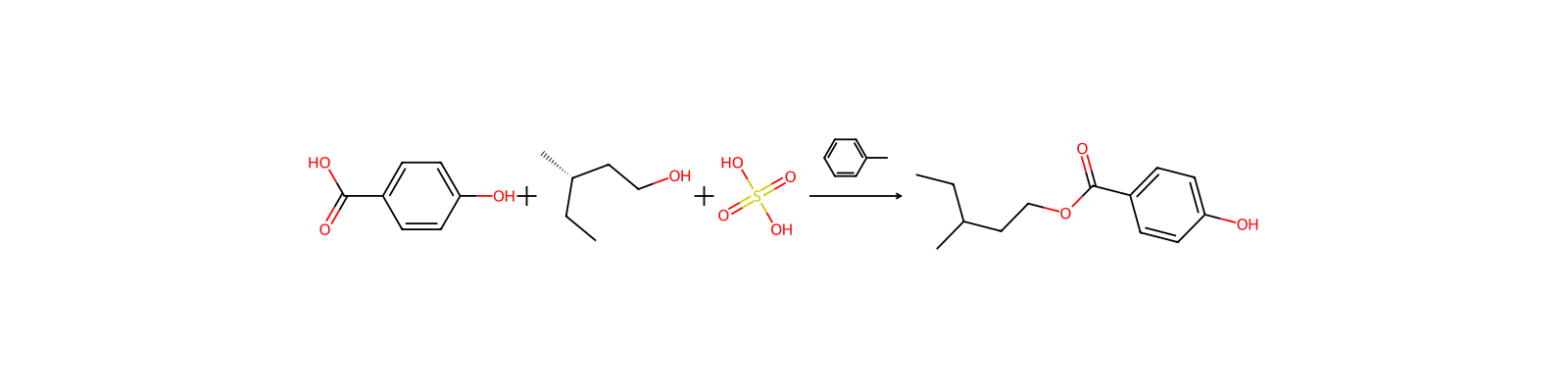
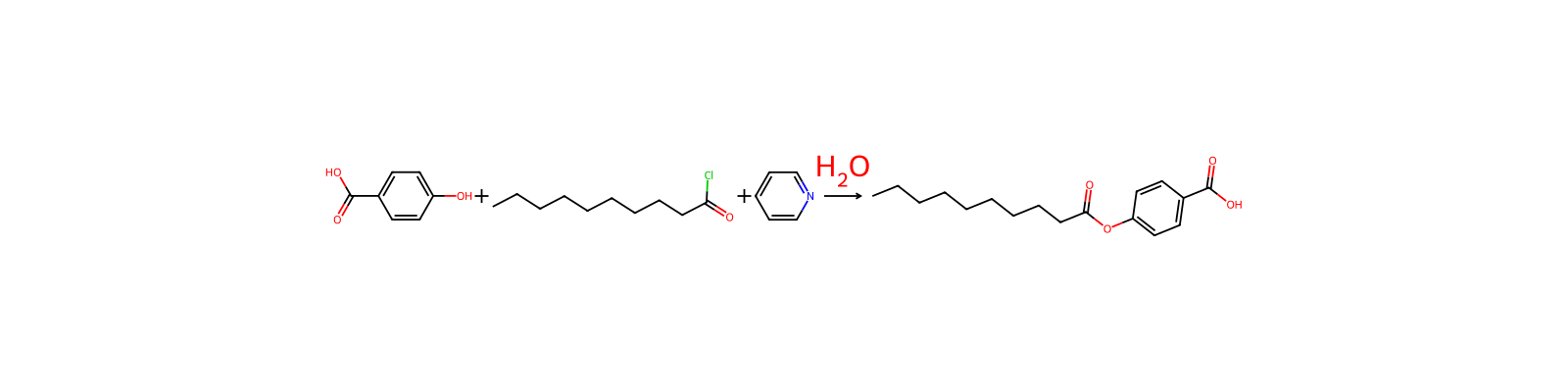
Reaktionsgleichung von HRID 753
HRID 753als Eduktuspto-grants-1998_03
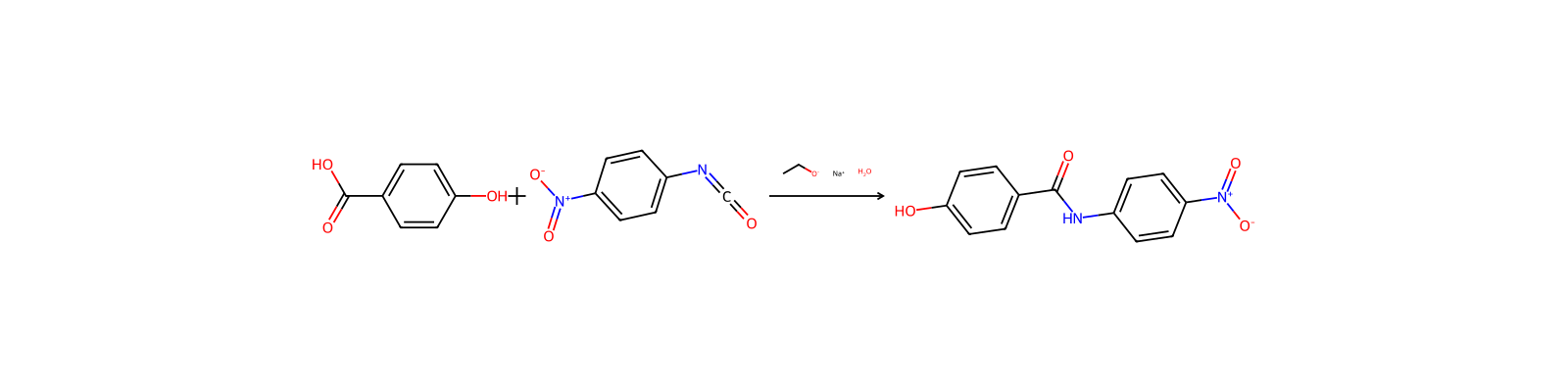
Reaktionsgleichung von HRID 6314
HRID 6314als Eduktuspto-grants-1993_09
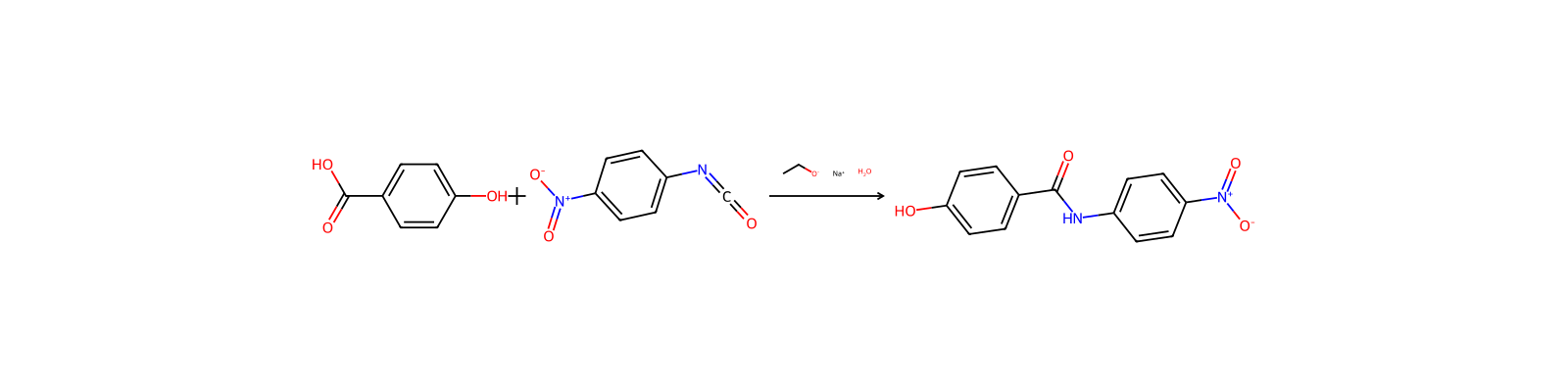
Reaktionsgleichung von HRID 6317
HRID 6317als Eduktuspto-grants-1993_09
Reaktionsgleichung von HRID 6318
HRID 6318als Eduktuspto-grants-1993_09
Reaktionsgleichung von HRID 6413
HRID 6413als Eduktuspto-grants-1993_09
Reaktionsgleichung von HRID 6418
HRID 6418als Eduktuspto-grants-1993_09
Reaktionsgleichung von HRID 7331
HRID 7331als Eduktuspto-grants-2006_08
Seite 1 von 66

Notizen zur Verbindung

Wird geladen…

Auf dieser SeiteGrundinformationenÜberblickNamen und BezeichnerEigenschaftenSicherheit und RegulatorischesChemie und IndustrieZugehörige ReaktionenNotizen zur Verbindung
Weitere Aktionen
Neue NotizNeue ReaktionAnfrage stellen
White granular crystalline powder consisting of monoclinic prisms
Solubility · 6 Einträge

Solubility (in 100 g of solution): 99% ethanol 38.75 g (67 °C); n-butanol 19.5 g (32.5 °C)

Soluble in about 125 parts water, freely in alcohol, slightly in chloroform; soluble in ether, acetone. Practically insoluble in carbon disulfide.

In water, 5000 mg/L at 25 °C

5.0 mg/mL

slightly soluble in water; soluble in organic solvents

freely soluble (in ethanol)

Boiling Point334.00 to 335.00 °C. @ 760.00 mm Hg
DecompositionWhen heated to decomposition it emits acrid smoke and irritating fumes.

Physikochemische Eigenschaften

Schmelzpunkt
213 · 213-217 °C (lit.)
Siedepunkt
213.5 °C · 213.5°C (rough estimate)
Dichte
1 · 1,46 g/cm3
Dampfdruck
0 Pa · 0Pa at 20℃
Brechungsindex
1.46 · 1.4600 (estimate)
FEMA
3986 · 3986 | 4-HYDROXYBENZOIC ACID
Flammpunkt
199 °C · 199 °C
storage temp.
30 °C · Store below +30°C.
Löslichkeit
5 %, · methanol: soluble5%, clear to slightly hazy, colorless to faintly yellow
Aggregatzustand
Crystalline Powder
pka
4.48 · 4.48(at 19℃)
Farbe
White to ivory
PH
3.3 · 3.3 (1g/l, H2O, 20℃)
Geruch (Odor)
100 % · at 100.00 %. phenolic nutty
Geruchsart
phenolic
Biologische Quelle
synthetic
Wasserlöslichkeit
5 g/L · 5 g/L (20 ºC)
Merck
14 · 14,4812
JECFA Number
957 · 957
BRN
970950 · 970950
Henry's Law Constant
1.4 · 1.4×106 mol/(m3Pa) at 25℃, Duchowicz et al. (2020)
Kosmetik-Inhaltsstoffe Funktionen
PRESERVATIVEFRAGRANCE
InChI
1S/C7H6O3/c8-6-3-1-5(2-4-6)7(9)10/h1-4,8H,(H,9,10)
InChIKey
FJKROLUGYXJWQN-UHFFFAOYSA-N
SMILES
OC(=O)c1ccc(O)cc1
LogP
0.878 at · 0.878 at 22℃
CAS Datenbank
99 · 99-96-7(CAS DataBase Reference)
NIST chemische Informationen
4 · Benzoic acid, 4-hydroxy-(99-96-7)
EPA chemische Informationen
p-Hydroxybenzoic acid (99-96-7)
Atmospheric Standards · 1 Eintrag

This action promulgates standards of performance for equipment leaks of Volatile Organic Compounds (VOC) in the Synthetic Organic Chemical Manufacturing Industry (SOCMI). The intended effect of these standards is to require all newly constructed, modified, and reconstructed SOCMI process units to use the best demonstrated system of continuous emission reduction for equipment leaks of VOC, considering costs, non air quality health and environmental impact and energy requirements. 4-Hydroxybenzoic acid is produced, as an intermediate or a final product, by process units covered under this subpart.

Hazard Classes and CategoriesSkin Irrit. 2 (12.2%)

Sicherheit und Schutzausrüstung

Disposal Methods · 1 Eintrag

SRP: The most favorable course of action is to use an alternative chemical product with less inherent propensity for occupational exposure or environmental contamination. Recycle any unused portion of the material for its approved use or return it to the manufacturer or supplier. Ultimate disposal of the chemical must consider: the material's impact on air quality; potential migration in soil or water; effects on animal, aquatic, and plant life; and conformance with environmental and public health regulations.

Protective Action Criteria (PAC) · 3 Einträge

15 [mg/m3]

22 [mg/m3]

130 [mg/m3]

Toxikologische Informationen

Ecotoxicity Values · 3 Einträge

LC50 Oncorhynchus mykiss (Rainbow trout) >99 mg/L/96 hr /Conditions of bioassay not specified in source examined/

EC50 Daphnia magna (intoxication, immobilization) 181 mg/L/24 hr (95% confidence interval: 167-198 mg/L); 173 mg/L/48 hr; static

LD50 Oncorhynchus mykiss (Rainbow trout) ip 1.01 mmol/kg /formultated product/

Environmental Fate · 3 Einträge

TERRESTRIAL FATE: Based on a classification scheme(1), Koc values of 142, 20, and 14(2), indicate that 4-hydroxybenzoic acid is expected to have high to very high mobility in soil(SRC). Volatilization of 4-hydroxybenzoic acid from moist soil surfaces is not expected to be an important fate process(SRC) given an estimated Henry's Law constant of 7.2X10⁻¹² atm-cu m/mole(SRC), derived from its vapor pressure, 1.9X10⁻⁷ mm Hg(3), and water solubility, 5000 mg/L(4). In addition, the pKa of 4-hydroxybenzoic acid is 4.54(5), indicating that this compound will primarily exist in anion form in the environment and will not volatilize from moist soil surfaces(SRC). 4-Hydroxybenzoic acid is not expected to volatilize from dry soil surfaces(SRC) based upon its extrapolated vapor pressure value(3). Biodegradation of 4-hydroxybenzoic acid is expected to occur in aerobic and anaerobic soil environments based on both screening and microcosm studies (SRC). In aquifer sediment, from 34 to 70% mineralization was reported under aerobic conditions in 6 days(6). Under anaerobic conditions, 4-hydroxybenzoic acid was completely degraded in river sediments within 23 to 59 days(7).

AQUATIC FATE: Based on a classification scheme(1), Koc values of 142, 20, and 14(2)indicate that 4-hydroxybenzoic acid is not expected to adsorb to suspended solids and sediment(SRC). Volatilization from water surfaces is not expected(3) based upon an estimated Henry's Law constant of 7.2X10⁻¹² atm-cu m/mole(SRC), derived from its vapor pressure, 1.9X10⁻⁷ mm Hg(4) and water solubility, 5000 mg/L(5). The pKa of 4-hydroxybenzoic acid is 4.54(9), indicating that this compound will primarily exist in anion form and anions generally do not adsorb more strongly to suspended solids and sediment than their neutral counterparts(6). According to a classification scheme(7), an estimated BCF of 9(SRC), from its log Kow(8) and a regression-derived equation(3), suggests the potential for bioconcentration in aquatic organisms is low (SRC). Biodegradation of 4-hydroxybenzoic acid is expected to occur in aerobic and anaerobic aquatic environments based on both screening and microcosm studies (SRC). In aquifer sediment, from 34 to 70% mineralization was reported under aerobic conditions in 6 days(10). Under anaerobic conditions, 4-hydroxybenzoic acid was completely degraded in river sediments within 23 to 59 days(11).

ATMOSPHERIC FATE: According to a model of gas/particle partitioning of semivolatile organic compounds in the atmosphere(1), 4-hydroxybenzoic acid, which has an extrapolated vapor pressure of 1.9X10⁻⁷ mm Hg at 25 °C(2), is expected to exist in both the vapor and particulate phases in the ambient atmosphere. Vapor-phase 4-hydroxybenzoic acid is degraded in the atmosphere by reaction with photochemically-produced hydroxyl radicals(SRC); the half-life for this reaction in air is estimated to be 30 hours(SRC), calculated from its rate constant of 1.3X10⁻¹¹ cu cm/molecule-sec at 25 °C(SRC) that was derived using a structure estimation method(3). Particulate-phase 4-hydroxybenzoic acid may be removed from the air by wet and dry deposition(SRC).

Adverse EffectsNeurotoxin - Other CNS neurotoxin
Toxicity Summary · 2 Einträge

The CIR Expert Panel concluded that the following 20 parabens are safe in cosmetics in the present practices of use and concentration described in the safety assessment when the sum of the combined concentration of parabens in any given formulation does not exceed 0.8 %...4-Hydroxybenzoic Acid...

Safe for use in cosmetics, with qualifications

Effluent Concentrations · 1 Eintrag

Night soil treatment plant effluents collected on two occasions in Japan in 1975 contained 4-hydroxybenzoic acid at 2.0 and 2.5 ug/L(1). Incinerating plant effluent collected in Japan in 1975 contained 4-hydroxybenzoic acid at a concentration of 6.5 ug/L(1).

Soil Adsorption/Mobility · 1 Eintrag

Koc values of 142, 20, and 14 were measured according to a modified version of OECD guideline 106 for 4-hydroxybenzoic acid in a podzol (pH=2.8, C organic=4.85%, sand:silt:clay=89.2:8.2:2.6%), alfisol (pH=6.7, C organic=1.25%, sand:silt:clay=69.7:14.4:15.9%), and a sediment (pH=7.1, C organic=1.58%, sand:silt:clay=5.5:58.8:35.7%), respectively(1). According to a classification scheme(2), these Koc values suggest that 4-hydroxybenzoic acid is expected to have high to very high mobility in soil. The pKa of 4-hydroxybenzoic acid is 4.54(3), indicating that this compound will primarily exist in anion form in the environment and anions generally do not adsorb more strongly to organic carbon and clay than their neutral counterparts(4).

Natural Pollution SourcesPhenolic acids, including 4-hydroxybenzoic acid, are widely distributed in vascular plants(1).
Atmospheric Concentrations · 2 Einträge

URBAN/SUBURBAN: Aerosol samples collected in April 1985 approximately 60 km northeast of Tokyo in a suburban area surrounded by agricultural fields and forests contained unreported concentrations of 4-hydroxybenzoic acid(1). 24-Hour air samples collected from two urban sites in the San Joaquin valley, CA from December 5, 1995 to January 6, 1996 contained 4-hydroxybenzoic acid at 7.8(Bakersfield, CA) and 12 (Fresno, CA) ng/cu m(2). Atmospheric fallout samples collected in a residential district of Tokyo, Japan, between February 1976 and January 1978, contained 4-hydroxybenzoic acid at concentrations ranging from 0.3 to 4.7 ug/cu m/day(3).

RURAL/REMOTE: 24-Hour air samples collected from the Kern Wildlife refuge in the San Joaquin valley, CA, from December 5, 1995 to January 6, 1996 contained 4-hydroxybenzoic acid at 0.6 ng/cu m(1).

Artificial Pollution Sources4-Hydroxybenzoic acid's production and use as a chemical intermediate, in synthetic drugs, and as a food preservative (up to 0.1% approved by the FDA)(1) may result in its release to the environment through various waste streams(SRC).
Environmental Biodegradation · 2 Einträge

AEROBIC: In a 1% soil suspension screening test, 4-hydroxybenzoic acid at 25 ppm was completely degraded within 1 day, as measured by loss of UV absorbancy(1). 4-Hydroxybenzoic acid was readily biodegraded in several aerobic activated sludge screening tests including the Zahn-Wellens test (100% removal in 1 day), Japanese MITI test (98% theoretical BOD reached in 14 days), Sturm CO2 evolution test (61% theoretical CO2 produced in 28 days), OECD Screening test (95% DOC removal in 19 days), and the Closed bottle test (93% theoretical BOD reached in 30 days)(2). In an OECD coupled units biological treatment simulation test, 99% DOC removal of 4-hydroxybenzoic acid, initially present at 12 ppm C, was reported after an acclimation period of 7 days(2). 4-Hydroxybenzoic acid was mineralized 44 to 54% in 14 days in an assay where aquifer sediments from outside the coal-tar contaminated plume were added to the compound in distilled water at 20 °C(3). When aquifer sediment collected from within the plume were used, from 50 to over 80% of the added 4-hydroxybenzoic acid was generally mineralized within 14 days(3). Under microaerophilic conditions, mineralization of 4-hydroxybenzoic acid ranged from 13 to 54% in 6 days; sediment collected from within the plume was used as an inoculum(3). Under aerobic conditions, using the same sediment, from 34 to 70% mineralization was reported over the same time(3). The percent 4-hydroxybenzoic acid mineralization in 20 days ranged from 35 to 55, 35 to 55, and 0 to 35 in microcosms using sediment upgradient of a coal-tar contaminated plume, downgradient of the plume, and in pristine sediment, respectively(4). Mineralization of 4-hydroxybenzoic acid in aquifer sediment microcosms from uncontaminated and contaminated boreholes in an urban coal-tar waste site was reported as 43 to 51% and 46 to 52%, respectively, in 14 days(5).

ANAEROBIC: 4-Hydroxybenzoic acid was slowly mineralized in a microcosm study using aquifer sediment and groundwater from two boreholes in a coal-tar contaminated aquifer; the percent mineralization ranged from 0 to 30% in 28 days(1). 4-Hydroxybenzoic acid was readily degraded in several anaerobic digester sludge screening studies. Digester sludge from the Adrian and Jackson waste treatment plants, present at 10% in an anaerobic salts medium, degraded 100% of the added 4-hydroxybenzoic acid (at 50 ppm C) within 14 days(2). Complete mineralization of 4-hydroxybenzoic acid was reported within 14 days in a screening study using anaerobic digester sludge (initial test compound concentration of 30 mg C/L, sludge inoculum at 100 mg C/L, incubation at 37 °C, glucose and glutamic acid added)(4). In a second similar digester sludge screening test, 87% mineralization was reported in 28 days(5). In another digester sludge screening study, 17 days were required to completely degrade 4-hydroxybenzoic acid with over 80% of the initial concentration converted to gas(6). Significant mineralization of 4-hydroxybenzoic acid in a freshwater lake sediment was noted in 2 to 4 weeks(2). In anaerobic sediment slurries constructed using sediment from the Milwaukee Harbor and Green Bay, complete degradation of 4-hydroxybenzoic acid was generally reported in 24 to 59 days and 23 to 51 days, respectively(3). 4-Hydroxybenzoic acid was mineralized by 96 and 121% under denitrifying and methanogenic conditions, respectively, in a screening study using a 10% sediment slurry inoculum(7). Mineralization rate constants of >70(lag phase of 0 to 1.4 weeks) and 20 umol/L/day(lag phase of 0 to 1 week) were reported for 4-hydroxybenzoic acid during its degradation under denitrifying and methanogenic conditions, respectively(7).

Sediment/Soil Concentrations · 2 Einträge

SOIL: A peat soil contained 4-hydroxybenzoic acid at a concentration of 265 to 727 ug/100 gm dry soil(1). 4-Hydroxybenzoic acid dominated the other phenolic carboxylic acids present in soil samples collected from the McMurdo Sound region of the Antarctic(2). A composite of soil samples collected in a residential district of Tokyo, Japan, between February 1976 and January 1978, contained 4-hydroxybenzoic acid at a concentration of 4.2 ug/g dry soil(3). 4-Hydroxybenzoic acid concentrations in 5 freshwater sediment samples ranged from 3.47 to 133 ug/g dry weight(4).

SEDIMENT: 4-Hydroxybenzoic acid dominated the other phenolic carboxylic acids present in sediment samples collected from the McMurdo Sound region of the Antarctic(1). Sediments collected from Lake Haruna, Tama river, Komagari reservoir, Yatsuse river, and the Gulf of Mexico contained 4-hydroxybenzoic acid at 14, 1.2, 7.9, 16, and 0.51 ug/g dry sediment(2).

Environmental Bioconcentration · 1 Eintrag

An estimated BCF of 9 was calculated for 4-hydroxybenzoic acid(SRC), using a log Kow of 1.58(1) and a regression-derived equation(2). According to a classification scheme(3), this BCF suggests the potential for bioconcentration in aquatic organisms is low(SRC), provided the compound is not altered physically or chemically once released into the environment.

Regulatorische Informationen

Atmospheric Standards · 1 Eintrag

This action promulgates standards of performance for equipment leaks of Volatile Organic Compounds (VOC) in the Synthetic Organic Chemical Manufacturing Industry (SOCMI). The intended effect of these standards is to require all newly constructed, modified, and reconstructed SOCMI process units to use the best demonstrated system of continuous emission reduction for equipment leaks of VOC, considering costs, non air quality health and environmental impact and energy requirements. 4-Hydroxybenzoic acid is produced, as an intermediate or a final product, by process units covered under this subpart.

Sicherheitsdaten

wgk
1
tsca
TSCA listed
hs_code
29182930
RTECS-Nr.
DH1925000
risk_code
36-36/37/38
Toxizität
LD50 orally in Rabbit: > 5000 mg/kg
hazard_code
Xi
safety_code
26-37/39-36
Speicherklasse
11 - Combustible Solids
Giftige Stoffe Daten
99-96-7(Hazardous Substances Data)
Hazard Classifications
Eye Dam. 1STOT SE 3
Selbstentzündungstemperatur
>250 °C
U.S. Production2023: 10,000,000 - <25,000,000 lb
Consumer UsesProcessing aids not otherwise specified
Industry UsesCorrosion inhibitor
Methods of Manufacturing · 3 Einträge

4-Hydroxybenzoic acid can... be obtained by isomerization of dipotassium salicylate at temperatures up to 240 °C and under carbon dioxide pressure (slightly above atmospheric pressure), or by oxidation of the alkali-metal salt of p-cresol on metal oxides at 260-270 °C. Reaction of phenol with tetrachloromethane in the presence of alkali produces salicylic acid as the main product and smaller amounts of 4-hydroxybenzoic acid.

4-Hydroxybenzoic acid is produced by carboxylation of potassium phenolate above 220 °C and with a carbon dioxide pressure of 0.45 MPa. The yield fo 4-hydroxybenzoic acid (partly present as the dipotassium salt) is 80% of the theoretical amount in which the conversion of phenolate is 60%.

Interaction of 1-aminobenzoic acid and nitrous acid.

Use Classification · 5 Einträge

Flavouring Agent -> FLAVOURING_AGENT -> JECFA Functional Classes

Flavoring Agents -> JECFA Flavorings Index

Flavouring Agent -> FLAVOURING_AGENT -> JECFA Functional Classes

Flavouring Agent -> FLAVOURING_AGENT -> JECFA Functional Classes

Cosmetics -> Preservative

General Manufacturing Information · 2 Einträge

Miscellaneous Manufacturing

Benzoic acid, 4-hydroxy-: ACTIVE

Anwendungen · 3 Einträge

Beschreibung4-Hydroxybenzoic acid, also known as p-hydroxybenzoic acid or PHBA, is a monohydroxybenzoic acid, a phenolic derivative of benzoic acid. It is a white crystalline solid that is slightly soluble in water and chloroform but more soluble in polar organic solvents such as alcohol and acetone. It is isomeric with salicylic acid (2-hydroxybenzoic acid), a forerunner to aspirin, and 3-hydroxybenzoic acid. The esters of 4-hydroxybenzoic acid, also called parabens, are widely used as preservatives in cosmetics and some ophthalmic solutions.

Occurrence4-Hydroxybenzoic acid is a phenolic acid that has been found in a variety of fruit peels and leaves. It can be found naturally in coconut. It is one of the main catechins metabolites found in humans after consumption of green tea infusions. It is also found in wine, in vanilla, in Macrotyloma uniflorum (horse gram), carob and in Phyllanthus acidus (Otaheite gooseberry).

Verwenden4-Hydroxybenzoic acid is used as an intermediate for dyes, antiseptics and active pharmaceutical ingredients. It is also used as a food preservative, corrosion inhibitor, anti-oxidant and an emulsifier. It reacts with 6-hydroxynaphthalene-2-carboxylic acid to prepare aromatic polyester called Vectran fiber. It acts as a precursor to prepare p-hydroxyphenylbenzoate, p-acetoxybenzoyl chloride and 4,4'-dihydroxybenzophenone. Further, it is used in paint additives, coating additives, processing aids, electrical and electronic products. In addition to this, it acts as a preservative in cosmetics and some ophthalmic solutions.

Darstellung · 1 Eintrag

synthetischePrepared from p-bromophenol or p-hydroxybenzaldehyde, or from saponification of methyl salicylate, a major component of oil of wintergreen.In 1947, H. Gilman and C. E. Arntzen at Iowa State College (Ames) reported the synthesis of 4-HBA from 4-hydroxybenzaldehyde. Several other preparation methods were developed since then. Today it is produced commercially via the Kolbe–Schmitt reaction, which originated in the mid-1800s. Potassium phenoxide and CO2 are heated under pressure; the reaction mixture is then acidified to obtain the product 4-Hydroxybenzoic acid. (Oddly, if the sodium salt is used, the product is 2-hydroxybenzoic acid, or salicylic acid.)Org. Synth. 1934, 14, 48DOI: 10.15227/orgsyn.014.0048

Vor- und nachgelagerte Produkte

Vorgelagerte Rohstoffe

1,2-Benzisothiazol-3(2H)-on-1,1-dioxidKaliumhydroxidPhenolDipotassium rabdosiin RabdosiinPotassium hydroxide solutionTosylchloridKaliumphenolatKaliumsulfatMethyl-4-brombenzoat4-Iodbenzoesure4-(3-Butenyloxy)benzoic acidp-(Benzyloxy)benzoesure

Nachgelagerte Produkte

Propyl-4-hydroxybenzoatMethyl-4-hydroxybenzoat4-ButoxybenzoesureIsobutyl-4-hydroxybenzoatBromoxynil (ISO)Ethyl-4-hydroxybenzoatButyl-4-hydroxybenzoatIsopropyl-4-hydroxybenzoat2-Brombenzonitril4-Hydroxybenzonitrilp-AnissureCyanophos (ISO)Heptyl-4-hydroxybenzoatHexa-2,4-diensure
Ergänzende Hinweise · 1 Eintrag

DefinitionChEBI: 4-hydroxybenzoic acid is a monohydroxybenzoic acid that is benzoic acid carrying a hydroxy substituent at C-4 of the benzene ring. It has a role as a plant metabolite and an algal metabolite. It is a conjugate acid of a 4-hydroxybenzoate.