StartseiteMCPWorkbenchSkills
StartseiteWorkbenchBenachrichtigungenMein Bereich
llms.txt · MCP-AnleitungDatenschutz · Nutzungsbedingungen · Supportv1.8.1
  1. Startseite
  2. /Verbindung

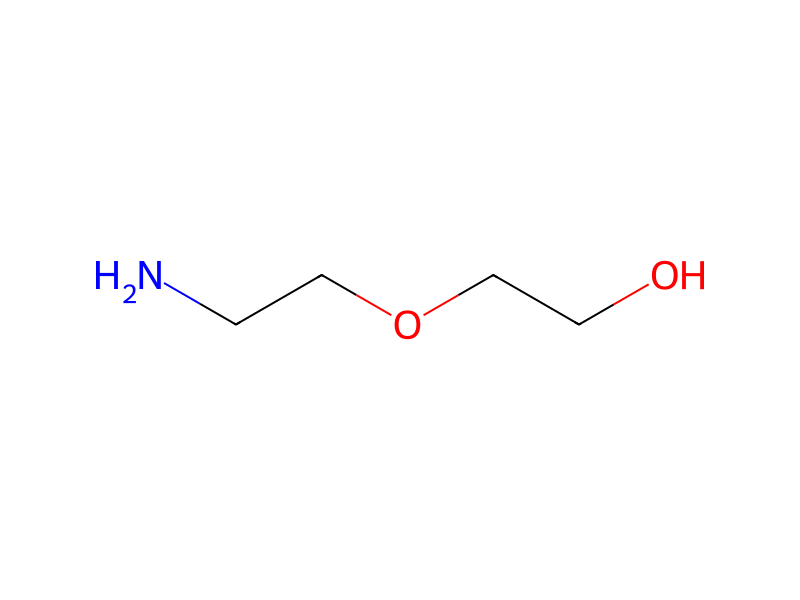
Diglycolamine

HCID 13578
Neue Reaktion
Drucken

Daten werden ergänzt – lade die Seite später neu, um den aktuellen Stand zu sehen
GrundinformationenÜberblickNamen und BezeichnerEigenschaftenSicherheit und RegulatorischesChemie und IndustrieZugehörige ReaktionenNotizen zur Verbindung
TeilstruktursucheÄhnliche Strukturen suchen

Grundinformationen

CAS
929-06-6
Standard-SMILES
NCCOCCO
InChIKey
GIAFURWZWWWBQT-UHFFFAOYSA-N
Summenformel
C4H11NO2
Durchschnittliche Molmasse
105,14 g/mol
Monoisotopische Masse
105,07897859

Überblick

2-(2-aminoethoxy)ethanol appears as a colorless liquid with a faint fishlike odor. Combustible but difficult to ignite. Corrosive to tissue. Combustion produces toxic oxides of nitrogen.

Namen und Bezeichner

Bevorzugter Name
Diglycolamine
IUPAC
2-(2-aminoethoxy)ethanol
Englischer Name
2-Aminoethoxyethanol
Summenformel
C4H11NO2
Molmasse
105.13564

Namen und Synonyme

2-(2-AMINOETHOXY)ETHANOL929-06-6Diglycolamine2-Aminoethoxyethanol2-(2-Hydroxyethoxy)ethylamineDiethylene glycol monoamineEthanol, 2-(2-aminoethoxy)-Diethylene glycol amine1-Amino-2-(2-hydroxyethoxy)ethane5-Hydroxy-3-oxapentylamine2-Amino-2'-hydroxydiethyl etherDiglycolamine agent
Weitere Namen anzeigen
2-(Hydroxyethoxy)ethylamineDTXSID6027341beta-(beta-Hydroxyethoxy)ethylaminebeta-Hydroxy-beta'-aminoethyl etherbeta-Hydroxy-beta'-aminodiethyl ether6R5Y84T8W9NSC-86108DTXCID907341

Datenbank-Bezeichner

CAS
929-06-6
PubChem CID
13578
DTXSID
DTXSID6027341
ChEMBL
CHEMBL3183757
UNII
6R5Y84T8W9
EC Number
213-195-4
Nikkaji
J7.177C

Eigenschaften

Berechnete StruktureigenschaftenWird ergänzt

XLogP
-1,5
Polarare Oberfläche (TPSA)
55,5 Ų
H-Brücken-Donoren
2
H-Brücken-Akzeptoren
3
Frei drehbare Bindungen
4
Schwere Atome
7
Formalladung
0
Komplexität
32,9

Experimentelle und physikochemische Eigenschaften

Chemical Classes · 2 Einträge

Nitrogen Compounds -> Other Nitrogen Compounds

Corrosives

OdorMILD AMINE ODOR
Density · 2 Einträge

1.0572 @ 20 °C/20 °C

1.05 @25 °C

ViscositySLIGHTLY VISCOUS
Color/FormCOLORLESS LIQUID
SolubilityMISCIBLE WITH WATER AND ALCOHOLS
Flash Point · 2 Einträge

Flash point =126 °C

260 °F (126.6 °C)

Boiling Point · 2 Einträge

221 °C

220 °C @760 [mm Hg]

Melting Point · 2 Einträge

FP: -12.5 °C

-16 °C

Vapor Pressure0.05 [mm Hg] @20 °C

Sicherheit und Regulatorisches

Sicherheitsangaben dienen nur zur Orientierung und ersetzen weder das Sicherheitsdatenblatt (SDB) des Lieferanten noch geltende Vorschriften oder eine fachliche Bewertung.

GHS-Klassifizierung

GHS Classification · 4 Einträge

Danger

H290 (49.3%): May be corrosive to metals [Warning Corrosive to Metals]

P234, P260, P264, P264+P265, P280, P301+P330+P331, P302+P361+P354, P304+P340, P305+P354+P338, P316, P317, P321, P363, P390, P405, P406, and P501 (click each P-code to see the statement)

Aggregated GHS information provided per 897 reports by companies from 13 notifications to the ECHA C&L Inventory. Each notification may be associated with multiple companies.

Gefahrenhinweise

Regulatory Information · 5 Einträge

Chemical: Ethanol, 2-(2-aminoethoxy)-

Ethanol, 2-(2-aminoethoxy)- is listed on the EPA's Chemical Data Reporting (CDR) system. Manufacturers and importers of Ethanol, 2-(2-aminoethoxy)- are required to report information about their production and use of this chemical to the EPA under the Toxic Substances Control Act (TSCA). (40 eCFR Part 711)

Status: Active Update: 14-03-2023 https://echa.europa.eu/registration-dossier/-/registered-dossier/13361

2-(2-Aminoethoxy) ethanol: Does not have an individual approval but may be used under an appropriate group standard

The New Jersey Worker and Community Right to Know Act requires public and private employers to provide information about hazardous substances at their workplaces. (N.J.S.A. 34:5A-1 et. seq.)

DOT LabelCorrosive
Fire Hazards · 2 Einträge

Excerpt from ERG Guide 154 [Substances - Toxic and/or Corrosive (Non-Combustible)]:

· Non-combustible, substance itself does not burn but may decompose upon heating to produce corrosive and/or toxic fumes.

Health Hazards · 2 Einträge

Excerpt from ERG Guide 154 [Substances - Toxic and/or Corrosive (Non-Combustible)]:

Chemie und Industrie

Verwendung und Herstellung

Uses · 3 Einträge

Used as an emulsifying agent in metalworking fluids;

Metal Machining [Category: Heat or Machine]

REMOVAL OF ACID COMPONENTS FROM GASES, ESPECIALLY CARBON DIOXIDE & HYDROGEN SULFIDE FROM NATURAL GAS; INTERMEDIATE

U.S. Production2023: 8,500,000 - <10,000,000 lb
Consumer UsesNot Known or Reasonably Ascertainable
Industry UsesIntermediate
Household ProductsInformation on 2 consumer products that contain Diglycolamine in the following categories is provided:
General Manufacturing Information · 2 Einträge

Wholesale and Retail Trade

Ethanol, 2-(2-aminoethoxy)-: ACTIVE

Zugehörige Reaktionen

175
Reaktionsaufzeichnung erstellen
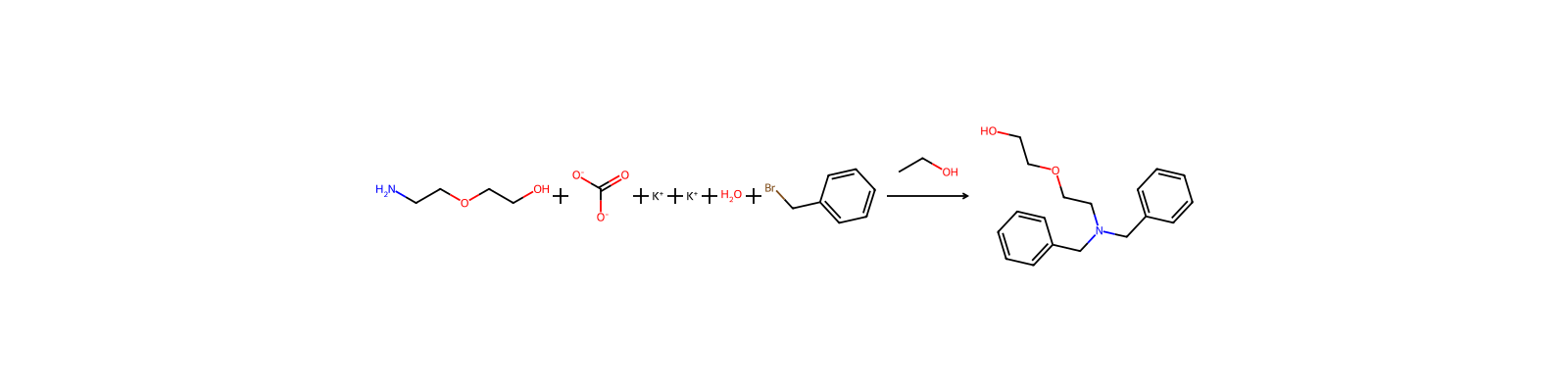
Reaktionsgleichung von HRID 3068
HRID 3068als Eduktuspto-grants-1998_03
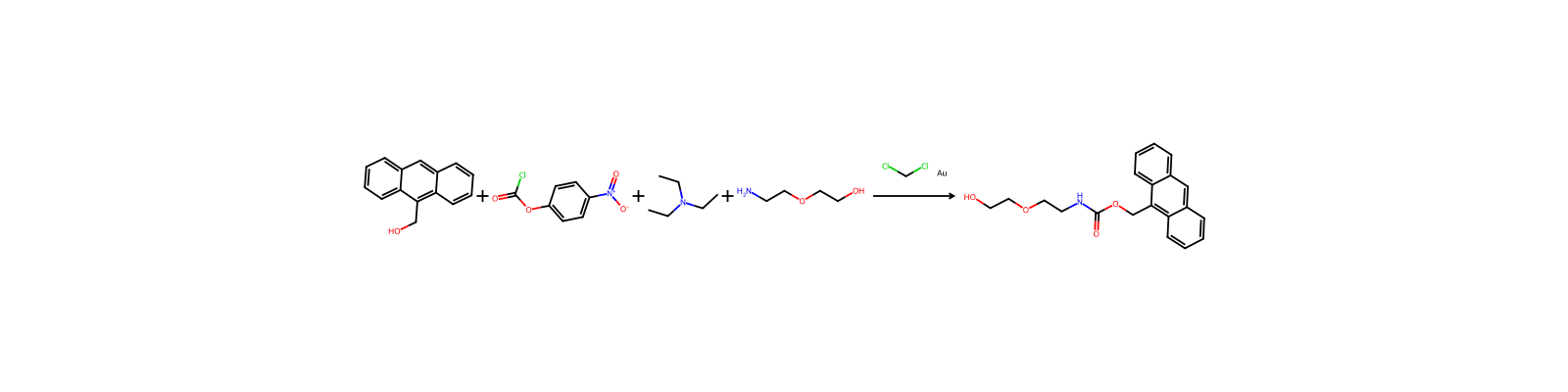
Reaktionsgleichung von HRID 21040
HRID 21040als Eduktuspto-grants-2010_06
Reaktionsgleichung von HRID 23855
HRID 23855als Eduktuspto-grants-2005_02
Reaktionsgleichung von HRID 33099
HRID 33099als Eduktuspto-grants-2008_09
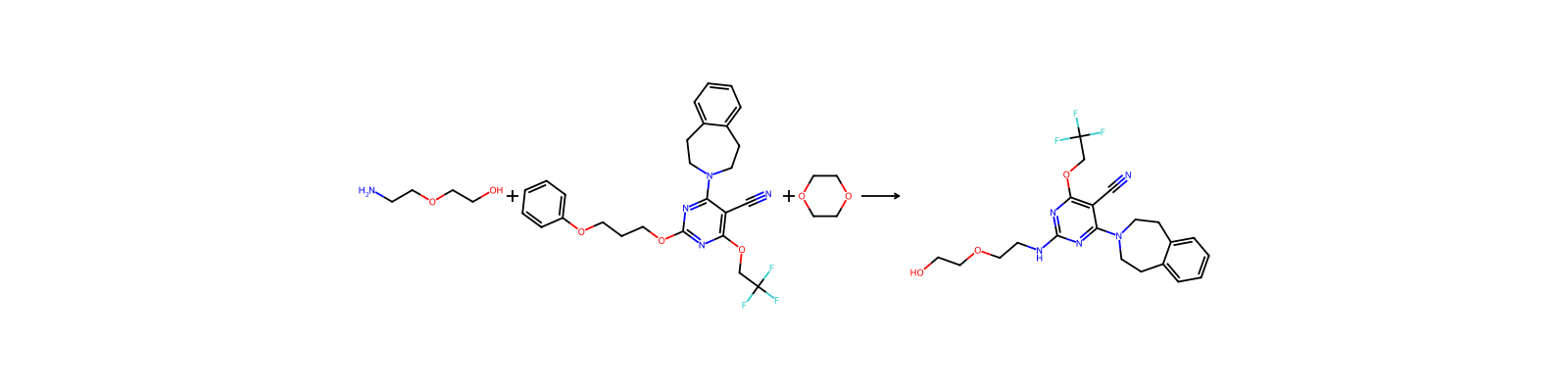
Reaktionsgleichung von HRID 87457
HRID 87457als EduktTraining data from https://doi.org/10.1039/C8SC04228D (2/10)
Reaktionsgleichung von HRID 89382
HRID 89382als EduktTraining data from https://doi.org/10.1039/C8SC04228D (2/10)
Reaktionsgleichung von HRID 125107
HRID 125107als EduktTraining data from https://doi.org/10.1039/C8SC04228D (2/10)
Reaktionsgleichung von HRID 141866
HRID 141866als EduktTraining data from https://doi.org/10.1039/C8SC04228D (9/10)
ZurückSeite 1 von 22

Notizen zur Verbindung

Auf dieser SeiteGrundinformationenÜberblickNamen und BezeichnerEigenschaftenSicherheit und RegulatorischesChemie und IndustrieZugehörige ReaktionenNotizen zur Verbindung
Physical Description · 3 Einträge

2-(2-aminoethoxy)ethanol appears as a colorless liquid with a faint fishlike odor. Combustible but difficult to ignite. Corrosive to tissue. Combustion produces toxic oxides of nitrogen.

Liquid

A colorless liquid with a faint fishlike odor; [CAMEO]

Collision Cross Section235.8 Ų [M+H]+ [CCS Type: DT; Buffer gas: N2; Ionization: ESI+; Dataset: TOXCAST; Source Identifier: DTXSID6027341]

Physikochemische Eigenschaften

Siedepunkt
221 °C · 221 °C
Dichte
1.0572 g/cm3 · 1.0572 g/cm3
pka
14.37 · 14.37±0.10(Predicted)

· TOXIC and/or CORROSIVE; inhalation, ingestion or skin contact with material may cause severe injury or death.

Hazards Summary · 1 Eintrag

Allergic contact dermatitis reported in a machinist; Corrosive to skin; [Quick CPC] Causes burns; harmful if swallowed; Inhalation of high concentration may cause chemical pneumonitis; [MSDSonline] Skin designation; Danger of skin sensitization; [MAK]

DOT ID and Guide3055 154
Reactive GroupAlcohols and Polyols
Reactivity Profile · 1 Eintrag

2-(2-AMINOETHOXY)ETHANOL is an organic compound with both amine and alcohol substituents. Neutralizes acids in exothermic reactions to form salts plus water. May be incompatible with isocyanates, halogenated organics, peroxides, phenols (acidic), epoxides, anhydrides, and acid halides. Flammable gaseous hydrogen is generated in combination with strong reducing agents, such as hydrides.

DOT Emergency Guidelines · 5 Einträge

/GUIDE 154: SUBSTANCES - TOXIC AND/OR CORROSIVE (NON-COMBUSTIBLE)/ Health: TOXIC; inhalation, ingestion, or skin contact with material may cause severe injury or death. Contact with molten substance may cause severe burns to skin and eyes. Avoid any skin contact. Effects of contact or inhalation may be delayed. Fire may produce irritating, corrosive and/or toxic gases. Runoff from fire control or dilution water may be corrosive and/or toxic and cause pollution.

/GUIDE 154: SUBSTANCES - TOXIC AND/OR CORROSIVE (NON-COMBUSTIBLE)/ Fire or Explosion: Non-combustible, substance itself does not burn but may decompose upon heating to produce corrosive and/or toxic fumes. Some are oxidizers and may ignite combustibles (wood, paper, oil, clothing, etc.). Contact with metals may evolve flammable hydrogen gas. Containers may explode when heated.

/GUIDE 154: SUBSTANCES - TOXIC AND/OR CORROSIVE (NON-COMBUSTIBLE)/ Public Safety: CALL Emergency Response Telephone Number ... . As an immediate precautionary measure, isolate spill or leak area in all directions for at least 50 meters (150 feet) for liquids and at least 25 meters (75 feet) for solids. Keep unauthorized personnel away. Stay upwind. Keep out of low areas. Ventilate enclosed areas.

/GUIDE 154: SUBSTANCES - TOXIC AND/OR CORROSIVE (NON-COMBUSTIBLE)/ Protective Clothing: Wear positive pressure self-contained breathing apparatus (SCBA). Wear chemical protective clothing that is specifically recommended by the manufacturer. It may provide little or no thermal protection. Structural firefighters' protective clothing provides limited protection in fire situations ONLY; it is not effective in spill situations where direct contact with the substance is possible.

For more DOT Emergency Guidelines (Complete) data for 2-(2-AMINOETHOXY)ETHANOL (8 total), please visit the HSDB record page.

DOT Hazard Classification · 4 Einträge

2-(2-Aminoethoxy) ethanol

UN3055

Class 8 Corrosive material (49 eCFR § 173.136)

PG III: the degree of danger presented by the material is minor

Air and Water ReactionsWater soluble.
Hazard Classes and Categories · 2 Einträge

Met. Corr. 1 (49.3%)

Corrosives

Sicherheit und Schutzausrüstung

Fire FightingExcerpt from ERG Guide 154 [Substances - Toxic and/or Corrosive (Non-Combustible)]:
Accidental Release Measures · 2 Einträge

· CALL 911. Then call emergency response telephone number on shipping paper. If shipping paper not available or no answer, refer to appropriate telephone number listed on the inside back cover.

· ELIMINATE all ignition sources (no smoking, flares, sparks or flames) from immediate area.

First Aid · 2 Einträge

Excerpt from ERG Guide 154 [Substances - Toxic and/or Corrosive (Non-Combustible)]:

General First Aid:

Exposure Control and Personal Protection · 2 Einträge

· Wear positive pressure self-contained breathing apparatus (SCBA).

0.2 [ppm]

Nonfire Spill ResponseExcerpt from ERG Guide 154 [Substances - Toxic and/or Corrosive (Non-Combustible)]:
Isolation and Evacuation · 2 Einträge

Excerpt from ERG Guide 154 [Substances - Toxic and/or Corrosive (Non-Combustible)]:

Immediate precautionary measure

Protective Action Criteria (PAC) · 3 Einträge

9.0 [mg/m3]

99 [mg/m3]

590 [mg/m3]

Personal Protective Equipment (PPE)Excerpt from ERG Guide 154 [Substances - Toxic and/or Corrosive (Non-Combustible)]:
Emergency Response Planning GuidelinesSmall Fire

Toxikologische Informationen

Adverse EffectsDermatotoxin - Skin burns.
Human Toxicity ExcerptsSTRONG IRRITANT TO TISSUE.

Sicherheitsdaten

Alarmwort
Achtung
Gefahrenhinweise
Code Gefahrenhinweise Gefahrenklasse Abteilung Alarmwort Symbol P-Code H314